
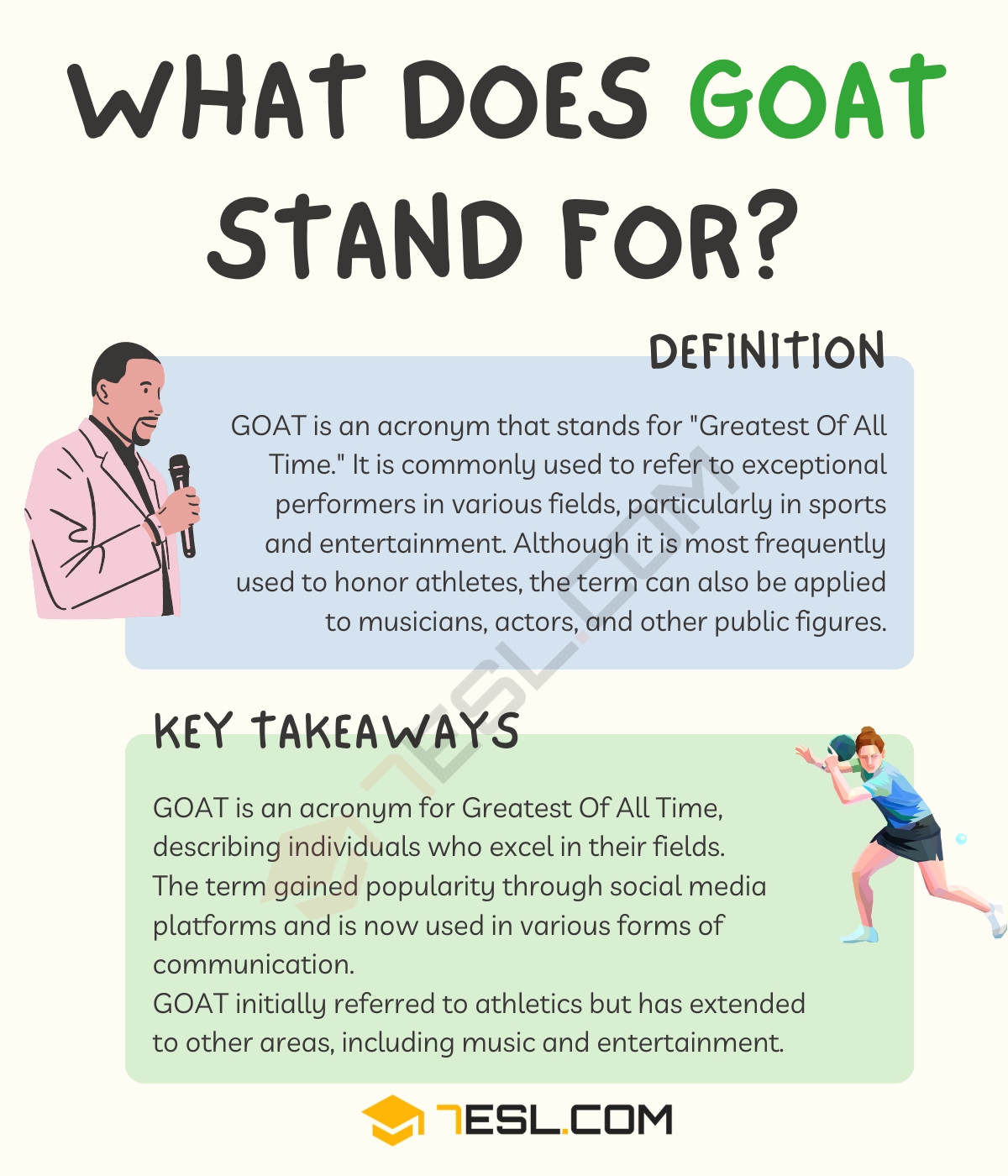
In the fast-paced world of modern commerce, language evolves almost as quickly as the markets themselves. One term that has transcended its origins in sports culture to become a cornerstone of brand identity is “GOAT”—an acronym for the “Greatest of All Time.” While it was once reserved for the likes of Muhammad Ali or Michael Jordan, the concept of the GOAT has been meticulously adopted by brand strategists, marketers, and corporate leaders to define a specific level of market dominance and consumer loyalty.
Understanding what the GOAT means in a branding context is about more than just acknowledging success; it is about analyzing the architecture of a brand that has become synonymous with its industry. When a brand achieves GOAT status, it no longer competes on price or features; it competes on legacy, emotional resonance, and an unshakable identity that defines the standard for everyone else.
The Evolution of Excellence: From Acronym to Brand Strategy
The transition of the GOAT acronym from the athletic arena to the boardroom represents a shift in how we perceive market leadership. In branding, being “the best” is a temporary state, often disrupted by the next technological breakthrough or a cheaper competitor. However, being the “Greatest of All Time” implies a historical significance that transcends current trends.
Defining the GOAT Status in Modern Business
In brand strategy, GOAT status refers to a company or personal brand that has achieved such a high level of differentiation and equity that it becomes the benchmark for its entire category. This is not merely about market share. A brand can have the largest market share but not be the GOAT if it lacks the cultural impact and emotional connection that define true greatness.
For a brand, being the GOAT means occupying the “number one” slot in the consumer’s mind (top-of-mind awareness) so firmly that the brand name often replaces the generic product name. It is the pinnacle of brand positioning, where the identity of the product and the identity of the leader are indistinguishable.
The Psychology of “The Greatest” in Consumer Perception
Why do consumers gravitate toward brands they perceive as the GOAT? The answer lies in the psychological comfort of excellence. In an era of infinite choice, consumers experience “decision fatigue.” Choosing the GOAT brand is a mental shortcut that guarantees quality, social status, and a sense of belonging to a winning legacy.
When a brand positions itself as the greatest, it appeals to the consumer’s aspiration. By purchasing a product from a GOAT brand, the consumer isn’t just buying a tool; they are participating in a narrative of excellence. This psychological bond creates a level of brand loyalty that is resistant to price hikes or minor product flaws.
Building a GOAT Identity: Core Pillars of Market Dominance
Achieving the status of the Greatest of All Time does not happen by accident. It is the result of a deliberate, long-term brand strategy focused on several core pillars. These pillars ensure that the brand remains relevant, respected, and irreplaceable.
Innovation as a Barrier to Entry
True GOAT brands are almost always pioneers. They don’t just enter a market; they create or redefine it. Innovation in this context isn’t just about “new features”; it is about “category creation.” By being the first to solve a problem in a revolutionary way, a brand sets the rules of the game. Every subsequent competitor is then forced to play by those rules, forever positioning them as followers rather than leaders.
Storytelling and the Hero’s Journey
Every GOAT brand has a powerful “Origin Story.” Whether it’s a garage-born startup or a century-old heritage house, the narrative of overcoming obstacles to reach the top is essential. This is the “Hero’s Journey” applied to corporate identity. Brand strategists use this storytelling to humanize the brand, making it relatable while simultaneously elevating it to a mythic status. A brand without a story is just a commodity; a brand with a GOAT narrative is an icon.

Unwavering Consistency Across Touchpoints
Consistency is the bedrock of trust. A brand cannot be the greatest if its quality or message fluctuates. This means that every touchpoint—from the high-level advertising campaigns to the user interface of an app or the packaging of a product—must reflect the same “greatness.” GOAT brands maintain a “Brand Bible” that is followed with religious fervor, ensuring that the consumer experience is identical whether they are in Tokyo, New York, or London.
Case Studies: Brands That Have Achieved GOAT Status
To understand the practical application of these strategies, we can look at specific brands that have moved beyond mere success to become the undisputed GOATs of their respective industries.
Apple: The GOAT of Design and Ecosystem
Apple is perhaps the most cited example of a GOAT brand in the 21st century. Their strategy was never about being the first to invent a technology (they didn’t invent the MP3 player or the smartphone), but about being the “greatest” at implementing it. By focusing on design, simplicity, and a closed ecosystem, Apple created a brand identity that felt premium and exclusive. Today, the “Apple ecosystem” is a masterclass in brand “stickiness,” where the cost of leaving the brand (switching to a competitor) is high both financially and psychologically.
Nike: The GOAT of Emotional Branding
Nike’s “Just Do It” is more than a slogan; it is a brand philosophy that has turned a footwear company into a global symbol of human potential. Nike’s branding strategy involves aligning itself with the “GOATs” of the sporting world—Michael Jordan, Serena Williams, Cristiano Ronaldo. By associating their logo with the highest level of human achievement, Nike has successfully transferred those attributes to their brand identity. They don’t sell shoes; they sell the spirit of victory.
Coca-Cola: The GOAT of Global Recognition
In terms of longevity and global reach, Coca-Cola is the GOAT of the beverage industry. Their strategy focuses on “universalism.” While many brands try to segment their audience, Coca-Cola brands itself as the universal symbol of happiness and refreshment. Through consistent visual identity (that specific shade of red and the Spencerian script) and massive emotional marketing, they have maintained their position as the world’s most recognizable brand for over a century.
The Risks of the Pedestal: Maintaining GOAT Status in a Volatile Market
Getting to the top is difficult, but staying there is often harder. The “GOAT” status carries a heavy burden of expectation. When a brand is positioned as the greatest, any failure—ethical, financial, or functional—is amplified.
Overcoming the “Innovator’s Dilemma”
One of the greatest risks to a GOAT brand is complacency. The “Innovator’s Dilemma” describes a situation where a successful company becomes so focused on its current, winning product that it fails to see the next wave of disruption. To maintain GOAT status, a brand must be willing to cannibalize its own successful products to make room for the future. They must remain “hungry and foolish,” as Steve Jobs famously put it, continually reinventing themselves to avoid becoming a “Legacy GOAT” that is eventually forgotten.
Protecting Brand Integrity in the Age of Social Media
In the digital age, a brand’s identity is no longer entirely in its own hands; it is co-created by the community. A GOAT brand is under constant scrutiny. Maintaining the title of “Greatest” requires a proactive approach to brand reputation management. This involves transparent communication, ethical corporate social responsibility (CSR), and a deep understanding of the cultural zeitgeist. A brand that loses its “moral GOAT” status can quickly see its market value plummet, regardless of product quality.
Conclusion: Why Striving for the GOAT Matters
In the world of brand strategy, the term GOAT is not just hyperbole; it is a North Star. It represents the ultimate goal of any corporate identity: to be perceived as the definitive, timeless leader of a category.
By focusing on innovation, storytelling, and unwavering consistency, brands can move beyond the “commodity trap” and build a legacy that lasts for generations. While the market will always see new entrants and temporary leaders, those who achieve GOAT status enter a different realm of business—one defined not just by profit margins, but by a permanent place in the cultural fabric of society. Understanding what the GOAT means is the first step toward becoming it.
aViewFromTheCave is a participant in the Amazon Services LLC Associates Program, an affiliate advertising program designed to provide a means for sites to earn advertising fees by advertising and linking to Amazon.com. Amazon, the Amazon logo, AmazonSupply, and the AmazonSupply logo are trademarks of Amazon.com, Inc. or its affiliates. As an Amazon Associate we earn affiliate commissions from qualifying purchases.