
Runes, at their core, represent an ancient Germanic alphabet. However, their significance extends far beyond mere linguistic tools. Over centuries, these enigmatic symbols have evolved, acquiring layers of meaning that touch upon mysticism, divination, and even historical cryptography. For those curious about their origins, their multifaceted applications, and their enduring appeal, understanding runes requires a journey into history, culture, and the very human desire to connect with deeper knowledge and meaning. This exploration will delve into the foundational aspects of runes, their historical context, and their diverse interpretations, aiming to provide a comprehensive understanding of what runes truly are.

The Origins and Evolution of the Runes
The genesis of the runes is shrouded in a blend of historical evidence and mythological speculation. While definitive proof of their earliest creators remains elusive, scholarly consensus points towards their development among Germanic tribes in Northern Europe. This period, roughly between the 2nd and 8th centuries CE, saw the emergence of distinct runic scripts, each with its unique characteristics and geographical distribution. The evolution of these scripts was not a static process; they adapted and changed over time, reflecting the cultural and linguistic shifts of the societies that used them.
The Elder Futhark: The Proto-Runic Alphabet
The oldest known runic alphabet is the Elder Futhark, named after its first six runes: F, U, Th, A, R, and K. This alphabet, comprising 24 distinct characters, is believed to have been in use from around the 2nd century CE. Its origins are thought to be influenced by existing Latin and Greek alphabets, though the specific ways in which these influences were absorbed and adapted remain a subject of academic debate. Each rune in the Elder Futhark was not only a phonetic symbol representing a sound but also carried an associated meaning, often related to natural phenomena, deities, or abstract concepts. This dual nature—phonetic and symbolic—is a hallmark of runic writing and a key reason for their continued fascination.
For example, the rune Fehu (ᚠ), representing the ‘f’ sound, also symbolized wealth, cattle, and prosperity. Uruz (ᚢ), representing ‘u’, signified strength, wild ox, and untamed power. Thurisaz (ᚦ), representing ‘th’, evoked the giant, Thor, and protective force. This symbolic richness imbued even everyday inscriptions with a deeper layer of meaning, suggesting a worldview where the written word was intrinsically connected to the spiritual and material aspects of life.
The Younger Futhark and Anglo-Saxon Futhorc
As Germanic tribes migrated and their languages evolved, so too did their runic scripts. The Elder Futhark gradually gave way to regional variations. The Younger Futhark, developed in Scandinavia around the 8th century CE, is a simplified alphabet of 16 runes. This simplification was partly driven by the need for more efficient writing, especially for carving onto wood, bone, or stone. Despite the reduced number of runes, many retained their phonetic values and symbolic associations, though some meanings shifted or were reinterpreted.
Simultaneously, in Anglo-Saxon England, the Elder Futhark evolved into the Anglo-Saxon Futhorc. This script expanded to include more runes, often up to 33 characters, to accommodate the nuances of the Old English language. This expansion reflects the distinct linguistic development in the British Isles and the continued adaptation of runic traditions to local contexts. The Anglo-Saxon Futhorc saw the introduction of new runes and the modification of existing ones, further diversifying the runic landscape.
The Multifaceted Applications of Runes
Beyond their role as a writing system, runes have been employed for a variety of purposes throughout history. Their symbolic depth and perceived magical properties led to their use in divination, amulets, and even as potent inscriptions meant to invoke divine protection or specific outcomes. Understanding these applications reveals the integral role runes played in the daily lives and belief systems of ancient Germanic peoples.
Runic Inscriptions: From Practical to Sacred
The most common historical use of runes was for inscriptions. These ranged from the mundane to the highly significant. Practical inscriptions included marking ownership of tools or weapons, commemorating important events, or leaving messages. For instance, archaeologists have found runic inscriptions on everyday objects like combs, jewelry, and even cooking pots.
However, many runic inscriptions carried a far more profound weight. They were often found on memorial stones, erected to honor the deceased and to preserve their memory and deeds for posterity. These inscriptions could include genealogies, heroic tales, or prayers. Inscriptions on weapons or shields were believed to imbue them with power or offer protection to the wielder. The very act of carving a rune could be seen as an invocation, a way of binding a symbol’s inherent power to the object or message.
Consider the famous Rök Stone in Sweden, one of the longest runic inscriptions known. It is a complex tapestry of text that includes historical references, mythological allusions, and seemingly encoded messages, demonstrating the sophisticated use of runes for storytelling and potentially even for preserving esoteric knowledge. The sheer artistry and labor involved in creating such monumental inscriptions underscore the importance placed on the written word and the symbolic power of the runes themselves.
Runes in Divination and Magic
Perhaps the most enduring and widely recognized use of runes today is in divination and magical practices. Ancient Germanic cultures, like many ancient societies, sought ways to understand the will of the gods, predict the future, and influence events. Runes, with their rich symbolic meanings, became potent tools for this purpose.
The exact methods of ancient runic divination are not fully documented, but historical accounts and later traditions suggest that runes were cast or drawn from a container, and their arrangement or the rune that appeared was interpreted for insight. The symbolic meanings of each rune, as discussed earlier, provided a framework for understanding answers to questions posed. For example, if Fehu appeared in a casting related to finances, it might suggest an increase in wealth, while Hagalaz (ᚾ), representing hail and disruption, might indicate an unforeseen obstacle or crisis.
This practice of runic divination continues to be popular in contemporary neo-pagan and esoteric circles. Modern practitioners often create their own rune sets, carved from wood, bone, or stone, and develop their own interpretations based on historical texts, scholarly research, and personal intuition. The appeal lies in the tangible connection to ancient wisdom and the personalized guidance that can be derived from the symbolic language of the runes.
The Symbolism and Meaning of Individual Runes
Each rune within a runic alphabet is more than just a letter; it is a glyph imbued with a specific meaning and energy. While the precise interpretations can vary slightly between different runic alphabets and traditions, a core set of symbolic associations exists, particularly for the Elder Futhark, which serves as the foundation for many modern practices. Understanding these individual meanings is crucial for appreciating the depth and complexity of the runic system.
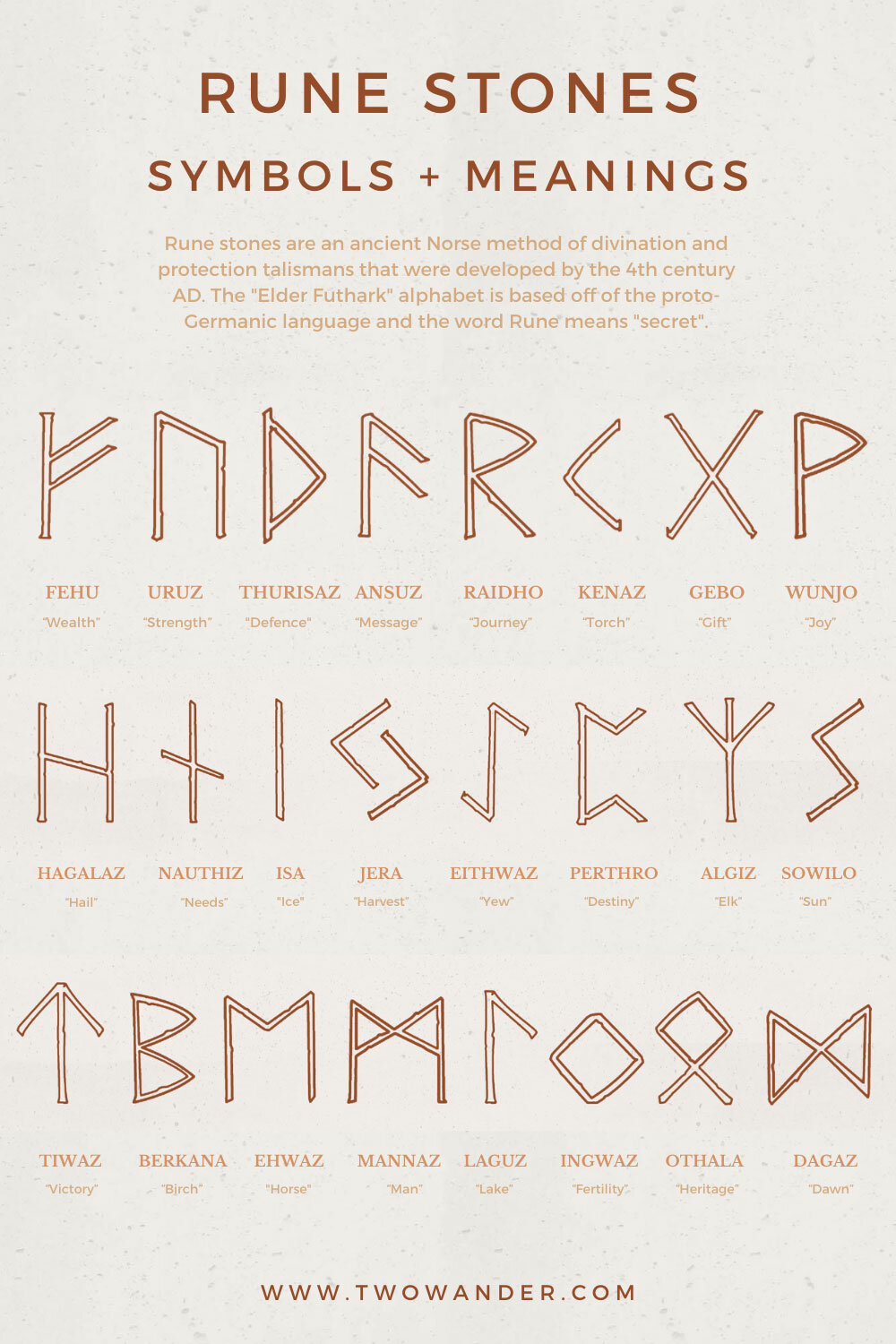
Exploring the Elder Futhark’s Deeper Meanings
Let’s delve into a few examples from the Elder Futhark to illustrate this symbolic richness:
-
ᚠ (Fehu): As mentioned, this rune signifies wealth, prosperity, abundance, and fulfillment. It represents tangible assets and the rewards of labor, but also the spiritual abundance that comes from inner contentment.
-
ᚢ (Uruz): Symbolizing primal strength, raw power, vitality, and untamed nature. It speaks of resilience, endurance, and the force of will needed to overcome challenges. It can also represent the untamed aspects of the self.
-
ᚦ (Thurisaz): This rune is associated with Thor, the thunder god, and represents protective force, defense, and often conflict. It can signify a thorn, a barrier, or a destructive force that can also be a source of strength when faced directly. It prompts caution and careful consideration.
-
ᚨ (Ansuz): Connected to Odin, the chief god of wisdom, inspiration, and communication. Ansuz represents divine messages, inspiration, creativity, and the power of the spoken word or song. It is a rune of learning and understanding.
-
ᚱ (Raidho): Meaning “riding” or “journey,” this rune symbolizes movement, progress, rhythm, and the right order of things. It can represent both physical journeys and the progression of life’s path, emphasizing the importance of structure and discipline.
-
ᚲ (Kenaz): This rune signifies “torch” or “knowledge,” representing illumination, insight, revelation, and controlled fire. It symbolizes the dispelling of ignorance and the bringing of light to dark places, offering guidance and clarity.
-
ᚷ (Gebo): Meaning “gift,” this rune represents partnership, exchange, generosity, and balance. It is a rune of unconditional giving and receiving, highlighting the importance of fair exchange and mutual respect in relationships.
-
ᚹ (Wunjo): Symbolizing joy, happiness, harmony, and success. Wunjo is a rune of well-being and contentment, representing the positive outcomes of effort and the satisfaction of achieving goals.
These are just a fraction of the runes in the Elder Futhark, each carrying its own nuanced web of meanings. Modern interpretations often expand upon these ancient associations, drawing connections to psychological archetypes, natural cycles, and spiritual development.
The Interpretive Framework: Casting and Reading Runes
The practice of interpreting runes involves more than simply knowing their individual meanings. It requires a framework for how these meanings interact and how they can be applied to specific questions or situations. When runes are cast for divination, the arrangement of the runes, their orientation (upright or reversed, though not all runes have distinct reversed meanings), and their proximity to one another all contribute to the overall message.
A reading might involve laying out runes in a specific pattern, such as a three-rune spread representing past, present, and future, or a more complex Celtic Cross-style layout. The “reader” then analyzes the interplay of the runes within the spread. For instance, a positive rune like Wunjo appearing next to a challenging rune like Thurisaz might suggest that joy and happiness can be found by facing the challenges with strength and resolve. Conversely, a negative rune in a position of potential future success might serve as a warning, prompting the questioner to take proactive steps to avoid an undesirable outcome.
The interpretation is also highly personal and intuitive. While historical meanings provide a foundation, the effective use of runes often relies on the practitioner’s ability to connect with the symbols on a deeper level and to translate their messages into practical advice or insightful reflections for the questioner. This interpretive art bridges the gap between ancient symbolism and modern understanding, making runes a living tradition.
The Enduring Legacy and Modern Relevance of Runes
Despite their ancient origins, runes continue to resonate with people today. Their appeal lies in their rich historical tapestry, their enigmatic symbolism, and their perceived connection to deeper wisdom. From historical scholarship to contemporary spiritual practices, runes offer a unique lens through which to examine the past, understand the present, and contemplate the future.
Runes in History and Archaeology
The study of runes is an active field within historical and archaeological research. Inscriptions found on artifacts, standing stones, and ancient structures provide invaluable insights into the languages, cultures, and beliefs of the early Germanic peoples. Archaeologists and linguists work to decipher these inscriptions, piecing together fragmented histories and shedding light on the daily lives, religious practices, and societal structures of these ancient societies.
The discovery of new runic inscriptions can rewrite historical narratives or confirm existing theories. For example, the discovery of runic inscriptions in Greenland and North America has provided evidence of Viking exploration and settlement in the Americas centuries before Columbus. The analysis of the runes themselves – their form, script, and linguistic content – allows scholars to date artifacts, identify geographical origins, and understand the spread of runic literacy.

Contemporary Interpretations and Practices
In the modern era, runes have experienced a significant resurgence in popularity, particularly within spiritual and esoteric communities. Their use as tools for divination, meditation, and personal development has become widespread. This contemporary engagement is not simply a revival of ancient practices but often an adaptation and reinterpretation of runic symbolism within new contexts.
Many individuals today use runes for self-reflection, journaling, and as a source of inspiration. They might create runic art, wear runic jewelry as talismans, or incorporate runic principles into their personal philosophies. This modern relevance highlights the timeless appeal of these ancient symbols – their ability to offer guidance, provoke thought, and connect individuals to a sense of continuity with the past. Whether viewed as historical artifacts, mystical tools, or symbolic archetypes, runes continue to offer a profound and multifaceted source of knowledge and inspiration, inviting exploration and understanding across generations.
aViewFromTheCave is a participant in the Amazon Services LLC Associates Program, an affiliate advertising program designed to provide a means for sites to earn advertising fees by advertising and linking to Amazon.com. Amazon, the Amazon logo, AmazonSupply, and the AmazonSupply logo are trademarks of Amazon.com, Inc. or its affiliates. As an Amazon Associate we earn affiliate commissions from qualifying purchases.