
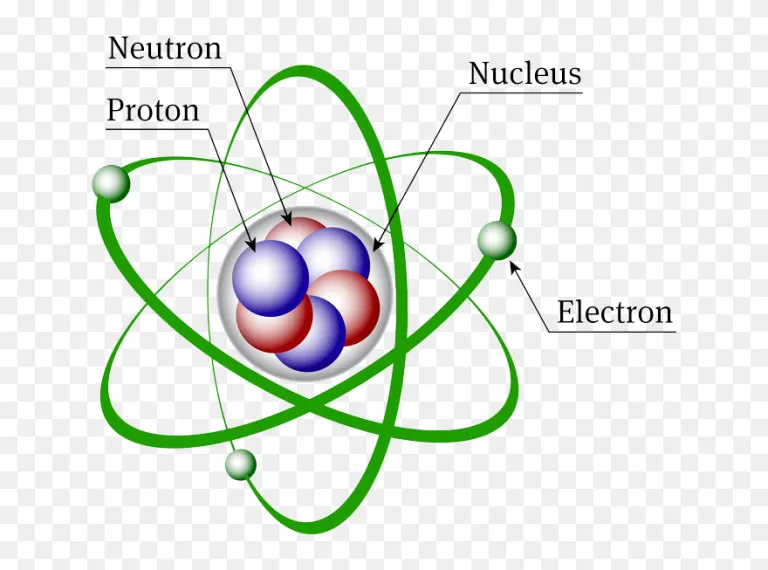
At the heart of every smartphone, every cloud server, and every artificial intelligence model lies a fundamental truth of physics: the behavior of the three subatomic particles—protons, neutrons, and electrons. While these particles were once the exclusive domain of theoretical physicists and high school science textbooks, they have transitioned into the “source code” of modern technology.
In the tech industry, we often discuss high-level abstractions like “The Cloud,” “Machine Learning,” or “Blockchain.” However, the hardware that facilitates these innovations is entirely dependent on our ability to manipulate particles at the subatomic level. Understanding these particles isn’t just about chemistry; it is about understanding the foundation of the digital world. This article explores the technological implications of the three subatomic particles and how their manipulation is driving the next decade of tech trends, from semiconductor miniaturization to the dawn of quantum supremacy.

The Electron: The Foundation of Current Digital Infrastructure
The electron is undoubtedly the most “technological” of the three subatomic particles. Its low mass and negative charge allow it to move relatively freely through conductive materials, a phenomenon we call electricity. For the last century, the tech industry has been built almost entirely on the movement and storage of electrons.
Semiconductors and the Transistor Revolution
The bedrock of all modern software and apps is the transistor. Within a CPU or a GPU, billions of transistors act as tiny switches that control the flow of electrons. When we talk about “7nm” or “3nm” process nodes in the context of Apple’s M-series chips or Nvidia’s AI hardware, we are referring to the physical scale at which we manipulate electron flow.
As we shrink these gates, we encounter a phenomenon known as “electron tunneling,” where electrons jump across barriers because they are packed so tightly together. This is a primary bottleneck in current hardware engineering. Tech giants like TSMC and Intel are currently developing Gate-All-Around (GAA) architectures to better “corral” these electrons, ensuring that our gadgets continue to get faster and more efficient despite reaching the physical limits of silicon.
The Role of Electron Flow in Digital Security and Encryption
On the software side, the way electrons are stored in memory cells (like NAND flash or DRAM) determines how data is encrypted and secured. Modern digital security relies on the stability of these states. Furthermore, hardware-level security—such as Trusted Execution Environments (TEEs)—uses physical isolation to ensure that electron pathways representing sensitive data (like biometric keys) are physically separated from the rest of the processor. Without our precise mastery over the electron, the concept of a “secure digital perimeter” would be physically impossible to implement.
Protons and Neutrons: The Nucleus of Next-Gen Hardware
While electrons handle the “processing,” the heavier particles—protons and neutrons—reside in the nucleus and provide the structural stability and atomic identity of the materials we use. In the tech world, we are seeing a shift where the properties of the nucleus are becoming just as important as the electrons orbiting them.
Ion Trapping and the Quantum Computing Race
In the race to build a functional quantum computer, one of the leading methods is “Ion Trapping.” Companies like IonQ and Honeywell use lasers to strip electrons away from atoms, leaving behind positively charged ions (atoms with more protons than electrons).
These ions are then suspended in electromagnetic fields. Because protons provide the mass and the positive charge, these ions can be held extremely still. Tech researchers then use the “spin” of these nuclei or the remaining electrons to represent “qubits.” Unlike a traditional bit (0 or 1), a qubit can exist in a state of superposition. This breakthrough in manipulating the relationship between protons and electrons is what will eventually allow us to solve AI problems that would take a classical supercomputer ten thousand years to calculate.
Particle Physics in Material Science for AI Hardware
As AI models grow in complexity, we require new materials beyond standard silicon to handle the heat and energy demands. This is where the study of protons and neutrons comes into play in material science. By understanding nuclear density and atomic weight, engineers are developing “Wide Bandgap Semiconductors” using materials like Gallium Nitride (GaN).
GaN chargers and chips are already hitting the consumer market, offering much smaller form factors and higher power efficiency than traditional silicon. The stability of the proton-neutron nucleus in these heavier atoms allows the material to withstand much higher voltages without breaking down, which is essential for the high-density power requirements of modern AI data centers.

Quantum Supremacy: Manipulating Particles for Advanced Software
The tech industry is currently transitioning from the “Electronic Age” to the “Quantum Age.” This transition is defined by our ability to move beyond simply moving electrons and starting to utilize the quantum mechanical properties of all three subatomic particles.
From Bits to Qubits: A New Computational Paradigm
In traditional computing, an electron is either there (1) or it isn’t (0). This binary logic has served us well for decades. However, software developers are now preparing for a world where “Quantum Logic” dominates. By manipulating the “spin” or “polarization” of subatomic particles, we can create software that processes information in parallel on a scale that is difficult to visualize.
This isn’t just a hardware upgrade; it’s a total rewrite of software architecture. Tech leaders are currently investing in “Quantum-Ready” algorithms. These tools are designed to optimize complex systems—such as global logistics, drug discovery, and financial modeling—by leveraging the way subatomic particles can be “entangled.” If two particles are entangled, the state of one (regardless of distance) instantly influences the other. For digital security, this enables “Quantum Key Distribution” (QKD), a method of encryption that is physically impossible to hack because the act of observing the particle changes its state.
The Impact of Quantum Algorithms on Big Data
Big Data is currently hitting a wall. We have more data than we have the “electron-power” to process. By utilizing the subatomic property of “superposition,” quantum-tech tools can scan through massive databases simultaneously rather than sequentially. This will revolutionize AI tools, allowing for real-time language translation and complex simulation of physical systems that are currently too “noisy” for standard binary processors to handle.
Emerging Tech Trends: Subatomic Research and Future Gadgets
As we look toward the future of gadgets and consumer tech, the focus is shifting toward “Nanotechnology,” which is essentially the art of building tech one atom (and one subatomic particle) at a time.
Nanotechnology and the Shrinking Form Factor
We are approaching an era of “Atomic Layer Deposition” (ALD) in manufacturing. This tech allows companies to build sensors and processors by depositing materials one atomic layer at a time. By precisely controlling the number of protons and neutrons in a substrate, we can create “2D materials” like graphene.
Graphene, a layer of carbon atoms just one atom thick, is a tech holy grail. It is more conductive than copper and stronger than steel. The tech reviews of 2030 will likely focus on “Graphene-based gadgets” that are paper-thin, foldable, and have battery lives measured in weeks rather than hours. This is only possible because we have mastered the subatomic interactions between carbon nuclei and their shared electrons.
Sustainable Energy: Powering Tech with Particle Efficiency
Digital sustainability is a major tech trend. Data centers currently consume about 1% of global electricity. To solve this, researchers are looking at “Spintronics.” Instead of moving an electron from point A to point B (which generates heat due to resistance), spintronics simply flips the “spin” of the electron.
This requires almost zero energy and produces no heat. By moving from “charge-based” tech to “spin-based” tech, we can reduce the carbon footprint of the entire internet. This shift represents the ultimate maturation of our relationship with the subatomic world: moving from blunt-force manipulation of electricity to the surgical manipulation of subatomic properties.
Conclusion: The Subatomic Future of Technology
The three subatomic particles—the proton, the neutron, and the electron—are no longer just concepts for the lab. They are the essential components of the modern tech stack. The electron gave us the internet and the smartphone; the proton and neutron are now giving us quantum computing and advanced material science.
As we move forward, the line between “physics” and “technology” will continue to blur. For tech professionals, software developers, and gadget enthusiasts, an awareness of these particles is becoming essential. We are moving into an era where the most powerful tech tools on the planet are being built at the smallest possible scale. The next big “disruptive app” or “revolutionary device” won’t just be a feat of coding; it will be a masterpiece of subatomic engineering. Understanding the three subatomic particles is, quite literally, understanding the future of tech.
aViewFromTheCave is a participant in the Amazon Services LLC Associates Program, an affiliate advertising program designed to provide a means for sites to earn advertising fees by advertising and linking to Amazon.com. Amazon, the Amazon logo, AmazonSupply, and the AmazonSupply logo are trademarks of Amazon.com, Inc. or its affiliates. As an Amazon Associate we earn affiliate commissions from qualifying purchases.