
In the globalized landscape of the 21st century, time is often viewed as a universal constant, governed by the Gregorian calendar and synchronized via Atomic Clocks and Network Time Protocols (NTP). However, for software developers, data scientists, and systems architects working within the Horn of Africa, “now” is a relative term. As of the current Gregorian year 2024, Ethiopia is currently in the year 2016 (approaching the transition to 2017 in September).
This 7-to-8-year difference is not merely a cultural curiosity; it represents a significant technical challenge in the realms of software localization, database management, and algorithmic synchronization. Understanding what year it is in the Ethiopian calendar requires more than a simple subtraction—it requires an exploration into how modern technology bridges the gap between the Ge’ez temporal system and the Western digital standard.

The Architecture of Time: Understanding the Ge’ez Calendar Algorithms
At its core, the Ethiopian calendar (often referred to as the Ge’ez calendar) is a solar calendar that stems from the ancient Alexandrian system. While the Gregorian calendar dominates global commerce, the Ethiopian system remains the primary timekeeping method for over 120 million people. From a technical perspective, the architecture of this calendar demands specific algorithmic handling that differs significantly from standard Unix timestamp conversions.
13 Months and 365 Days: The Computational Logic
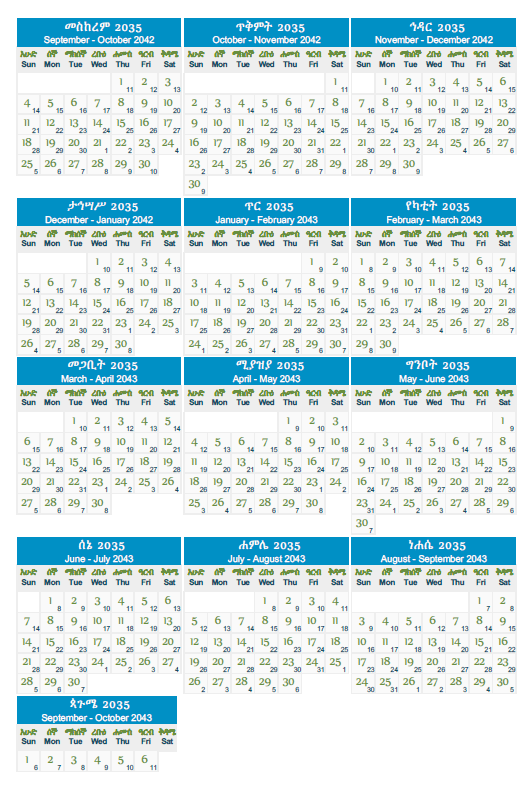
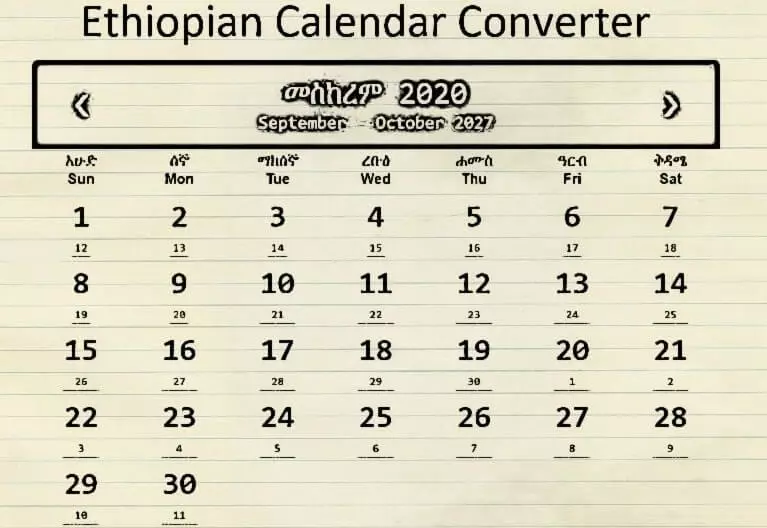
The most striking feature for a software engineer is the month structure. Unlike the Gregorian system, which features months of varying lengths (28 to 31 days), the Ethiopian calendar consists of 12 months of exactly 30 days each, followed by a 13th month known as Pagumē. This 13th month typically has five days, or six days during a leap year.
When building a date-picker UI or a backend scheduling service, developers cannot rely on standard libraries like Python’s datetime or JavaScript’s Date object without specialized wrappers. The logic must account for a fixed-width month system, which simplifies some aspects of arithmetic (e.g., calculating “30 days from now” always lands on the same day of the next month) but complicates integration with external APIs that expect a 12-month array.
The Leap Year Cycle and Epoch Calculations
The 7-to-8-year gap arises from a difference in the calculation of the Annunciation (the birth of Christ). While the Gregorian calendar was adjusted in 1582, the Ethiopian Orthodox Tewahedo Church maintained the ancient calculations.
From a coding standpoint, the “New Year” (Enkutatash) falls on September 11th (or September 12th in a leap year) of the Gregorian calendar. This floating point creates a “conditional offset” in software. For approximately eight months of the Gregorian year, the difference is seven years; for the remaining four months, it is eight years. Hard-coding a “-7” or “-8” integer is a common pitfall in amateur scripts; robust systems must use a reference epoch (the “Era of Incarnation”) to ensure accurate delta calculations across the temporal divide.
Software Localization and the Challenges of Global Internationalization (i18n)
In the tech industry, Internationalization (i18n) and Localization (L10n) are the frameworks that allow software to adapt to regional variations. For a global platform like Facebook, Google, or Microsoft Windows to function in Ethiopia, it must support the eth-ET locale. This involves more than translating text; it requires a fundamental shift in how the operating system perceives the passage of time.
The Role of ICU and CLDR Frameworks
The “International Components for Unicode” (ICU) and the “Common Locale Data Repository” (CLDR) are the backbone of modern software localization. These libraries provide the necessary data for software to display dates in the Ethiopian format. When a user in Addis Ababa opens a spreadsheet, the software queries the CLDR to determine how to format “May 15th.”
However, supporting the Ethiopian calendar is technically “Tier 2” or “Tier 3” for many smaller tech firms. This leads to “Calendar Fragmentation,” where the operating system might show the Gregorian year while local apps show the Ethiopian year. Developers must manually implement the Ethiopic calendar support using specialized libraries such as joda-time for Java or custom wrappers for the Intl.DateTimeFormat object in JavaScript, which finally added support for the ethiopian calendar identifier in recent ECMAScript updates.
JavaScript Date Objects and Ethiopian Interoperability
For web developers, the challenge is often found in the browser. Until recently, the new Date() constructor in JavaScript was strictly Gregorian. To display the year 2016 to an Ethiopian user, developers now utilize the Intl API:
const date = new Date();
console.log(new Intl.DateTimeFormat('en-u-ca-ethiopian', {year: 'numeric'}).format(date));
This technical evolution allows for “Calendar-Agnostic” coding, where the underlying data remains a Unix timestamp, but the presentation layer adapts dynamically to the user’s cultural context.
Mobile Apps and User Experience: Bringing 2016 to the Smartphone
The proliferation of smartphones in East Africa has birthed a niche market for “Calendar Converters” and localized utility apps. Because the Gregorian calendar is used for international business and the Ethiopian calendar for local daily life, the UX (User Experience) of an Ethiopian smartphone is often a hybrid of two different eras.
UX Design for a 13-Month Interface
Designing a calendar UI for the Ethiopian market requires a departure from the standard 7×5 or 7×6 grid used in Western apps. The 13th month, Pagumē, presents a design hurdle: how do you display a month that only lasts 5 or 6 days without creating “dead space” in the interface?
Top-tier localized apps solve this by using fluid grids or “infinite scroll” layouts that prioritize the day and the event over the traditional monthly grid. Furthermore, UX designers must consider “Ethiopic Time,” where the day begins at dawn (6:00 AM Gregorian is 12:00 in Ethiopia). A mobile app that doesn’t account for this 6-hour offset in time-telling will fail, even if it gets the year 2016 correct.
Mapping Ethiopian Dates to Global Standards
For travel and logistics apps (like Ethiopian Airlines or local ride-hailing services like Ride), the backend must perform constant bi-directional mapping. If a user books a flight for “Meskerem 1,” the API must translate that to “September 11” to communicate with global GDS (Global Distribution Systems). This requires a robust middleware layer that handles date conversion at the point of entry and exit, ensuring that “2016” in the database doesn’t trigger a “past date” error in a Gregorian-standard payment gateway.
The Future of Temporal Tech: Blockchain and Distributed Systems
As we move toward decentralized technologies, the way we handle regional time is evolving. Blockchain and AI offer new methods for managing the Ethiopian calendar’s unique requirements, particularly in smart contracts and automated data processing.
Smart Contracts and Regional Timestamping
In a decentralized autonomous organization (DAO) or a smart contract platform operating in Ethiopia, the “execution date” can be a point of contention. If a contract is set to expire in “2017,” does it expire in 2017 Gregorian or 2017 Ethiopian?
To solve this, developers are experimenting with “Oracle-based time feeds.” These are third-party services that provide a verified timestamp for specific regional calendars. By encoding the Ethiopian calendar logic into a smart contract’s immutable code, businesses can automate payments based on local holidays and fiscal years without human intervention. This ensures that a “New Year’s Bonus” is triggered on the Ethiopian New Year, not the Western one.
AI-Driven Temporal Translation
Large Language Models (LLMs) and AI are increasingly being used to bridge the communication gap. Modern AI tools can now ingest documents dated in the Ge’ez calendar and automatically normalize the data into a Gregorian-based dataset for global analysis. This is particularly useful for historical data digitization projects in Ethiopia, where centuries of records are dated using the local system. AI algorithms can identify the context—determining, for instance, if a date refers to the Ethiopian or Gregorian system based on the surrounding Amharic or English text—and apply the correct transformation.
Conclusion: The Technical Value of Temporal Diversity
The question of “what year is it in Ethiopia” is more than a trivia point; it is a testament to the complexity of the digital world. For the tech industry, the existence of the year 2016 in a 2024 world is a reminder that “standardization” is often just a majority consensus, not a universal truth.
As software becomes more inclusive, the goal is not to force the Ethiopian calendar into a Gregorian box, but to build systems flexible enough to support multiple “nows” simultaneously. By mastering the algorithms of the Ge’ez calendar, refining i18n frameworks, and leveraging emerging tech like AI and blockchain, the global tech community can ensure that no matter what year a user believes it is, the software will always be right on time.
aViewFromTheCave is a participant in the Amazon Services LLC Associates Program, an affiliate advertising program designed to provide a means for sites to earn advertising fees by advertising and linking to Amazon.com. Amazon, the Amazon logo, AmazonSupply, and the AmazonSupply logo are trademarks of Amazon.com, Inc. or its affiliates. As an Amazon Associate we earn affiliate commissions from qualifying purchases.