
The minimum wage is a cornerstone of labor policy, designed to ensure a baseline standard of living for workers and to prevent exploitation. In Pennsylvania, like all other states, this mandated hourly pay rate is subject to regular review and adjustment, impacting millions of workers and businesses across the Commonwealth. Understanding the current minimum wage in Pennsylvania, its historical context, its economic implications, and the potential for future changes is crucial for employees, employers, and policymakers alike. This article delves into the intricacies of Pennsylvania’s minimum wage, providing a comprehensive overview of its current status and the factors that influence it.

The Current Minimum Wage Landscape in Pennsylvania
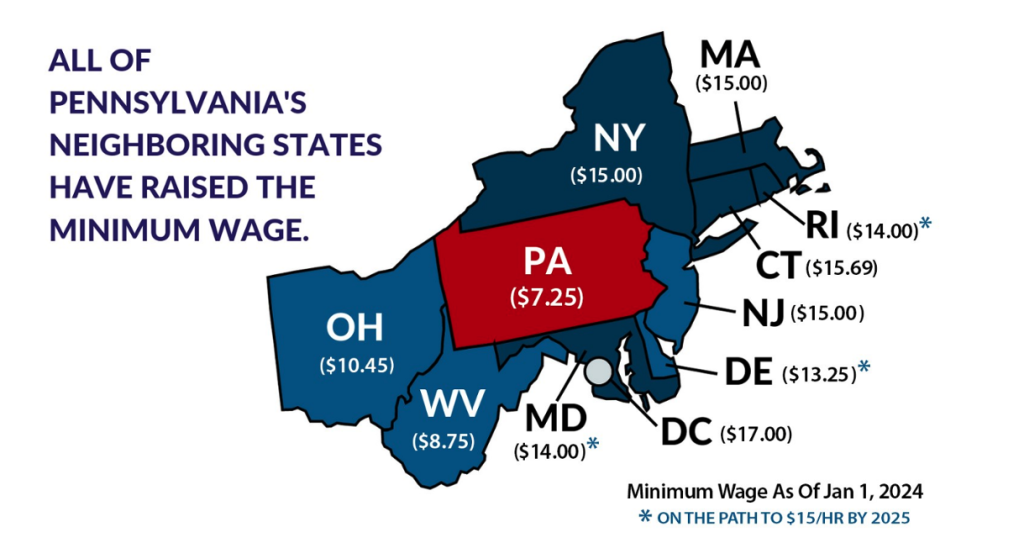
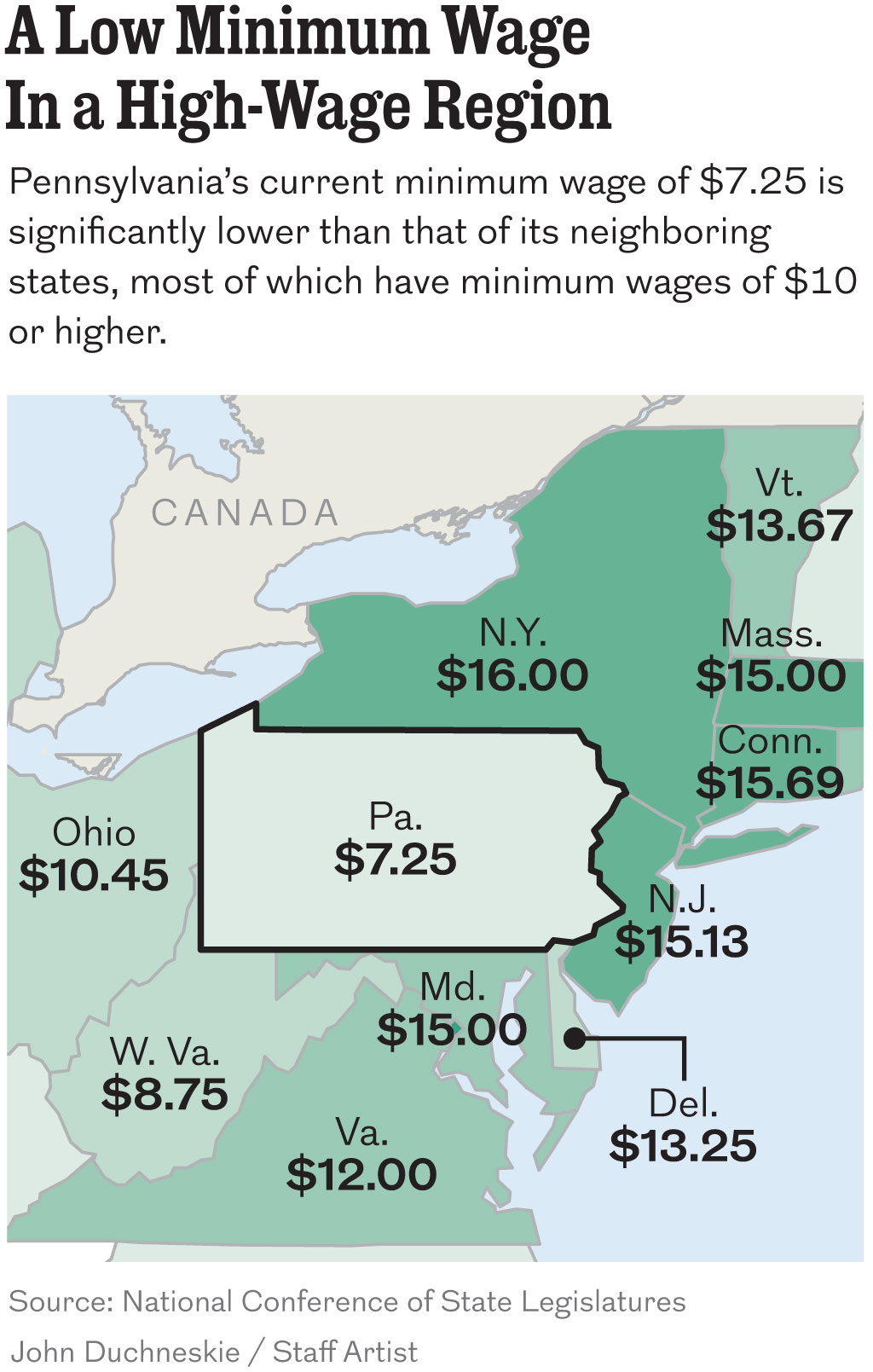
Pennsylvania’s minimum wage is currently set at $7.25 per hour. This rate has remained unchanged since 2009, placing it among a group of states that have not increased their minimum wage in over a decade. This stagnation has led to significant debate about its adequacy in the face of rising living costs and inflation.
Federal vs. State Minimum Wage
It’s important to understand how Pennsylvania’s minimum wage interacts with the federal minimum wage. The Fair Labor Standards Act (FLSA) establishes a federal minimum wage, which is also $7.25 per hour. For states with their own minimum wage laws, employers must pay the higher of the federal or state minimum wage. In Pennsylvania, since the state minimum wage matches the federal rate, employees are protected by the $7.25 per hour floor. However, if a state’s minimum wage were to be higher than the federal rate, employers would be obligated to pay that higher state rate. This principle of paying the higher rate ensures that workers are always afforded the most advantageous minimum wage.
Tipped Employees and the Service Charge Minimum Wage
A crucial distinction exists for tipped employees in Pennsylvania. Under the FLSA, employers can pay tipped employees a lower direct cash wage, provided that the employee’s tips, when added to the direct wage, equal at least the standard minimum wage. This is often referred to as the “tip credit.” In Pennsylvania, the minimum cash wage that an employer can pay a tipped employee is $2.83 per hour. This means that an employer can pay $2.83 per hour directly to a tipped employee, and the employee’s tips are expected to make up the difference to reach the full $7.25 per hour minimum wage.
However, there are important regulations surrounding this practice. If a tipped employee’s tips do not bring their total earnings up to the $7.25 per hour minimum wage for a given workweek, the employer must make up the difference. This ensures that even tipped employees are guaranteed at least the state minimum wage. Furthermore, the definition of a “tipped employee” is generally an employee who customarily and regularly receives more than $30 per month in tips. The specific rules and record-keeping requirements for tipped employees can be complex, and employers must be diligent in their compliance to avoid violations.
Exemptions and Special Provisions
Not all employees in Pennsylvania are covered by the minimum wage law. Certain categories of workers are exempt from minimum wage requirements, or are subject to special provisions. These exemptions are typically based on the nature of the work, the employer, or the employee’s status. Common exemptions can include:
- Executive, Administrative, and Professional Employees: Bona fide executive, administrative, and professional employees who meet certain salary and duties tests are typically exempt from minimum wage and overtime requirements.
- Learners and Apprentices: Special minimum wage rates may apply to learners and apprentices who are undergoing training. These rates are usually lower than the standard minimum wage but are intended to facilitate skills development.
- Individuals with Disabilities: In some cases, employers may be able to pay a reduced wage to individuals with disabilities, provided that a special certificate is obtained from the U.S. Department of Labor. This is intended to allow individuals with disabilities to work and earn income in a manner that reflects their productive capacity.
- Certain Agricultural Workers: Some agricultural employees may be subject to different minimum wage rules or exemptions.
- Independent Contractors: Individuals classified as independent contractors, rather than employees, are not covered by minimum wage laws. However, the classification of workers can be a complex legal issue, and misclassification can lead to significant penalties for employers.
It is crucial for both employers and employees to understand these potential exemptions and special provisions to ensure accurate wage payments and compliance with labor laws.
The Economic Debate Surrounding Pennsylvania’s Minimum Wage
The debate over the minimum wage in Pennsylvania is deeply intertwined with broader economic discussions about poverty, income inequality, employment levels, and business competitiveness. Proponents of increasing the minimum wage argue that it is a vital tool for lifting low-wage workers out of poverty, reducing reliance on public assistance, and stimulating the economy through increased consumer spending. Opponents, conversely, express concerns that raising the minimum wage could lead to job losses, reduced business profitability, and increased prices for consumers.
Arguments for Increasing the Minimum Wage
Advocates for a higher minimum wage often point to the fact that the current $7.25 per hour rate has not kept pace with the cost of living. In many parts of Pennsylvania, earning the minimum wage makes it exceedingly difficult, if not impossible, to afford basic necessities such as housing, food, healthcare, and transportation. This leads to what is often termed the “working poor,” individuals who are employed but still struggle to make ends meet.
Increasing the minimum wage, according to proponents, can have several positive economic effects:
- Poverty Reduction: A higher minimum wage directly increases the income of low-wage workers, lifting many households above the poverty line.
- Reduced Income Inequality: By narrowing the gap between the highest and lowest earners, a higher minimum wage can contribute to a more equitable distribution of income.
- Increased Consumer Spending: Workers with more disposable income are likely to spend more on goods and services, which can boost demand and economic growth.
- Improved Worker Morale and Productivity: Fairer wages can lead to increased job satisfaction, reduced employee turnover, and higher productivity.
- Decreased Reliance on Public Assistance: When workers earn a living wage, their need for government assistance programs like food stamps and housing subsidies can decrease, potentially saving taxpayer money.
Many studies, including those from the Congressional Budget Office and various academic researchers, have analyzed the potential impacts of minimum wage increases. While results vary, a significant body of research suggests that moderate increases in the minimum wage have had relatively small negative effects on overall employment, while providing substantial benefits to low-wage workers.
Arguments Against Increasing the Minimum Wage
Conversely, critics of minimum wage hikes often raise concerns about the potential negative consequences for businesses, particularly small businesses, and the broader job market. Their arguments typically center on the following points:
- Job Losses: Businesses, especially those with thin profit margins, may respond to higher labor costs by reducing their workforce through layoffs, slower hiring, or automation. This is particularly a concern in industries with a high proportion of low-wage workers, such as retail and hospitality.
- Reduced Business Competitiveness: Businesses operating in areas with higher minimum wages might be at a disadvantage compared to those in neighboring regions with lower wage requirements.
- Increased Prices for Consumers: To offset higher labor costs, businesses may pass these expenses onto consumers in the form of higher prices for goods and services. This could lead to inflation and reduce the purchasing power of all consumers, including those who received a wage increase.
- Reduced Entry-Level Opportunities: Some argue that a higher minimum wage can make it more difficult for young or inexperienced workers to find entry-level jobs, as employers may be less willing to invest in training and development for more expensive labor.
- Impact on Small Businesses: Small businesses often operate with tighter budgets and may find it more challenging to absorb increased labor costs compared to larger corporations.
These concerns highlight the complex trade-offs involved in setting minimum wage policy. The optimal minimum wage level is often a subject of ongoing debate, with different economic models and empirical studies offering varying conclusions.
The Legislative Process and Future of Minimum Wage in PA
The minimum wage in Pennsylvania is established and can be changed through legislative action. Unlike some states that have automatic indexing of their minimum wage to inflation or other economic indicators, Pennsylvania’s minimum wage requires an act of the state legislature and the governor’s signature to be modified. This means that any change to the minimum wage involves a political and legislative process.
Historical Context of Pennsylvania’s Minimum Wage
Pennsylvania’s minimum wage has a history of adjustments. The current rate of $7.25 per hour was last set in 2009, aligning with the federal minimum wage at that time. Prior to that, the state minimum wage had been increased periodically. The journey to the current rate involved legislative debates, the influence of advocacy groups, and consideration of economic conditions prevailing at the time. Understanding this history provides valuable context for current discussions about the minimum wage.
Efforts to Increase the Minimum Wage in Pennsylvania
In recent years, there have been numerous legislative efforts and advocacy campaigns aimed at increasing Pennsylvania’s minimum wage. Various bills have been introduced in the state legislature proposing gradual increases to the minimum wage, often suggesting a phased approach to reach a higher target rate, such as $12 or $15 per hour. These proposals are typically met with significant debate, with proponents highlighting the economic benefits for workers and opponents voicing concerns about the potential negative impacts on businesses.
The political landscape plays a significant role in the prospects of minimum wage increases. The composition of the state legislature and the governor’s stance on labor issues are key factors that determine whether such legislation can advance. Public opinion and the influence of labor unions and business organizations also contribute to the ongoing dialogue.
Potential Future Trends and Considerations
The future of the minimum wage in Pennsylvania remains a subject of active discussion. Several factors will likely influence any future changes:
- Economic Conditions: The overall health of the Pennsylvania economy, including inflation rates, unemployment levels, and wage growth, will undoubtedly play a role in policy decisions.
- Advocacy and Public Pressure: Continued advocacy from labor groups, worker organizations, and concerned citizens can exert significant pressure on lawmakers to address the issue.
- National Trends: Developments in other states and at the federal level regarding minimum wage policy can also influence Pennsylvania’s approach.
- Research and Data: Ongoing economic research on the impact of minimum wage laws will continue to inform the debate and provide data for policymakers.
As living costs continue to rise, the pressure to adjust Pennsylvania’s minimum wage is likely to persist. Whether and how the state will move forward will depend on a complex interplay of economic realities, political will, and ongoing public discourse. For businesses, staying informed about potential legislative changes and economic trends is essential for effective planning and compliance. For workers, understanding their rights and the current minimum wage is a crucial step in ensuring fair compensation.
aViewFromTheCave is a participant in the Amazon Services LLC Associates Program, an affiliate advertising program designed to provide a means for sites to earn advertising fees by advertising and linking to Amazon.com. Amazon, the Amazon logo, AmazonSupply, and the AmazonSupply logo are trademarks of Amazon.com, Inc. or its affiliates. As an Amazon Associate we earn affiliate commissions from qualifying purchases.