
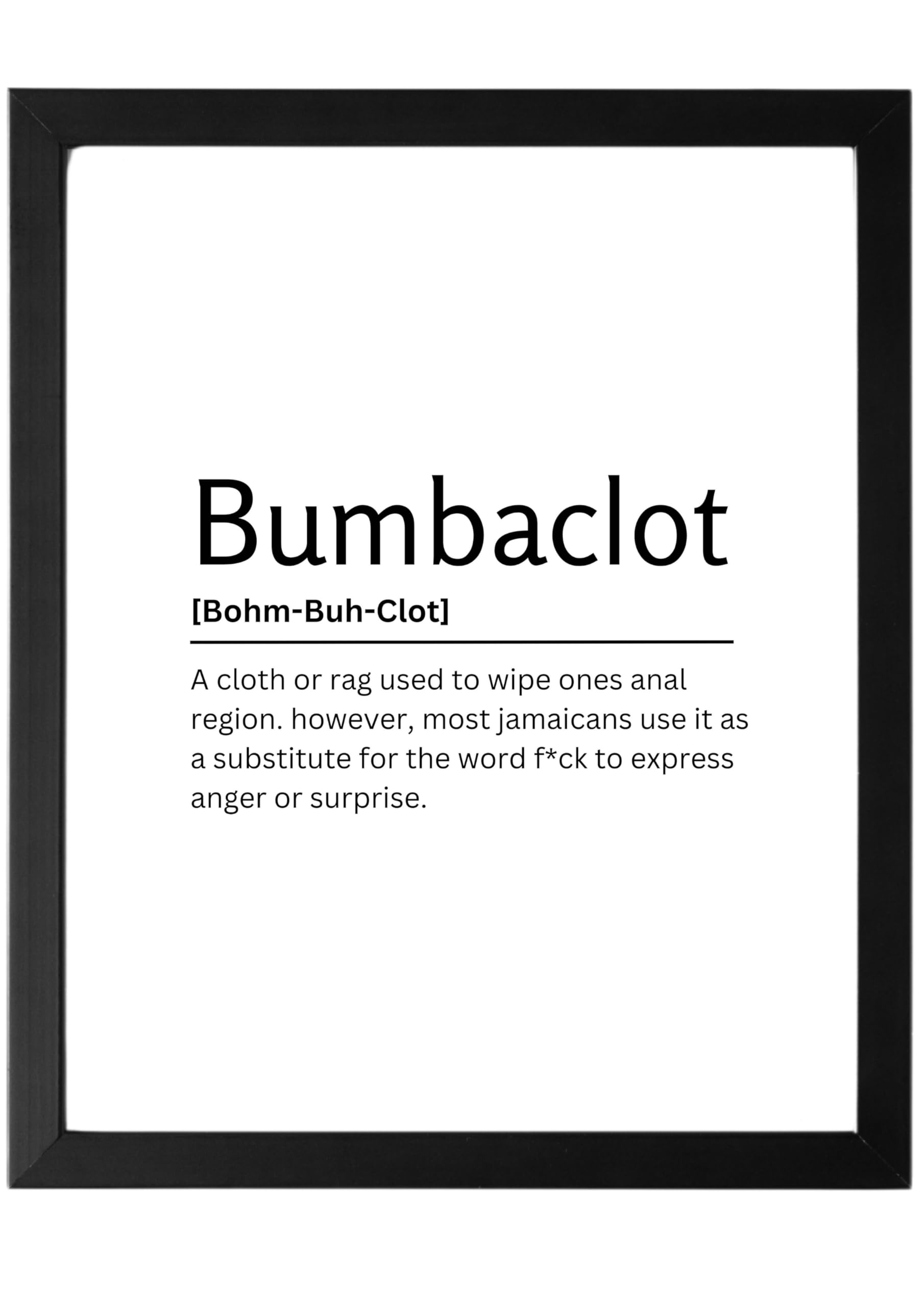
In the rapidly evolving landscape of digital communication, few phenomena highlight the intersection of culture and technology as vividly as the viral proliferation of regional slang. The term “bomboclat” (often spelled bumboclaat), a Jamaican Patois expletive, has transitioned from a specific cultural context to a ubiquitous digital shorthand across platforms like X (formerly Twitter), TikTok, and Instagram. However, for technology professionals, developers, and data scientists, the “bomboclat” phenomenon is more than a meme; it represents a complex case study in Natural Language Processing (NLP), algorithmic prioritization, and the challenges of automated content moderation.
As we move deeper into an era defined by Large Language Models (LLMs) and hyper-personalized discovery engines, understanding how non-standard linguistic tokens like “bomboclat” propagate through digital systems is essential. This article explores the technical mechanics behind the rise of such terms, the AI-driven analysis of cultural vernacular, and what this tells us about the future of human-computer interaction.
The Digital Lexicon: Understanding Slang through the Lens of Natural Language Processing (NLP)
At its core, the journey of a word from a specific dialect to a global digital trend is a data event. In the realm of computational linguistics, terms like “bomboclat” present unique challenges for traditional NLP models which were historically trained on “Standard” English corpora like Wikipedia or news archives.
How Modern LLMs Decode Cultural Nuance
Modern transformer-based models, such as GPT-4 or Google’s Gemini, represent words as high-dimensional vectors in a semantic space. When a term like “bomboclat” enters the training set, the model doesn’t just learn a dictionary definition; it learns “contextual embeddings.” In its original Jamaican context, the word is an intensifier or an expletive. However, in the digital tech stack of social media, its vector position has shifted toward “reactionary surprise” or “caption prompt.”
AI models now use “attention mechanisms” to weigh the importance of surrounding words. When the tech detects “bomboclat” paired with a surreal image, the NLP engine identifies it not as a profanity, but as a functional token—a signal for engagement. This ability of AI to parse subtext over literal definition marks a significant leap in how software understands human expression.
The Challenge of Contextual Ambiguity in Machine Learning
One of the primary hurdles in tech development is “polysemy”—when a word has multiple meanings. For developers building sentiment analysis tools, “bomboclat” is a nightmare variable. Depending on the user’s intent, it can signal anger, joy, shock, or simply be a placeholder to drive “quote-tweet” engagement.
Machine learning models must be fine-tuned using Reinforcement Learning from Human Feedback (RLHF) to recognize that the digital usage of the word often strips it of its original weight, transforming it into a “syntactic filler.” This process of teaching machines to recognize “internet-speak” is vital for the development of more sophisticated virtual assistants and customer service bots that need to navigate diverse global dialects without misinterpreting intent.
The Algorithm of Virality: Why Terms like “Bomboclat” Dominate Platforms
The technical reason “bomboclat” became a global trend is rooted in the architecture of social media recommendation engines. These algorithms are programmed to maximize “dwell time” and “interaction rates.”
Sentiment Analysis and the Spread of Expressive Language
Algorithms on platforms like TikTok and X utilize sentiment analysis to categorize content. High-arousal emotions—whether positive or negative—are prioritized because they are more likely to trigger a user response. “Bomboclat,” as an intensifier, functions as a high-arousal linguistic trigger.
When a user posts a photo with the caption “bomboclat,” the platform’s backend identifies the post as a “reaction prompt.” Because the term is linguistically flexible, it encourages a high volume of replies and shares. The algorithm interprets this flurry of activity as “high-quality engagement,” further pushing the content into the “For You” pages of users who may not even understand the word’s origin. This creates a feedback loop where the tech actually facilitates the “de-contextualization” of cultural language in favor of engagement metrics.
User Engagement Metrics and Viral Content Loops
From a software engineering perspective, the viral “bomboclat” meme (often used as a replacement for “Sco pa tu mana”) functioned as a standardized input for a variable output. In programming terms, the word acted as a “function call” where the “argument” was the image attached.

This standardization allows the platform’s discovery engine to group similar content types. If the system recognizes a pattern of “slang + image = high share rate,” it will programmatically favor that structure. For developers looking to optimize content delivery networks (CDNs), understanding these linguistic patterns is key to predicting traffic spikes and optimizing server-side resources during viral events.
Content Moderation and the Tech of Linguistic Filtering
The use of “bomboclat” poses a significant technical challenge for automated content moderation (ACM) systems. How does a global tech company decide whether a word is a slur, a profanity, or a harmless meme?
Automated Flagging vs. Cultural Context
In the early days of digital security and moderation, tech platforms relied on simple “blacklists.” A word like “bomboclat,” being an expletive in its native Patois, would have been automatically flagged or shadow-banned. However, modern moderation tech uses “fuzzy logic” and “contextual classification.”
Developers now build moderation layers that analyze the “social graph” of a post. If the term is being used within a community that frequently uses Caribbean vernacular, the system may assign it a “low-risk” score. If it is used in a derogatory manner toward a specific individual, the “hate speech” classifier—trained on toxic language patterns—might intervene. This shift from static filtering to dynamic, AI-driven moderation is a cornerstone of modern digital safety engineering.
The Role of Bias in AI-Driven Content Policies
A critical issue in the tech industry is “algorithmic bias.” If the developers training an AI are not familiar with Caribbean culture or African-American Vernacular English (AAVE), the model may disproportionately flag those users.
To combat this, tech firms are increasingly using “diverse data sets” to ensure that their software recognizes regional nuances. The “bomboclat” trend forced many tech organizations to re-evaluate their linguistic models, leading to the development of more inclusive “Global English” NLP frameworks. This ensures that the technology doesn’t inadvertently silence cultural expression due to a lack of technical nuance.
The Future of Digital Communication: Towards More Culturally Aware Technology
The evolution of “bomboclat” from a local term to a global digital token is a precursor to the future of “Hyper-Local/Global” tech interfaces. As we move toward the Metaverse and more immersive digital spaces, the way software handles language will become increasingly personalized.
Hyper-Personalized UX through Vernacular Adaptation
We are approaching a point where User Experience (UX) design will be linguistically adaptive. Imagine an AI interface that adjusts its tone and vocabulary based on the user’s regional dialect or preferred digital slang. For a user in Kingston, the AI might process “bomboclat” with its original weight; for a Gen-Z user in London, it might treat it as a meme.
This level of personalization requires immense computational power and real-time data processing. It involves “Edge Computing,” where linguistic processing happens closer to the user to reduce latency, ensuring that the AI can respond to slang and colloquialisms in real-time conversations.
Bridging the Gap between Data and Human Expression
The ultimate goal of the next generation of software is to bridge the gap between “cold” data and the “warmth” of human culture. The tech industry is moving away from seeing language as a fixed set of rules and toward seeing it as a fluid, data-driven ecosystem.
By analyzing the lifecycle of terms like “bomboclat,” software architects can build better social tools, more accurate translation apps, and more empathetic AI. The lesson for the tech world is clear: to build the future of global communication, the software must be as culturally fluid as the people using it.
In conclusion, “bomboclat” is more than a viral curiosity. It is a testament to how technology captures, amplifies, and sometimes complicates human culture. For those in the tech sector, it serves as a reminder that behind every trending hashtag is a complex web of algorithms, data structures, and machine learning models that are constantly learning what it means to be human in a digital age. As we continue to refine these technologies, the focus must remain on creating systems that are not just “smart,” but culturally intelligent.
aViewFromTheCave is a participant in the Amazon Services LLC Associates Program, an affiliate advertising program designed to provide a means for sites to earn advertising fees by advertising and linking to Amazon.com. Amazon, the Amazon logo, AmazonSupply, and the AmazonSupply logo are trademarks of Amazon.com, Inc. or its affiliates. As an Amazon Associate we earn affiliate commissions from qualifying purchases.