
A genogram is a powerful visual tool that transcends simple family trees, offering a rich, multi-generational map of family relationships, dynamics, and patterns. Far more than just a collection of names and dates, it delves into the intricate web of connections that shape individuals and families over time. While its roots lie in therapeutic settings, the principles and applications of genograms are increasingly recognized in various fields, including research, social work, and even organizational development. Understanding what a genogram is, and how to interpret its symbolic language, unlocks a deeper understanding of familial influences and their impact on individuals.

The Foundation: Constructing Your Genogram
At its core, a genogram is a diagram that records information about a family across at least three generations. This process involves more than just listing individuals; it requires careful consideration of how these individuals relate to each other, their health histories, significant life events, and the emotional landscape of the family. The visual representation allows for patterns to emerge that might otherwise remain hidden in verbal accounts or anecdotal evidence.
Essential Symbols and Their Meanings
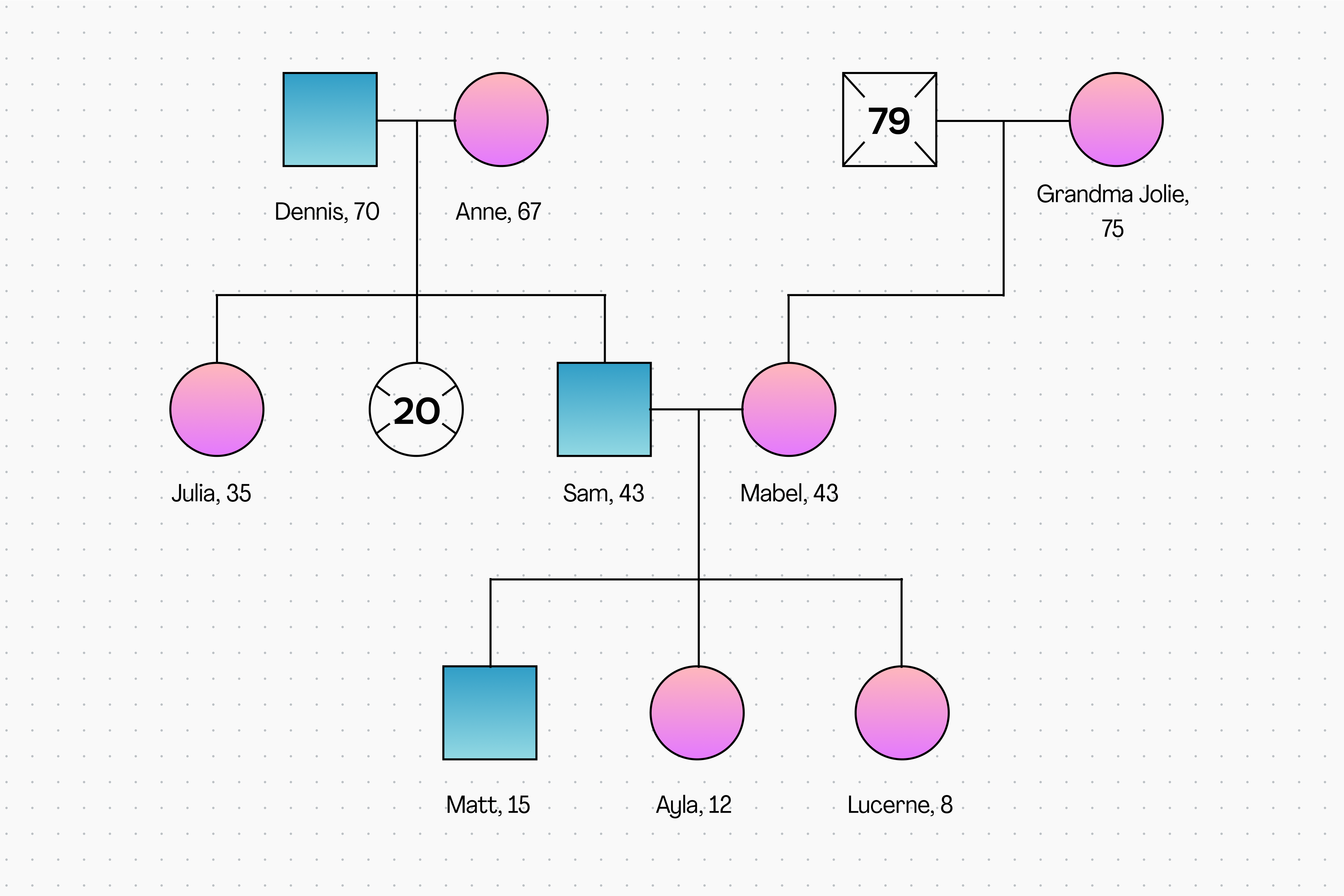
The true power of a genogram lies in its standardized symbolic language, which allows for the efficient and clear communication of complex information. These symbols are universally recognized within the fields that utilize genograms, making them an effective tool for collaboration and analysis.
- Individuals: The most basic symbols represent individuals. Males are typically depicted as squares, and females as circles. Individuals currently living are often represented with a solid outline, while those who have passed away might have a crossed-out symbol or a different colored outline. The age of an individual can be indicated within the symbol, or by placing a line representing their lifespan.
- Relationships: The lines connecting individuals are crucial for depicting the nature of their relationships.
- Marital/Partnership Bonds: A simple, solid line connecting two individuals represents a marriage or committed partnership. A dotted line can indicate a separation or divorce, and a double line might signify a remarriage.
- Family Bonds: Vertical lines connecting parents to their children signify lineage. Multiple children are shown connected to a horizontal line extending from the parental bond, with birth order indicated from left to right.
- Emotional Connections: The type of line between individuals can also convey the quality of their emotional relationship.
- A close, loving relationship might be represented by a solid line with no additional markings.
- A conflicted or tense relationship is often depicted with a jagged or broken line.
- A estranged or cut-off relationship is shown with a line that ends abruptly, often with a slash through it.
- A very close or enmeshed relationship might be indicated with a thick or double solid line.
- Other Significant Information: Beyond basic relationships and emotional connections, genograms allow for the inclusion of a wealth of additional information:
- Health History: Specific symbols or notations can be used to represent significant health conditions, such as heart disease, diabetes, or mental health issues. This allows for the identification of hereditary predispositions.
- Significant Life Events: Major life transitions or traumatic events, such as deaths, significant illnesses, accidents, geographical moves, or substance abuse, can be noted on the diagram to illustrate their impact on family dynamics.
- Demographic Data: Information like occupation, religious beliefs, or education level can be incorporated to provide a more comprehensive picture of family members and their societal contexts.
The Process of Creation
Creating a genogram is an iterative process that typically involves gathering information from multiple family members, if possible, and consulting existing records. The initial construction might involve a series of interviews or questionnaires. It’s important to approach this with sensitivity and respect, as discussions about family history can evoke strong emotions.
- Identify the “Proband”: The genogram is usually centered around a specific individual, known as the “proband” or “index person.” This is the individual whose family history is being mapped out.
- Map the Immediate Family: Begin by drawing the proband and their parents, siblings, and children.
- Extend to Grandparents: Work upwards to include the grandparents, and then outwards to aunts, uncles, and cousins. The goal is to capture at least three generations.
- Incorporate Relationship Dynamics: Carefully document the quality of relationships between individuals using the symbolic language described above. This is often the most nuanced and insightful part of the process.
- Add Significant Information: Systematically record health histories, major life events, and other relevant details for each family member.
- Review and Refine: Once the initial diagram is complete, it’s crucial to review it for accuracy and completeness. This might involve further conversations with family members to clarify information or add missing details. The genogram is not a static document; it can evolve as new information comes to light or family circumstances change.
Beyond the Basics: Uncovering Family Dynamics and Patterns
The real value of a genogram emerges not just from its creation, but from the analysis and interpretation of the information it presents. By visually mapping out family structures and interactions, genograms provide a powerful lens through which to understand recurring patterns, potential strengths, and areas of challenge within a family system.
Identifying Intergenerational Patterns
One of the most significant contributions of genograms is their ability to illuminate intergenerational patterns. These are behaviors, attitudes, beliefs, or even health conditions that are transmitted from one generation to the next.
- Relationship Styles: A genogram might reveal consistent patterns in how romantic relationships are formed and maintained across generations. For example, if multiple generations have experienced similar relationship conflicts or divorce patterns, it suggests a potential inherited dynamic.
- Communication Styles: The way family members communicate, or their propensity to avoid difficult conversations, can also be observed. A genogram might show a pattern of emotional distance or a tendency to suppress feelings, which can impact current relationships.
- Coping Mechanisms: Families often develop characteristic ways of coping with stress or adversity. Genograms can highlight these patterns, such as a reliance on substance use, emotional withdrawal, or excessive caregiving, which may be passed down.
- Role Distribution: The roles individuals adopt within a family, such as the “caretaker,” the “rebel,” or the “peacemaker,” can also show generational continuity. Observing these roles can provide insight into the underlying needs and expectations within the family system.
Recognizing Strengths and Resilience Factors
While genograms are often used to identify areas of concern, they are equally valuable in highlighting family strengths and sources of resilience. Identifying these positive aspects can be a powerful tool for intervention and growth.
- Support Systems: The presence of strong, supportive relationships within the family, even across generations, is a significant asset. A genogram can visually represent these supportive bonds, reinforcing their importance.
- Positive Role Models: Observing individuals who have successfully navigated challenges or demonstrated positive traits can provide inspiration and demonstrate that positive outcomes are possible.
- Coping Strategies that Work: Identifying effective coping mechanisms that have been passed down or developed within the family can be a source of strength. These are strategies that have helped family members overcome adversity.
- Cultural and Familial Traditions: The continuation of positive cultural or familial traditions can provide a sense of belonging, identity, and continuity, contributing to family resilience.
Understanding Potential Risk Factors and Areas for Intervention
The ability of a genogram to reveal recurring issues also makes it an indispensable tool for identifying potential risk factors and areas where intervention might be most beneficial.
- Hereditary Health Risks: As mentioned, mapping out family health histories can highlight predispositions to certain genetic conditions, allowing for proactive health management and early detection.
- Cycles of Abuse or Neglect: Genograms can sometimes reveal patterns of abuse, neglect, or dysfunction that have been perpetuated across generations. Identifying these cycles is the first step toward breaking them.
- Mental Health Challenges: The prevalence of mental health issues within a family can be observed, prompting further investigation and support for individuals who may be at risk.
- Unresolved Conflicts: Persistent unresolved conflicts or unresolved trauma can cast a long shadow over family dynamics. Genograms can make these lingering issues visible, creating an opportunity for healing and resolution.
Applications of Genograms in Various Disciplines
The utility of genograms extends far beyond individual therapeutic counseling. Their comprehensive nature and ability to visualize complex human systems have led to their adoption in a variety of professional and academic fields.
Clinical Psychology and Therapy
This is perhaps the most well-known application of genograms. Therapists utilize them to gain a deeper understanding of a client’s familial background and its impact on their current psychological state.
- Individual Therapy: For individuals struggling with issues such as anxiety, depression, or relationship difficulties, a genogram can help them understand how past family experiences might be contributing to their present challenges. It provides a framework for exploring intergenerational transmission of trauma, coping mechanisms, and relationship patterns.
- Family Therapy: In family therapy, genograms are invaluable for visualizing the dynamics and relationships within the entire family system. They can help family members see how their individual behaviors are influenced by broader family patterns and can facilitate communication and understanding between members.
- Assessing Intergenerational Trauma: Genograms are particularly effective in identifying and addressing intergenerational trauma, where the effects of traumatic experiences are passed down through family lineages. By mapping these influences, therapists can develop targeted interventions to help families heal.
Social Work and Case Management
Social workers frequently employ genograms in their practice to assess the needs of individuals and families and to develop effective intervention plans.
- Client Assessment: When working with clients facing various challenges, such as poverty, substance abuse, or domestic violence, a genogram provides a comprehensive overview of their support systems, potential stressors, and historical context. This holistic view is crucial for effective case management.
- Identifying Support Networks: Genograms can reveal the presence or absence of strong familial support networks, which are critical for an individual’s well-being and ability to overcome adversity. This information guides efforts to strengthen or build these networks.
- Intervention Planning: By understanding the complex interplay of family dynamics and historical factors, social workers can create more tailored and effective intervention plans that address the root causes of problems.
Research and Academic Study
The structured and visual nature of genograms makes them a valuable tool for researchers studying family dynamics, sociology, and public health.
- Studying Family Dynamics: Researchers can use genograms to study specific family phenomena across large populations, such as the intergenerational transmission of mental illness, parenting styles, or socioeconomic status.
- Epidemiological Studies: In public health research, genograms can be used to track the prevalence of diseases or health behaviors within families and to identify potential genetic or environmental risk factors.
- Qualitative Research: Genograms can serve as a rich source of qualitative data, providing insights into the subjective experiences and perceptions of family members.
Organizational Development and Human Resources
While less common, the principles of genograms can be adapted to understand organizational dynamics.
- Understanding Team Dynamics: In a metaphorical sense, a “team genogram” could be constructed to map the history, relationships, and communication patterns within a work team or department, helping to identify potential conflicts or areas for improved collaboration.
- Leadership Succession: Understanding the historical relationships and influential figures within an organization can provide context for leadership succession planning.

The Future of Genograms: Integration and Evolution
As our understanding of human systems deepens and technology advances, the role and application of genograms are likely to continue evolving. The core principles of visualizing relationships and intergenerational patterns will remain vital, but the methods of creation and analysis may become more sophisticated.
The increasing interconnectedness of families, often spanning geographical distances, necessitates tools that can bridge these gaps. Digital platforms and software are emerging that allow for the collaborative creation and sharing of genograms, making them more accessible and dynamic. These tools can incorporate richer multimedia elements, such as video clips or audio recordings, to further enhance the depth of information captured.
Furthermore, as fields like behavioral genetics and epigenetics gain prominence, genograms may become even more critical in bridging the gap between observable family patterns and underlying biological influences. The visual representation of inherited traits and environmental exposures can provide valuable data for these emerging areas of study.
In conclusion, the genogram is a versatile and profound tool that offers a unique perspective on the intricate tapestry of family life. Whether used in clinical settings to foster healing, in social work to guide interventions, or in research to uncover societal patterns, its ability to illuminate the past and inform the present makes it an enduring and invaluable resource for understanding ourselves and the families that shape us.
aViewFromTheCave is a participant in the Amazon Services LLC Associates Program, an affiliate advertising program designed to provide a means for sites to earn advertising fees by advertising and linking to Amazon.com. Amazon, the Amazon logo, AmazonSupply, and the AmazonSupply logo are trademarks of Amazon.com, Inc. or its affiliates. As an Amazon Associate we earn affiliate commissions from qualifying purchases.