
The Tesla Cybertruck is perhaps the most polarizing piece of industrial design released in the last decade. While its “Exoskeleton” stainless-steel exterior captures the most headlines, the interior represents a radical departure from traditional automotive engineering. To understand what the inside of a Cybertruck looks like is to understand a shift in the philosophy of vehicle design—where the cabin is no longer a cockpit for a driver, but a mobile computational environment.
For tech enthusiasts and early adopters, the interior of the Cybertruck is a masterclass in minimalism, powered by advanced software and hardware integration that blurs the line between a utility vehicle and a high-end workstation. From its steer-by-wire system to its distributed computing power, every element of the Cybertruck’s cabin serves a functional, tech-forward purpose.

The Minimalist Command Center: Software and Interface Design
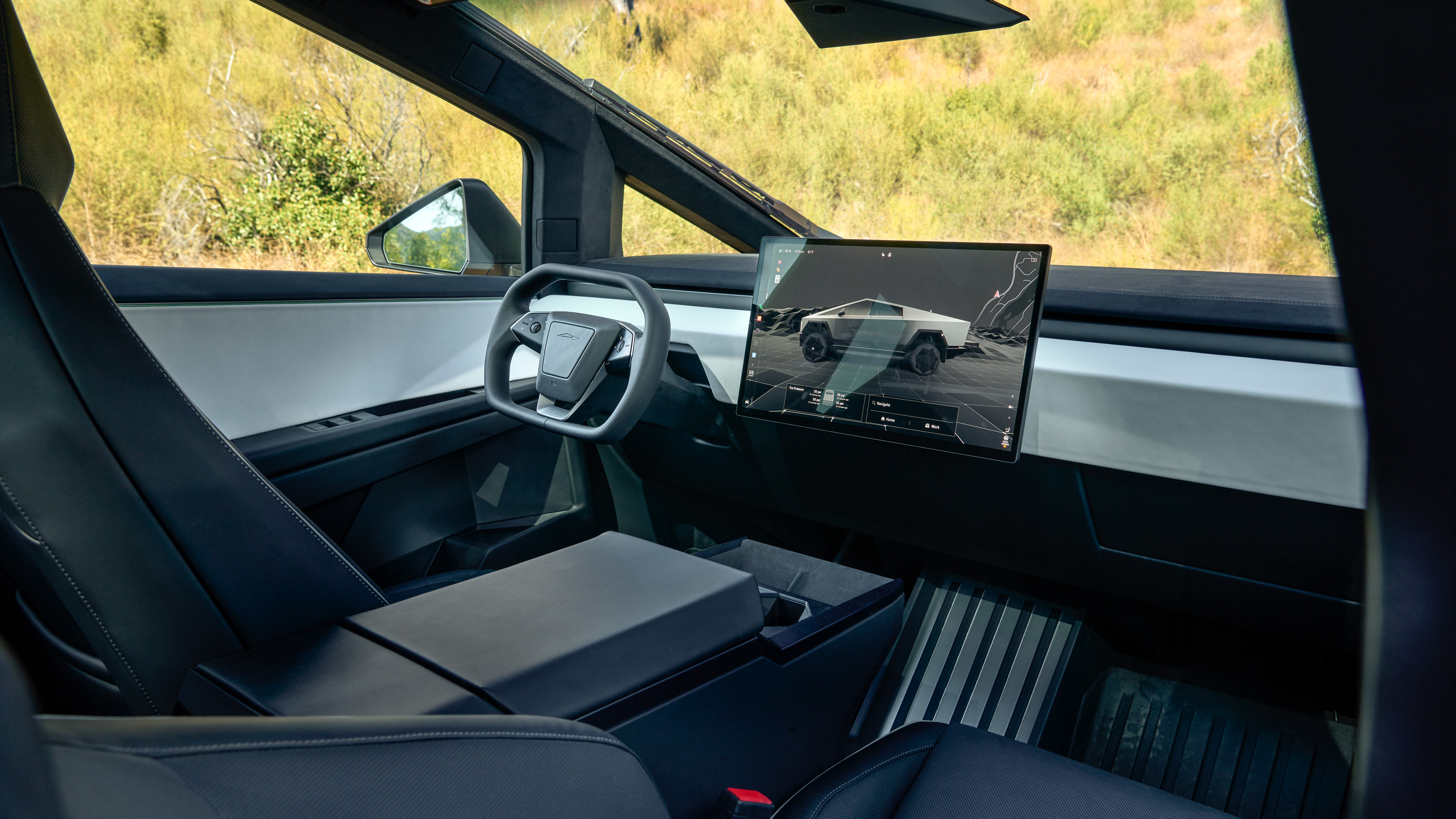
When you step inside the Cybertruck, the most striking feature is the absence of almost everything. There are no stalks on the steering column, no physical HVAC vents, and no dashboard gauges. This is not just an aesthetic choice; it is a software-first engineering decision. The vehicle’s entire functionality is consolidated into a centralized digital interface.
The 18.5-Inch Infinity Display
The heart of the Cybertruck is its massive 18.5-inch horizontal touchscreen. Unlike the screens found in the Model 3 or Model Y, the Cybertruck’s display features a bespoke User Interface (UI) designed to match the angular, “cyber” aesthetic of the vehicle. The resolution is crisp, and the latency is virtually non-existent, powered by a custom-designed AMD Ryzen processor.
This screen handles everything: gear selection (shifting from Park to Drive via a swipe on the screen), suspension height adjustment, the motorized tonneau cover controls, and even the “Bioweapon Defense Mode” air filtration system. For the tech-focused user, the UI provides a 3D real-time rendering of the truck’s surroundings, utilizing the vehicle’s suite of cameras to provide a digital twin of the environment on the display.
Custom UI and Ecosystem Integration
The software ecosystem inside the Cybertruck is deeply integrated with Tesla’s proprietary OS. It supports seamless over-the-air (OTA) updates that can alter the truck’s performance, interface, and safety features overnight. The infotainment system is essentially a high-end gaming PC; it supports AAA gaming titles through the integrated Steam platform, allowing passengers to play graphics-intensive games using the truck’s processing power while waiting at a Supercharger.
Furthermore, the interface manages the “Tesla Theater,” which integrates streaming services like Netflix, YouTube, and Twitch. The software also includes a “Camp Mode,” which optimizes the interior climate and power consumption for overnight stays, showing how the cabin is designed to be a versatile living space managed by code.
Engineering the Cabin: Hardware and Connectivity
Beyond the pixels on the screen, the hardware architecture of the Cybertruck’s interior represents a massive leap in automotive electronics. Tesla has moved away from the traditional 12-volt lead-acid battery system to a more efficient 48-volt architecture. This technical shift allows for thinner wiring throughout the cabin, reducing weight and increasing the efficiency of the electronics.
Steer-by-Wire and the Yoke Philosophy
One of the most innovative technical features visible from the driver’s seat is the steering system. The Cybertruck utilizes a full steer-by-wire system, meaning there is no physical mechanical link between the steering wheel (a “squircle” or yoke-hybrid design) and the front wheels. Instead, sensors detect the driver’s input and send digital signals to electromechanical actuators.
At low speeds, the software increases the steering ratio, allowing the driver to make a full turn of the wheels with just a slight movement of the yoke. At high speeds, the ratio tightens to ensure stability. This tech removes the need for a traditional steering column, creating more legroom and a more open floor plan, while also enabling the “crab walk” and four-wheel steering features that make the massive truck feel nimble.
High-Speed Charging and Distributed Power
The Cybertruck is designed for the modern “prosumer” who carries a suite of digital tools. The interior features a distributed power network that includes multiple USB-C ports capable of 65W output—enough to fast-charge a MacBook Pro or a high-end camera.

In the center console, there are dual wireless charging pads finished in high-quality Alcantara, designed to keep mobile devices secure even during off-road maneuvers. Furthermore, the 110V/220V power outlets found in the bed are managed via the interior screen, allowing users to monitor power draw in real-time if they are running heavy-duty tech equipment, such as server racks or mobile broadcasting gear, directly from the truck’s massive battery pack.
Environmental Control and Sensory Technology
The interior of the Cybertruck is designed to be a sanctuary, utilizing advanced sensory technology to shield occupants from the outside world. This is achieved through a combination of high-tech filtration and high-fidelity audio engineering.
Bioweapon Defense Mode and HVAC Innovation
Visually, the dashboard is a clean, flat surface with a hidden vent system. This “Air Curtains” technology uses precisely controlled strips to direct airflow without the need for manual plastic fins. Under the hood—and controlled via the interior tech stack—is a medical-grade HEPA filtration system.
When “Bioweapon Defense Mode” is activated via the touchscreen, the cabin is pressurized to prevent outside air from leaking in, and all air is passed through the HEPA filter. This system removes 99.97% of airborne particles, including smoke, bacteria, and allergens. For the user, the “look” of the interior remains clean and uncluttered, while the “tech” underneath is working to maintain a laboratory-grade environment.
The 15-Speaker Studio Grade Audio System
Sound is a critical component of the Cybertruck’s interior experience. The cabin is outfitted with 15 speakers, including two dedicated subwoofers and distributed amplifiers. The acoustic engineering team at Tesla focused on creating a “studio-grade” soundstage, utilizing advanced digital signal processing (DSP) to account for the unique geometry of the stainless-steel and glass cabin.
Because the Cybertruck uses acoustic glass—which consists of two layers of glass with a dampening polymer in between—the noise floor inside the cabin is incredibly low. This allows the software-tuned audio system to deliver high-resolution sound with minimal distortion, rivaling high-end home theater setups.
Rear Passenger Tech and Utility Integration
The technological sophistication of the Cybertruck does not stop at the front seats. The rear cabin is designed with the same “digital first” mentality, ensuring that every occupant has access to the vehicle’s core systems.
The Secondary 9.4-Inch Display
Rear passengers are treated to their own 9.4-inch touchscreen mounted on the back of the center console. This display is not just for climate control; it allows rear passengers to stream media, play games, and adjust their own heated seats. The software is synchronized with the front display, allowing for a shared or independent media experience.
This secondary screen also controls the rear climate zone and provides access to the vehicle’s connectivity suite, making the back seat a viable mobile office for tech professionals on the move.
Smart Storage and Powered Accessories
The “inside” of the Cybertruck extends conceptually to the storage solutions designed into the cabin. Under the rear seats, there is an expansive storage area that benefits from the flat floor enabled by the EV architecture.
More importantly, the interior tech integrates with the truck’s exterior sensors. For example, if a passenger is opening a door, the interior ambient lighting—a wrap-around LED strip capable of millions of colors—can flash red to warn of an approaching vehicle detected by the blind-spot cameras. This integration of lighting, sensors, and software creates a cohesive “living” environment that prioritizes both safety and high-tech aesthetics.
In conclusion, the inside of a Cybertruck looks like a vision of the future that has finally arrived. It is a space defined by what is absent (buttons, dials, wires) and what is present (massive screens, high-speed connectivity, and intelligent software). For the tech-savvy individual, it represents the ultimate gadget: a 6,000-pound mobile computer that happens to be able to go anywhere. Through its 48-volt architecture, steer-by-wire precision, and comprehensive software ecosystem, the Cybertruck interior sets a new technical benchmark for the automotive industry.
aViewFromTheCave is a participant in the Amazon Services LLC Associates Program, an affiliate advertising program designed to provide a means for sites to earn advertising fees by advertising and linking to Amazon.com. Amazon, the Amazon logo, AmazonSupply, and the AmazonSupply logo are trademarks of Amazon.com, Inc. or its affiliates. As an Amazon Associate we earn affiliate commissions from qualifying purchases.