
In the realm of mathematics, the dot product is often introduced as a simple algebraic operation—a way to multiply two sequences of numbers and sum the results. However, in the context of modern technology, the dot product is far more than a calculation; it is the fundamental language of similarity, alignment, and projection. From the rendering of high-end video game graphics to the complex inner workings of Large Language Models like GPT-4, the dot product serves as the invisible engine driving our digital world.
To understand what the dot product represents in a tech-centric landscape, we must look past the formula $A cdot B = sum Ai Bi$. Instead, we must view it as a tool that allows software to quantify how much two things “agree” with one another. Whether those “things” are pixels, search queries, or the weights of a synthetic neuron, the dot product provides the definitive answer to the question: How closely do these two vectors align?
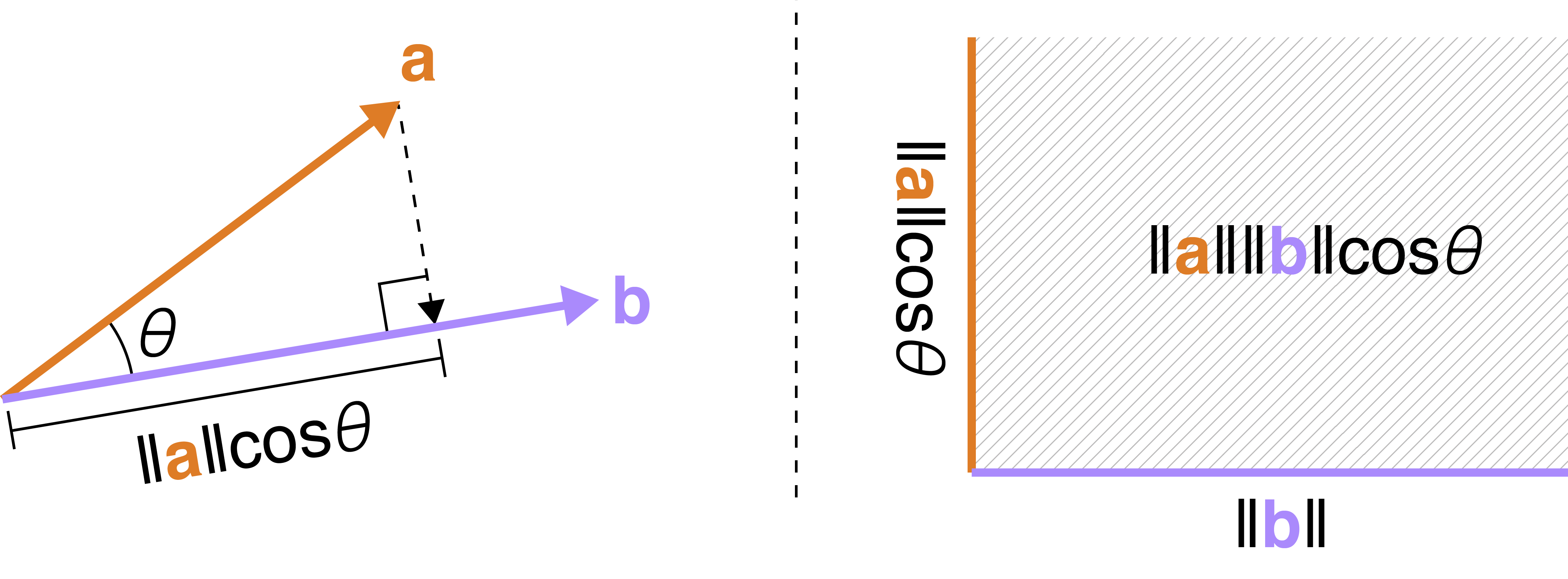
The Geometric Intuition: Alignment and Projection
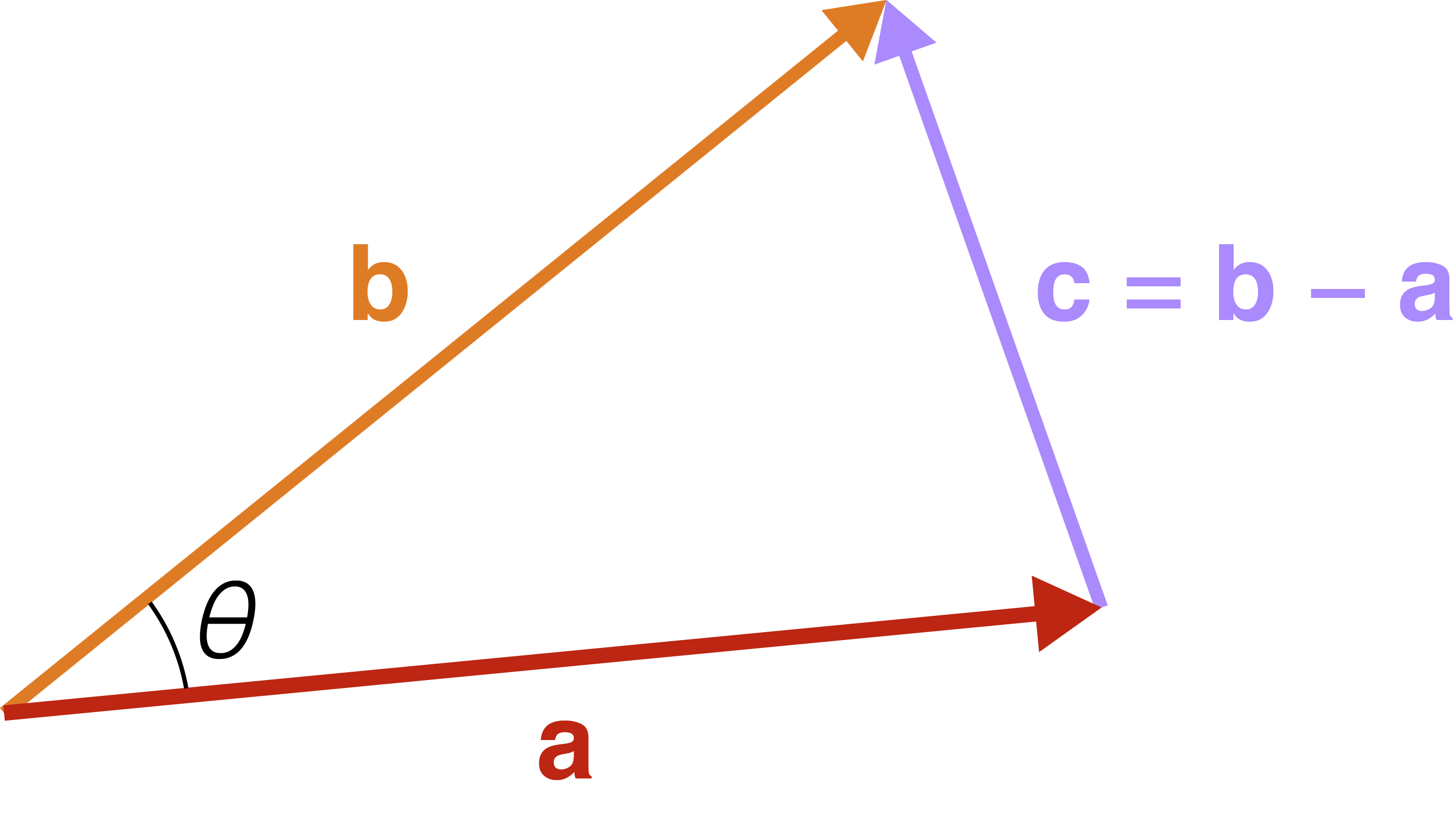
At its core, the dot product represents a measure of directional agreement between two vectors in a multi-dimensional space. In tech, almost everything can be vectorized—represented as a series of coordinates. The dot product tells us how much of one vector exists in the direction of another.
Measuring Similarity Between Vectors
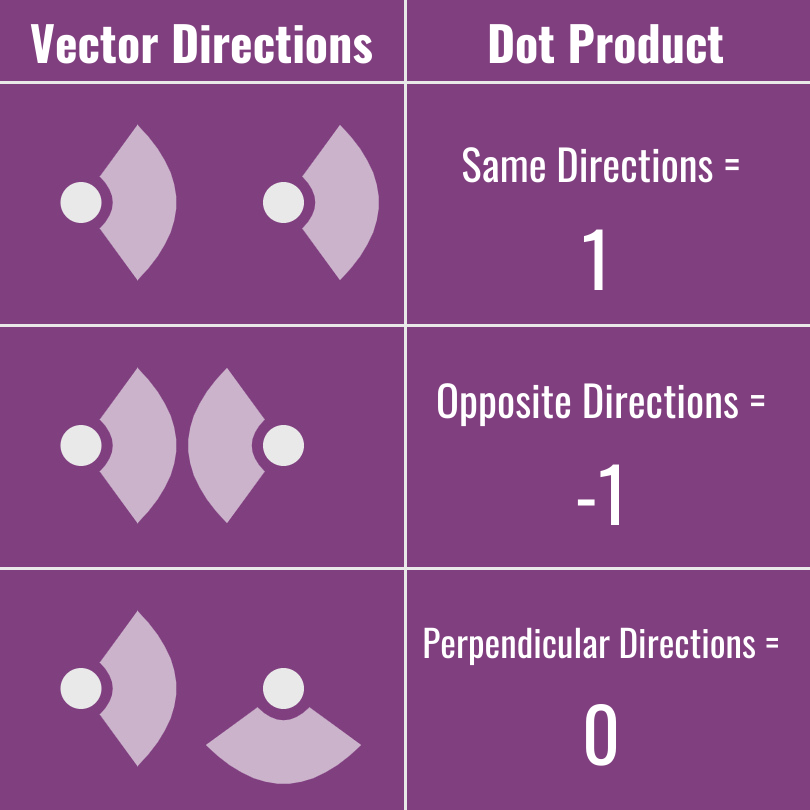
In software engineering and data science, we often represent data as vectors. If you have two vectors pointing in exactly the same direction, their dot product is maximized (relative to their magnitudes). If they are perpendicular (orthogonal), their dot product is zero, representing a total lack of correlation or “agreement.” If they point in opposite directions, the dot product is negative.
This representation is vital for any technology that requires comparison. For instance, in digital signal processing, the dot product helps identify if a specific frequency or pattern exists within a noisy stream of data. By “dotting” the incoming signal with a reference pattern, engineers can extract clear information from chaotic inputs.
Orthogonality and Independence in Data
In the world of digital security and data compression, the concept of “orthogonality”—where the dot product is zero—is a powerful tool. In secure communications, designers often use orthogonal codes to ensure that different signals do not interfere with one another. Because their dot product is zero, the system can distinguish between multiple data streams occupying the same frequency without “bleeding” or crosstalk. This mathematical property is what allows your smartphone to handle multiple simultaneous data connections without signal degradation.
The Engine of Artificial Intelligence and Machine Learning
If you were to strip away the complex layers of a modern Artificial Intelligence (AI) system, you would find billions of dot products happening every millisecond. In the niche of Machine Learning (ML), the dot product represents the fundamental act of “recognition.”
Weights and Biases: How Neurons “Think”
A neural network consists of layers of interconnected nodes. Each connection has a “weight,” and each input is a value. When an AI processes information, it calculates the dot product of the input vector and the weight vector.
This operation represents the “strength” of a signal. If the input features align closely with the weights the network has learned, the dot product will be high, “firing” the neuron. This is how a computer “recognizes” an edge in an image or a specific tone in a voice command. The dot product is the filter through which raw data is transformed into structured intelligence.
Attention Mechanisms in Large Language Models (LLMs)
The breakthrough of the “Transformer” architecture, which powers modern AI tools, relies heavily on something called “Scaled Dot-Product Attention.” In this context, the dot product represents the relevance of one word to another within a sentence.
When an AI processes the word “bank,” it uses dot products to compare that word’s vector against the context vectors of “river” or “money.” If the dot product between “bank” and “river” is higher in a specific paragraph, the model “pays attention” to the geographic meaning rather than the financial one. Without the dot product’s ability to represent contextual alignment, AI would be unable to grasp the nuances of human language.
Transforming Visuals: Computer Graphics and Game Development
For those in the world of software development and computer graphics, the dot product represents the physical interaction between light and matter. Every 3D environment you interact with, from architectural visualizations to open-world video games, relies on this operation to create visual realism.
Light, Shadow, and Surface Normals
One of the most common uses of the dot product in graphics is calculating the brightness of a surface, a concept known as Lambert’s Cosine Law. In a 3D engine, every surface has a “normal” vector—a line pointing straight out from it. The light source also has a directional vector.
The dot product of the light vector and the surface normal tells the GPU exactly how much light the surface should receive. If the vectors are perfectly aligned (dot product is 1), the surface is hit directly and appears bright. As the angle increases, the dot product decreases, and the surface naturally darkens into shadow. This simple mathematical representation allows for the real-time rendering of complex, three-dimensional shapes.
Ray Tracing and Collision Detection
In modern game engines like Unreal Engine 5 or Unity, the dot product is used to handle “collision detection.” When a player character walks toward a wall, the engine calculates the dot product of the player’s movement vector and the wall’s orientation.
This determines if the player should stop, slide along the wall, or bounce off it. By representing the “projection” of movement onto a surface, the dot product ensures that digital physics behave in a way that feels intuitive to the human eye. Furthermore, in “Ray Tracing”—the gold standard for digital lighting—dot products are used to calculate how light rays bounce off reflective surfaces, creating the realistic mirrors and puddles seen in modern high-end gadgets.
Information Retrieval: How Modern Search Engines Understand Intent
In the early days of the internet, search engines looked for exact keyword matches. Today, search is “semantic,” meaning it understands the intent behind your query. This shift was made possible by treating search as a high-dimensional vector problem where the dot product represents “semantic proximity.”
Cosine Similarity and High-Dimensional Embeddings
Modern search tools and AI-driven databases (like Pinecone or Milvus) convert text, images, and video into “embeddings”—long lists of numbers that represent the meaning of the data. When you type a query into a search engine, the engine converts your query into a vector and calculates the dot product between your query and millions of stored documents.
This specific application—often normalized into “Cosine Similarity”—allows the system to find results that are conceptually related even if they don’t share a single keyword. The dot product represents the bridge between a user’s vague intent and the vast repository of digital information.
Recommendation Systems and Collaborative Filtering
Tech giants like Netflix, YouTube, and Amazon use the dot product to power their recommendation engines. They represent users and items (movies, videos, or products) as vectors in a “latent space.”
If you have watched several sci-fi movies, your “user vector” will have high values in dimensions associated with that genre. The system then calculates the dot product between your user vector and the vectors of thousands of movies. The movies with the highest dot products are the ones that appear in your “Recommended for You” tray. In this niche, the dot product represents the intersection of human preference and machine logic.
Conclusion: The Ubiquitous Mathematical Tool
The dot product is the unsung hero of the digital age. While it may seem like a dry topic from a linear algebra textbook, its practical representation in technology is nothing short of revolutionary. It is the tool that allows our devices to see, our AI to reason, and our search engines to understand.
In the tech industry, the dot product represents the ultimate reductionism: taking complex, real-world phenomena—be it the glint of sun on water, the meaning of a philosophical sentence, or a user’s taste in music—and turning it into a measurable value of alignment. As we move further into the era of spatial computing and generative AI, the importance of this operation will only grow. Every time you interact with a smart device, you are witnessing the power of the dot product, translating the geometry of the world into the binary logic of the machine.
aViewFromTheCave is a participant in the Amazon Services LLC Associates Program, an affiliate advertising program designed to provide a means for sites to earn advertising fees by advertising and linking to Amazon.com. Amazon, the Amazon logo, AmazonSupply, and the AmazonSupply logo are trademarks of Amazon.com, Inc. or its affiliates. As an Amazon Associate we earn affiliate commissions from qualifying purchases.