
The Preliminary Scholastic Aptitude Test (PSAT), now often referred to as the PSAT/NMSQT (National Merit Scholarship Qualifying Test), is a pivotal standardized test for high school students. While its name suggests a direct correlation with the SAT, the PSAT serves a multifaceted purpose that extends beyond mere preparation for college admissions. It acts as a crucial diagnostic tool, a gateway to significant scholarship opportunities, and a vital stepping stone in a student’s academic and future career journey. Understanding what lies within the PSAT, its structure, content, and the benefits it offers, is essential for students aiming to maximize their high school experience and unlock their post-secondary potential.
The Structure and Content of the PSAT/NMSQT
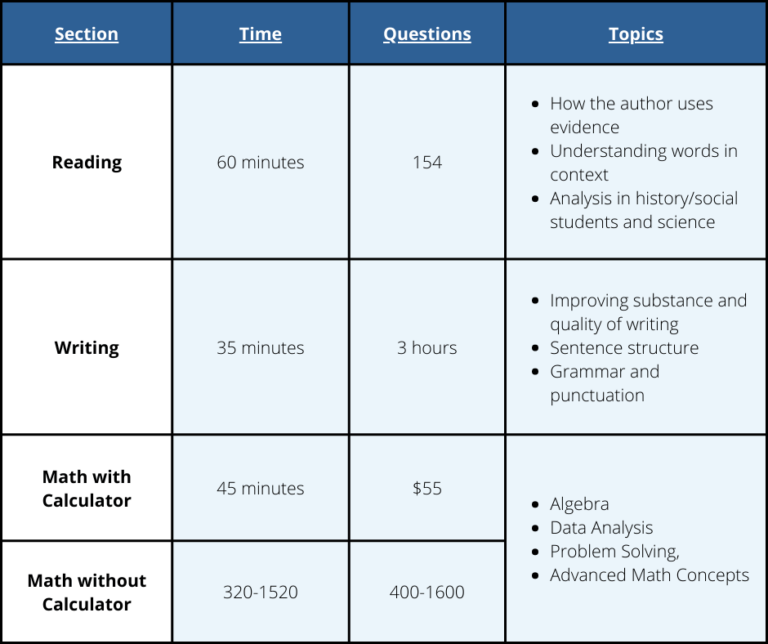
The PSAT/NMSQT is designed to assess the skills and knowledge that are most critical for college and career readiness. It is structured into distinct sections, each targeting specific academic competencies. The test is administered in a digital format for most students, a recent shift that has brought about changes in question types and testing experience. Familiarizing oneself with this structure and content is the first step in effectively preparing for and succeeding on the exam.
Reading and Writing Section
The Reading and Writing section of the PSAT/NMSQT is a combined assessment that evaluates a student’s ability to comprehend and analyze text, as well as their command of standard English conventions in writing. This section is crucial because it reflects the core skills needed for academic success in higher education, where critical reading and clear, concise communication are paramount.
Comprehension and Analysis of Texts
This subsection focuses on assessing a student’s ability to understand, interpret, and evaluate various types of texts. Students will encounter passages drawn from literature, history/social studies, and science. The questions will probe their understanding of:
- Main Ideas and Supporting Details: Identifying the central theme of a passage and the evidence used to support it.
- Inference and Implication: Drawing logical conclusions from the text, even when not explicitly stated.
- Vocabulary in Context: Understanding the meaning of words as they are used within a specific sentence or passage. This emphasizes comprehension over rote memorization of vocabulary lists.
- Author’s Purpose and Tone: Determining why the author wrote the passage and the attitude they convey.
- Analysis of Arguments and Evidence: Evaluating the effectiveness of the reasoning and evidence presented in a text, particularly in passages related to history and science.
- Information Synthesis: Connecting information from different parts of a passage or even across multiple short passages.
Standard English Conventions
This portion of the Reading and Writing section evaluates a student’s grasp of grammar, usage, and punctuation. The questions are typically presented in the context of sentences or short paragraphs, requiring students to identify and correct errors. Key areas assessed include:
- Sentence Structure: Recognizing and correcting issues with fragments, run-on sentences, and misplaced modifiers.
- Verb Tense and Agreement: Ensuring consistency in verb tense and subject-verb agreement.
- Pronoun Usage: Correcting errors in pronoun agreement, case, and reference.
- Punctuation: Demonstrating proficiency in using commas, semicolons, colons, apostrophes, and other punctuation marks correctly.
- Word Choice and Usage: Identifying and correcting instances of commonly confused words (e.g., “there,” “their,” “they’re”) and ensuring appropriate diction.
The shift to a digital format has influenced how these skills are assessed. Questions are often presented in shorter bursts, with more interactive elements, aiming to mirror the demands of digital literacy in academic and professional settings.
Math Section
The Math section of the PSAT/NMSQT is designed to measure a student’s proficiency in mathematical reasoning and problem-solving. It covers a range of topics that are typically encountered in high school mathematics curricula, with a strong emphasis on applying mathematical concepts to real-world scenarios. The digital format of the test allows for the inclusion of built-in graphing calculators, which can be a helpful tool for students.
Algebra
A significant portion of the Math section is dedicated to algebra, reflecting its foundational importance in higher-level mathematics and various STEM fields. Students will be tested on their understanding of:
- Linear Equations and Inequalities: Solving and interpreting linear equations and inequalities, including systems of equations.
- Quadratic Equations: Solving quadratic equations and understanding their properties, such as roots and parabolas.
- Functions: Working with linear, quadratic, and exponential functions, including their graphs, domains, and ranges.
- Algebraic Manipulation: Simplifying expressions, factoring polynomials, and performing operations with algebraic fractions.
- Word Problems: Translating real-world situations into algebraic equations and solving them.
Advanced Math
This category encompasses more complex mathematical concepts that build upon algebra. It delves into topics that are typically introduced in precalculus and advanced algebra courses. Key areas include:
- Polynomials, Radicals, and Rational Expressions: Working with more complex polynomial expressions, roots, and rational functions.
- Exponential and Logarithmic Functions: Understanding the properties and applications of these functions.
- Geometry Concepts Integrated with Algebra: Solving problems that involve geometric figures but require algebraic methods for their solution, such as finding areas or volumes.
- Trigonometry (Basic Concepts): While not as extensive as in some other standardized tests, some basic trigonometric concepts might be assessed, particularly as they relate to functions and geometry.
Problem-Solving and Data Analysis
This area focuses on a student’s ability to interpret and analyze data, make predictions, and solve problems using mathematical reasoning. It reflects the increasing importance of data literacy in today’s world. Students will be expected to:
- Ratios, Proportions, and Percentages: Applying these concepts to solve various problems.
- Data Interpretation: Analyzing tables, graphs, and charts to extract meaningful information.
- Probability and Statistics: Understanding basic concepts of probability, including calculating likelihoods, and interpreting statistical measures like mean, median, and mode.
- Modeling: Using mathematical concepts to model real-world phenomena and solve problems.
Geometry
While integrated into other sections, there are specific geometry concepts that students should be prepared for. These often involve applying algebraic principles to geometric figures. Topics include:
- Area and Volume: Calculating areas of plane figures and volumes of three-dimensional shapes.
- Properties of Shapes: Understanding the characteristics of triangles, quadrilaterals, circles, and other geometric figures.
- Coordinate Geometry: Working with points, lines, and shapes on a coordinate plane, including distance and midpoint formulas.
- Similarity and Congruence: Understanding and applying concepts of similar and congruent figures.
The digital format may allow for more visual representations and interactive problem-solving within the Math section, enhancing the testing experience.
The Significance and Benefits of Taking the PSAT/NMSQT
The PSAT/NMSQT is more than just a practice test for the SAT. Its significance lies in its dual role as a diagnostic tool and a pathway to valuable opportunities, particularly for high-achieving students. Understanding these benefits can motivate students to approach the test with a strategic mindset.
Diagnostic Tool for SAT and College Readiness
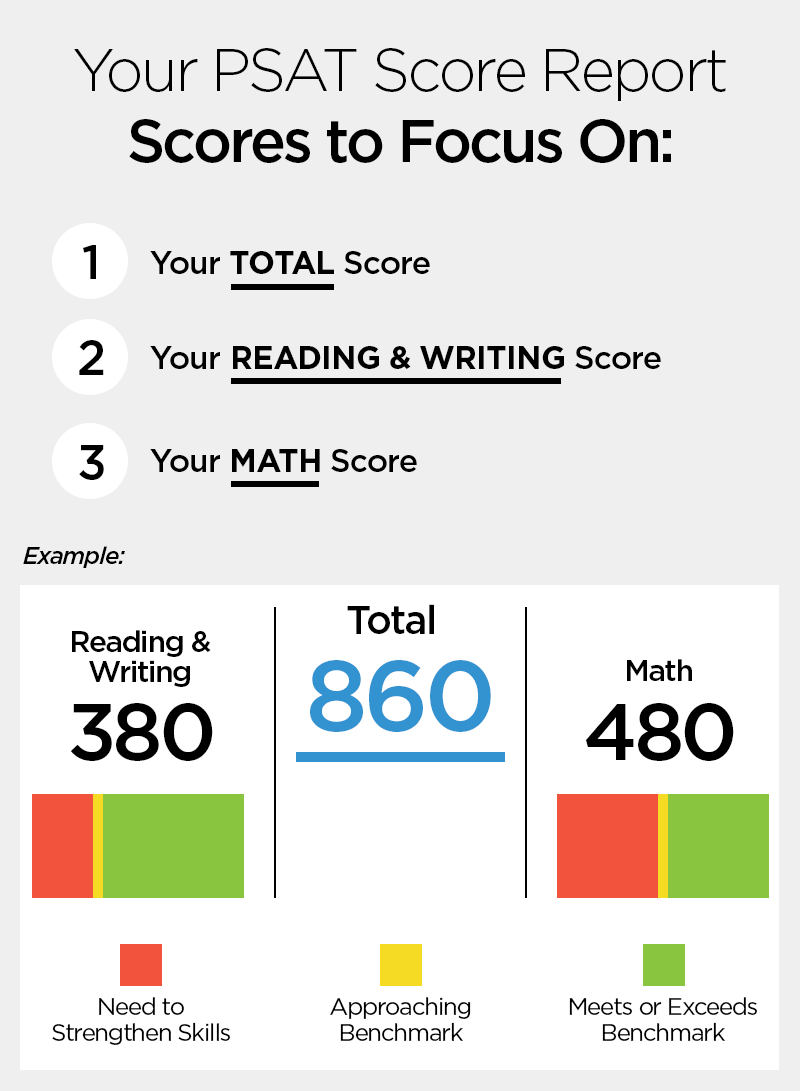
One of the primary purposes of the PSAT/NMSQT is to provide students with a realistic preview of the SAT. The scoring scale and question types are aligned with the SAT, making it an excellent tool for gauging current strengths and weaknesses.
- Identifying Skill Gaps: By analyzing their scores in each section and sub-section, students can pinpoint specific areas where they need to focus their preparation efforts. This targeted approach to studying is far more effective than a general review.
- Familiarity with Test Format: The PSAT/NMSQT allows students to experience the pressure and timing of a standardized test in a lower-stakes environment. This familiarity can reduce anxiety and improve performance when they take the SAT or ACT.
- Understanding Score Reporting: Students receive detailed score reports that not only provide a total score but also break down performance by skill area. This granular data is invaluable for personalized study plans.
- Building Foundational Skills: The content covered on the PSAT/NMSQT directly aligns with the skills needed for success in high school coursework and college-level studies. Regular practice with PSAT-level material can reinforce these essential academic competencies.
Gateway to the National Merit Scholarship Program
Perhaps the most widely recognized benefit of the PSAT/NMSQT is its role as the qualifying test for the prestigious National Merit Scholarship Program. This program recognizes and rewards academic excellence among high school students.
- National Merit Semifinalists and Finalists: Students who score exceptionally well on the PSAT/NMSQT are eligible to become Semifinalists and, subsequently, Finalists in the National Merit Scholarship Program. These designations are highly regarded by colleges and universities.
- Scholarship Opportunities: National Merit Finalists can receive significant scholarships from the National Merit Scholarship Corporation, as well as from sponsoring colleges and corporations. These scholarships can substantially reduce the financial burden of higher education.
- Enhanced College Applications: Being recognized as a National Merit Semifinalist or Finalist can significantly boost a student’s college application. It signals a high level of academic achievement and intellectual promise to admissions committees.
- Recognition and Prestige: The National Merit program confers a level of academic distinction that is recognized nationwide. This recognition can open doors to academic programs, research opportunities, and future career advancements.
Other Scholarship and Recognition Programs
Beyond the National Merit Scholarship Program, strong PSAT/NMSQT scores can also provide access to other scholarships and academic recognition opportunities.
- Commended Students: Students who score in the top percentages on the PSAT/NMSQT but do not qualify as Semifinalists may be recognized as Commended Students by the National Merit Scholarship Program. This is still an honor that can be noted on college applications.
- College-Specific Scholarships: Some colleges and universities use PSAT/NMSQT scores as a criterion for awarding their own merit-based scholarships, even if a student doesn’t qualify for National Merit.
- Leadership and Academic Programs: High scores can sometimes be a factor in selection for various academic enrichment programs, summer camps, and leadership initiatives.
Preparation Strategies for the PSAT/NMSQT
Success on the PSAT/NMSQT requires a strategic approach to preparation. Understanding the test’s format, content, and scoring, combined with targeted study, can significantly improve a student’s performance and unlock their full potential.
Understanding the Digital Test Format
The recent transition to a digital PSAT/NMSQT has introduced new considerations for test-takers. Familiarity with the digital interface and its features is crucial.
- Adaptive Testing: The digital PSAT/NMSQT uses an adaptive format. This means that the difficulty of the questions a student receives in the second module of each section depends on their performance in the first module. This adaptive nature requires a consistent level of engagement throughout the test.
- Digital Tools: Students will have access to digital tools such as a calculator (for the Math section), a timer, and annotation features. Learning how to effectively use these tools can streamline the test-taking process.
- Shorter Passages and Questions: The digital format often presents shorter reading passages and more focused questions compared to the paper-and-pencil version. This requires students to be adept at quickly processing information and identifying key details.
- Practice with Digital Platforms: It is highly recommended that students utilize official practice tests provided by the College Board that are administered on a digital platform. This will help them become comfortable with the user interface, question types, and the adaptive scoring mechanism.
Content Review and Skill Building
A solid understanding of the academic concepts tested is fundamental. Preparation should focus on both reviewing existing knowledge and building new skills.
- Targeted Content Review: Based on diagnostic scores from practice tests or previous PSAT attempts, students should focus their review on the specific areas where they need improvement. This could involve revisiting algebra concepts, grammar rules, or reading comprehension strategies.
- Vocabulary Development: While the PSAT/NMSQT emphasizes vocabulary in context, a strong vocabulary base is still advantageous. Students can build vocabulary through reading diverse texts, using flashcards, or engaging with vocabulary-building apps.
- Reading Comprehension Strategies: Practicing active reading techniques, such as annotating, summarizing, and asking questions about the text, can significantly improve comprehension. Students should also learn to identify the main idea, supporting details, and author’s purpose.
- Mathematical Problem-Solving: Working through a variety of math problems, focusing on understanding the underlying concepts rather than just memorizing formulas, is essential. Students should practice translating word problems into mathematical expressions and interpreting their solutions.

Practice Tests and Timed Conditions
Consistent practice under timed conditions is vital for building stamina and improving pacing.
- Full-Length Practice Tests: Taking full-length PSAT/NMSQT practice tests is one of the most effective ways to prepare. This helps students simulate the actual test experience, including the duration and the pressure of time constraints.
- Timed Section Practice: If full-length tests are overwhelming, students can focus on practicing individual sections or even sets of questions under timed conditions. This helps them develop a sense of pacing and learn to manage their time effectively within each section.
- Analyze Practice Test Results: After each practice test, it is crucial to thoroughly review the answers, understand why certain questions were missed, and identify recurring error patterns. This analysis is key to refining study strategies.
- Simulate Testing Environment: When taking practice tests, students should aim to replicate the actual testing environment as closely as possible, minimizing distractions and adhering strictly to time limits.
The PSAT/NMSQT is a valuable tool for high school students, offering a clear path to understanding their academic strengths, preparing for the SAT, and accessing significant scholarship opportunities. By understanding its structure, content, and benefits, and by engaging in diligent preparation, students can maximize their performance and set a strong foundation for their future academic and professional endeavors.
aViewFromTheCave is a participant in the Amazon Services LLC Associates Program, an affiliate advertising program designed to provide a means for sites to earn advertising fees by advertising and linking to Amazon.com. Amazon, the Amazon logo, AmazonSupply, and the AmazonSupply logo are trademarks of Amazon.com, Inc. or its affiliates. As an Amazon Associate we earn affiliate commissions from qualifying purchases.