
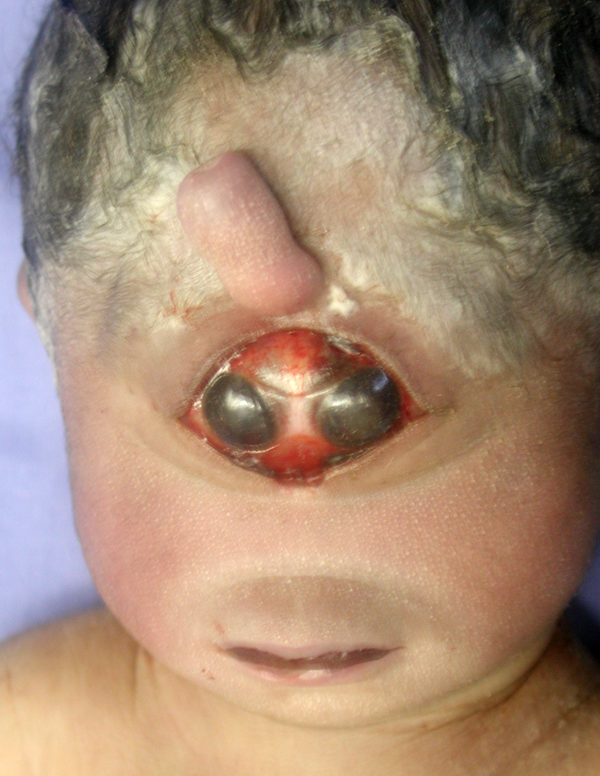
Holoprosencephaly (HPE) is a complex brain malformation resulting from the failure of the prosencephalon—the embryonic forebrain—to sufficiently divide into the left and right hemispheres. While historically viewed through a purely clinical lens, the modern understanding of HPE has been radically transformed by the intersection of medical technology, high-speed computing, and genomic data science. In the current era, diagnosing and managing such a profound neurological condition is as much a triumph of software and hardware engineering as it is a medical endeavor.
To understand holoprosencephaly today is to understand the cutting-edge tools that allow us to peer into the developing brain with unprecedented clarity. From AI-driven imaging to the massive computational power required for genetic sequencing, the narrative of HPE is now being rewritten by the tech industry.
Decoding the Architecture: The Role of Advanced Neuro-Imaging
The diagnosis of holoprosencephaly begins with the visual mapping of the brain’s structure. In decades past, low-resolution imaging often left clinicians guessing about the specific classification of the condition—whether alobar, semilobar, or lobar. Today, the tech sector provides a sophisticated suite of imaging modalities that turn biological structures into high-fidelity digital models.
High-Resolution MRI and 3D Volumetric Reconstructions
Magnetic Resonance Imaging (MRI) has undergone a hardware revolution. With the advent of 7-Tesla (7T) magnets, the signal-to-noise ratio has increased exponentially, allowing for sub-millimeter visualization of the cerebral cortex. In the context of HPE, this technology allows technicians to identify subtle “fusions” of the basal ganglia or the absence of the corpus callosum with pinpoint accuracy. Furthermore, 3D volumetric software can now reconstruct these scans into navigable digital environments, enabling neurosurgeons to perform “virtual walk-throughs” of a patient’s unique brain anatomy before ever entering an operating room.
Automated Segmentation and Quantitative Radiomics
Perhaps the most significant tech trend in imaging is the move toward quantitative radiomics. Instead of relying solely on a radiologist’s eye, automated segmentation software uses deep learning algorithms to measure the volume of brain structures instantly. For HPE patients, these tools can track the growth patterns of the brain over time, comparing them against vast databases of neurotypical development to predict potential developmental delays with higher statistical confidence.
The Genomic Revolution: Software and High-Throughput Sequencing
Holoprosencephaly is often rooted in genetic mutations, specifically within the “Sonic Hedgehog” (SHH) signaling pathway. Unlocking these genetic secrets requires more than just a lab; it requires massive computational infrastructure. The field of bioinformatics has turned the search for HPE-related mutations into a big-data challenge.
Next-Generation Sequencing (NGS) and Data Pipelines
Next-Generation Sequencing (NGS) has democratized the ability to scan the entire human genome. For families affected by HPE, NGS platforms can process terabytes of raw data to identify single-nucleotide polymorphisms (SNPs) or copy number variants (CNVs) that contribute to the malformation. The “tech” here is the pipeline: the software that filters out the “noise” of common genetic variations to find the specific “glitch” in the biological code responsible for the condition.
Bioinformatics Platforms for Variant Analysis
Once data is sequenced, it must be interpreted. Cloud-based bioinformatics platforms allow researchers to cross-reference a patient’s genetic profile with global databases of rare diseases. Using sophisticated scoring algorithms, these platforms can predict the pathogenicity of a newly discovered mutation. This is a critical tech development because it allows for “precision medicine”—tailoring the clinical response to the specific genetic driver of the patient’s holoprosencephaly.
AI and Machine Learning in Early Detection and Screening
The most critical window for identifying HPE is during prenatal development. Here, artificial intelligence is proving to be a game-changer, augmenting the capabilities of traditional ultrasound and providing a layer of “augmented intelligence” to fetal medicine.

Neural Networks in Prenatal Ultrasound
Ultrasound technology has been integrated with neural networks trained on millions of fetal scans. In many modern clinics, AI-assisted ultrasound tools can automatically flag abnormalities in the “midline” of the fetal brain during routine anatomy scans. By identifying the tell-tale signs of HPE—such as a single primitive ventricle or a fused thalamus—as early as the first trimester, these AI tools provide parents and clinicians with crucial time to plan for complex care.
Predictive Modeling for Clinical Outcomes
Machine learning isn’t just for diagnosis; it’s for prognosis. Tech companies are currently developing predictive models that ingest a variety of inputs—imaging data, genetic markers, and maternal health records—to forecast the clinical trajectory of an infant born with HPE. These algorithms help in managing expectations and resource allocation, identifying which patients are at higher risk for complications like seizures or endocrine dysfunction (diabetes insipidus), which are common in holoprosencephaly cases.
Digital Health Ecosystems: Managing Complex Chronic Care
HPE is a multi-systemic condition that often requires a “village” of specialists, including neurologists, endocrinologists, and therapists. The technology used to coordinate this care is becoming as vital as the clinical treatment itself.
Telehealth and Interdisciplinary Cloud Platforms
For families living in rural areas, accessing a specialist who understands a rare condition like HPE used to be a significant barrier. The explosion of high-bandwidth telehealth platforms has solved this. Furthermore, centralized electronic health record (EHR) systems with interoperability features ensure that a neurosurgeon in New York and a pediatrician in Ohio are looking at the same high-res imaging and genetic reports in real-time. This “digital thread” of data ensures that care is cohesive rather than fragmented.
Wearables and Remote Patient Monitoring
Many children with HPE suffer from temperature dysregulation and sleep apnea. The Internet of Medical Things (IoMT) offers a solution through wearable sensors. These gadgets can monitor heart rate, oxygen saturation, and body temperature 24/7, streaming the data to a mobile app. If a patient’s vitals deviate from their baseline, an alert is sent to the caregiver’s smartphone. This tech provides a safety net that was non-existent a decade ago, allowing for proactive rather than reactive medical intervention.
Future Horizons: Neural Engineering and the Tech of Tomorrow
As we look toward the future, the intersection of tech and HPE is moving into the realm of neural engineering and synthetic biology. These emerging fields offer hope for improving the quality of life for those with significant neurological impairments.
Brain-Computer Interfaces (BCI) for Non-Verbal Communication
Many individuals with the more severe forms of holoprosencephaly face significant motor and speech challenges. Brain-Computer Interfaces—a tech sector popularized by companies like Neuralink and Synchron—are developing non-invasive and minimally invasive sensors that can translate brain activity into digital commands. In the future, a child with HPE who is unable to speak might be able to communicate their needs via a tablet controlled directly by their neural signals.
CRISPR and the Future of In-Utero Gene Editing
While still in the experimental and ethical-review stages, CRISPR-Cas9 technology represents the ultimate technological “fix” for genetic disorders. The ability to edit the genetic code in utero to correct a mutation in the SHH pathway could, in theory, prevent the progression of HPE before the brain fully forms. While the hardware for this is being refined, the software used to design these “molecular scissors” is already highly advanced, allowing for precise targeting of the genome with minimal off-target effects.
Conclusion: The Synergy of Biology and Bitrate
Holoprosencephaly remains one of the most challenging diagnoses in neurology, but the technological tools at our disposal are narrowing the gap between “detecting” and “understanding.” We have moved from an era of simple observation to an era of deep data.
Through the lens of Tech, HPE is no longer just a medical term; it is a catalyst for innovation in imaging, a case study for the power of bioinformatics, and a testing ground for the life-saving potential of AI. As software becomes more intuitive and hardware more powerful, the focus shifts from the limitations of the condition to the limitless possibilities of the technology supporting those who live with it. The marriage of medicine and technology ensures that for every challenge presented by a condition like holoprosencephaly, there is a digital solution being coded to meet it.
aViewFromTheCave is a participant in the Amazon Services LLC Associates Program, an affiliate advertising program designed to provide a means for sites to earn advertising fees by advertising and linking to Amazon.com. Amazon, the Amazon logo, AmazonSupply, and the AmazonSupply logo are trademarks of Amazon.com, Inc. or its affiliates. As an Amazon Associate we earn affiliate commissions from qualifying purchases.