
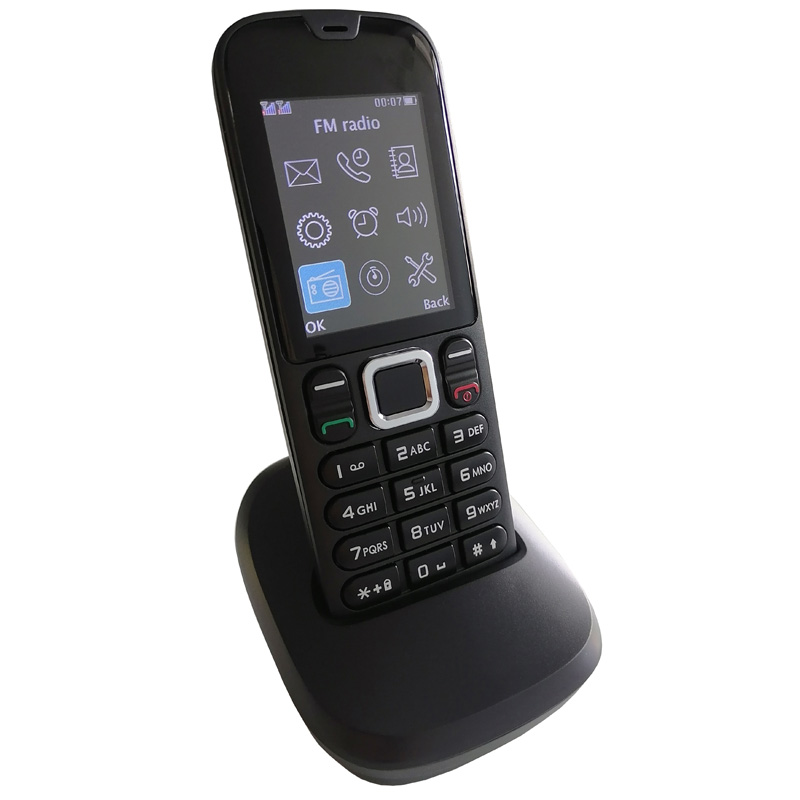
The term “GSM handset” might sound antiquated to many, conjuring images of chunky brick phones and slow data speeds. However, understanding what a GSM handset is, and the technology it represents, is fundamental to grasping the evolution of mobile communication and the infrastructure that underpins our connected lives today. While newer technologies like 4G and 5G have largely superseded GSM, the principles established by this Global System for Mobile Communications paved the way for the sophisticated smartphones we rely on. This article delves into the core concepts of GSM handsets, their historical significance, and their enduring legacy in the technological landscape.
The Genesis of GSM: A Digital Revolution in Mobile Telephony
Before GSM, mobile phone networks were a fragmented and analog affair. Each country, and often each carrier within a country, operated its own proprietary system. This meant that phones were not interoperable, and international roaming was a complex, often impossible, endeavor. The need for a standardized, digital mobile communication system was evident. GSM emerged as the solution, representing a paradigm shift in how mobile phones communicated.
The Need for Standardization: Breaking Down Barriers
The analog mobile systems of the past, such as AMPS (Advanced Mobile Phone System) in North America, suffered from several limitations. Their capacity was limited, leading to dropped calls during peak times. They were also susceptible to interference and less secure, with calls being relatively easy to intercept. Furthermore, the lack of a global standard meant that a traveler from one continent could not use their phone in another. This lack of interoperability hindered the growth of mobile telephony and its potential for global connectivity.
The Birth of a Standard: GSM’s Core Principles
GSM, which stands for Global System for Mobile Communications, was developed by the European Telecommunications Standards Institute (ETSI). Its primary goal was to create a unified, digital cellular network that could be deployed across Europe and eventually, the world. Key to GSM’s success were several core principles:
- Digital Technology: Unlike its analog predecessors, GSM converted voice into digital data. This allowed for more efficient use of spectrum, improved call quality, and enhanced security features.
- Global Roaming: The standardized nature of GSM enabled international roaming. This meant that a subscriber of a GSM network in one country could use their handset on compatible GSM networks in other countries, a revolutionary concept at the time.
- Circuit Switching and Packet Switching: GSM initially relied on circuit switching for voice calls, where a dedicated connection was established for the duration of the call. For data services, it introduced packet switching, where data was broken into small packets and sent independently, a precursor to modern mobile internet.
- SIM Cards: A defining feature of GSM is the Subscriber Identity Module (SIM) card. This small, portable chip stores subscriber information, allowing users to easily switch phones without changing their phone number or subscription details. It also provided a layer of security by authenticating the user to the network.
Anatomy of a GSM Handset: Components and Functionality
A GSM handset, at its core, is a sophisticated piece of technology designed to connect to a GSM network and facilitate mobile communication. While the form factor has evolved dramatically from early feature phones to modern smartphones, the fundamental components and their functions remain rooted in GSM principles.
The Radio Frequency (RF) Front-End: The Bridge to the Network
The RF front-end is the critical interface between the handset and the cellular tower. It comprises several key components:
- Transceiver: This is the heart of the RF system, responsible for both transmitting and receiving radio signals. It converts digital data into radio waves for transmission and decodes incoming radio waves back into digital data.
- Antenna: The antenna is responsible for radiating transmitted signals and capturing incoming signals. GSM handsets typically utilized internal antennas, a significant departure from earlier external ones.
- Filters: These components ensure that the handset only transmits and receives on the specific frequencies allocated to the GSM network, preventing interference with other services.
The Baseband Processor: The Brains of the Operation
The baseband processor is the central processing unit responsible for managing all the digital signal processing required for communication. Its functions include:
- Modulation and Demodulation: Converting digital data into analog radio signals (modulation) for transmission and vice-versa (demodulation) for reception.
- Error Correction: Implementing algorithms to detect and correct errors that may occur during transmission, ensuring the integrity of the communication.
- Voice Encoding/Decoding: Compressing and decompressing voice data to optimize bandwidth usage.
- Protocol Management: Handling the complex set of rules and protocols that govern communication between the handset and the GSM network.
The SIM Card: Identity and Security
As mentioned earlier, the SIM card is a vital component of a GSM handset. It contains:

- International Mobile Subscriber Identity (IMSI): A unique identifier for the subscriber.
- Authentication Keys: Used to verify the subscriber’s identity to the network.
- Contact List: Historically, a place to store phone numbers.
- SMS Storage: Capacity for storing text messages.
The SIM card’s role extends beyond mere identification; it is a crucial element of the security architecture of GSM, preventing unauthorized access to the network.
The Evolution and Decline of GSM Handsets: A Technological Progression
GSM handsets dominated the mobile communication landscape for over two decades. Their widespread adoption and interoperability fueled the explosion of mobile phone usage globally. However, as demand for faster data speeds and more advanced functionalities grew, GSM began to be phased out in favor of newer technologies.
The Era of Feature Phones: Simplicity and Affordability
In the early days of GSM, handsets were primarily used for voice calls and SMS messaging. These were the era of “feature phones” – devices that offered basic functionalities beyond just calling, such as calendars, calculators, and simple games. They were robust, affordable, and accessible to a vast population, playing a pivotal role in democratizing mobile communication. Brands like Nokia, Motorola, and Ericsson were synonymous with this era, producing iconic devices that defined mobile communication for millions.
The Rise of Smartphones: Data Demands and New Possibilities
The advent of 3G (Third Generation) and subsequently 4G (Fourth Generation) networks marked a significant shift. These technologies offered substantially higher data speeds, enabling the widespread use of the internet on mobile devices. This paved the way for smartphones – sophisticated computing devices that could run complex applications, stream video, and provide a rich mobile internet experience. While early smartphones could operate on GSM networks for voice calls, their primary connectivity for data relied on newer standards.
The Sunset of GSM: Refarming Spectrum and Technological Advancement
As 3G, 4G, and now 5G networks have become increasingly prevalent, mobile operators have begun to “refarm” the spectrum previously used by GSM. This means reallocating those valuable radio frequencies to newer, more efficient technologies. Consequently, many operators have shut down their 2G GSM networks, rendering older GSM-only handsets inoperable for network communication. This transition is a natural part of technological progression, driven by the ever-increasing demand for faster and more data-intensive mobile services.
The Enduring Legacy of GSM: Lessons Learned and Future Implications
Despite its eventual decline, the impact of GSM on the telecommunications industry and society at large cannot be overstated. It laid the groundwork for the interconnected world we inhabit today.
A Global Standard for Connectivity
GSM’s greatest achievement was establishing a truly global standard. This interoperability fostered competition among manufacturers, drove innovation, and made mobile communication accessible to billions worldwide. The concept of seamlessly roaming across borders, which we now take for granted, was largely a product of the GSM revolution.
Foundational Technologies for Modern Networks
Many of the underlying principles of GSM, such as digital modulation, error correction, and the concept of a subscriber identity module, continue to be relevant in modern mobile technologies. While the specific implementation has evolved, the core ideas remain. For instance, the SIM card has evolved into the eSIM (embedded SIM), offering a more streamlined and flexible approach to device activation and management, but its origin can be traced back to the GSM SIM.

A Stepping Stone to the Future
The infrastructure and knowledge gained from the widespread deployment of GSM were crucial stepping stones for the development of subsequent mobile technologies. The lessons learned in managing complex cellular networks, ensuring security, and facilitating global roaming informed the design and implementation of 3G, 4G, and 5G.
In conclusion, while the term “GSM handset” might refer to a bygone era of mobile technology, its significance is profound. It represents a pivotal moment in human history, transforming communication from a localized, analog experience to a global, digital phenomenon. Understanding what a GSM handset is allows us to appreciate the evolutionary journey of mobile technology and the foundational principles that continue to shape our connected present and future.
aViewFromTheCave is a participant in the Amazon Services LLC Associates Program, an affiliate advertising program designed to provide a means for sites to earn advertising fees by advertising and linking to Amazon.com. Amazon, the Amazon logo, AmazonSupply, and the AmazonSupply logo are trademarks of Amazon.com, Inc. or its affiliates. As an Amazon Associate we earn affiliate commissions from qualifying purchases.