
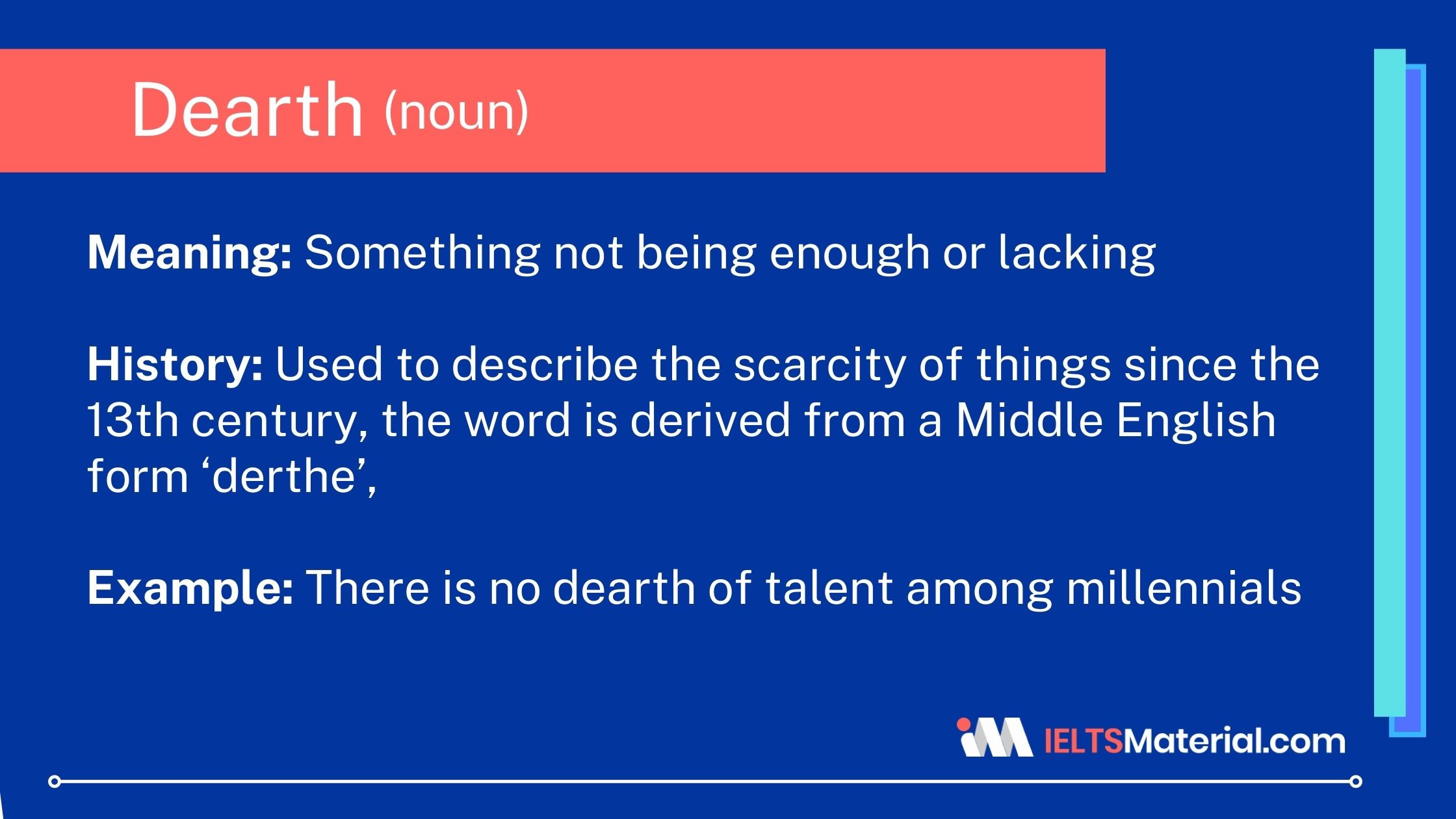
The term “dearth” traditionally evokes images of scarcity – a lack of something essential, whether it be food, water, or resources. However, in the rapidly evolving landscape of the 21st century, “dearth” takes on new dimensions, particularly within the Tech domain. The digital world, often perceived as boundless and infinitely available, is surprisingly susceptible to various forms of scarcity. This scarcity isn’t always about physical limitations; it’s increasingly about information, expertise, attention, and even processing power. Understanding these digital dearths is crucial for navigating the complexities of our interconnected world, from developing robust AI systems to securing our digital lives.
This article will delve into the concept of “dearth” as it applies to technology, exploring the various forms it can take, the implications of these shortages, and the innovative ways the tech industry is striving to overcome them. We will examine the scarcity of critical data for AI, the dwindling supply of skilled cybersecurity professionals, the ever-intensifying competition for user attention, and the evolving challenges related to computational resources.
The Data Drought: Fueling the AI Engine
Artificial Intelligence (AI) and its subfields, like machine learning, are heavily reliant on vast quantities of high-quality data for training and development. The adage “data is the new oil” has never been more pertinent. Yet, despite the explosion of digital information, a significant dearth of relevant and high-quality data can hinder AI progress. This isn’t just about the volume of data; it’s about its accuracy, representativeness, and ethical sourcing.
The Challenge of Bias and Representativeness
One of the most insidious forms of data dearth stems from inherent biases within the datasets used to train AI models. If the data predominantly reflects a specific demographic, culture, or experience, the AI model will inevitably perpetuate and even amplify these biases. This can lead to discriminatory outcomes in areas like hiring, loan applications, and even criminal justice. The dearth here is not a lack of data itself, but a lack of diverse and equitable data that accurately represents the complexities of the real world.
For instance, facial recognition systems have historically shown lower accuracy rates for women and people of color due to datasets skewed towards lighter-skinned males. Similarly, language models trained on text predominantly from Western cultures may struggle to understand or generate nuanced content relevant to other linguistic or cultural contexts. Bridging this gap requires conscious efforts to curate datasets that are inclusive and representative, addressing the dearth of diverse perspectives.
The Scarcity of Labeled and Annotated Data
Many AI applications, particularly in supervised learning, require data to be meticulously labeled and annotated. This process, often done by human experts, can be incredibly time-consuming, expensive, and prone to errors. As AI applications become more sophisticated and require larger, more specialized datasets, the dearth of readily available, expertly labeled data becomes a significant bottleneck.
Consider the field of medical imaging. To train an AI to detect diseases from X-rays or MRIs, each image needs to be reviewed by radiologists who can precisely highlight abnormalities. The sheer volume of medical images and the specialized knowledge required for accurate annotation create a substantial challenge. This scarcity can slow down the development of life-saving diagnostic tools and personalized treatment plans.
Privacy and Ethical Considerations: A Data Straitjacket
The increasing focus on data privacy, driven by regulations like GDPR and CCPA, presents another layer to the data dearth challenge. While these regulations are essential for protecting individuals, they can also make it more difficult to access and utilize certain types of data, especially sensitive personal information. This creates a tension between the need for data to fuel AI innovation and the imperative to safeguard privacy.
The dearth of easily accessible, ethically sourced, and privacy-compliant data forces researchers and developers to explore more complex and often slower methods of data acquisition and anonymization. Techniques like federated learning, differential privacy, and synthetic data generation are emerging as solutions, but they come with their own set of technical hurdles and limitations, highlighting the ongoing struggle against this form of data scarcity.
The Talent Gap: The Cybersecurity Chasm
The digital world is under constant threat from malicious actors. Cybersecurity is no longer a niche IT concern; it’s a foundational element for any organization operating online. However, a critical dearth of skilled cybersecurity professionals poses a significant and growing threat to digital security. This shortage is exacerbated by the ever-evolving nature of cyber threats and the increasing complexity of digital infrastructures.
The Escalating Threat Landscape
The pace of cyberattacks is relentless. New vulnerabilities are discovered daily, and sophisticated attack methods are constantly being developed. This creates an environment where the demand for cybersecurity expertise outstrips the available supply. The dearth of professionals who can anticipate, detect, and respond to these evolving threats leaves organizations vulnerable.
Attackers are often well-funded and highly organized, leveraging advanced tools and techniques. To counter this, organizations need security teams with deep knowledge of network security, threat intelligence, incident response, cryptography, and much more. The sheer breadth of expertise required, coupled with a limited pool of qualified individuals, leads to a significant talent gap.
The Skill Mismatch and the Need for Continuous Learning
The skills required in cybersecurity are not static. As new technologies emerge (e.g., cloud computing, IoT, quantum computing), so do new security challenges and attack vectors. This creates a dearth of professionals with up-to-date skills and experience in the latest technologies and security paradigms.
Many educational institutions struggle to keep pace with the rapid advancements in the field, leading to a disconnect between academic training and the practical demands of the industry. Furthermore, the field often attracts individuals with deep technical skills but may lack the crucial soft skills, such as communication and problem-solving, that are vital for effective collaboration and incident management. This skill mismatch further widens the talent chasm.
The Burnout Factor and Retention Challenges
The demanding nature of cybersecurity work, characterized by high stress, constant vigilance, and the potential for high-stakes incidents, contributes to a significant problem of professional burnout and retention challenges. Cybersecurity professionals are often on call 24/7, dealing with critical incidents that can have far-reaching consequences. This can lead to exhaustion, mental fatigue, and a high turnover rate.

When experienced professionals leave the field, it exacerbates the existing dearth of talent. Organizations face a continuous struggle to not only recruit new talent but also to retain their existing cybersecurity workforce. This requires not just competitive salaries but also a supportive work environment, opportunities for professional development, and a clear understanding of the value these professionals bring. Addressing this dearth requires a multi-pronged approach, including enhanced training programs, industry-academia partnerships, and a greater emphasis on employee well-being.
The Attention Economy: The Dearth of Focus in a Noisy World
In the digital age, our attention has become a valuable commodity. The proliferation of content, notifications, and digital platforms has led to an intense competition for our cognitive resources, resulting in a dearth of genuine focus and sustained attention. This is a particularly pervasive form of scarcity that impacts individuals, businesses, and the very fabric of how we consume information and interact online.
The Algorithmic Barrage and Information Overload
Social media feeds, news aggregators, streaming services, and countless apps are all vying for our attention. Algorithms are designed to keep us engaged, often by bombarding us with personalized content, notifications, and updates. This constant influx of stimuli creates an environment of information overload, making it difficult to discern what is truly important or to engage in deep thinking.
The dearth of focused attention means that even well-crafted messages or valuable content can be easily overlooked or quickly forgotten. Users often skim rather than read, leading to superficial engagement and a diminished capacity for critical analysis. This has profound implications for education, productivity, and even our ability to form meaningful connections in the digital space.
The Impact on Content Creation and Marketing
For businesses and content creators, the dearth of attention translates into an increasingly challenging marketing landscape. Standing out from the crowd requires not just creating good content but also finding innovative ways to capture and hold an audience’s gaze. The dearth of readily available attention means that traditional advertising methods are becoming less effective, and the focus is shifting towards more engaging, interactive, and value-driven content.
Marketers are constantly experimenting with new formats and strategies, from short-form videos and interactive quizzes to personalized experiences and influencer collaborations. The goal is to cut through the noise and create moments of genuine connection. However, even these strategies face the risk of becoming saturated and contributing to the overall cacophony, leading to a perpetual arms race for attention.
The Psychological Toll of Constant Distraction
The relentless demand on our attention can have significant psychological consequences. The constant switching between tasks and the feeling of being perpetually “on” can lead to increased stress, anxiety, and a feeling of being overwhelmed. This dearth of mental quietude and the ability to disconnect can impact our well-being and our ability to be present in our offline lives.
Developing strategies to combat this dearth of focus is becoming increasingly important. This includes practicing mindfulness, setting digital boundaries, curating one’s digital environment, and consciously choosing to engage in deep work. For technologists, this presents an opportunity and a responsibility to design platforms and tools that promote mindful engagement rather than mindless consumption, addressing the dearth of focus by design.
The Computational Conundrum: The Growing Demand for Processing Power
As AI models become larger and more complex, and as we generate ever-increasing amounts of data, the demand for computational resources – processing power, memory, and storage – is skyrocketing. This has led to a growing dearth of accessible and affordable computational power, posing a significant challenge for researchers, developers, and even individuals.
The Scale of Modern AI Models
The latest advancements in AI, particularly in areas like large language models (LLMs) and complex simulation, require immense computational resources for training and inference. These models can have billions, or even trillions, of parameters, necessitating powerful graphics processing units (GPUs) and vast amounts of memory. The dearth of readily available, high-performance computing hardware can significantly slow down the pace of innovation and limit access to cutting-edge AI capabilities.
For smaller research institutions, startups, or individual researchers, acquiring the necessary hardware can be prohibitively expensive. This creates an uneven playing field, where only organizations with substantial financial resources can afford to push the boundaries of AI research. Cloud computing platforms have emerged as a partial solution, but the costs can still be substantial, and access can be limited by availability.
The Energy Consumption Challenge
The immense computational power required for training and running advanced AI models also comes with a significant energy footprint. The dearth of energy-efficient computing solutions is a growing concern, both from an environmental and an economic perspective. Large data centers consume vast amounts of electricity, contributing to carbon emissions and increasing operational costs.
Researchers are actively exploring more energy-efficient hardware architectures and algorithmic optimizations to reduce the power consumption of AI. However, the fundamental demand for more processing power continues to grow, making this a persistent challenge. The scarcity here is not just of the hardware itself, but of the sustainable energy resources needed to power it.

The Future of Computing: Beyond Current Paradigms
The limitations of current silicon-based computing architectures are becoming increasingly apparent. The continuous need for more power and efficiency is pushing the boundaries of what is physically possible. This has spurred research into novel computing paradigms, such as quantum computing and neuromorphic computing, which promise to offer exponentially greater computational power.
However, these technologies are still in their nascent stages, and widespread adoption is some way off. The dearth of mature and accessible quantum or neuromorphic computing solutions means that for the foreseeable future, we will continue to grapple with the limitations of current hardware. The race is on to develop new ways to compute, to overcome the scarcity of raw processing power and unlock the next generation of technological advancements.
In conclusion, the concept of “dearth” in technology is multifaceted and ever-present. From the crucial scarcity of high-quality data for AI and the critical shortage of cybersecurity talent to the pervasive lack of focused attention and the growing demand for computational resources, these scarcities shape the landscape of technological development and adoption. Understanding these digital dearths is not merely an academic exercise; it is essential for fostering innovation, ensuring security, and navigating the complexities of our increasingly technological world. The ongoing efforts to address these challenges, through novel algorithms, ethical data practices, robust training programs, and innovative computing architectures, will define the future of technology.
aViewFromTheCave is a participant in the Amazon Services LLC Associates Program, an affiliate advertising program designed to provide a means for sites to earn advertising fees by advertising and linking to Amazon.com. Amazon, the Amazon logo, AmazonSupply, and the AmazonSupply logo are trademarks of Amazon.com, Inc. or its affiliates. As an Amazon Associate we earn affiliate commissions from qualifying purchases.