
In the landscape of modern kitchen appliances, the “broil” function is often relegated to a simple button on a digital interface. However, from a technological perspective, the broiler represents one of the most sophisticated applications of thermal engineering and electromagnetic radiation in the domestic environment. While baking relies on convection—the movement of heated air—broiling is an entirely different mechanism of energy transfer. It is the high-intensity, short-wavelength approach to cooking that mimics the raw power of an open flame or the industrial precision of infrared manufacturing tools.
As we move further into the era of the “Smart Home,” the technology behind the broiler is evolving. It is no longer just a heating element; it is a component of an integrated ecosystem of sensors, algorithms, and advanced materials designed to achieve professional-grade results through precise digital control.

The Mechanics of Infrared Radiation: How Broiling Works
To understand what a broiler is from a technical standpoint, one must look beyond the heat and toward the electromagnetic spectrum. Unlike the “Bake” setting, which utilizes the ambient temperature of the oven cavity to cook food through conduction and convection, the broiler utilizes thermal radiation.
Electromagnetic Spectrum and Thermal Transfer
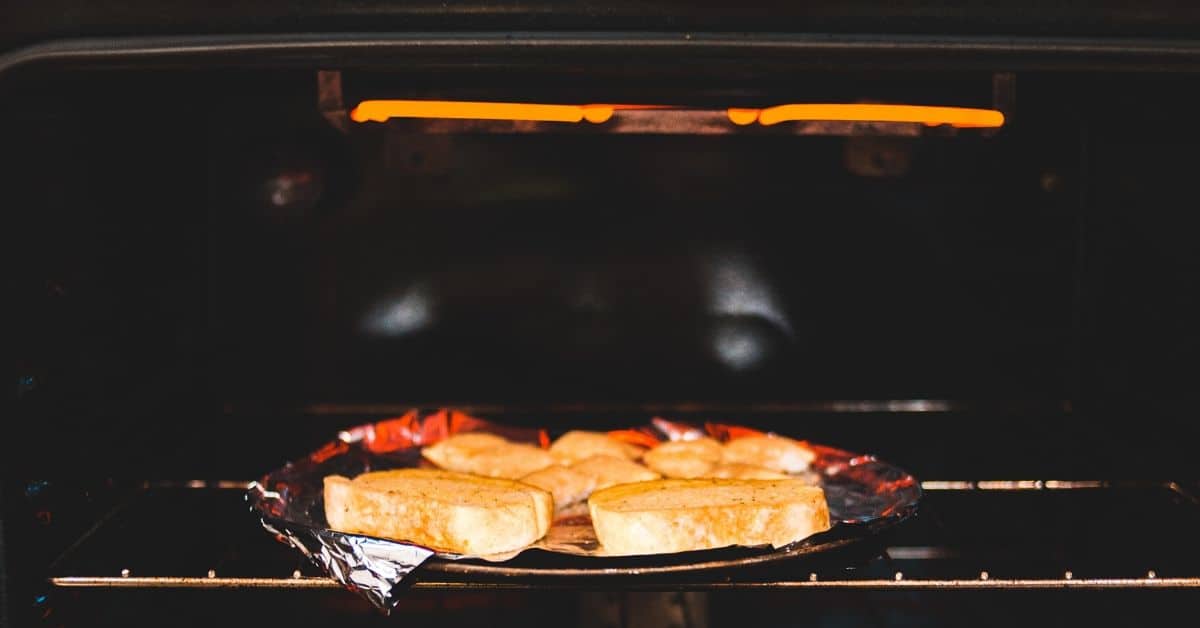
In a broiling cycle, the heating element (whether electric or gas) reaches temperatures ranging from 500°F to over 550°F (260°C to 290°C). At these temperatures, the element emits significant amounts of infrared radiation. This energy travels in waves and does not require a medium (like air) to transfer heat. Instead, the energy is absorbed directly by the surface of the object it strikes. This is technically known as “radiative heat transfer.”
The efficiency of this transfer is governed by the Stefan-Boltzmann law, which states that the power radiated is proportional to the fourth power of the absolute temperature. This explains why a small increase in the broiler’s power output results in a massive increase in cooking intensity. It is the same technological principle used in industrial drying processes and high-end heaters.
Electric vs. Gas: The Technological Variance
The hardware used to generate this radiation varies significantly between appliance types. In electric ovens, the broiler typically consists of a high-resistance Calrod element—a coil of nickel-chromium (NiCr) wire encased in a protective metal sheath. When current passes through the wire, electrical resistance generates intense heat.
In gas ovens, the technology utilizes a burner tube or a ceramic infrared tile. Modern high-end gas broilers often use “Infrared Burners,” where gas is forced through thousands of tiny holes in a ceramic plate. The gas ignites on the surface, heating the ceramic until it glows red, emitting a steady, uniform curtain of infrared energy. This is a significant technological leap over traditional blue-flame burners, which provide uneven heat distribution.
The Evolution of Oven Hardware: From Coil to Carbon Fiber
The history of kitchen tech is a journey toward higher efficiency and faster response times. The “broil” function has been a primary driver of innovation in heating element materials and design.
Traditional Calrod Elements
For decades, the standard in broiler tech was the tubular heating element. While reliable, these elements have a “thermal lag.” It takes time for the metal sheath and the magnesium oxide insulation inside to reach the required temperature. From a user-experience design perspective, this delay is a bottleneck. Engineers have spent years optimizing the diameter and length of these coils to maximize the surface area-to-heat ratio, ensuring that the infrared “throw” covers the entire rack.
Advanced Infrared and Halogen Systems
Recent shifts in appliance technology have introduced halogen-based broiling. These systems use high-intensity halogen bulbs to provide instant-on heat. Unlike traditional coils, halogen elements reach peak radiative output in seconds. This technology is often found in “speed-cook” or “Advantium” style ovens, where light energy is used to penetrate the surface of food while simultaneously browning it.
Furthermore, some luxury brands are experimenting with carbon fiber heating elements. Carbon fiber has a very low thermal mass, meaning it heats up and cools down almost instantly. This allows for pulse-width modulation (PWM) control—where the oven’s computer rapidly cycles the power on and off to maintain a hyper-precise temperature, preventing the “scorch” often associated with older broiler tech.

Smart Ovens and the Digitization of High-Heat Cooking
The most significant shift in broiler technology over the last decade is the integration of software and artificial intelligence. The broiler is no longer a “dumb” heating element; it is a data-driven tool.
AI-Driven Temperature Sensors and Precision Control
Traditional broilers operated on a simple thermostat logic: on or off. Modern smart ovens utilize Proportional-Integral-Derivative (PID) controllers. These are the same types of control loop mechanisms used in industrial automation and robotics. A PID controller calculates the difference between the desired temperature and the actual temperature, then adjusts the power output to the broiler element to minimize the “overshoot.”
In high-end “smart” models, cameras equipped with computer vision are mounted inside the oven. These cameras use machine learning algorithms to identify what is being broiled—be it a steak, salmon, or vegetables. The software monitors the “Maillard reaction” (browning) in real-time, automatically adjusting the broiler’s intensity or shutting it off entirely when the optimal digital profile for “doneness” is reached.
IoT Integration and Remote Monitoring
As part of the Internet of Things (IoT) ecosystem, the broiler can now be controlled via mobile applications. This involves sophisticated firmware that bridges the gap between a smartphone’s UI and the oven’s high-voltage relays. Users can receive “Push Notifications” when the broiler has reached its peak infrared output or when the sensor detects that the food’s surface temperature is approaching a critical threshold. This connectivity reduces the risk of fire—a common hazard with high-heat broiling—by providing a digital fail-safe.
Safety Engineering and Thermal Management
Broiling places an immense amount of stress on an appliance’s internal components. Designing an oven that can withstand 550°F from the top down requires advanced materials science and thermal management.
Cooling Fan Technology and Heat Dissipation
When the broiler is active, the control board—the “brain” of the oven—is at risk of overheating. Engineers solve this using “Cross-Flow” or “Tangential” cooling fans. These fans create a curtain of cool air that flows between the oven cavity and the exterior skin of the appliance. This keeps the digital displays and touch-sensitive interfaces from melting or malfunctioning. In high-tech ovens, these fans are “Variable Speed,” meaning the onboard computer adjusts the RPM based on real-time data from internal thermistors.
Circuit Protection and Overheat Mitigation
Broiling requires a high draw of amperage. Most residential electric broilers pull between 3,000 and 4,000 watts. This necessitates heavy-duty wiring and specialized relay switches. Modern ovens include “Thermal Cut-off” (TCO) switches. These are safety components that act like a fuse; if the internal temperature of the oven chassis exceeds a certain safety limit (usually due to a component failure), the TCO mechanically breaks the circuit to the broiler, preventing a catastrophic electrical fire.
The Future of High-Heat Tech: Solid-State and Laser Cooking
As we look toward the next frontier of kitchen technology, the “broiler” as we know it may be replaced by even more precise energy delivery systems.
One emerging technology is “Solid-State RF” (Radio Frequency) cooking. While currently used in advanced microwave technology (like the Miele Dialog oven), the ability to target specific molecules with RF energy allows for surface browning that is even more uniform than infrared broiling.
Another area of research involves laser-diode arrays. In laboratory settings, engineers have used blue lasers to “print” heat onto the surface of food. This would allow for a “zonal broiler” where different areas of the oven rack receive different intensities of heat based on the specific requirements of the food placed there.
Conclusion
“What is broil in an oven?” From a tech perspective, it is a high-energy radiative system that represents the pinnacle of home thermal engineering. It is a fusion of physics, hardware design, and increasingly, sophisticated software. Whether it is through the use of PID controllers to manage heat spikes or the application of infrared ceramic tiles for uniform energy distribution, the broiler is a testament to how we have digitized the ancient power of the flame. As smart home technology continues to mature, the broiler will only become more precise, safer, and more integrated into our automated lives.
aViewFromTheCave is a participant in the Amazon Services LLC Associates Program, an affiliate advertising program designed to provide a means for sites to earn advertising fees by advertising and linking to Amazon.com. Amazon, the Amazon logo, AmazonSupply, and the AmazonSupply logo are trademarks of Amazon.com, Inc. or its affiliates. As an Amazon Associate we earn affiliate commissions from qualifying purchases.