
In the realm of mathematics, the question “what is the absolute value of 0?” yields a deceptively simple answer: 0. However, when we transition this concept into the world of technology, software engineering, and digital architecture, this “simple” value becomes a foundational pillar. In computing, zero is not merely a number; it is a state, a placeholder, a boundary, and occasionally, a source of significant logical complexity.
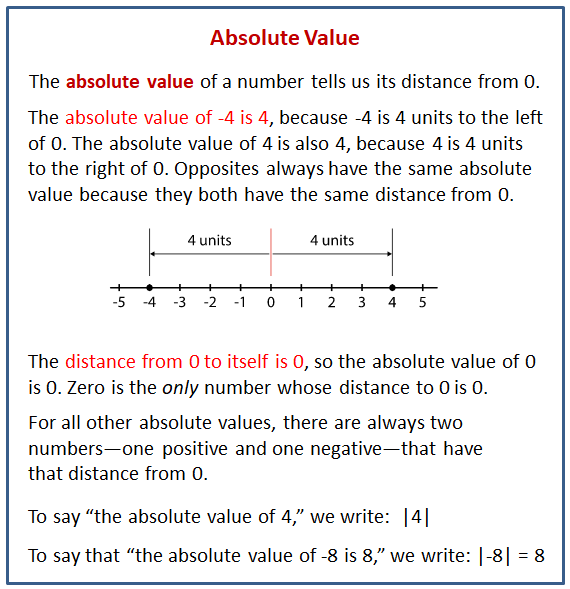
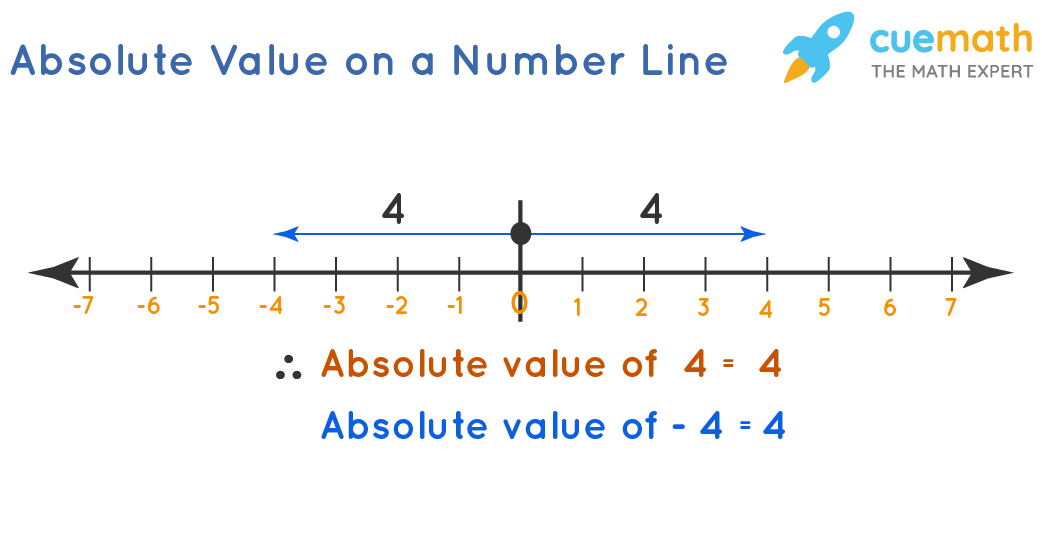
The absolute value of a number is defined as its distance from zero on a number line, regardless of direction. Because zero is the origin itself, its distance from itself is inherently zero. While this is mathematically intuitive, the implementation of this logic within modern technology—ranging from high-level AI algorithms to low-level hardware processing—reveals the profound importance of how we handle the “null point.”

The Engineering of Zero: Signed Zeros and Floating-Point Arithmetic
To understand the absolute value of zero in a tech context, one must first look at how computers actually store numbers. Unlike the abstract number line used in a classroom, computers use bits and bytes, which necessitates specific standards for representing numerical data.
The IEEE 754 Standard
Most modern computing systems follow the IEEE 754 standard for floating-point arithmetic. This standard is what allows your laptop, smartphone, and cloud servers to perform complex calculations with precision. Interestingly, this technical standard introduces a concept that doesn’t exist in basic arithmetic: the “signed zero.”
In many digital systems, zero can be represented as both “positive zero” (+0) and “negative zero” (-0). This occurs because a specific bit (the sign bit) is dedicated to indicating whether a number is positive or negative. When the magnitude of the number is zero, the sign bit can still be toggled.
Why the Absolute Value Function Matters in Hardware
When a software engineer calls an absolute value function, such as abs() in C++ or math.fabs() in Python, the underlying hardware must reconcile these signed zeros. The absolute value of both +0 and -0 is defined by technical protocols to be +0.
This is critical for digital stability. If a system treated -0 as a distinct entity from 0 during distance calculations or logic gates, it could lead to “division by zero” errors or infinite loops in critical software. By ensuring the absolute value of any form of zero is a clean, unsigned zero, engineers create a “safe harbor” for computational logic.
Practical Applications in Software Development and Data Science
In software development, the absolute value of zero serves as more than just a calculation; it is a vital component of algorithm design and error handling.
Distinguishing Between Null and Zero
One of the most common pitfalls in technology is the confusion between a value of zero and a “Null” or “Undefined” state. In database management and web development, zero has a specific “absolute value”—it represents a quantity of nothingness. Conversely, Null represents the absence of a value entirely.
When building search engines or recommendation algorithms, the absolute value of zero is used as a baseline. For instance, if an algorithm is calculating the “weight” of a user’s interest in a topic, a value of zero indicates a neutral stance. If the system fails to calculate the absolute value correctly (i.e., treating it as a Null), the entire recommendation engine could skew, leading to poor user experiences.
Absolute Value in Modern Programming Languages
Developers frequently use the absolute value of zero when normalizing data. In languages like Python, JavaScript, and Java, the abs() function is a core utility.
Consider a financial software application that tracks market fluctuations. The software might use absolute values to determine the “magnitude of change.” If the market does not move, the change is 0. The absolute value of that 0 ensures that the system records a “stable” state rather than an “error” state. Without this mathematical certainty, the UI might display nonsensical data or trigger false alerts for “negative movement” when no movement occurred.
Absolute Value in Machine Learning and AI Algorithms
As we move into the era of Artificial Intelligence, the mathematical properties of zero become even more significant. AI models rely on multidimensional vector spaces where “zero” is the center of the universe.
Distance Metrics and the Origin
Machine learning models often function by calculating the distance between data points. Whether using Euclidean distance or Manhattan distance, the “origin” (0,0,0…) is the point from which many measurements begin. The absolute value of 0 is the fundamental unit of these calculations.
In “Loss Functions”—the mathematical tools used to train AI—the goal is often to bring the “error” as close to zero as possible. When an AI model achieves an absolute error value of 0, it means the model has reached perfect parity with its training data (though this often leads to “overfitting”). Understanding that the absolute value of 0 is the ultimate goal allows data scientists to calibrate their models for maximum accuracy.
Activation Functions and Thresholds
Many AI neural networks use “activation functions” like ReLU (Rectified Linear Unit). These functions essentially ask: “Is the input greater than zero?” If the input is zero or less, the function returns zero.
Here, the absolute value is used to determine thresholds. By defining the absolute value of 0 as the pivot point, engineers can create “sparse” models that are more efficient. If the computer knows that any value whose absolute distance from zero is negligible can be ignored, it can save massive amounts of processing power and electricity, making AI more sustainable.
Digital Security and Cryptographic Significance
The precision of zero also extends into the high-stakes world of digital security and cryptography. In encryption, the difference between zero and a fraction of a decimal can be the difference between a secure system and a vulnerable one.
The Role of Zero in Encryption Keys
Cryptographic algorithms, such as RSA or Elliptic Curve Cryptography, rely on complex modular arithmetic. In these systems, zero often represents a “null state” or a specific point on a curve. If a cryptographic function incorrectly calculated the absolute value of an internal zero-sum, it could inadvertently leak information about the private key.
Secure coding practices require that mathematical operations involving zero are “constant-time.” This means the computer should take the same amount of time to calculate the absolute value of 0 as it does for 1,000,000. If the calculation for 0 were faster, a hacker could use a “timing attack” to guess the data being processed by measuring how long the CPU takes to respond.
Resilience Against Computational Errors
In digital security, “Zero-Day” vulnerabilities often arise from unexpected mathematical results. For example, if an integer overflow causes a value to wrap around to zero, the way the software handles the absolute value of that zero determines if the program crashes or continues securely.
By strictly adhering to the mathematical definition—that the absolute value of 0 is always 0—security protocols ensure that there are no “shadow values” that could be exploited to bypass authentication or gain unauthorized access to a system.
The Philosophical and Technical “Value” of Nothing
While the absolute value of 0 is a basic fact taught in primary school, its role in technology is a testament to the importance of precision. In the digital world, zero is the bridge between “off” and “on,” between “false” and “true,” and between a “negative” vector and a “positive” one.
From the IEEE 754 floating-point standards that govern our hardware to the complex neural networks that drive modern AI, the absolute value of zero provides a stable, predictable foundation. For tech professionals, developers, and designers, zero is not a “lack of value.” It is a specific, absolute coordinate that allows our digital universe to remain consistent, secure, and functional.
By understanding the technical nuances of zero—its signs, its representations in code, and its role in algorithms—we gain a deeper appreciation for the invisible mathematics that power our modern world. The absolute value of 0 may be 0, but its importance in the tech industry is immeasurable.
aViewFromTheCave is a participant in the Amazon Services LLC Associates Program, an affiliate advertising program designed to provide a means for sites to earn advertising fees by advertising and linking to Amazon.com. Amazon, the Amazon logo, AmazonSupply, and the AmazonSupply logo are trademarks of Amazon.com, Inc. or its affiliates. As an Amazon Associate we earn affiliate commissions from qualifying purchases.