
In the rapidly evolving landscape of photonics and precision engineering, few technologies have maintained as much relevance and versatility as the YAG laser. Short for Yttrium Aluminum Garnet, the YAG laser represents a cornerstone of solid-state laser technology. Since its inception, it has transitioned from a specialized laboratory instrument into an essential component of global manufacturing, medical science, and telecommunications.
To understand what a YAG laser is, one must look beyond the acronym and explore the intricate synergy of physics, hardware engineering, and software control that allows this technology to manipulate matter with sub-millimeter precision. As we move deeper into the era of Industry 4.0 and advanced robotics, the YAG laser remains at the forefront of the technological frontier.
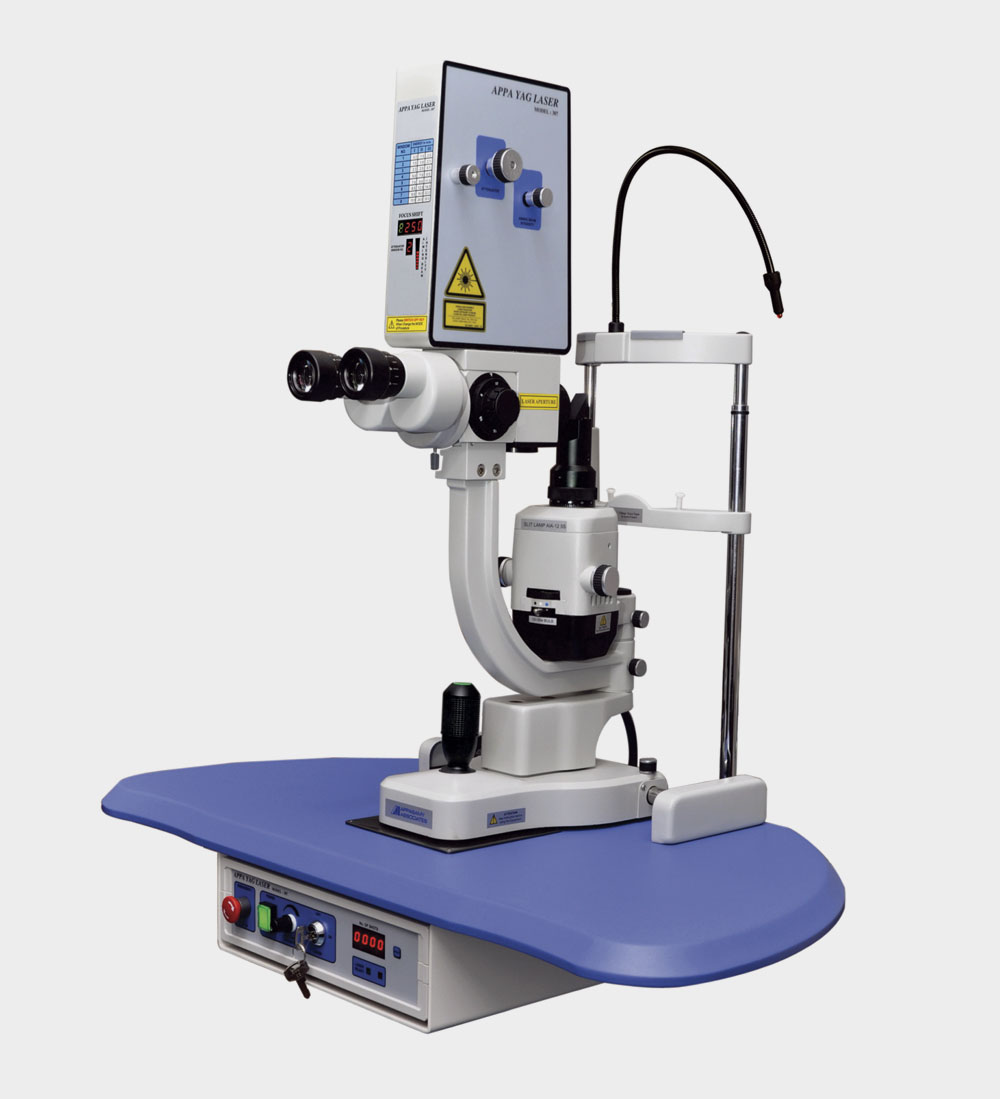
The Engineering and Physics of YAG Technology
At its core, a YAG laser is a solid-state laser that uses a synthetic crystal as its lasing medium. While there are various types of YAG lasers, the most prevalent by far is the Nd:YAG (Neodymium-doped Yttrium Aluminum Garnet). This technology relies on the principles of stimulated emission to produce a high-intensity, coherent beam of light.
The Role of the Solid-State Crystal
The “heart” of the system is the YAG crystal (Y3Al5O12), which serves as the host lattice. By itself, the crystal is optically inactive. However, engineers “dope” the crystal with rare-earth ions, most commonly Neodymium (Nd3+). These ions replace a small percentage of the yttrium ions in the crystal structure. When an external energy source—such as a flashlamp or a laser diode—”pumps” the crystal, the neodymium ions become excited. As they return to their ground state, they release photons, which are then amplified between two mirrors to create the laser beam.
Wavelengths and Optical Characteristics
The standard Nd:YAG laser operates at a primary wavelength of 1064 nanometers (nm), which sits in the infrared spectrum, invisible to the human eye. This specific wavelength is highly effective because it is absorbed efficiently by metals and certain biological tissues. Furthermore, through a process called “frequency doubling” or “second-harmonic generation,” the 1064nm light can be converted into 532nm light (visible green), expanding its utility into applications requiring different absorption profiles.
Pulsed vs. Continuous Wave (CW) Operation
One of the key technical advantages of YAG lasers is their operational flexibility. They can function in a Continuous Wave (CW) mode, providing a steady stream of energy, or in a Pulsed mode. Pulsed YAG lasers, particularly those utilizing “Q-switching,” can deliver incredibly high peak power (megawatts) in extremely short durations (nanoseconds). This “burst” capability allows for precise material removal without excessive heat transfer to the surrounding area, a critical factor in micro-electronics and delicate surgeries.
Industrial and Precision Manufacturing Applications
The industrial sector has been the primary driver of YAG laser evolution. Its ability to focus high energy into a microscopic spot makes it the tool of choice for heavy industries and high-tech manufacturers alike.
Advanced Metal Fabrication: Cutting and Welding
In the automotive and aerospace industries, YAG lasers are integrated into multi-axis robotic arms to perform complex cutting and welding tasks. Unlike traditional mechanical tools, a YAG laser does not suffer from “tool wear.” It can cut through hardened alloys and titanium with high speed and repeatability. In welding, the YAG laser produces a narrow, deep weld (known as keyhole welding) that minimizes structural distortion, ensuring the integrity of critical components like jet engine blades or fuel injectors.
Micromachining and Semiconductor Manufacturing
As gadgets become smaller and more powerful, the need for micromachining has skyrocketed. YAG lasers are used to drill “micro-vias” (tiny holes) in multi-layer circuit boards and to trim resistors in integrated circuits. The precision of the YAG beam allows for the removal of material at the micron level, facilitating the production of the high-density semiconductors that power modern smartphones and AI hardware.
Laser Marking and Traceability
In the realm of digital security and logistics, YAG lasers provide a permanent solution for marking. Unlike ink or labels, laser marking alters the surface of the material itself. This is used for “Direct Part Marking” (DPM), where serial numbers, QR codes, and anti-counterfeiting data are etched into everything from medical implants to high-end electronics. The high contrast and durability of these marks are essential for global supply chain transparency.
The Medical Tech Revolution: From Vision to Surgery
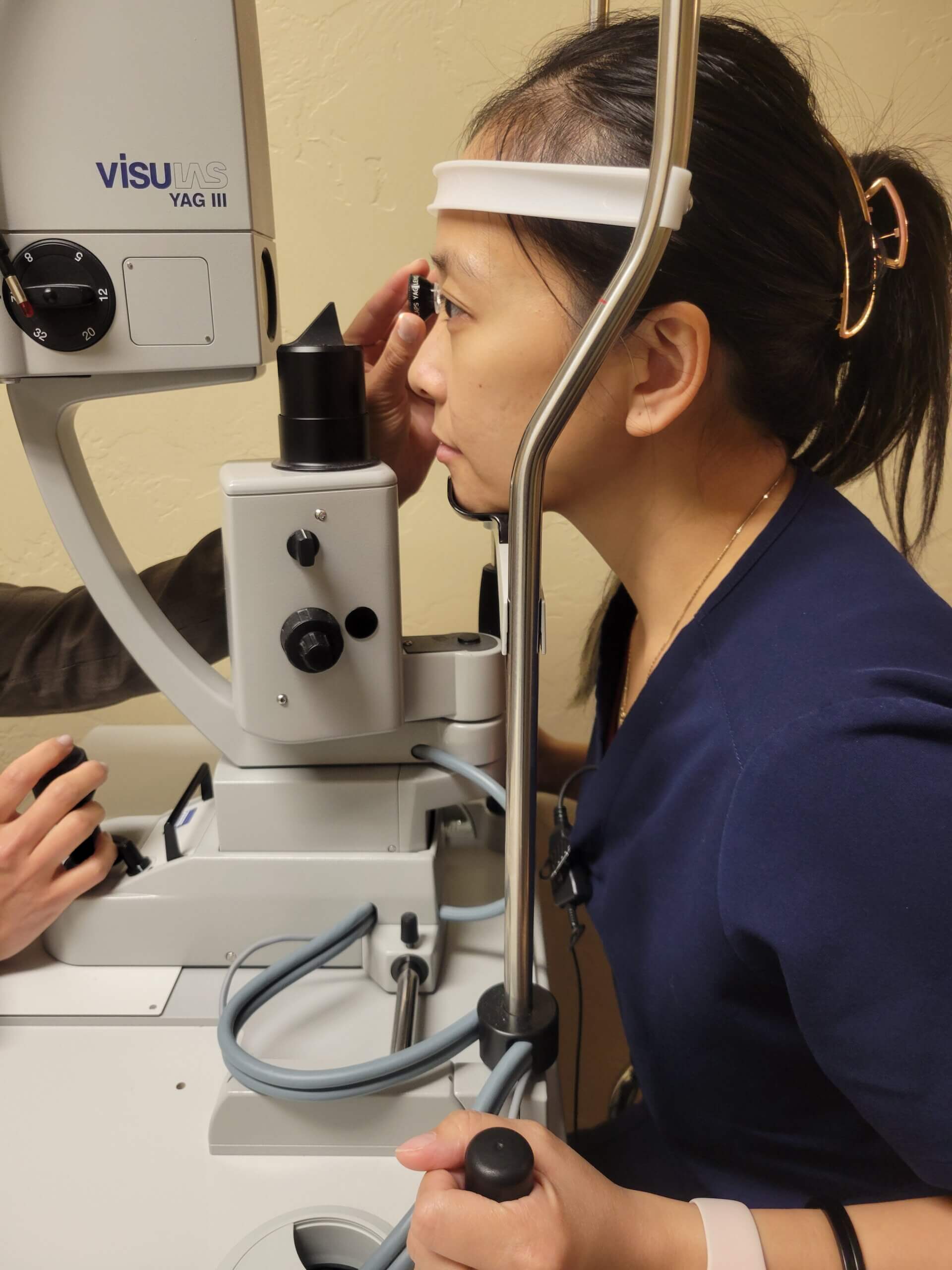
Beyond the factory floor, YAG lasers have revolutionized medical technology, offering non-invasive solutions for complex biological issues. The precision afforded by solid-state optics has turned once-risky surgeries into routine outpatient procedures.
Ophthalmology and Corrective Procedures
The most famous medical application of the YAG laser is in ophthalmology. Specifically, the Nd:YAG laser is used for “posterior capsulotomy.” After cataract surgery, some patients develop a clouding of the lens capsule; the YAG laser allows surgeons to create a clear opening in the center of the cloudy capsule without ever making an incision in the eye. This light-based surgery restores vision almost instantly with minimal recovery time.
Cosmetic Dermatology and Tattoo Removal
The tech behind tattoo removal is largely dependent on Q-switched YAG lasers. Different wavelengths are used to target specific ink pigments. The laser energy shatters the ink particles into tiny fragments that the body’s immune system can then flush away. Similarly, YAG lasers are utilized for skin resurfacing and the treatment of vascular lesions, where the laser targets hemoglobin in the blood vessels without damaging the overlying skin.
Dental and Surgical Precision
In dentistry, YAG lasers are used for soft-tissue treatments and “hard-tissue” procedures like cavity preparation. Because the laser can be tuned to specific energy levels, it often reduces the need for local anesthesia and minimizes bleeding. In general surgery, the laser acts as a high-precision scalpel that simultaneously cauterizes blood vessels, leading to cleaner surgical fields and faster patient recovery.
Advancements in Laser Software and AI Integration
Modern YAG laser systems are no longer just hardware components; they are sophisticated IoT (Internet of Things) devices integrated into a wider digital ecosystem. The “Tech” aspect of these lasers now involves complex software layers and AI-driven optimizations.
Computer-Aided Manufacturing (CAM) Synchronization
The efficiency of a YAG laser is only as good as the software driving it. Modern systems utilize advanced CAM software that optimizes the “tool path” of the laser beam. By using algorithms to calculate the most efficient path, manufacturers can reduce cycle times and energy consumption. This software integration allows for “Rapid Prototyping,” where a digital CAD model can be turned into a physical part in minutes.
AI-Driven Predictive Maintenance
High-powered YAG lasers are significant investments. To prevent downtime, tech providers are integrating AI and machine learning sensors within the laser housing. These sensors monitor beam quality, cooling temperatures, and power stability in real-time. AI models can predict when a flashlamp or a diode is nearing the end of its lifecycle, alerting technicians to perform maintenance before a failure occurs. This shift toward “Predictive Maintenance” is a hallmark of modern industrial tech.
Digital Security and Anti-Counterfeiting
Advanced YAG systems are now being paired with blockchain and digital verification tech. For example, a YAG laser can etch a unique “fingerprint” into a luxury watch or a high-end microchip. This etch is then recorded on a secure ledger. Because the YAG laser can mark at such a microscopic, high-resolution level, these marks are nearly impossible to replicate, providing a physical-to-digital link that secures high-value tech assets.
The Future of Solid-State Laser Innovation
The trajectory of YAG laser technology is moving toward greater efficiency, miniaturization, and integration into “Green Tech.” As we look toward the next decade, the evolution of the YAG laser will be defined by its environmental footprint and its role in emerging tech sectors.
Diode-Pumped Solid-State (DPSS) Efficiency
The traditional method of “pumping” a YAG crystal with a flashlamp is being rapidly replaced by Diode-Pumped Solid-State (DPSS) technology. Laser diodes are significantly more energy-efficient than flashlamps and have a much longer lifespan. This transition not only reduces the carbon footprint of manufacturing facilities but also allows for more compact laser designs that can be integrated into handheld devices or small-scale laboratory equipment.
Miniaturization and Portable Tech
We are seeing a trend toward the miniaturization of YAG components. While high-power industrial lasers still require significant cooling and power infrastructure, “Micro-YAG” systems are being developed for portable chemical analysis (LIBS – Laser-Induced Breakdown Spectroscopy). These portable tech tools allow scientists and engineers to analyze the elemental composition of materials in the field, from mining sites to space exploration missions.
Sustainability and the Circular Economy
As the world focuses on sustainability, the longevity of YAG lasers becomes a key selling point. Unlike fiber lasers which can sometimes be “black boxes” that are difficult to repair, many YAG systems are modular. Components can be refurbished or replaced, aligning with the principles of a circular economy. Furthermore, the precision of YAG cutting reduces material waste in manufacturing, ensuring that expensive raw materials are used as efficiently as possible.
In conclusion, the YAG laser is far more than a simple beam of light. It is a sophisticated technological platform that bridges the gap between physics and practical utility. Whether it is carving out the microscopic circuits of the future or restoring a patient’s sight, the YAG laser stands as a testament to the power of human ingenuity and the endless possibilities of precision tech. As AI and software continue to enhance its capabilities, the YAG laser will undoubtedly remain a vital tool in the global technological toolkit for decades to come.
aViewFromTheCave is a participant in the Amazon Services LLC Associates Program, an affiliate advertising program designed to provide a means for sites to earn advertising fees by advertising and linking to Amazon.com. Amazon, the Amazon logo, AmazonSupply, and the AmazonSupply logo are trademarks of Amazon.com, Inc. or its affiliates. As an Amazon Associate we earn affiliate commissions from qualifying purchases.