
In the intricate world of technology, precision is not just a desirable trait; it’s an absolute necessity. From the microscopic components that power our smartphones to the advanced materials shaping the future of aerospace, understanding and controlling measurements at incredibly small scales is paramount. Within this realm of fine detail, the unit of measurement known as the micrometer, often abbreviated as µm, plays a foundational role. While it might sound esoteric to those outside of scientific and engineering disciplines, the micrometer is, in fact, the unsung hero behind many of the technological marvels we interact with daily. This article delves into what a micrometer is, its significance in various technological applications, and why its precise measurement capabilities are so crucial for innovation and advancement.

Understanding the Micrometer: A Unit of Microscopic Scale
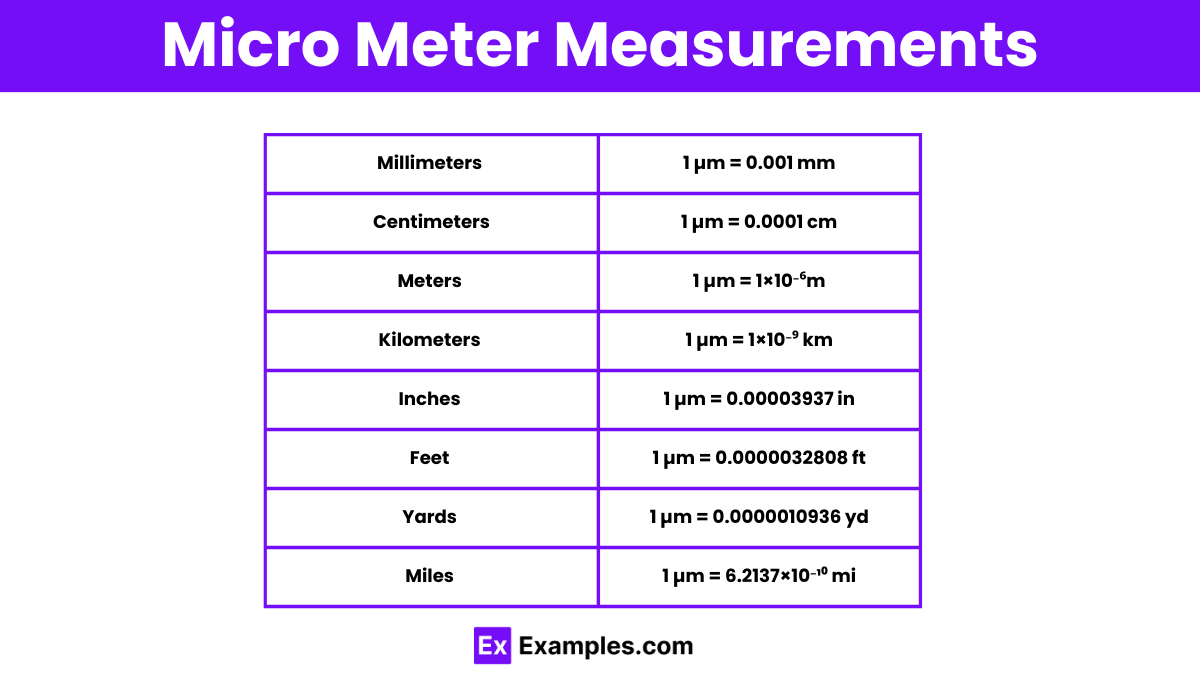
The micrometer, symbolized by the Greek letter mu (µ) followed by the letter “m,” represents a fundamental unit of length in the metric system. It is defined as one-millionth of a meter (10⁻⁶ m). To put this into perspective, a single meter is roughly the height of a doorknob or the width of a doorway. Dividing that meter into a million equal parts gives us the incredibly small dimension of a micrometer. For further visualization, consider that a human hair is typically between 50 and 100 micrometers in diameter. This highlights the minuscule scale at which micrometer measurements operate.
The Metric System and Scientific Notation
The metric system, also known as the International System of Units (SI), is the standard for scientific and technical measurements worldwide. Its decimal-based structure makes conversions and calculations straightforward. The micrometer fits seamlessly into this system, allowing for precise quantification of incredibly small entities.
From Millimeters to Micrometers: A Leap in Precision
To appreciate the micrometer, it’s helpful to understand its relationship to other common metric units. A millimeter (mm) is one-thousandth of a meter (10⁻³ m). A micrometer is then one-thousandth of a millimeter (1 mm = 1000 µm). This means that within the span of a single millimeter, one could fit 1000 micrometers. This progression from millimeters to micrometers signifies an exponential increase in the precision of measurement, enabling engineers and scientists to work with dimensions that were once beyond practical comprehension.
Historical Context and the Rise of Precision Engineering
The development of the micrometer as a unit of measurement is intrinsically linked to the advancement of precision engineering and microscopy. As scientific instruments became more sophisticated, particularly with the invention and refinement of the microscope, the need to accurately quantify the increasingly smaller objects being observed became critical. The late 19th and early 20th centuries saw significant strides in manufacturing capabilities, allowing for the production of components with tolerances measured in micrometers. This era laid the groundwork for the miniaturization and complexity that define modern technology.
The Micrometer’s Indispensable Role in Technological Advancement
The influence of the micrometer extends across a vast spectrum of technological fields, underpinning the functionality and performance of countless devices and systems. Without the ability to measure and control dimensions at the micrometer scale, much of what we consider cutting-edge technology would simply not be possible.
Semiconductor Manufacturing: The Heartbeat of the Digital Age
Perhaps the most profound impact of micrometer measurement is felt in the semiconductor industry. The intricate circuitry of microchips, the very foundation of our digital world, is etched onto silicon wafers with features measured in nanometers (nm) – units even smaller than micrometers. However, the processes involved in creating these nanometer-scale features are controlled and validated using micrometer-level precision.
Lithography and Feature Sizes
Photolithography, the process used to transfer patterns onto semiconductor wafers, relies on precisely controlled wavelengths of light and meticulously engineered masks. The smallest features that can be reliably manufactured, such as transistors and interconnects, are often described in terms of their critical dimensions, which are routinely in the tens or hundreds of nanometers. However, the alignment of layers, the uniformity of etching, and the overall quality control of the wafer often involve measurements in the micrometer range to ensure that the nanometer-scale features are correctly placed and formed.
Wafer Fabrication and Quality Control
The silicon wafers themselves are manufactured to incredibly tight tolerances, with flatness and surface roughness often specified in micrometers. Any deviation from these precise specifications can lead to defects in the final microchips, rendering them non-functional. Sophisticated metrology tools, such as interferometers and profilometers, are used to measure these parameters with micrometer accuracy.
Advanced Materials Science and Engineering
The development and application of new materials with specific properties are heavily reliant on controlling their structure and dimensions at the microscopic level. This is where micrometer measurements become indispensable for researchers and engineers.
Nanomaterials and Composites
While many advanced materials are now in the nanometer realm, their integration into larger structures and devices often requires understanding and controlling interfaces and structures at the micrometer scale. For example, in composite materials, the size and distribution of reinforcing fibers or particles, typically measured in micrometers, significantly influence the material’s strength, stiffness, and other mechanical properties.
Surface Engineering and Coatings
The application of thin films and coatings, often measured in nanometers or micrometers, is crucial for enhancing the performance and durability of components. The thickness and uniformity of these coatings, vital for properties like wear resistance, corrosion protection, or optical performance, are precisely controlled and measured using techniques that operate within the micrometer precision range.
Optics and Photonics: The Science of Light Manipulation
The precise manipulation of light is the cornerstone of modern optics and photonics, from the lenses in our cameras and microscopes to the fiber optic cables that transmit data globally. Micrometer precision is essential for crafting the components that control and direct light.
Lens Fabrication and Alignment
The surfaces of lenses are ground and polished to achieve specific curvatures and smoothness, with tolerances often specified in micrometers. Even minute deviations can lead to optical aberrations, degrading image quality. The alignment of optical components in complex systems, such as telescopes or laser systems, also requires micrometer accuracy to ensure that light rays converge or diverge as intended.
Fiber Optic Technology

The core diameter of optical fibers, the conduits for the internet and telecommunications, is typically in the range of a few micrometers (e.g., 9 µm for single-mode fibers). The precise diameter and uniformity of the fiber core are critical for efficient light transmission over long distances. Furthermore, the splicing and connection of optical fibers require alignment accuracy on the order of micrometers to minimize signal loss.
Biomedical Engineering and Microfluidics
The burgeoning field of biomedical engineering, with its focus on intricate biological systems and advanced medical devices, relies heavily on micrometer-scale precision.
Microfluidic Devices and Lab-on-a-Chip Technology
Microfluidic devices, often referred to as “lab-on-a-chip” systems, are designed to manipulate extremely small volumes of fluids. These devices feature channels and chambers with dimensions ranging from a few micrometers to hundreds of micrometers. They are used in applications such as drug discovery, diagnostics, and cellular analysis. The precise fabrication of these channels and the control of fluid flow within them are dependent on micrometer-level engineering.
Medical Implants and Devices
Many medical implants, such as stents and artificial joints, are manufactured with surface textures and tolerances measured in micrometers to ensure biocompatibility and optimal integration with the body. Furthermore, minimally invasive surgical tools and diagnostic probes often incorporate incredibly fine components whose functionality relies on micrometer precision.
Metrology: The Science of Measurement at the Microscopic Level
The ability to accurately measure at the micrometer scale is not an inherent property of the unit itself but a testament to the sophisticated field of metrology. Metrology is the scientific study of measurement, and at the micrometer level, it involves specialized instruments and techniques.
Optical Metrology Techniques
Optical metrology utilizes light to perform precise measurements without physical contact, which is crucial when dealing with delicate or microscopic objects.
Interferometry
Interferometry is a technique that splits a beam of light into two paths, one of which reflects off the surface being measured. The interference pattern created when the beams recombine provides incredibly precise information about the surface topography, often with sub-micrometer resolution.
Optical Microscopy
While primarily used for visualization, advanced optical microscopes, such as confocal microscopes and scanning electron microscopes (which also utilize electron beams for higher resolution), can also provide dimensional measurements. Calibration and precise stage control are essential for achieving micrometer accuracy.
Mechanical Metrology
While optical methods are prevalent, mechanical measurement techniques also play a role, particularly in manufacturing and quality control.
Micrometers and Calipers
The traditional mechanical micrometer, a precision instrument for measuring external dimensions, operates by a calibrated screw mechanism. While often associated with macroscopic measurements, its principles can be applied to finer scales. Digital calipers also offer increasingly precise measurements, often down to the hundredths of a millimeter, which bridges the gap towards micrometer-level precision for certain applications.
Coordinate Measuring Machines (CMMs)
CMMs are sophisticated automated machines that use probes to measure the geometry of physical objects. Modern CMMs are capable of achieving accuracies in the micrometer range, making them essential for inspecting complex manufactured parts in industries like automotive and aerospace.
The Future of Micrometer Measurement and Technological Frontiers
As technology continues its relentless march towards miniaturization and increased complexity, the importance of micrometer measurement will only grow. The drive towards smaller, faster, and more efficient devices necessitates an ever-finer control over dimensions at the microscopic level.
Beyond Micrometers: The Rise of Nanotechnology
While this article focuses on the micrometer, it’s crucial to acknowledge the increasing prominence of the nanometer (nm) scale in cutting-edge research and development. Nanotechnology, dealing with structures and devices between 1 and 100 nanometers, builds upon the foundations laid by micrometer-scale precision. Many fabrication processes that create nanostructures are guided and verified by micrometer-level measurements.
Advanced Manufacturing and Smart Materials
The future promises even more advanced manufacturing techniques, such as additive manufacturing (3D printing) at microscopic scales, and the development of smart materials that can adapt their properties based on external stimuli. The precise control and measurement of these materials and manufacturing processes will undoubtedly rely on sophisticated micrometer-level metrology.
The Ever-Present Need for Precision
From the microscopic world of semiconductors to the vastness of space exploration where components must withstand extreme conditions, the ability to measure and control at the micrometer scale is a fundamental enabler of technological progress. It is the silent, yet indispensable, partner in innovation, allowing us to build the future, one precise measurement at a time. The micrometer, therefore, is not just a unit of length; it’s a critical dimension in the ongoing story of human ingenuity and technological advancement.
aViewFromTheCave is a participant in the Amazon Services LLC Associates Program, an affiliate advertising program designed to provide a means for sites to earn advertising fees by advertising and linking to Amazon.com. Amazon, the Amazon logo, AmazonSupply, and the AmazonSupply logo are trademarks of Amazon.com, Inc. or its affiliates. As an Amazon Associate we earn affiliate commissions from qualifying purchases.