
The landscape of fitness and weight training is constantly evolving, driven by both scientific understanding and technological innovation. While the core principles of building muscle and strength remain, the methods employed to achieve these goals are becoming more sophisticated. Among these advanced techniques, the superset stands out as a highly effective strategy for maximizing workout intensity and efficiency. But what exactly constitutes a superset, and how can technology amplify its benefits? This article delves into the concept of supersets, exploring their mechanics, strategic application, and crucially, how modern technology empowers individuals to implement and optimize them for superior results.
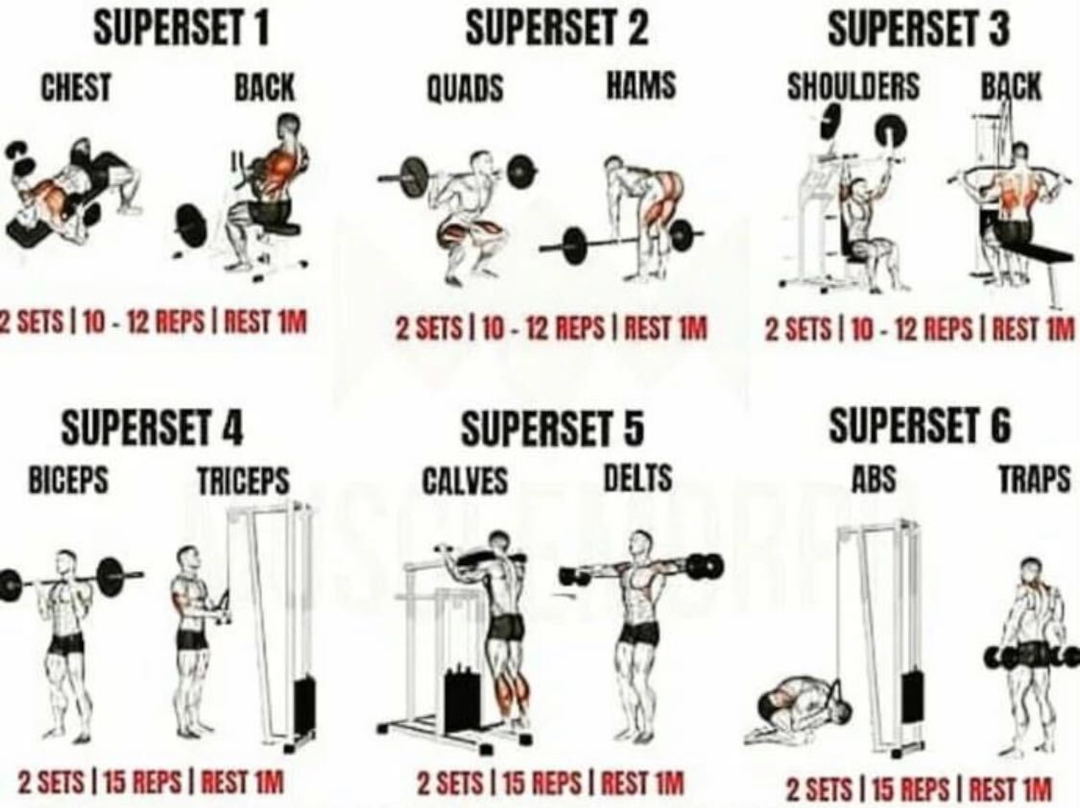
In its simplest form, a superset involves performing two or more exercises back-to-back with minimal rest in between. This contrasts with traditional sets where a period of rest is taken after each completed set of an exercise. The primary goal of a superset is to increase the density of your workout – meaning you accomplish more work in less time – and to challenge your muscles in novel ways, leading to greater hypertrophy (muscle growth) and strength gains. However, the true power of supersets is unlocked when integrated with technological tools that provide precise tracking, personalized guidance, and actionable insights.
Understanding the Mechanics of Supersets: More Than Just Back-to-Back Sets
At its core, a superset is a strategic pairing of exercises. The effectiveness and specific applications of supersets depend heavily on the type of pairing and the intended physiological outcome. Technology plays a pivotal role in ensuring these pairings are executed correctly and their impact is accurately measured.
Types of Superset Pairings and Their Physiological Impact
Supersets are not a one-size-fits-all approach. The choice of exercises and their order can be manipulated to target specific muscle groups, energy systems, or biomechanical functions. Understanding these variations is crucial for maximizing their effectiveness, and technology aids in this understanding and execution.
Antagonist Supersets: The Classic Efficiency Booster
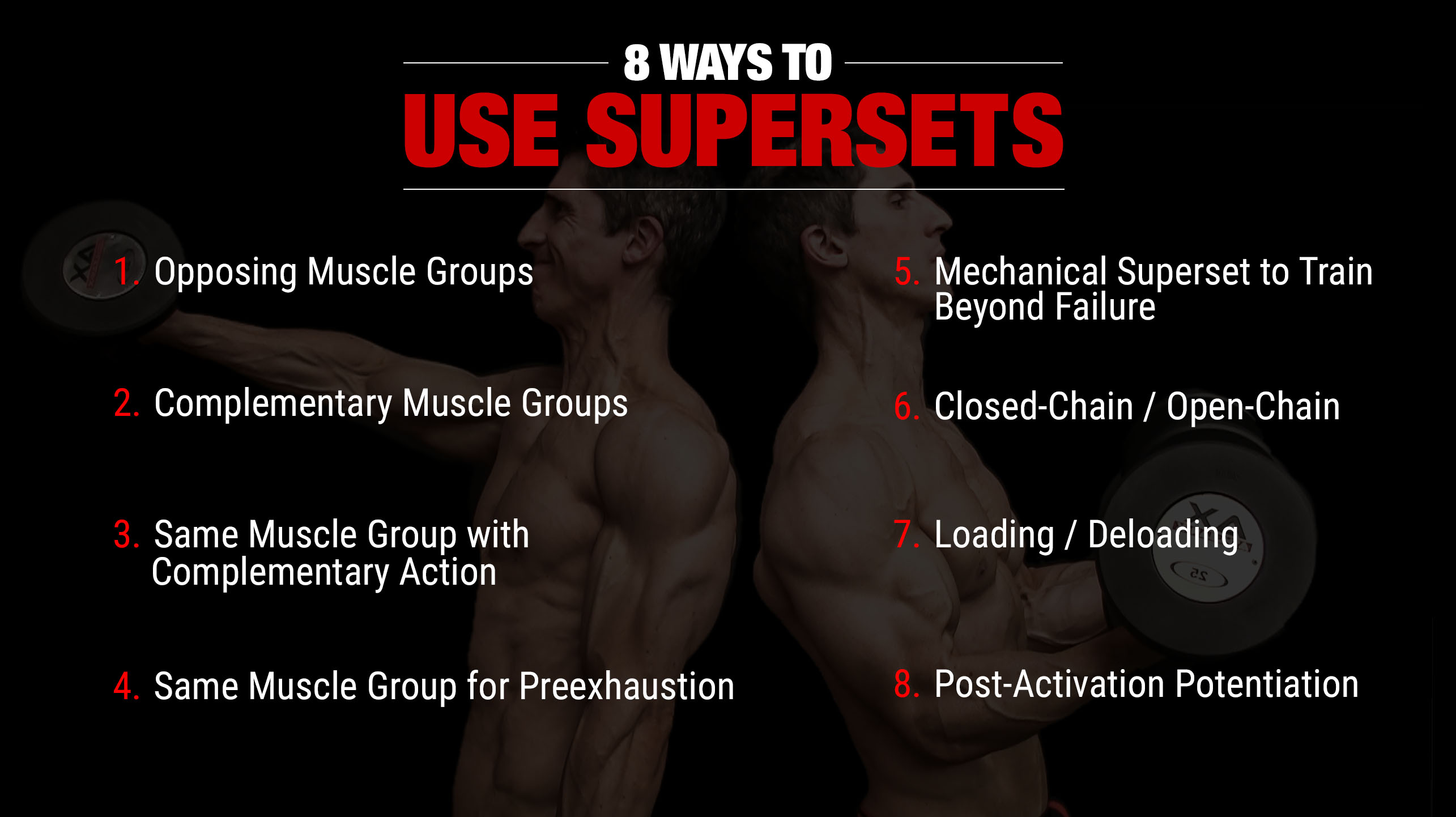
Perhaps the most common and widely understood type of superset involves pairing exercises that work opposing muscle groups. For instance, performing a bicep curl immediately followed by a triceps extension. The physiological advantage here is that while one muscle group is working, the opposing group is resting and recovering, allowing for a quick transition to the next exercise. This minimizes the overall rest time between sets, significantly increasing workout density.
From a technological perspective, apps and smartwatches can help track the duration of the working sets for each exercise and the minimal rest taken between the two. Some advanced fitness tracking devices can even detect the type of movement and alert the user if the rest period between antagonist exercises exceeds a predefined optimal window. This ensures that the efficiency gains of the superset are truly realized. Furthermore, many fitness apps categorize exercises by muscle group, making it effortless to identify effective antagonist pairings.
Agonist Supersets: Intensifying Muscle Fatigue
Agonist supersets involve performing two exercises that target the same muscle group consecutively. A prime example would be performing barbell bench presses immediately followed by dumbbell flyes, both targeting the chest. The rationale behind this pairing is to maximally fatigue a specific muscle group by attacking it from slightly different angles or with different movement patterns. This can lead to a greater metabolic stress on the muscle, a key driver of hypertrophy.
Here, technology is indispensable for monitoring fatigue levels and ensuring that the second exercise isn’t compromised by the exhaustion from the first. Wearable heart rate monitors can provide real-time data on exertion, helping users gauge their intensity. Sophisticated fitness apps can even suggest appropriate weight reductions for the second exercise in an agonist superset based on previous performance data and perceived exertion inputs. This prevents potential form breakdown due to fatigue and ensures the targeted muscle receives optimal stimulation.
Compound Sets: The Power of Multiple Angles
A compound set is a variation where you perform two or more exercises for the same muscle group using the same equipment but with slightly different grips or stances. For example, on the lat pulldown machine, you might perform a set with a wide grip followed immediately by a set with a close grip. This method further amplifies muscle activation and fatigue within a single muscle group.
The technological challenge here is ensuring proper form and consistent tension across both exercises. While no technology can directly correct form during a compound set, apps can provide detailed video demonstrations and form cues for each exercise variation. Furthermore, strength training apps that allow users to log sets, reps, and weight can help track progress across these variations, highlighting which grip or stance combinations yield the best results for that individual.
The Role of Rest: Timing is Everything
The minimal rest between exercises is the defining characteristic of a superset. This brief interlude is crucial for maintaining intensity without completely recovering. Technology plays a vital role in precisely timing these short rest periods.
Smart Timers and Interval Training Apps
Modern fitness apps and smartwatches come equipped with sophisticated interval timers that can be customized for superset workouts. Users can program the exact duration for each exercise and the precise rest interval between them. These timers often provide audio or vibration cues to signal the transition to the next exercise or rest period, allowing the user to focus entirely on their performance rather than constantly checking a stopwatch. Some advanced apps even offer pre-programmed superset routines that guide the user through the entire workout with timed transitions.
Harnessing Technology for Superset Optimization and Tracking
The true power of incorporating supersets into a training regimen is amplified exponentially by the integration of various technological tools. These tools move beyond simple timing to provide detailed analytics, personalized adjustments, and injury prevention insights.
Wearable Fitness Trackers: Real-Time Performance Metrics
Wearable fitness trackers, from smartwatches to chest straps, are invaluable for superset training. They provide a wealth of real-time data that can inform and refine the execution of these demanding workout protocols.
Heart Rate Monitoring and Intensity Management
Heart rate monitoring is a cornerstone of understanding cardiovascular exertion during a workout. When performing supersets, heart rate can spike considerably due to the reduced rest periods. Wearables allow users to track their heart rate zones, ensuring they are working within the desired intensity for their goals (e.g., fat burning, cardiovascular conditioning, or peak strength development). If the heart rate consistently remains too high during the rest periods, it might indicate insufficient rest or an overly demanding superset pairing, prompting a necessary adjustment. Conversely, if it’s too low, the intensity might not be sufficient.
Calorie Expenditure and Metabolic Impact
While not the primary focus of supersets for all individuals, understanding the caloric expenditure associated with these high-density workouts can be beneficial for those with weight management goals. Fitness trackers estimate calorie burn based on heart rate, activity level, and individual biometrics. Supersets, due to their intensity and shorter duration, often lead to a higher caloric expenditure per unit of time compared to traditional set structures. This data can be used to fine-tune nutrition plans.
Fitness Apps and Software: Intelligent Workout Design and Analysis
The proliferation of fitness applications has revolutionized how individuals approach their training. For supersets, these apps offer a powerful suite of tools for planning, executing, and analyzing workouts.
Intelligent Superset Programming and Adaptation
Many fitness apps now offer sophisticated workout builders that allow users to easily create superset routines. Users can select exercises, specify the number of reps and sets, and define the rest periods between exercises and between supersets. Some advanced platforms even employ AI algorithms to suggest optimal superset pairings based on the user’s goals, fitness level, and historical performance data. These algorithms can adapt the workout on the fly, recommending changes if the user is consistently over- or underperforming.
Rep and Weight Tracking with Performance Analytics
Accurate logging of repetitions, weight lifted, and exercise variations is crucial for progress. Fitness apps provide a digital logbook, often with detailed analytics. For supersets, this means tracking how many reps were completed in each part of the superset, and the weight used for each exercise. Over time, users can review this data to identify trends, plateaus, and areas for improvement. Seeing the weight and reps increase over time for specific supersets is a clear indicator of progress and can be highly motivating.
Video Demonstrations and Form Guidance
Maintaining proper form is paramount, especially when fatigued during a superset. Many fitness apps include extensive libraries of exercise videos with detailed instructions on proper technique. For supersets, these resources are invaluable for ensuring that the second exercise in a pairing is performed correctly, minimizing the risk of injury and maximizing muscle engagement. Some apps even offer real-time form feedback using smartphone cameras and AI, although this technology is still in its nascent stages for complex, dynamic movements.
Advanced Applications and Considerations for Superset Training
Beyond the basic execution, integrating supersets with technology opens doors to more advanced training strategies and necessitates careful consideration of individual physiology and recovery.
Periodization and Progressive Overload with Supersets
Supersets are not meant to be performed at maximum intensity indefinitely. Like any training methodology, they need to be integrated into a well-structured periodization plan to ensure continued progress and prevent overtraining. Technology aids in this by providing the data necessary to implement progressive overload effectively.
Data-Driven Progression Strategies
By meticulously tracking performance metrics through wearables and apps (e.g., increased weight lifted, more reps achieved, shorter rest times maintained), individuals can systematically apply progressive overload. For instance, if a user consistently hits the target reps for a specific superset, the app can suggest increasing the weight for the next session. Conversely, if performance dips, it might indicate a need to deload or adjust the superset pairing. This data-driven approach ensures that training stimuli remain challenging and conducive to adaptation.
Integrating Supersets into Different Training Phases
Technology can help users program supersets appropriately within broader periodization cycles. For example, during hypertrophy phases, agonist and compound supersets might be emphasized to maximize muscle breakdown and growth. During strength phases, antagonist supersets might be used to increase work capacity and efficiency, allowing for more overall volume without excessively long rest periods. Fitness apps can assist in scheduling these variations according to a macrocycle of training.
Injury Prevention and Recovery Monitoring
The high intensity of supersets can increase the risk of injury if not managed properly. Technology offers tools that can help monitor fatigue and promote recovery, mitigating these risks.
Fatigue Monitoring and Overtraining Prevention
Wearable devices can track metrics like resting heart rate, heart rate variability (HRV), and sleep quality. Significant deviations in these metrics can be early indicators of overtraining or inadequate recovery. If a user’s HRV is consistently low, or their resting heart rate is elevated, it might be a signal to scale back on the intensity of supersets or take an extra rest day. Fitness apps can often integrate this data and provide personalized recovery recommendations.
Personalized Recovery Protocols Informed by Data
Recovery is as crucial as the training itself. Technology can help individuals tailor their recovery strategies based on their training load and physiological response. For instance, an app might suggest specific stretching routines, foam rolling techniques, or nutritional adjustments based on the intensity and type of supersets performed, coupled with biometric data from wearables. This personalized approach ensures that the body is adequately prepared for the next demanding superset session.
In conclusion, supersets represent a powerful technique for enhancing weight training efficiency and effectiveness. However, their true potential is unlocked when integrated with the technological tools available today. From smart timers and wearable trackers to sophisticated fitness apps that offer intelligent programming and analytics, technology empowers individuals to not only understand but also optimize their superset workouts. By leveraging these innovations, users can push their limits safely, track their progress meticulously, and ultimately achieve their fitness goals with greater precision and efficacy. The future of weight training is intertwined with technology, and for those looking to maximize their gains, mastering the technologically-enhanced superset is a significant step forward.
aViewFromTheCave is a participant in the Amazon Services LLC Associates Program, an affiliate advertising program designed to provide a means for sites to earn advertising fees by advertising and linking to Amazon.com. Amazon, the Amazon logo, AmazonSupply, and the AmazonSupply logo are trademarks of Amazon.com, Inc. or its affiliates. As an Amazon Associate we earn affiliate commissions from qualifying purchases.