
In the realm of industrial and manufacturing environments, the paramount importance of safety cannot be overstated. Accidents in these settings can lead to severe injuries, fatalities, and significant financial repercussions. A cornerstone of preventing such incidents is the implementation of robust safety protocols, and within these protocols, the Lockout Tagout (LOTO) system plays a vital role. While the broader LOTO procedure involves locking out energy sources, the LOTO tag, often overlooked in its individual significance, is a crucial piece of technology that visually communicates danger and prevents unauthorized re-energization of machinery. This article delves into the technical aspects and operational nuances of LOTO tags, highlighting their role as indispensable safety technology in modern workplaces.

The Technical Foundation of LOTO Tags: Material, Design, and Durability
LOTO tags are not merely pieces of paper; they are engineered safety devices designed to withstand harsh industrial environments and clearly convey critical information. Their technical specifications are a testament to their demanding application.
Material Science and Construction
The materials used in the construction of LOTO tags are carefully selected for their resilience. Common materials include durable plastics like polyester, vinyl, or nylon, often reinforced for tear resistance. These materials are chosen for their ability to resist abrasion, chemicals, grease, oil, and extreme temperatures – conditions frequently encountered in manufacturing plants, construction sites, and other industrial settings.
- Durability and Weather Resistance: Industrial environments can expose equipment and safety devices to the elements. LOTO tags are often designed to be waterproof and UV-resistant, ensuring their legibility and structural integrity even when subjected to prolonged outdoor exposure or washing down procedures. The inks used for printing are also chosen for their fade resistance and chemical inertness.
- Reinforcement and Attachment: To prevent accidental detachment, LOTO tags are typically reinforced with grommets, often made of metal or heavy-duty plastic. These grommets provide a strong point for attaching the tag to the lockout device, preventing it from being easily ripped or torn off. The method of attachment, usually via a cable tie, wire, or hasp, is also engineered for security and tamper-resistance.
Design and Information Encoding
The design of a LOTO tag is as critical as its material composition. It is a visual communication tool, and its effectiveness hinges on clarity, conciseness, and adherence to established safety standards.
- Standardized Color Coding: While specific color schemes can vary slightly by region or company policy, a common convention exists. Red is universally recognized as a symbol of danger and is typically used for LOTO tags to signify that machinery is being worked on and must not be operated. Other colors might be used for different purposes within a broader safety management system, but the LOTO tag’s primary color is almost always red.
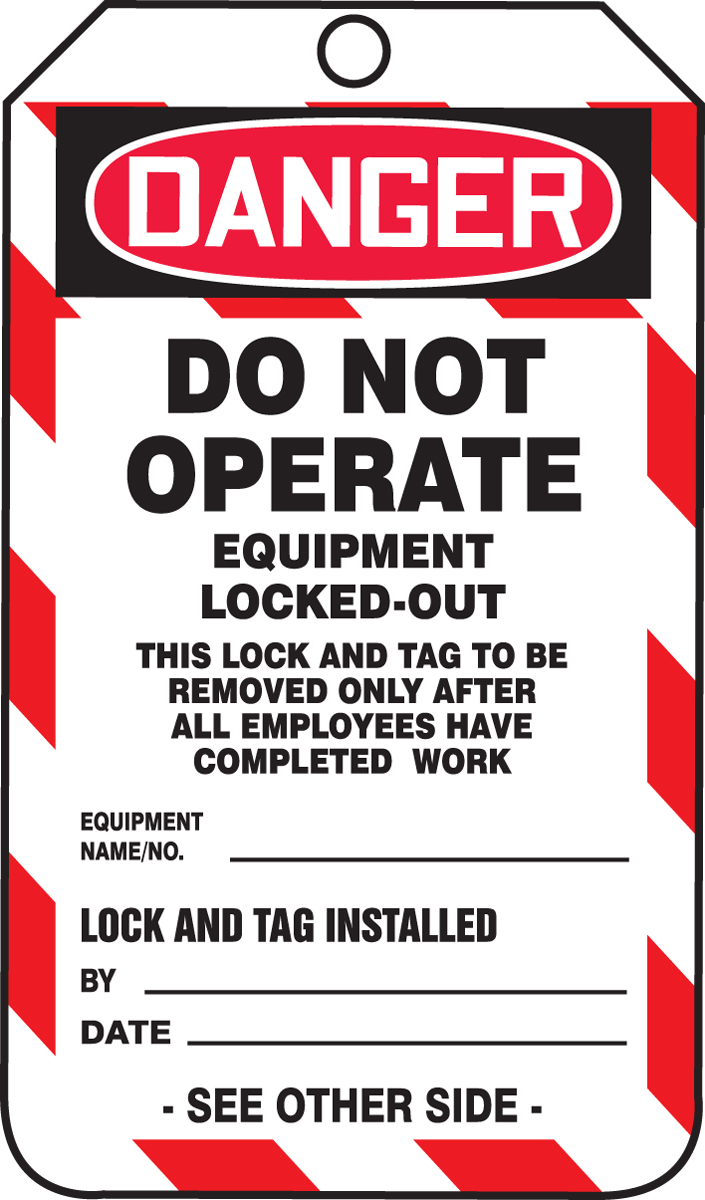
- Essential Information Fields: LOTO tags are designed with specific fields to capture vital information, ensuring that anyone approaching the machinery understands the situation. These fields typically include:
- “DO NOT OPERATE” or “DANGER”: A prominent, bold warning to immediately alert personnel to the hazardous state of the equipment.
- Reason for Lockout/Tagout: A space for a brief explanation of why the equipment is de-energized (e.g., “Maintenance,” “Repair,” “Cleaning”).
- Name of Person Applying Tag: The identity of the authorized employee performing the LOTO procedure. This is crucial for accountability and for clear communication during the shift change or when the work is completed.
- Date and Time of Application: This helps track the duration of the lockout and ensures that tags are not left on equipment indefinitely.
- Contact Information: In some cases, contact details for the person who applied the tag might be included for further clarification.
- Legibility and Contrast: The font used on LOTO tags is typically clear and sans-serif, ensuring maximum legibility from a distance. High contrast between the text and the tag background (usually white text on a red background) further enhances visibility. Some tags may incorporate symbols or icons to communicate danger in multilingual environments or for personnel with limited literacy.
The Role of LOTO Tags in Digital Safety Systems: Bridging Physical and Digital
While LOTO tags are inherently physical devices, their integration into modern digital safety management systems represents a significant technological evolution. The principles of LOTO are being digitized to enhance efficiency, tracking, and overall safety compliance.
Electronic Lockout/Tagout (eLOTO) Systems
The advent of digital technologies has led to the development of electronic lockout/tagout (eLOTO) systems. These systems aim to replicate and improve upon the traditional paper-based LOTO process, leveraging digital tools for greater control and traceability.

- Software Platforms and Mobile Applications: eLOTO systems typically involve a central software platform that manages lockout/tagout procedures. Authorized personnel can use mobile devices or terminals to initiate, manage, and close out LOTO events. This eliminates the need for physical tags in many instances, though the principles of clear identification and authorization remain paramount.
- Digital Tag Equivalents: In eLOTO, the concept of a “tag” is replaced by a digital record. This record contains all the information traditionally found on a physical tag: the machine affected, the reason for lockout, the authorized personnel involved, and the time of activation. These digital records are stored securely and are auditable.
- Integration with IoT and RFID: Advanced eLOTO systems can be integrated with Internet of Things (IoT) devices and Radio-Frequency Identification (RFID) technology. RFID tags attached to machinery can be scanned, instantly bringing up relevant LOTO procedures and safety data on a technician’s mobile device. IoT sensors can potentially monitor the status of equipment, automatically triggering alerts if unauthorized attempts to operate are detected or if a lockout procedure is breached.
- Benefits of Digital Integration: The transition to digital LOTO offers several advantages:
- Enhanced Traceability and Auditing: Digital records provide an irrefutable audit trail, making it easier to track compliance, identify recurring issues, and conduct post-incident investigations.
- Improved Communication: Real-time updates and notifications can be sent to relevant personnel, ensuring everyone is aware of lockout statuses.
- Reduced Errors: Digital forms and automated workflows can minimize the risk of human error associated with manual data entry.
- Faster Procedure Management: Initiating and closing out LOTO procedures can be significantly quicker, reducing downtime and improving operational efficiency.
Cybersecurity Considerations for eLOTO
As LOTO systems become more digitized, cybersecurity emerges as a critical technical consideration. Protecting these systems from unauthorized access and manipulation is paramount to maintaining workplace safety.
- Access Control and Authentication: Robust access control mechanisms are essential to ensure that only authorized personnel can initiate or modify LOTO procedures in an eLOTO system. Multi-factor authentication and role-based access control are standard practices.
- Data Integrity and Encryption: The data within eLOTO systems must be protected against tampering. Encryption of sensitive data, both in transit and at rest, is crucial. Regular backups and disaster recovery plans are also necessary to ensure data availability and integrity.
- Network Security: eLOTO systems, especially those integrated with IoT devices, rely on network connectivity. Secure network configurations, firewalls, intrusion detection systems, and regular vulnerability assessments are vital to prevent breaches.
- Regular Software Updates and Patching: Like any software system, eLOTO platforms require regular updates and patching to address security vulnerabilities. A proactive approach to cybersecurity is essential to mitigate emerging threats.
The Technological Evolution of Safety Communication: From Simple Tags to Smart Systems
The LOTO tag, in its simplest form, is a testament to the principle of clear visual communication for safety. However, its journey from a basic printed card to an integrated component of sophisticated digital safety management systems highlights the relentless pace of technological advancement in ensuring workplace well-being.
The Foundational Simplicity of the Physical Tag
The enduring effectiveness of the traditional LOTO tag lies in its simplicity and universality. Its immediate visual impact serves as an unambiguous warning.
- Low Barrier to Entry: Physical LOTO tags are inexpensive to produce and require no specialized training to understand their basic purpose – to indicate that a machine is unsafe to operate. This makes them accessible and implementable across a wide range of industries and business sizes.
- Mechanical Reliability: Unlike digital systems, physical tags do not rely on power, network connectivity, or software to function. They are immune to electronic failures, making them a reliable last line of defense in critical situations.
- Tangible Warning: The physical presence of a tag on a piece of machinery creates a tangible and undeniable warning. It is a physical barrier to accidental re-energization, reinforcing the importance of the safety procedure.
The Digital Leap: Enhancing Control and Intelligence
The transition to eLOTO and integrated safety technologies represents a significant leap in enhancing the control, traceability, and intelligence of safety management processes.
- Centralized Management and Standardization: Digital systems allow for centralized management of all LOTO procedures across an entire organization. This ensures consistency in application, reduces the risk of non-compliance, and facilitates easier auditing and reporting.
- Data Analytics for Proactive Safety: The wealth of data generated by digital LOTO systems can be analyzed to identify trends, common failure points, or areas where LOTO procedures are frequently initiated. This data can inform proactive safety initiatives, training programs, and equipment maintenance strategies.
- Augmented Reality (AR) in LOTO: Emerging technologies like Augmented Reality are beginning to find applications in safety. Future iterations of LOTO could involve AR overlays on equipment, providing technicians with real-time LOTO status, relevant procedure steps, and safety warnings directly within their field of vision, further enhancing clarity and reducing cognitive load.
- Predictive Safety Measures: By analyzing historical lockout data, combined with equipment operational data, organizations can move towards predictive safety measures. This could involve identifying equipment that is likely to require frequent LOTO procedures due to recurring mechanical issues and addressing these proactively.
Conclusion: The Indispensable Technological Guardian of Workplace Safety
The Lockout Tagout (LOTO) tag, though seemingly a simple tool, is a critical component of workplace safety technology. Its design, materials, and information encoding are all engineered to prevent severe accidents and protect personnel. From its fundamental role as a visual warning to its evolving integration into sophisticated digital safety management systems, the LOTO tag embodies the constant pursuit of improved safety through technological innovation. As industries continue to embrace digital transformation, the LOTO tag, whether in its physical form or as a digital equivalent within an eLOTO system, will remain an indispensable guardian of the workplace, ensuring that the inherent risks of industrial operations are managed with the utmost care and technological foresight. The ongoing development in this area promises even more intelligent and integrated safety solutions, further solidifying the LOTO system’s position as a cornerstone of modern industrial safety technology.
aViewFromTheCave is a participant in the Amazon Services LLC Associates Program, an affiliate advertising program designed to provide a means for sites to earn advertising fees by advertising and linking to Amazon.com. Amazon, the Amazon logo, AmazonSupply, and the AmazonSupply logo are trademarks of Amazon.com, Inc. or its affiliates. As an Amazon Associate we earn affiliate commissions from qualifying purchases.