
In the rapidly evolving landscape of medical technology, the transition from manual clinical assessments to automated, data-driven diagnostics represents one of the most significant shifts in modern healthcare. Among the traditional clinical indicators being reimagined through the lens of artificial intelligence and wearable sensors is the Homans sign. Historically a manual physical examination maneuver used by clinicians to screen for Deep Vein Thrombosis (DVT), the Homans sign is currently undergoing a digital transformation.
In the world of health-tech, software developers and data scientists are no longer looking at the Homans sign as a simple physical test involving foot dorsiflexion. Instead, it is being viewed as a data point within a broader ecosystem of predictive analytics, Internet of Medical Things (IoMT) devices, and machine learning models designed to prevent vascular catastrophes before they occur.

The Evolution of Diagnostic Logic: From Manual Physicality to Digital Inputs
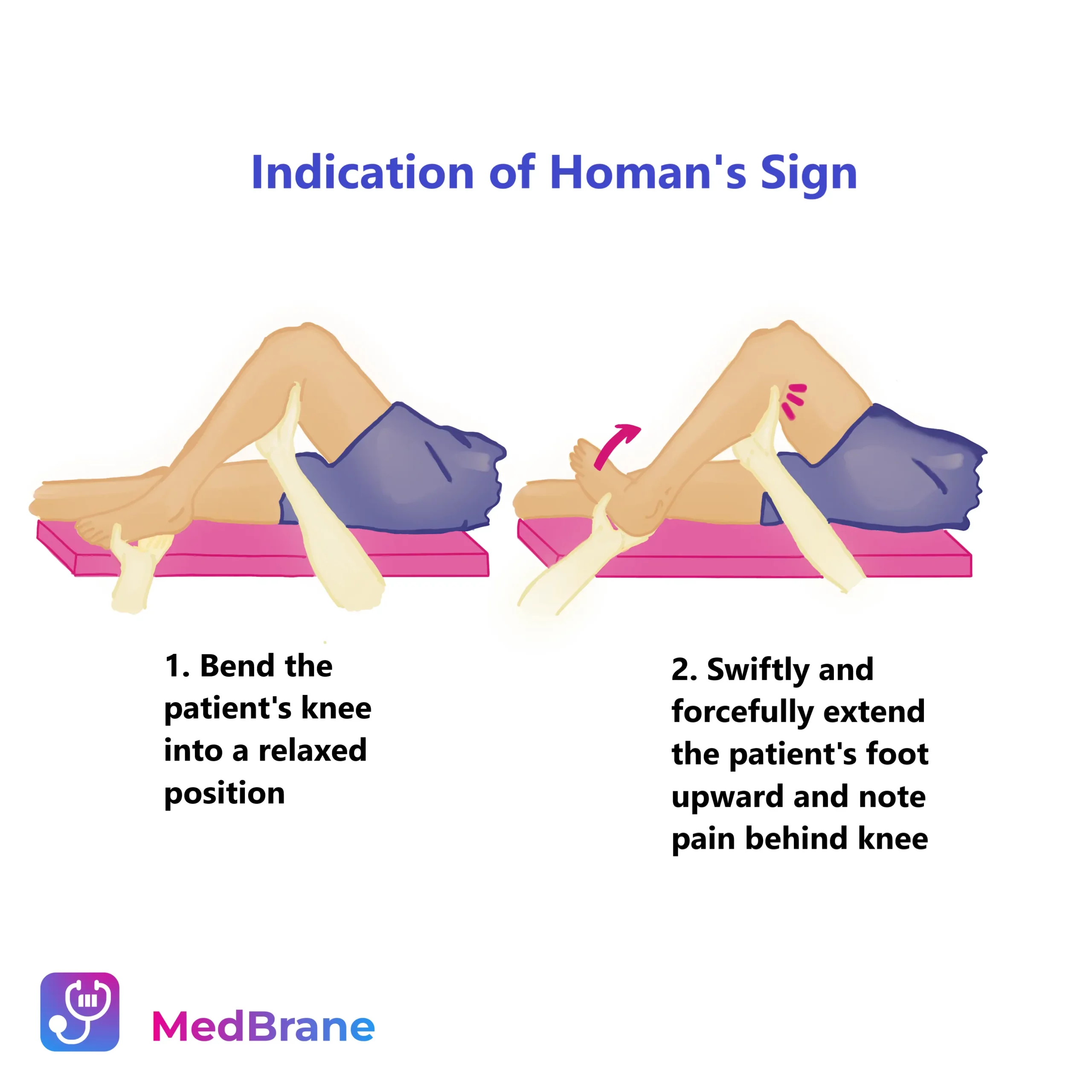
The traditional Homans sign is a clinical procedure where a practitioner dorsiflexes the patient’s foot; if the patient experiences pain in the calf or popliteal region, the sign is considered “positive,” suggesting a potential blood clot. However, in the niche of medical software and diagnostic tech, the manual Homans sign is often criticized for its low sensitivity and specificity. This “analog” limitation has birthed a new era of tech-driven vascular monitoring.
The Algorithmization of Clinical Signs
In the tech sector, we refer to the “algorithmization” of clinical signs. This process involves taking a subjective physical response—like pain or resistance—and converting it into quantifiable metrics. Software engineers are building diagnostic engines that incorporate the logic of the Homans sign into complex risk-assessment tools. By integrating patient history, sedentary behavior tracking from smartphones, and biometric data, these algorithms can predict the likelihood of a vascular event with far greater precision than a single physical maneuver.
Digital Symptom Tracking and User Interfaces
The user experience (UX) of modern health apps has evolved to prompt users for “digital signs.” If a user’s wearable device detects a sudden decrease in mobility combined with an increased resting heart rate, the application may guide the user through a self-assessment protocol that mimics the diagnostic intent of the Homans sign. This is a prime example of how software is decentralizing healthcare, moving the diagnostic power from the hospital clinic to the palm of the patient’s hand.
Leveraging AI and Wearables to Modernize Vascular Health Monitoring
As we move deeper into the “Tech” niche, the hardware and software used to monitor circulatory health become the focal point. The modern equivalent of the Homans sign isn’t a hand on a foot; it is a suite of high-precision sensors and neural networks.
Beyond Manual Testing: IoT and Real-Time Monitoring
The Internet of Medical Things (IoMT) has introduced specialized gadgets, such as smart compression stockings and ankle-worn accelerometers, that provide continuous monitoring. These devices act as a “permanent Homans sign,” constantly analyzing the venous return and blood flow velocity in the lower extremities.
For developers, the challenge lies in signal processing. The software must filter out “noise”—such as muscle tremors or environmental vibrations—to isolate the specific physiological markers of a thrombus. By using edge computing, these gadgets can process data locally, alerting the user and their physician in real-time if the “digital sign” indicates a blockage.
Neural Networks and Pattern Recognition in Vascular Health
Artificial Intelligence (AI) takes the concept of the Homans sign to the next level through pattern recognition. Deep learning models are trained on thousands of data points from patients who have suffered from DVT. These models can identify subtle changes in skin temperature, local swelling, and movement patterns that the human eye (and the traditional Homans sign) might miss.
By feeding ultrasonic imaging data into convolutional neural networks (CNNs), software tools are now achieving diagnostic accuracy that surpasses human clinical observation. This is the ultimate “tech” upgrade: transforming a controversial physical sign into a high-fidelity digital diagnostic tool.
The Software Infrastructure Behind Modern Diagnostic Tools
Developing technology that can identify physiological “red flags” requires a robust backend architecture. When we talk about the technology behind identifying a “digital Homans sign,” we are discussing a sophisticated stack of data pipelines, security protocols, and integration layers.
Data Integrity and Security in Patient Monitoring
Digital security is paramount when handling the biometric data required for vascular monitoring. Software platforms must adhere to HIPAA (Health Insurance Portability and Accountability Act) and GDPR (General Data Protection Regulation) standards.
To protect the “digital sign” data, developers implement:
- End-to-End Encryption: Ensuring that data transmitted from a wearable sensor to a cloud server cannot be intercepted.
- Blockchain for Health Records: Some emerging health-tech startups use decentralized ledgers to ensure that diagnostic data is immutable and transparently accessible to authorized medical professionals.
- Anonymized Data Lakes: To train AI models to better recognize vascular issues, massive amounts of data are aggregated into “data lakes.” Tech security ensures this data is de-identified to protect patient privacy while still providing the “fuel” for machine learning.
Integrating Diagnostic Signs into Electronic Health Records (EHR)
A diagnostic sign is only useful if it is actionable. Modern software tutorials for health-tech developers focus heavily on Interoperability. Using standards like FHIR (Fast Healthcare Interoperability Resources), developers ensure that if a mobile app detects a positive “digital Homans sign,” that data is instantly pushed to the patient’s Electronic Health Record (EHR). This creates a seamless loop where the technology bridges the gap between home-based monitoring and clinical intervention.
The Future of Health-Tech: Digital Twins and Virtualized Testing
Looking toward the future of technology in medicine, we see the emergence of concepts that once belonged to science fiction. The “Homans sign” of the future may not involve the physical body at all, but rather a digital replica.
Simulating Vascular Health with Digital Twin Technology
A “Digital Twin” is a virtual model of a physical object—in this case, a patient’s circulatory system. Engineers use high-performance computing to simulate blood flow through a patient’s veins. By applying “virtual stress” to the digital twin, software can predict where a clot might form. This moves the Homans sign from a reactive diagnostic tool (finding a clot that exists) to a predictive simulation (preventing a clot from ever forming).
This tech trend is gaining massive traction in personalized medicine. Instead of a doctor performing a physical test, a software simulation runs thousands of scenarios based on the patient’s genetic profile, lifestyle, and real-time biometric feed.
Ethical Considerations in Automated Diagnostics
As AI and apps take over the role of clinical diagnostics, the tech industry faces new ethical challenges. If a software’s “digital Homans sign” returns a false negative, who is liable?
The tech community is currently responding with “Explainable AI” (XAI). Unlike “black box” algorithms, XAI provides the reasoning behind its diagnosis. If an app suggests a risk of DVT, it outlines the specific data points—such as heart rate variability or localized temperature increases—that led to that conclusion. This transparency is crucial for building trust between the technology, the healthcare provider, and the end-user.

Conclusion: The Digital Legacy of the Homans Sign
The transition of the Homans sign from a 20th-century physical exam to a 21st-century digital metric is a microcosm of the broader health-tech revolution. We are witnessing the fusion of medical knowledge with cutting-edge software engineering, AI, and IoT infrastructure.
In this new era, the question “What is a Homans sign?” is answered not just by medical textbooks, but by software documentation and API specifications. By leveraging technology to enhance diagnostic precision, we are moving toward a future where vascular health is monitored silently and efficiently by the devices we wear and the software that powers them. The clinical “sign” has become a digital “signal,” and in that transformation lies the potential to save countless lives through the power of technology.
aViewFromTheCave is a participant in the Amazon Services LLC Associates Program, an affiliate advertising program designed to provide a means for sites to earn advertising fees by advertising and linking to Amazon.com. Amazon, the Amazon logo, AmazonSupply, and the AmazonSupply logo are trademarks of Amazon.com, Inc. or its affiliates. As an Amazon Associate we earn affiliate commissions from qualifying purchases.