
The concept of “fungibility” is a cornerstone of economics and, increasingly, a vital consideration in the digital age. At its core, fungibility describes the ability of a good or asset to be exchanged for another identical or equivalent item without loss of value. Think of it as perfect interchangeability. This seemingly simple characteristic has profound implications for everything from everyday transactions to complex financial markets and emerging digital economies. Understanding fungibility is crucial for grasping how value is created, exchanged, and maintained in both the physical and digital realms.
The Pillars of Fungibility: Interchangeability and Divisibility
At the heart of fungibility lie two fundamental properties: interchangeability and divisibility. These are the characteristics that allow one unit of an asset to seamlessly replace another.
Interchangeability: The Essence of Equivalence
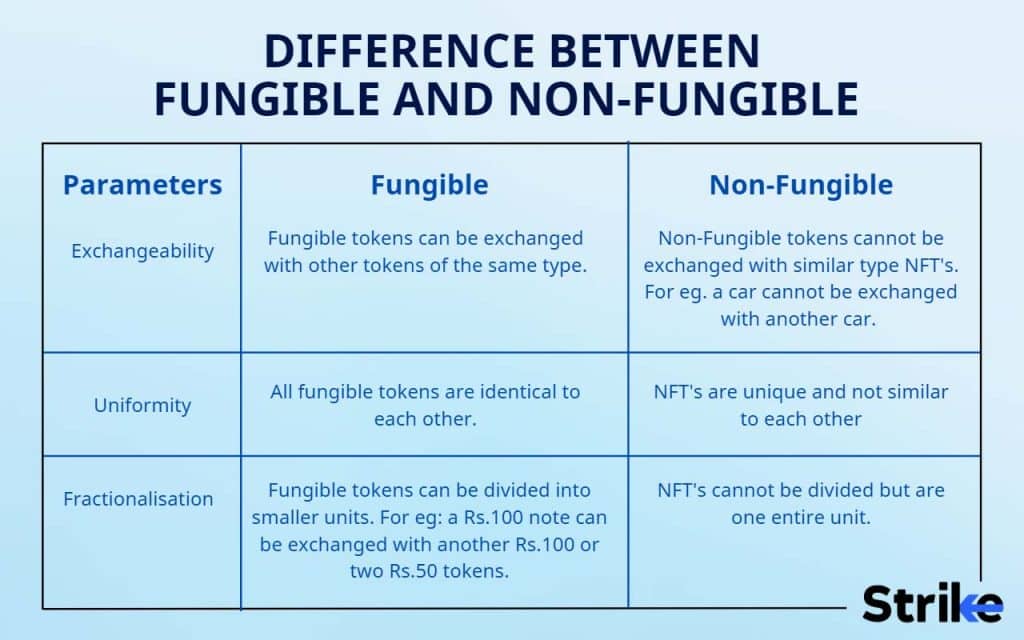
Interchangeability is the defining feature of a fungible asset. It means that any individual unit of the asset is identical in all material respects to any other unit. This sameness extends to quality, quantity, and inherent characteristics. For example, a $10 bill is fungible because any $10 bill is worth exactly the same as any other $10 bill. You can hand over one $10 bill and receive another, and the transaction is complete with no perceived change in value. The same applies to commodities like oil, gold, or wheat, provided they are of the same grade and quantity. A bushel of Grade A hard red winter wheat is indistinguishable from another bushel of the same grade. This interchangeability is what allows for efficient markets and standardized pricing.
Divisibility: The Foundation for Granular Exchange
Divisibility complements interchangeability by allowing fungible assets to be broken down into smaller, standardized units. This is essential for facilitating a wide range of transactions, from small purchases to large-scale trades. For instance, currency is highly divisible. You can use a $100 bill, or you can break it down into two $50 bills, ten $10 bills, or even 100 individual $1 coins. This divisibility allows for flexibility in transactions and pricing. In financial markets, stocks are also divisible. While you can buy 100 shares of Apple, you can also buy 1 share, or even a fraction of a share in some cases, depending on the brokerage and market. The ability to divide an asset into smaller, fungible units makes it more accessible and versatile for a broader range of economic activities.
Fungible Assets in the Physical World: The Traditional Landscape
Historically, the concept of fungibility has been deeply rooted in the physical world, underpinning much of our economic system. From money to commodities, many tangible items possess fungible qualities that facilitate trade and commerce.
Currency: The Ultimate Fungible Medium
Money, in its most common forms like cash and standard bank deposits, is perhaps the most universally recognized example of a fungible asset. A dollar is a dollar, regardless of its specific serial number or which mint produced it. This universal acceptance and perfect interchangeability make currency the bedrock of most economic exchanges. Governments issue currency with the explicit understanding that each unit holds the same value, ensuring smooth transactions and predictable economic behavior. The trust placed in fiat currency’s fungibility is a critical component of modern economies, enabling the widespread use of money for everyday purchases, savings, and investments.
Commodities: The Building Blocks of Industry
Many raw materials and agricultural products are also considered fungible, provided they meet specific quality standards. Gold, for instance, is highly fungible, with standardized purity levels ensuring that any ounce of 99.99% pure gold is equivalent to any other. This fungibility is crucial for global commodity markets, where standardized contracts and pricing are based on the interchangeability of these assets. Similarly, oil, natural gas, and agricultural staples like corn and soybeans are traded in fungible units. However, it’s important to note that the fungibility of commodities can be affected by factors like grade, origin, and market conditions. A specific grade of crude oil might be more desirable or command a higher price than another, introducing a degree of non-fungibility based on subtle but important distinctions.
Other Fungible Examples: Staples of Daily Life

Beyond currency and commodities, numerous other items exhibit fungibility in our daily lives. A gallon of regular unleaded gasoline at a particular pump is fungible with another gallon at the same pump. A standard brick from a reputable manufacturer is interchangeable with another of the same specifications. These examples highlight how fungibility simplifies transactions by removing the need for individual inspection or negotiation of quality for each unit exchanged. This inherent interchangeability reduces transaction costs and promotes efficiency in the exchange of goods and services.
The Rise of Non-Fungibility: Uniqueness in the Digital Age
While fungibility has long dominated our understanding of value, the digital revolution has brought the concept of non-fungibility to the forefront. Non-fungible assets are unique and cannot be directly exchanged for another identical item because no two are alike. This distinction is critical for understanding emerging digital ownership models.
Understanding Non-Fungible Tokens (NFTs)
Non-Fungible Tokens, or NFTs, are the most prominent manifestation of non-fungibility in the digital world. An NFT is a unique cryptographic token that represents ownership of a specific digital or physical asset. Unlike cryptocurrencies like Bitcoin, where one Bitcoin is identical to another, each NFT is distinct. This uniqueness is embedded in the blockchain’s ledger, providing verifiable proof of ownership for that particular digital item. NFTs can represent digital art, music, collectibles, in-game items, and even unique real-world assets. Their non-fungible nature allows for the creation of digital scarcity and verifiable ownership, opening up new avenues for creators and collectors.
The Significance of Uniqueness in Digital Assets
The concept of uniqueness is what gives NFTs their value and utility. If an NFT were fungible, it would essentially be just another unit of cryptocurrency, losing its distinctiveness and the ability to represent a one-of-a-kind item. For example, a digital artwork tokenized as an NFT is unique; there’s only one original, verifiable token associated with that specific piece of art. This contrasts sharply with digital images that can be infinitely copied. The non-fungible nature of NFTs allows for the creation of digital collectibles, the provenance of which can be tracked on the blockchain, much like a physical art piece with its documented history. This emphasis on unique ownership is transforming how digital content is valued and traded.
Implications for Digital Ownership and Scarcity
The rise of non-fungibility has profound implications for digital ownership and the creation of digital scarcity. For years, digital assets were often perceived as infinitely reproducible and therefore difficult to assign true ownership to. NFTs challenge this paradigm by providing a mechanism for verifiable, unique ownership in the digital space. This allows for the development of new economic models for creators, enabling them to monetize their digital work directly and to potentially receive royalties on future sales. The scarcity, even if digitally manufactured, can drive demand and create value for unique digital items, mirroring the dynamics of the physical art and collectibles markets.
The Interplay: Fungibility and Non-Fungibility in Modern Economies
The distinction between fungible and non-fungible assets is not merely academic; it has significant practical implications for how we transact, invest, and manage value in both traditional and emerging economic systems. The rise of digital assets has introduced a new layer of complexity and opportunity.
Fungible Cryptocurrencies: The Digital Dollar
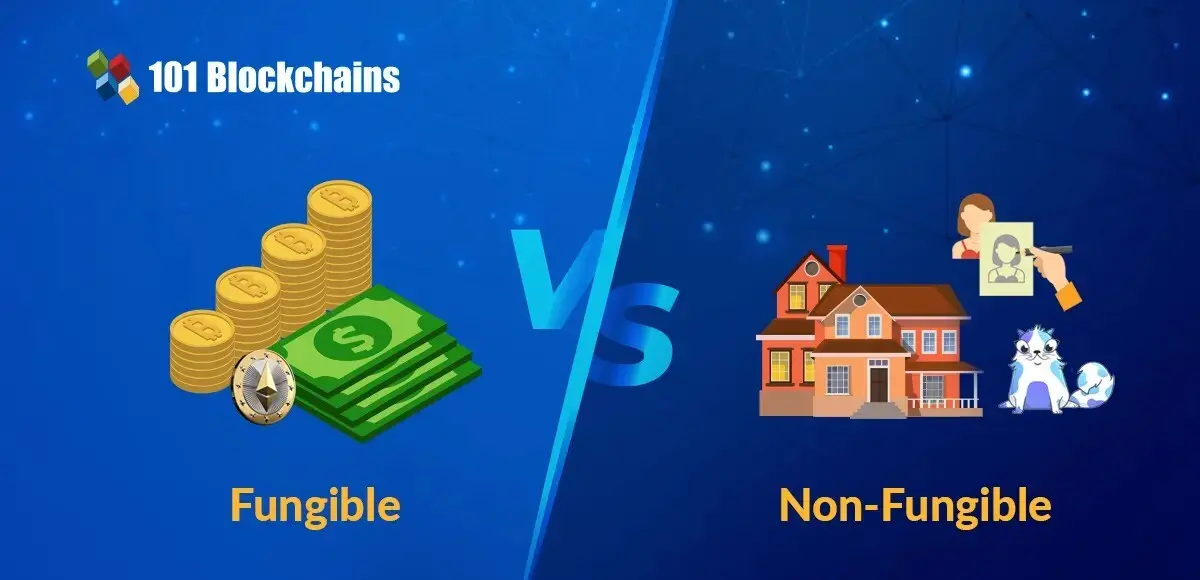
Fungible cryptocurrencies, such as Bitcoin and Ethereum (when used for transactions beyond NFTs), function much like traditional fiat currencies. One Bitcoin is interchangeable with another Bitcoin, and one Ether is interchangeable with another Ether. This fungibility makes them suitable as mediums of exchange, stores of value, and units of account within the cryptocurrency ecosystem. They can be used to purchase goods and services, to trade on exchanges, and to facilitate decentralized finance (DeFi) applications. Their fungible nature is what enables them to operate as a decentralized form of money.
The Spectrum of Value: Bridging the Gap
It’s important to recognize that fungibility exists on a spectrum. While some assets are perfectly fungible and others are entirely unique, many assets fall somewhere in between. For example, while all shares of a company’s stock are technically fungible, market perception, news, and investor sentiment can influence the perceived value of those shares at any given moment. Similarly, while two identical cars produced on the same day might be considered fungible from a manufacturing perspective, their individual condition, mileage, and maintenance history introduce non-fungible elements that affect their resale value. Understanding these nuances is crucial for accurate valuation and investment decisions. The digital age, with its ability to create and track unique digital entities, has amplified the exploration of non-fungible value, while fungible cryptocurrencies continue to evolve as digital forms of traditional money.
aViewFromTheCave is a participant in the Amazon Services LLC Associates Program, an affiliate advertising program designed to provide a means for sites to earn advertising fees by advertising and linking to Amazon.com. Amazon, the Amazon logo, AmazonSupply, and the AmazonSupply logo are trademarks of Amazon.com, Inc. or its affiliates. As an Amazon Associate we earn affiliate commissions from qualifying purchases.