
The automotive world is a landscape of constant innovation, with engineers continually striving to enhance performance, efficiency, and driver experience. Among the myriad of technological advancements that have reshaped how we drive, the Direct-Shift Gearbox, or DSG, stands out as a significant leap forward in transmission technology. Often hailed for its seamless shifts, sporty feel, and remarkable fuel economy, the DSG has become a sought-after feature in a growing number of vehicles. But what exactly is a DSG transmission, and how does it achieve its impressive capabilities? This article delves into the intricate workings, benefits, and considerations of this sophisticated piece of automotive engineering, placing it squarely within the realm of Tech.
The Genesis of Dual-Clutch Technology
The concept behind the DSG isn’t entirely new, but its widespread adoption and refinement are relatively recent. At its core, the DSG is an automated manual transmission, meaning it utilizes a manual gearbox’s fundamental principles but incorporates electronic and hydraulic controls to automate the shifting process. This approach marries the efficiency and engagement of a manual transmission with the convenience and smoothness of an automatic.
Evolution from Traditional Automatics
For decades, automatic transmissions primarily relied on torque converters. These systems use a fluid coupling to transmit power from the engine to the transmission. While offering a comfortable and smooth driving experience, torque converter automatics often suffered from power loss due to fluid slippage, impacting fuel efficiency and responsiveness, especially in earlier iterations. As the demand for better performance and economy grew, manufacturers explored alternative solutions. The DSG emerged as a compelling answer, offering a way to achieve near-manual efficiency without sacrificing the ease of operation that drivers have come to expect.
The Manual Gearbox Foundation
Understanding the DSG begins with appreciating the manual transmission. A manual gearbox consists of sets of gears that can be engaged to achieve different ratios, allowing the engine to operate within its optimal power band. Shifting gears in a manual car involves the driver depressing a clutch pedal to disengage the engine from the transmission, selecting a new gear, and then releasing the clutch to re-engage the engine. This process requires skill and coordination, particularly for smooth acceleration. The DSG automates this entire sequence, but with a crucial difference: it uses two clutches.
The Dual-Clutch Advantage
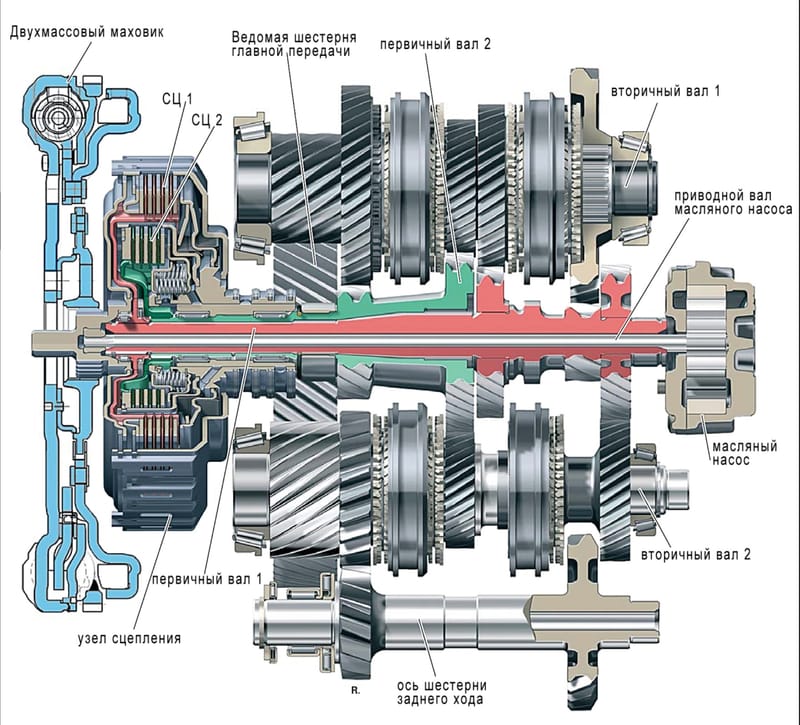
The defining feature of a DSG is its use of two separate clutches. One clutch controls the odd-numbered gears (1st, 3rd, 5th, and sometimes 7th), while the other controls the even-numbered gears (2nd, 4th, 6th, and reverse). This ingenious design allows the transmission to pre-select the next gear. For example, while the car is driving in 3rd gear (controlled by the first clutch), the transmission’s computer will have already engaged 4th gear on the second clutch, ready to be seamlessly transferred. When a shift is initiated, it’s not a matter of disengaging and re-engaging a single clutch; instead, it’s a rapid handover from one clutch to the other. This is what enables the incredibly quick and smooth gear changes that characterize DSG transmissions.
How the DSG Works: A Symphony of Electronics and Hydraulics
The magic of the DSG lies in the intricate interplay between its mechanical components, sophisticated electronics, and precise hydraulic actuation. It’s a marvel of mechatronics, where software and hardware work in perfect harmony.
The Two Clutches and Their Roles
The dual-clutch system is the heart of the DSG. Typically, these clutches are “wet” clutches, meaning they are bathed in transmission fluid to dissipate heat and ensure smooth engagement. One clutch is responsible for the odd-numbered gears, and the other for the even-numbered gears. When the vehicle is stationary and in first gear, the first clutch is engaged, connecting the engine to the transmission’s input shaft for odd gears. Simultaneously, the transmission’s control unit anticipates the need for second gear and may even have it pre-selected on the second clutch’s input shaft, ready for activation.
The Mechatronic Unit: The Brain of the Operation
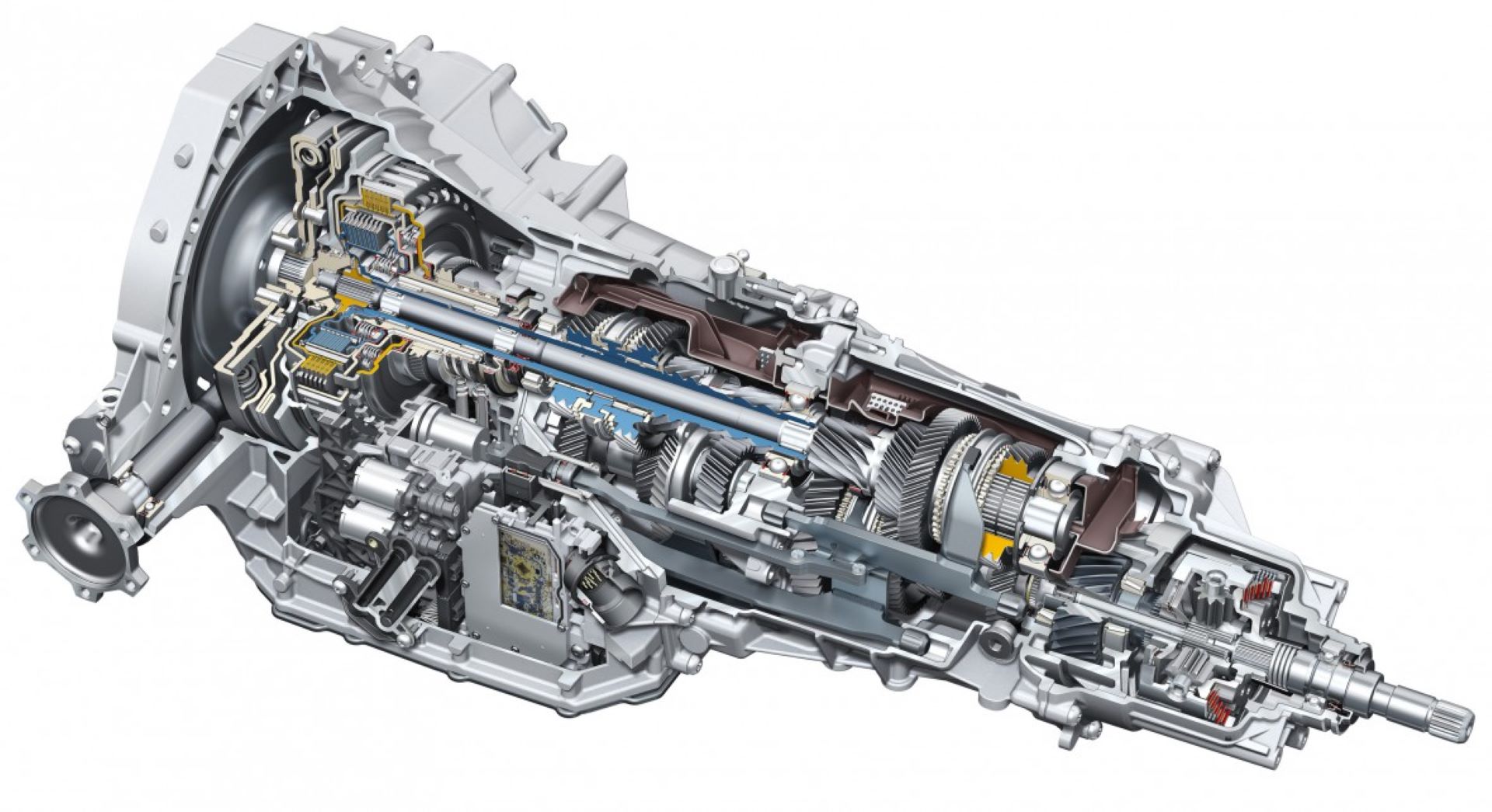
The “mechatronic unit” is the sophisticated control module that orchestrates the entire DSG operation. This unit combines electronic control systems with hydraulic actuators. It receives data from various sensors within the vehicle, including engine speed, throttle position, vehicle speed, brake pressure, and driver inputs. Based on this information, the mechatronic unit makes real-time decisions about which gear to engage, when to shift, and how to control the clutch engagement. It manages the hydraulic pressure that actuates the clutches and selects the gears, ensuring that shifts are executed with lightning speed and minimal interruption of power flow.
Pre-Selection and Seamless Shifting
The key to the DSG’s performance is its ability to pre-select gears. While the vehicle is in a particular gear, the transmission’s computer predicts the most likely next gear based on driving conditions and driver input. For instance, if the driver is accelerating, the computer will pre-select the next higher gear. If the driver brakes, it will pre-select a lower gear. When the time comes to shift, the mechatronic unit disengages the current clutch and simultaneously engages the other clutch. This process is incredibly fast, often occurring in milliseconds. Because the next gear is already meshed and ready, there’s no delay in power delivery, and the sensation for the driver is one of continuous acceleration or deceleration, rather than the noticeable interruption that can occur with a traditional automatic or even a manual shift.
Gear Selection Mechanism
Within the transmission, a complex series of forks and rods, controlled by hydraulic actuators, is responsible for moving the synchronizers and engaging the desired gear sets. The mechatronic unit directs these actuators with precision. The synchronizers themselves are crucial; they match the speed of the gear to be engaged with the speed of the input shaft before the clutch is fully engaged, ensuring smooth and quiet gear changes.
Advantages of the DSG Transmission
The widespread adoption of DSG technology is a testament to its numerous benefits, which significantly enhance the driving experience and the overall efficiency of a vehicle.
Enhanced Performance and Responsiveness
One of the most celebrated advantages of the DSG is its performance. The rapid, almost instantaneous gear shifts provide a feeling of continuous power delivery, making acceleration feel more potent and responsive. This is particularly noticeable during spirited driving, overtaking maneuvers, or when transitioning from braking to acceleration. The lack of torque converter slippage also means that more of the engine’s power is directly transferred to the wheels, contributing to a sportier and more engaging driving dynamic. Drivers who appreciate a connected feel to their vehicle often find the DSG’s performance characteristics highly appealing.
Improved Fuel Efficiency
Despite its performance capabilities, the DSG transmission is also remarkably fuel-efficient. By utilizing a direct mechanical connection through its clutches, it largely avoids the power losses associated with the fluid slip in traditional torque converter automatics. Furthermore, the intelligent shift logic of the mechatronic unit ensures that the engine is kept within its most efficient operating range for longer periods. This means that the DSG can often achieve fuel economy figures comparable to, or even better than, a well-driven manual transmission, while still offering the convenience of automatic operation. This dual benefit of performance and economy makes it an attractive option for a wide range of drivers.
Smoother Driving Experience
While DSG transmissions are renowned for their quick shifts, they also offer a remarkably smooth driving experience. The pre-selection of gears and the precisely controlled clutch engagement minimize jolts and interruptions during gear changes. In everyday driving, this translates to a more comfortable and refined ride, free from the sometimes jerky transitions that can be associated with older automatic transmissions. For drivers who prioritize a fluid and effortless journey, the DSG delivers a significant improvement over less advanced automatic systems.
Versatility in Driving Modes
Modern DSG transmissions often come equipped with various driving modes, allowing drivers to tailor the transmission’s behavior to their preferences and the driving conditions. These modes typically include:
- Drive (D) Mode: The standard automatic mode, where the transmission shifts gears automatically for optimal balance between performance and economy.
- Sport (S) Mode: In Sport mode, the transmission holds gears for longer, allowing the engine to reach higher RPMs before shifting up. This provides more aggressive acceleration and a sportier feel.
- Manual (M) Mode: This mode allows the driver to take full control of gear selection using paddle shifters mounted on the steering wheel or by manually moving the gear selector. This offers a more engaging driving experience for enthusiasts.
Some DSG systems also incorporate features like hill hold assist and creep functions for enhanced usability in traffic.
Considerations and Potential Downsides of DSG Transmissions
While the DSG offers a compelling package of benefits, like any advanced technology, it’s important to be aware of potential considerations and limitations.
Complexity and Maintenance
The sophisticated nature of the DSG transmission, with its dual clutches, intricate mechatronic unit, and complex hydraulic system, means it can be more complex to diagnose and repair compared to simpler automatic transmissions. Maintenance schedules are often critical. Regular fluid changes with the correct, manufacturer-specified fluid are essential for the longevity and proper functioning of the DSG. Neglecting these maintenance requirements can lead to premature wear and potential costly repairs. Technicians working on DSG systems often require specialized training and diagnostic equipment.
Cost of Repair and Replacement
Due to their complexity, repairs and replacement parts for DSG transmissions can be more expensive than those for traditional automatic transmissions. If a major component failure occurs, the cost of rectifying the issue can be substantial, potentially impacting the overall ownership cost of a vehicle equipped with a DSG. It is advisable to research the warranty coverage and potential repair costs associated with a DSG equipped vehicle before purchase.
Potential for Hesitation or Jerkiness in Specific Scenarios
While generally smooth, some DSG transmissions can occasionally exhibit slight hesitations or subtle jerkiness in very specific, low-speed, or stop-and-go traffic situations. This can occur as the transmission juggles multiple gear possibilities and clutch engagements in complex, low-traction environments. For instance, when maneuvering in tight parking spaces or during very gradual acceleration from a complete stop, there might be a brief moment of uncertainty before the appropriate gear is fully engaged. However, manufacturers have continually refined the software and hardware to minimize these instances.
Thermal Management and Driving Style
DSG transmissions, particularly those with wet clutches, rely on transmission fluid for cooling. In situations of prolonged, aggressive driving, such as repeated high-speed runs on a track or extensive towing in challenging terrain, the transmission fluid can reach high temperatures. While designed to handle significant thermal loads, extreme conditions can, in rare cases, lead to the transmission entering a “limp mode” or temporarily reducing performance to prevent damage. Drivers who intend to subject their vehicles to such demanding use should be aware of these limitations and consider their vehicle’s specific capabilities.

Conclusion: A Technological Triumph in Drivetrains
The Direct-Shift Gearbox (DSG) represents a significant advancement in automotive transmission technology. By cleverly integrating the efficiency and engagement of a manual gearbox with the convenience of an automatic, the DSG delivers a driving experience that is both exhilarating and economical. Its dual-clutch system, orchestrated by a sophisticated mechatronic unit, enables lightning-fast and exceptionally smooth gear changes, enhancing performance and fuel efficiency simultaneously.
While the inherent complexity and potential cost of repairs are factors to consider, the benefits offered by the DSG are undeniable. For drivers seeking a blend of sporty responsiveness, refined comfort, and impressive efficiency, the DSG transmission has become a highly desirable feature. As automotive technology continues to evolve, the DSG stands as a testament to the innovative spirit driving the industry forward, offering a compelling glimpse into the future of efficient and engaging powertrains. Understanding what a DSG transmission is empowers consumers to make informed decisions and appreciate the intricate engineering that makes our modern vehicles perform at their best.
aViewFromTheCave is a participant in the Amazon Services LLC Associates Program, an affiliate advertising program designed to provide a means for sites to earn advertising fees by advertising and linking to Amazon.com. Amazon, the Amazon logo, AmazonSupply, and the AmazonSupply logo are trademarks of Amazon.com, Inc. or its affiliates. As an Amazon Associate we earn affiliate commissions from qualifying purchases.