
The term “concussion test” conjures images of athletes on a field, performing a series of physical and cognitive tasks under the watchful eye of a medical professional. While this remains a crucial aspect of concussion diagnosis, the landscape of concussion assessment is rapidly evolving, with technology playing an increasingly significant role. Understanding what constitutes a concussion test today means exploring a sophisticated interplay of neurological evaluation, symptom reporting, and cutting-edge technological tools that aim to provide a more objective, precise, and accessible measure of brain function following a head injury.

The fundamental goal of any concussion test is to determine if a concussion has occurred, assess its severity, and guide the recovery process. This involves identifying disruptions to brain function that, while often temporary, can have profound and lasting consequences if not managed appropriately. The “test” is not a single, monolithic entity but rather a battery of assessments designed to capture the multifaceted nature of this injury.
The Pillars of Concussion Assessment: Beyond the Visual Inspection
Historically, concussion diagnosis relied heavily on subjective reporting of symptoms and basic observation. While these remain vital, modern concussion testing has expanded to incorporate more objective and data-driven approaches. The core of any assessment still revolves around understanding the impact on the brain’s ability to process information, coordinate movement, and regulate emotional and physical well-being.
Symptom Reporting: The Subjective Foundation
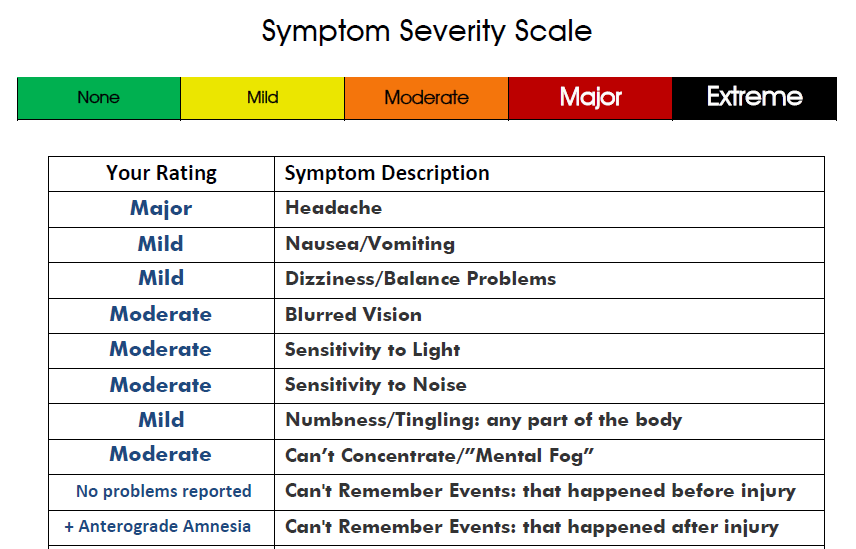
The first line of inquiry in assessing a potential concussion is often the individual’s subjective experience. A trained clinician will ask detailed questions about a range of symptoms, including:
- Headache: Its location, intensity, and character (e.g., throbbing, sharp).
- Dizziness/Balance Problems: The sensation of spinning or unsteadiness.
- Nausea/Vomiting: The presence and severity of these gastrointestinal symptoms.
- Sensitivity to Light and Sound: Increased discomfort or photophobia and phonophobia.
- Vision Changes: Blurred vision, double vision, or seeing stars.
- Cognitive Difficulties: Problems with memory, concentration, confusion, feeling “foggy” or slowed down.
- Emotional Changes: Irritability, sadness, anxiety, or mood swings.
- Sleep Disturbances: Difficulty falling asleep, staying asleep, or feeling excessively tired.
The reliability of symptom reporting is enhanced when these are gathered in a structured manner, often using standardized questionnaires or scales that allow for quantification and comparison over time. For instance, the Rivermead Post-Concussion Symptoms Questionnaire (RPQ) is a widely used tool that helps clinicians understand the range and impact of post-concussion symptoms.
Neurological Examination: The Physical Baseline
A comprehensive neurological examination forms a critical part of the initial assessment. This involves evaluating various aspects of brain function through physical tests:
- Balance and Coordination: Tests like the Romberg test (standing with feet together, eyes closed) or the tandem gait test (walking heel-to-toe) assess proprioception and cerebellar function.
- Eye Movements: Assessment of smooth pursuit, saccadic eye movements (rapid, jerky movements), and the vestibulo-ocular reflex (VOR) helps identify abnormalities related to the vestibular system and brainstem.
- Reflexes: Checking deep tendon reflexes and superficial reflexes can indicate underlying neurological integrity.
- Strength and Sensation: Evaluating muscle strength and sensory perception in different parts of the body.
This physical examination provides objective markers that can be compared to baseline assessments or repeated over time to track recovery.
The Technological Evolution of Concussion Testing
While clinical judgment and symptom reporting are indispensable, technology is revolutionizing concussion assessment by offering more objective, quantifiable, and sometimes predictive data. These tools move beyond subjective experience to analyze physiological and cognitive functions with remarkable precision.
Computerized Cognitive Assessment Tools (CCATs)
CCATs are software-based platforms that administer a battery of cognitive tests designed to measure key domains affected by concussion, such as:
- Processing Speed: How quickly an individual can process information.
- Working Memory: The ability to hold and manipulate information for short periods.
- Attention and Concentration: The capacity to focus and resist distractions.
- Reaction Time: The speed at which an individual responds to a stimulus.
Examples of widely used CCATs include ImPACT (Immediate Post-Concussion Assessment and Cognitive Testing), CogSport, and Sway Medical. These platforms often establish normative data for age and gender, allowing clinicians to compare an individual’s performance to their peers. A significant decline in performance on these tests compared to a pre-injury baseline is a strong indicator of a concussion. The advantage of CCATs lies in their standardization, objectivity, and ability to detect subtle deficits that might be missed by traditional pen-and-paper methods. They provide a quantitative measure of cognitive function, facilitating a more evidence-based approach to diagnosis and return-to-play/activity decisions.
Vestibular and Ocular Motor Screening (VOMS)

The vestibular and ocular motor systems are highly susceptible to concussion and play a crucial role in balance, spatial orientation, and visual stability. The VOMS assessment is a standardized, clinically administered tool that evaluates several key functions:
- Smooth Pursuit: The ability to track a moving object smoothly with the eyes.
- Saccades: The ability to quickly shift gaze between two points.
- Convergence: The ability of the eyes to turn inward to focus on a near object.
- Vection: The sensation of self-motion induced by visual stimuli.
- Gaze Stability: Maintaining a stable visual field while moving the head.
- Near Point of Convergence: The closest distance at which both eyes can focus on an object.
These tasks are performed while the clinician monitors for symptoms like dizziness, nausea, and headache, as well as observing for nystagmus (involuntary eye movements). Any exacerbation of symptoms or observed abnormalities during these movements can indicate vestibular or ocular motor dysfunction, a hallmark of concussion. VOMS is often integrated with symptom reporting and cognitive testing for a comprehensive assessment.
Balance and Postural Stability Assessments
Technology has enhanced the objectivity of balance assessments. Force plates, which measure ground reaction forces, can quantify subtle deficits in postural control. Wearable sensors and accelerometers integrated into smartphones or dedicated devices can also track sway patterns and assess an individual’s stability during various balance tasks. These tools provide precise data on the magnitude and direction of postural sway, allowing for objective measurement of balance impairments. This is particularly useful in monitoring recovery, as improvements in balance can be tracked through changes in these quantitative metrics.
Emerging Technologies: The Future of Concussion Detection
The field of concussion testing is continuously advancing, with research exploring novel technological solutions:
- Biomarker Detection: Scientists are investigating the use of blood tests to identify specific protein biomarkers released into the bloodstream after a brain injury. While still largely in the research phase, these could offer a highly objective and non-invasive method for concussion diagnosis.
- Advanced Neuroimaging: While not typically used for initial sideline testing, advanced MRI techniques like diffusion tensor imaging (DTI) can visualize subtle changes in white matter tracts and provide insights into the extent of neural damage. Functional MRI (fMRI) is also being explored to assess changes in brain activity patterns.
- Virtual Reality (VR) and Augmented Reality (AR): VR and AR platforms are being developed to create more dynamic and ecologically valid assessments of cognitive and vestibular function in simulated environments. These technologies can replicate real-world scenarios, providing a more challenging and informative testing experience.
- Eye-Tracking Technology: Sophisticated eye-tracking systems can analyze pupil dilation, saccadic eye movements, and fixation patterns with high precision. These subtle ocular responses can reveal cognitive load, attention deficits, and processing speed changes indicative of concussion.
These emerging technologies promise to move concussion assessment further towards a truly objective and sensitive diagnostic process, potentially aiding in earlier detection, more accurate diagnosis, and personalized recovery plans.
The Role of Technology in Return-to-Play and Return-to-Learn Protocols
The ultimate goal of a concussion test is not just diagnosis but also to inform safe and effective recovery. Technology plays an indispensable role in guiding these critical return-to-play and return-to-learn protocols, ensuring individuals are physically and cognitively ready to resume their activities.
Objective Data for Informed Decision-Making
The quantitative data generated by CCATs, VOMS, and balance assessments provide clinicians with objective evidence to support their decisions. This is particularly important in high-stakes environments like sports, where the pressure to return to competition can be immense. By comparing post-injury test results to pre-injury baselines, or to normative data, clinicians can identify lingering deficits that might not be apparent from subjective symptom reporting alone.
For example, if an athlete reports feeling “fine” but their cognitive processing speed scores remain significantly below their baseline, they may not yet be ready to return to play. Similarly, persistent difficulties with balance or eye movements identified through VOMS could indicate a higher risk of re-injury. Technology transforms these assessments from subjective observations into measurable outcomes.
Personalized Recovery Pathways
The detailed information gathered through technological assessments allows for the creation of more personalized recovery plans. If a specific cognitive domain, such as attention or memory, is particularly impaired, rehabilitation efforts can be tailored to address these weaknesses. Likewise, if vestibular dysfunction is identified, specific exercises and therapies can be implemented to restore balance and visual stability.
This individualized approach is a significant advancement over one-size-fits-all recovery models. Technology enables clinicians to track progress on specific functional metrics, adjusting the intensity and focus of rehabilitation as needed. This data-driven approach helps ensure that individuals are not returning to activities prematurely, thereby reducing the risk of prolonged recovery or more severe consequences.
Accessibility and Remote Monitoring
The increasing sophistication of mobile technology and wearable sensors is also paving the way for more accessible concussion testing and remote monitoring. Apps that incorporate elements of CCATs or VOMS can be used to conduct initial screenings or monitor recovery between clinical visits. While these remote assessments do not replace a full clinical evaluation, they can provide valuable longitudinal data and alert clinicians to potential issues. This is particularly beneficial for individuals in remote areas or those who have difficulty accessing regular clinical care. The ability to gather data over extended periods and in various environments provides a more complete picture of an individual’s recovery trajectory.
In conclusion, the “concussion test” has evolved from a purely clinical observation to a sophisticated, multi-modal assessment deeply integrated with technology. From computer-based cognitive evaluations and precise vestibular screenings to the promise of future biomarker detection and AI-driven analytics, technology is fundamentally reshaping how we understand, diagnose, and manage concussions. This technological advancement ensures more objective, personalized, and effective care, ultimately aiming to safeguard brain health for athletes, students, and individuals across all walks of life.
aViewFromTheCave is a participant in the Amazon Services LLC Associates Program, an affiliate advertising program designed to provide a means for sites to earn advertising fees by advertising and linking to Amazon.com. Amazon, the Amazon logo, AmazonSupply, and the AmazonSupply logo are trademarks of Amazon.com, Inc. or its affiliates. As an Amazon Associate we earn affiliate commissions from qualifying purchases.