
In the dynamic world of digital communication, clarity and precision in language are paramount. Whether you’re crafting compelling marketing copy, designing intuitive user interfaces, or developing cutting-edge software documentation, the words you choose significantly impact how your message is received. Among the myriad of grammatical tools at your disposal, compound adjectives play a crucial role in conveying nuanced ideas efficiently. Understanding what a compound adjective is and how to use it effectively can elevate your content from merely informative to truly impactful, enhancing user experience and strengthening your brand’s voice within the tech landscape.
The Building Blocks of Compound Adjectives in Tech
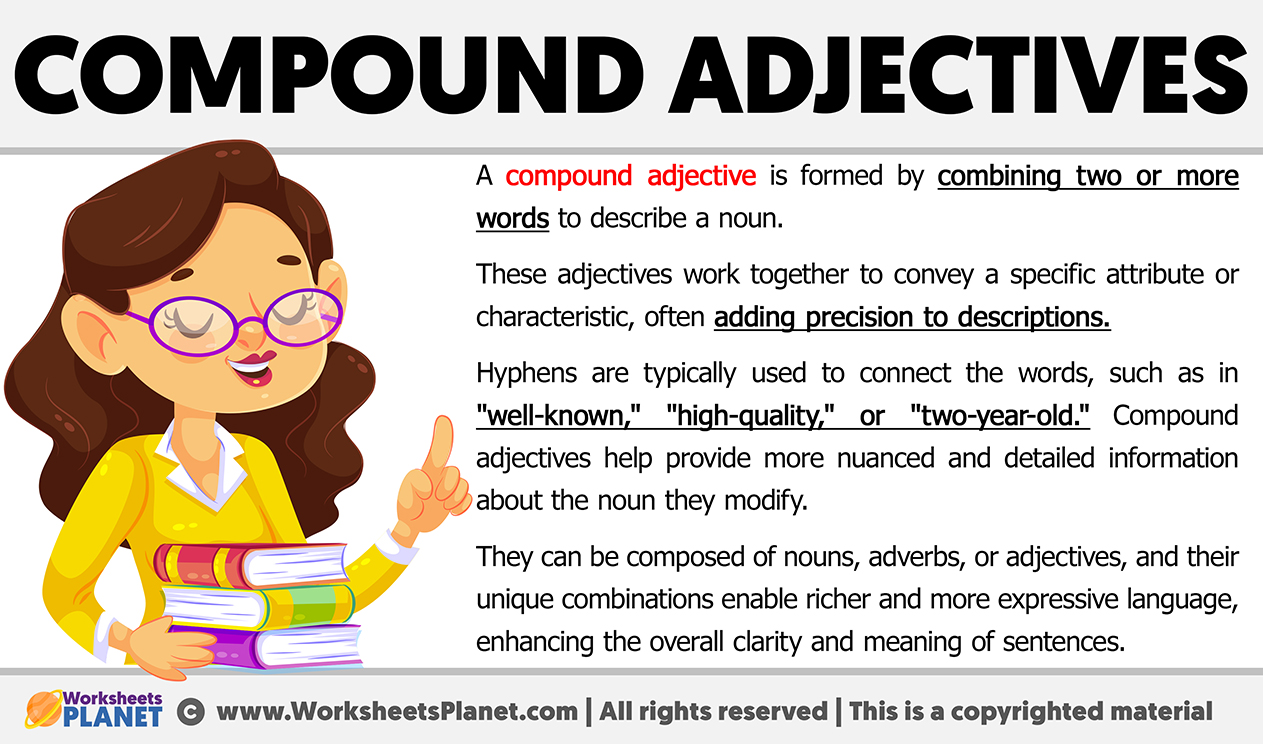
Compound adjectives are formed by combining two or more words to create a single adjective that modifies a noun. This fusion allows for more descriptive and specific language, which is particularly valuable in the fast-paced tech industry where new concepts and innovations are constantly emerging. By stringing together existing words, we can create novel descriptors that capture complex ideas succinctly.
Defining the Compound Adjective
At its core, a compound adjective is a linguistic shortcut, a way to pack more meaning into fewer words. Unlike a simple adjective, which typically stands alone (e.g., “fast car”), a compound adjective is a unit. It functions as a single descriptor, often linked by a hyphen when preceding the noun it modifies. For instance, instead of saying “a car that is fast and responsive,” we can use the compound adjective “a fast-responsive car.” This not only saves space but also creates a more cohesive and impactful description.
The purpose of these combined words is to paint a richer picture. In technology, where innovation is relentless, new functionalities, user experiences, and technical specifications require precise language. Compound adjectives offer a powerful way to achieve this. They allow us to encapsulate multifaceted attributes into a single, potent descriptor, making our technical writing, marketing materials, and even code documentation more efficient and engaging.
Consider the evolution of technology itself. Early descriptions might have been simple: “a good computer.” But as technology advanced, so did the need for more specific language. We moved to “a powerful computer,” then “a high-performance computer,” and eventually, with the advent of mobile devices, “a user-friendly mobile computer.” Each step involves combining words to create a more precise and evocative description, a hallmark of effective compound adjective usage.
The Hyphenation Rule: Clarity and Convention
The most common and often most critical aspect of using compound adjectives correctly is their hyphenation. Generally, when a compound adjective precedes the noun it modifies, it should be hyphenated. This signals to the reader that the words are working together as a single unit of meaning, rather than independently modifying the noun.
For example, consider the phrase “a well-designed interface.” Here, “well” and “designed” work together to describe the “interface.” If we were to omit the hyphen, “a well designed interface,” it could be misinterpreted, with “well” potentially being seen as an adverb modifying “designed,” and “designed” then acting as a standalone adjective. While this distinction might seem subtle, in technical contexts, clarity is king. The hyphen eliminates ambiguity and ensures the intended meaning is conveyed instantly.
However, there are exceptions. Adverbs ending in “-ly” that modify the following adjective are typically not hyphenated when they form a compound adjective. For instance, “a highly responsive app” does not require a hyphen between “highly” and “responsive” because “highly” is an adverb already indicating the degree of responsiveness. Similarly, when the compound adjective follows the noun it modifies, hyphens are usually omitted (e.g., “The app is user-friendly”).
Understanding these hyphenation conventions is not just about grammar; it’s about user experience. Clear, unambiguous language reduces cognitive load for the user, making your tech product or service more accessible and understandable. Poorly hyphenated or unhyphenated compound adjectives can lead to confusion, frustration, and a perception of unprofessionalism – precisely the opposite of what any tech brand aims for.
Compound Adjectives in Action: Enhancing Tech Content
The application of compound adjectives is vast and varied within the tech sphere. From product descriptions and user manuals to marketing campaigns and internal documentation, these linguistic tools can significantly improve the clarity, impact, and memorability of your content.
Marketing and Branding: Creating Compelling Narratives
In marketing, compound adjectives are indispensable for crafting persuasive and memorable descriptions. They allow brands to distill complex technological features into easily digestible benefits. For instance, instead of saying a device has a screen that produces very bright colors and is very sharp, a marketer might use “a vibrant-sharp display.” This single phrase communicates multiple positive attributes efficiently.
Consider the terms used to describe software. We see “cloud-based solutions,” “AI-powered analytics,” “user-friendly interface,” and “state-of-the-art technology.” These compound adjectives are not just descriptive; they are branding elements. They quickly convey key selling points and position the product or service within a specific category. A “user-friendly interface” immediately tells potential customers that the software is designed with ease of use in mind, a crucial factor for adoption. Similarly, “AI-powered analytics” signals advanced capabilities and data-driven insights.
The power of these descriptors lies in their ability to create a strong brand identity. A consistent use of well-chosen compound adjectives in marketing materials reinforces the brand’s messaging and helps it stand out in a crowded marketplace. For example, a company specializing in security software might consistently use terms like “bulletproof security,” “tamper-proof systems,” and “unbreakable encryption” to build a reputation for robustness and reliability. This strategic linguistic choice contributes significantly to brand perception and customer trust.
Technical Writing and Documentation: Ensuring Precision and Clarity
Beyond marketing, compound adjectives are vital for technical writers and developers. In user manuals, API documentation, and internal specifications, accuracy and clarity are paramount. Ambiguity can lead to errors, support issues, and wasted development time.
Imagine a user trying to understand how to set up a new piece of hardware. If the manual describes a “push-button reset” versus simply a “button reset,” the former implies a specific action that is crucial for successful operation. Similarly, distinguishing between a “low-latency connection” and a “connection with low latency” highlights the importance of speed in networking or gaming contexts.
Compound adjectives help condense complex technical information into understandable chunks. Instead of lengthy explanations, a single compound adjective can convey a wealth of information. For instance, describing a processor as “power-efficient” immediately tells the user that it consumes less energy, which is important for battery life in mobile devices or for cost savings in data centers. Likewise, a “real-time operating system” is a distinct category of software with specific characteristics that would require extensive explanation if not for this concise descriptor.
The use of consistent terminology, including compound adjectives, also contributes to a professional and credible technical documentation suite. When terms are used uniformly across different documents and platforms, it enhances the user’s ability to navigate and understand the information, ultimately leading to a better overall experience with the product or service.
User Interface (UI) and User Experience (UX) Design: Guiding Interactions
In the realm of UI/UX design, compound adjectives are powerful tools for shaping how users interact with digital products. The labels on buttons, menu items, and even error messages can be made more intuitive and effective through their judicious use.
Consider the difference between a button labeled “Save” and one labeled “Save-As.” The latter immediately communicates a more specific function: saving the current work under a new name or location. This prevents confusion and guides the user’s actions more effectively. Similarly, a “drag-and-drop” functionality is universally understood to describe a specific method of interaction.
Compound adjectives also contribute to the overall feel and intuitiveness of an interface. Words like “easy-to-use,” “intuitive-navigable,” or “responsive-feedback” describe the intended user experience. When designers use such terms in their wireframes, prototypes, and style guides, they are essentially embedding the desired user interaction characteristics directly into the design language.
The choice of words in UI/UX can significantly impact user satisfaction. A well-placed compound adjective can make a complex process feel simple, or a potentially confusing action feel straightforward. For example, describing a setup process as “step-by-step guidance” reassures users that they will be led through the process with clear instructions, reducing anxiety and improving the likelihood of successful completion.
Common Compound Adjective Structures in Tech

Understanding the common ways compound adjectives are formed can help you identify and utilize them more effectively in your tech-related writing and communication. These structures provide a framework for creating precise and descriptive language.
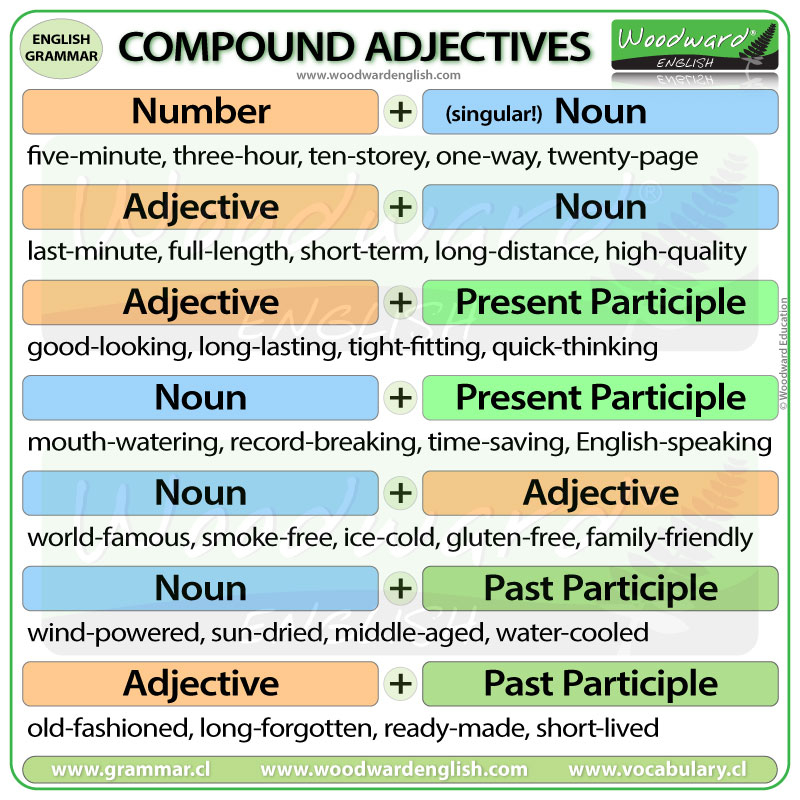
Noun + Past Participle: Describing State or Condition
One very common structure involves combining a noun with a past participle to create an adjective that describes a state, condition, or origin. This is particularly useful for describing features, processes, or attributes derived from a particular noun.
Examples in tech include:
- AI-powered: Indicates something that uses artificial intelligence. (e.g., “an AI-powered chatbot”)
- Cloud-based: Denotes that something is hosted on or utilizes cloud computing. (e.g., “a cloud-based storage solution”)
- User-generated: Refers to content created by users. (e.g., “user-generated content platforms”)
- Password-protected: Describes something secured by a password. (e.g., “a password-protected file”)
- Code-signed: Pertains to software that has been digitally signed with code. (e.g., “a code-signed application”)
- Feature-rich: Highlights the abundance of features. (e.g., “a feature-rich operating system”)
- Bug-free: Indicates the absence of errors or bugs. (e.g., “a bug-free release”)
This structure allows for concise descriptions of complex technological attributes. For instance, instead of saying “a system that is powered by AI,” we can simply say “an AI-powered system.” This makes the language more dynamic and easier to integrate into sentences.
Adjective + Adjective: Combining Qualities
Another frequent structure is the combination of two adjectives to create a single, more descriptive adjective. This allows for the merging of two distinct qualities into one concept.
Examples in tech include:
- High-performance: Describes a device or system designed for superior speed and efficiency. (e.g., “high-performance computing”)
- State-of-the-art: Refers to the most advanced or modern level of development. (e.g., “state-of-the-art security features”)
- User-friendly: Highlights ease of use and intuitive design. (e.g., “a user-friendly interface”)
- Cost-effective: Implies getting good value for money. (e.g., “a cost-effective solution”)
- Time-saving: Indicates that something reduces the amount of time needed. (e.g., “a time-saving app”)
- Cutting-edge: Similar to state-of-the-art, implying the forefront of innovation. (e.g., “cutting-edge research”)
These combinations are powerful because they synthesize multiple attributes, providing a more comprehensive picture of a product or service. For instance, “high-performance” suggests not just speed, but also power and capability, all within a two-word descriptor.
Adverb + Adjective: Modifying the Degree or Manner
While we discussed the hyphenation exception for “-ly” adverbs, the structure of adverb + adjective remains a key component of compound adjectives, often without a hyphen. This is used to specify the degree or manner of the adjective.
Examples in tech include:
- Highly responsive: Indicates a very quick reaction time. (e.g., “a highly responsive website”)
- Completely automated: Signifies full automation. (e.g., “a completely automated process”)
- Fully integrated: Suggests seamless integration. (e.g., “a fully integrated system”)
- Widely adopted: Refers to something that has been accepted by many. (e.g., “a widely adopted standard”)
- Real-time: Describes something that happens immediately, without delay. (e.g., “real-time data processing”)
The clarity provided by these structures is essential in technical communication. For example, specifying “real-time” data processing is far more informative than simply “fast data processing,” as it conveys the critical aspect of immediacy.
Avoiding Pitfalls: Best Practices for Compound Adjectives in Tech
While compound adjectives are valuable tools, their misuse can lead to confusion and detract from your message. Understanding common pitfalls and adhering to best practices will ensure you wield them effectively.
The Ambiguity of Unhyphenated Compounds
As previously mentioned, the primary source of confusion with compound adjectives arises from improper hyphenation, especially when they precede the noun. If a compound adjective is not hyphenated when it should be, it can break the intended meaning and force the reader to re-evaluate the sentence structure.
Consider “a fast response team” versus “a fast-response team.” The former suggests a team that is fast at responding. The latter, with the hyphen, implies a team specifically designed or tasked with responding quickly – a distinct organizational role. In a critical tech support scenario, this distinction could be significant.
Similarly, “a twenty four hour service” can be misinterpreted, whereas “a twenty-four-hour service” clearly indicates a service that operates continuously throughout the day. Always consider whether the words are acting as a single descriptive unit. If they are, and they appear before the noun, hyphenation is usually the way to go.
Overuse and Jargon: Striking a Balance
While compound adjectives can make your writing more descriptive, overusing them can lead to overly complex sentences and a dense, jargon-filled text. In the tech industry, there’s a constant temptation to use the latest buzzwords, which often manifest as compound adjectives.
Strive for clarity and conciseness. Not every descriptive phrase needs to be a compound adjective. Sometimes, a simple adjective or a clear, well-structured sentence is more effective. For instance, instead of constantly using “next-generation,” consider whether “new” or “advanced” might suffice, depending on the context.
Furthermore, be mindful of your audience. Technical jargon, even when expressed through compound adjectives, can alienate readers who are not deeply familiar with the subject matter. Ensure that your use of compound adjectives enhances understanding rather than creating barriers. If a compound adjective is not commonly understood, it might be better to explain the concept in simpler terms or use a more widely recognized descriptor.
Consistency in Application: A Unified Voice
In any tech product, documentation, or marketing campaign, consistency is key to building trust and a professional image. This extends to the use of compound adjectives. Establish a style guide that outlines the rules for hyphenation, preferred terms, and the avoidance of jargon.
For example, decide whether you will consistently use “user-friendly” or “easy-to-use.” Both are valid, but using one exclusively within your brand’s communication will create a more unified and recognizable voice. This consistency applies across all your platforms, from your website and app to your marketing emails and support articles.
A consistent approach to compound adjectives reinforces your brand’s attention to detail and commitment to clear communication. It signals to your users that you have thoughtfully considered how you present information, contributing to a positive overall user experience and a stronger brand identity. By adhering to these best practices, you can ensure that your compound adjectives serve to illuminate, inform, and impress, rather than confuse or detract.
aViewFromTheCave is a participant in the Amazon Services LLC Associates Program, an affiliate advertising program designed to provide a means for sites to earn advertising fees by advertising and linking to Amazon.com. Amazon, the Amazon logo, AmazonSupply, and the AmazonSupply logo are trademarks of Amazon.com, Inc. or its affiliates. As an Amazon Associate we earn affiliate commissions from qualifying purchases.