
Chromatic aberration is a ubiquitous optical phenomenon that affects imaging systems, from the simplest camera lenses to the most sophisticated telescopes. While often perceived as a flaw, understanding its origins and characteristics is crucial for anyone involved in photography, videography, optical design, or even just appreciating visual fidelity. At its core, chromatic aberration is a result of how light behaves as it passes through refractive materials, leading to color fringing and a reduction in image sharpness. This article will delve into the science behind chromatic aberration, its impact on image quality, and the various methods employed in modern technology to mitigate its effects.

The Science of Light and Lenses: Why Chromatic Aberration Occurs
The fundamental reason behind chromatic aberration lies in the nature of light itself and its interaction with lens materials. Light, when traveling through a vacuum, moves at a constant speed. However, when light enters a transparent medium like glass, it slows down. This slowing down is not uniform for all wavelengths (colors) of light. This phenomenon is known as dispersion.
Dispersion: The Rainbow Effect in Lenses
Dispersion occurs because the refractive index of a material – its measure of how much it bends light – varies slightly with the wavelength of light. Shorter wavelengths, like violet and blue light, are slowed down more significantly than longer wavelengths, such as red and orange light. Consequently, different colors of light bend at slightly different angles as they pass through a lens.
Imagine white light entering a prism. It separates into its constituent colors – a rainbow. This is a macroscopic demonstration of dispersion. In a lens, this same principle is at play. A simple lens is typically made of glass and is curved to converge parallel rays of light to a focal point. However, because different colors are bent by different amounts, they do not all converge at the exact same focal point. Blue light, being bent more, tends to focus closer to the lens, while red light, being bent less, focuses further away. Green light falls somewhere in between.
Longitudinal vs. Lateral Chromatic Aberration
This differential focusing of colors leads to two primary types of chromatic aberration:
-
Longitudinal Chromatic Aberration (LCA): This is the more common form, where different colors are focused at different distances along the optical axis. This results in a distinct color fringe appearing around objects, particularly at high-contrast edges. For instance, a bright object against a dark background might exhibit a purple or green halo. LCA is often more noticeable in the out-of-focus areas of an image.
-
Lateral Chromatic Aberration (LatCA): This occurs when the magnification of the lens varies slightly with the wavelength of light. Instead of being focused at different distances along the axis, different colors are magnified differently. This causes color fringes to appear more prominently towards the edges of the image, often perpendicular to the radius from the center. LatCA essentially creates a situation where the red, green, and blue images are not perfectly aligned and have slightly different sizes.
The interplay of these two forms of aberration contributes to a general degradation of image quality, manifesting as reduced sharpness, contrast, and the distracting color fringing.
The Impact of Chromatic Aberration on Digital Imaging
In the realm of digital imaging, particularly photography and videography, chromatic aberration is a critical consideration for both image quality and post-processing. Its presence can detract significantly from the intended visual impact of an image.
Visual Artifacts and Image Degradation
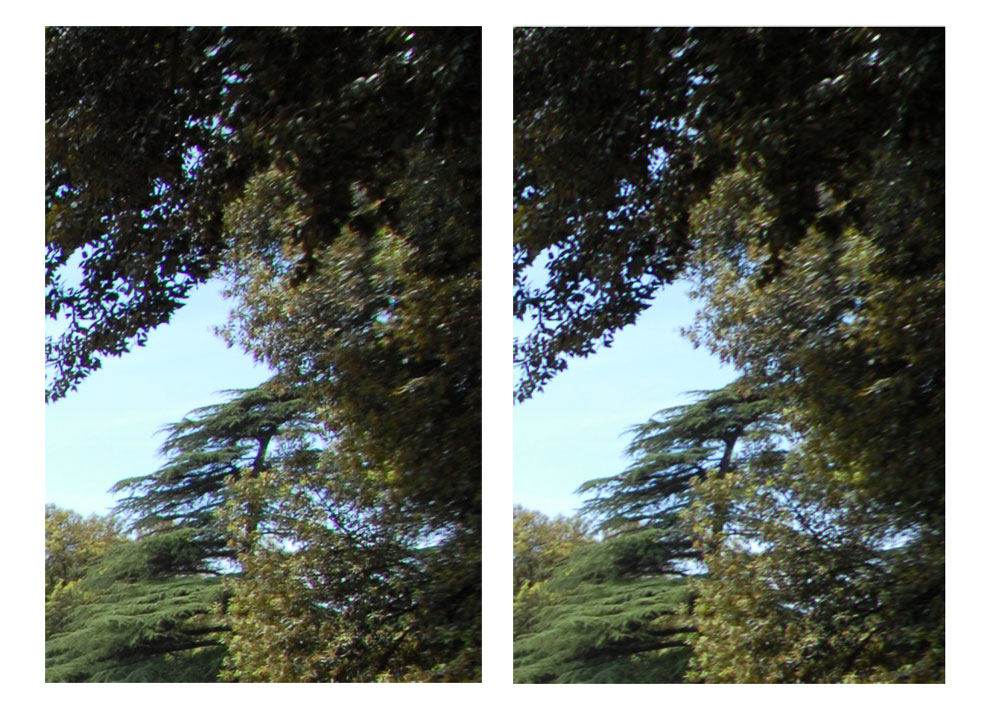
The most apparent manifestation of chromatic aberration is the color fringing. This typically appears as red, green, blue, or purple halos around high-contrast edges in an image. For example, the edge of a dark tree branch against a bright sky might show a distinct blue or purple fringe. Similarly, the edge of a white building against a darker background could exhibit a red or green fringe.
Beyond visible color fringing, chromatic aberration also leads to a loss of sharpness and detail. Because the different color channels are not perfectly focused at the same point, the overall image appears softer than it would be without aberration. This is especially problematic in fine details and textures, rendering them less crisp and defined. For professionals who rely on razor-sharp images, this can be a significant drawback.
Factors Influencing the Severity of Chromatic Aberration
The severity of chromatic aberration in a lens is influenced by several factors:
-
Lens Design and Complexity: Simple lenses, like a single convex lens, are prone to significant chromatic aberration. More complex lens designs, incorporating multiple lens elements made of different types of glass, can be engineered to minimize these effects.
-
Material Properties: The specific type of glass used in a lens element plays a crucial role. Glasses with different dispersion characteristics are used in combination to counteract the dispersion of other elements.
-
Aperture: While not a direct cause, the effects of chromatic aberration can become more pronounced when shooting at wider apertures (smaller f-numbers). This is because the depth of field is shallower, meaning out-of-focus areas are more noticeable, and LCA can be more apparent in these regions.
-
Focal Length: Wide-angle lenses, due to their construction and the wider field of view they capture, can sometimes exhibit more lateral chromatic aberration towards the edges of the frame.
Understanding these factors helps in appreciating why some lenses are more prone to chromatic aberration than others and how lens manufacturers strive to overcome these limitations.
Mitigating Chromatic Aberration: Technological Solutions
The pursuit of pristine image quality has driven significant innovation in lens design and digital processing techniques to combat chromatic aberration. Manufacturers and software developers have employed a multi-pronged approach to minimize its impact.
Advanced Lens Design: The Role of Apochromats and Chromatic Aberration Correcting Elements
The most fundamental way to reduce chromatic aberration is through sophisticated lens design. This involves using multiple lens elements with different optical properties and curvatures.
-
Achromatic Doublets: This is a basic design that combines a positive lens element made of crown glass (low dispersion) with a negative lens element made of flint glass (high dispersion). By carefully selecting the curvatures and thicknesses of these elements, the chromatic aberration of one element can be partially corrected by the other, bringing two colors (typically red and blue) to a common focal point.
-
Apochromatic Lenses (Apos): These are a more advanced form of correction. Apochromatic lenses are designed to bring three wavelengths of light (typically red, green, and blue) to the same focal point. This requires even more complex designs, often involving three or more lens elements, sometimes including specialized glass types like fluorite or extra-low dispersion (ED) glass. Apochromatic lenses are considered the gold standard for minimizing chromatic aberration, offering exceptionally sharp and color-accurate images.
-
Aspheric Elements: While primarily used to correct spherical aberration (another type of lens distortion), aspheric elements can also contribute to overall image sharpness and can indirectly help reduce the visual impact of residual chromatic aberration.
-
Extra-Low Dispersion (ED) Glass: The inclusion of lens elements made from ED glass is a common strategy. These specialized glass formulations have very low dispersion properties, meaning they bend different wavelengths of light much closer together. When combined with other glass types, they significantly reduce chromatic aberration.

Digital Correction: Software and In-Camera Processing
In the digital age, chromatic aberration correction is not solely reliant on optical engineering. Image processing software and in-camera algorithms play a vital role in refining images and further minimizing any remaining color fringing.
-
RAW Image Editors: Popular editing software such as Adobe Lightroom, Photoshop, Capture One, and others have built-in lens correction profiles. These profiles are specific to individual lens models and contain detailed information about their optical characteristics, including their chromatic aberration. When applied, the software analyzes the image and intelligently removes the color fringing based on the lens profile. This is a highly effective method for correcting both LCA and LatCA.
-
In-Camera Correction: Many digital cameras, particularly DSLRs and mirrorless cameras, offer in-camera lens correction features. These settings can automatically correct for chromatic aberration, distortion, and vignetting in real-time as the image is captured, especially when shooting in JPEG format. For photographers shooting in RAW, these corrections are often applied during the RAW conversion process in post-production.
-
Computational Photography: Emerging computational photography techniques also leverage algorithms to analyze and correct for optical imperfections, including chromatic aberration, often in conjunction with AI-powered image enhancement.
By combining advanced optical design with powerful digital processing, the prevalence and impact of chromatic aberration have been dramatically reduced, allowing for the creation of incredibly sharp, color-accurate, and visually stunning images. Understanding this phenomenon empowers users to make informed choices about their equipment and to leverage the tools available for achieving the best possible image quality.
aViewFromTheCave is a participant in the Amazon Services LLC Associates Program, an affiliate advertising program designed to provide a means for sites to earn advertising fees by advertising and linking to Amazon.com. Amazon, the Amazon logo, AmazonSupply, and the AmazonSupply logo are trademarks of Amazon.com, Inc. or its affiliates. As an Amazon Associate we earn affiliate commissions from qualifying purchases.