
When a consumer types “what is 8.5 in European size” into a search engine, they aren’t just looking for a number; they are seeking a solution to a decades-old fragmentation problem in global commerce. In the United States, an 8.5 might be a staple measurement, but transitioning that to the European “Paris Point” system—where it typically lands between a 41 and 42 for men or a 39 and 40 for women—reveals a significant technological gap.
In the modern digital economy, the “8.5” problem is no longer just a matter of looking at a printed cardboard chart in a shoe store. It has become a frontier for high-tech innovation, involving machine learning, computer vision, and sophisticated data analytics. As e-commerce continues to dominate the retail landscape, technology companies are racing to bridge the gap between regional sizing standards and the biological reality of the human foot.
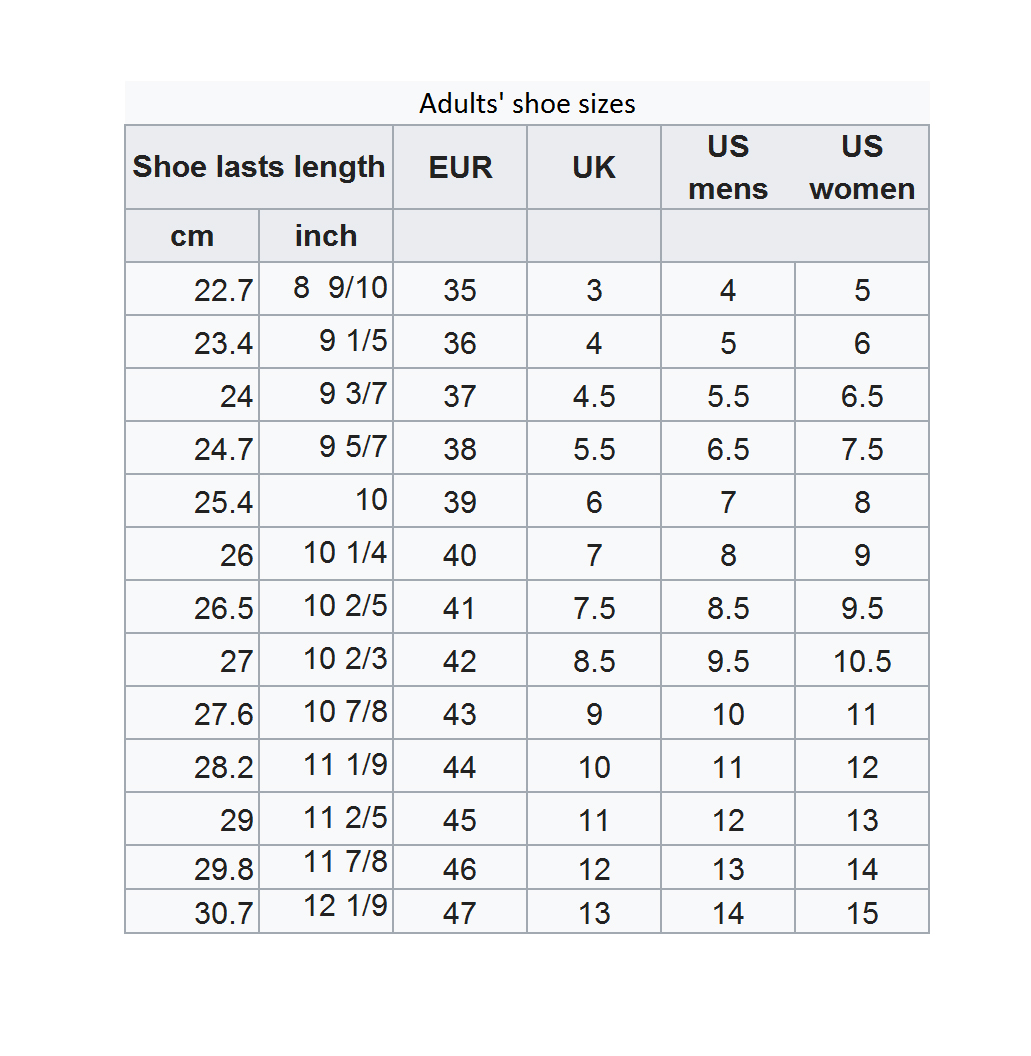
The Data Science Behind Global Sizing Discrepancies
The primary reason why a simple conversion from 8.5 US to a European size is so fraught with error lies in the legacy data structures of different regions. The US system is based on “barleycorns,” an ancient English unit, while the European system utilizes the “Paris Point,” which equals two-thirds of a centimeter. These disparate mathematical foundations create “rounding errors” that digital platforms must now resolve using complex algorithms.
The Fragmentation of Footwear Data
Historically, footwear data has been siloed. A brand based in Italy may define a size 42 differently than a brand based in Germany, even though both use the European system. For a tech-driven marketplace, this creates a “noisy” data environment. When an algorithm attempts to suggest a size to a user, it must account for these brand-specific deviations. Developers are now using Large Language Models (LLMs) and Big Data to scrape millions of customer reviews to identify “fit sentiment.” By processing natural language—such as “this runs large” or “narrow toe box”—AI can adjust the standard conversion of an 8.5 US to a more precise European equivalent based on real-world performance rather than theoretical charts.
Why Static Conversion Charts are Obsolete in the API Age
In the early days of the internet, a static HTML table was sufficient for size conversion. Today, the integration of Application Programming Interfaces (APIs) has made these charts obsolete. Modern e-commerce engines use dynamic sizing APIs that cross-reference a user’s purchase history across multiple brands. If a user wears an 8.5 in a specific American athletic brand, the API doesn’t just look at a chart; it queries a database of millions of other users who also wear that size and sees which European size they kept and which they returned. This shift from “static math” to “probabilistic modeling” is the new standard in retail tech.
AI and Machine Learning: The New Personal Stylists
As we move beyond simple calculations, the tech industry is deploying specialized AI to ensure that the “8.5” a customer orders is the perfect fit. Machine learning models are now capable of predicting fit with higher accuracy than a human sales assistant, using variables that the average consumer would never consider.
Computer Vision and Smartphone 3D Scanning
One of the most exciting developments in the tech-sizing niche is the use of LiDAR (Light Detection and Ranging) and computer vision through smartphones. New apps allow users to place their foot on a standard piece of paper (for scale) and take a photo. The software then generates a 3D “Digital Twin” of the foot.
This technology goes far beyond length. It measures arch height, instep volume, and width at the metatarsals. When the user asks “what is 8.5 in European size,” the app can respond by saying, “In this specific European brand, your 8.5 US foot actually requires a size 41.5 because of your high instep.” This level of personalization is only possible through the rapid processing of spatial data and the democratization of high-end sensors in consumer mobile devices.
Predicting Fit Through Neural Networks
Neural networks are being trained on “return data” to understand the relationship between foot shape and shoe geometry. By analyzing why certain European sizes are returned by American consumers, these networks identify patterns that humans miss. For instance, a neural network might find that people who wear an 8.5 US in dress shoes almost always prefer a 42 EU in Italian leather boots, but a 41 in Scandinavian sneakers. By leveraging these deep learning layers, tech platforms can offer a “confidence score” for every conversion, drastically reducing the uncertainty of international shopping.

The E-commerce Revolution: Reducing Returns with Precision Tech
The drive to solve the sizing mystery isn’t just about consumer convenience; it’s a financial imperative driven by the “Return Culture.” In the US and Europe, footwear return rates can exceed 30%, with “incorrect fit” being the primary culprit. For tech companies and retailers, reducing this percentage by even 1% translates into billions of dollars in saved logistics and carbon emissions.
Digital Twins and Virtual Fitting Rooms
The “Virtual Fitting Room” is no longer science fiction. Using Augmented Reality (AR), shoppers can now “wear” a shoe virtually to see how it looks on their feet. However, the true tech innovation lies under the surface. “Digital Twin” technology creates a virtual replica of the shoe’s interior. Tech providers like Volumental and True Fit maintain massive databases of the internal dimensions of thousands of shoe models. When a user with an 8.5 US foot looks for a European size, the software performs a “virtual collision test,” checking if the digital foot twin would encounter pressure points within the digital shoe interior.
Blockchain and the Future of Size Authentication
As the secondary market for footwear (resale) continues to grow, blockchain technology is being introduced to verify sizing and authenticity. A “Digital Product Passport” (DPP) can be attached to a pair of shoes as an NFT or a blockchain entry. This record includes the exact factory measurements in millimeters. When a shoe is resold globally, the buyer doesn’t have to wonder what an 8.5 US converts to; they can check the immutable data on the blockchain to see the exact dimensions, ensuring a perfect fit regardless of regional labeling.
Cybersecurity and Privacy in Biometric Footwear Data
As we move toward a future where our shoes are chosen for us by algorithms, a new tech challenge emerges: digital security. Your foot shape, gait, and size are biometric data points. As companies collect 3D scans to answer the “8.5 in European size” question, they are accumulating highly personal information.
Protecting the “Digital Footprint”
The phrase “digital footprint” is taking on a literal meaning. Tech firms must now navigate strict data privacy regulations like GDPR in Europe and CCPA in California. Securing 3D foot scans requires end-to-end encryption and robust cybersecurity protocols. If a database of biometric foot data were compromised, it could theoretically be used for everything from unauthorized medical profiling to identity theft. Therefore, the next generation of sizing tech isn’t just about better math; it’s about “Privacy by Design.”
The Move Toward Edge Computing
To mitigate security risks, many sizing apps are moving toward “Edge Computing.” Instead of sending a detailed 3D scan of a user’s foot to a central server, the processing happens locally on the user’s smartphone. The phone calculates the necessary dimensions and only sends the resulting “size requirements” to the retailer. This minimizes the amount of sensitive data in transit while still providing the user with the exact European size conversion they need.
The Future: Smart Shoes and Biometric Integration
Looking ahead, the question of “what is 8.5 in European size” may become entirely obsolete. We are entering the era of the “Internet of Shoes” (IoS), where footwear itself becomes a connected gadget.
The Internet of Things (IoT) in Footwear
Smart shoes equipped with pressure sensors and haptic feedback are currently in development. These shoes can detect if they are too tight or too loose and send that data back to a smartphone app. Over time, the shoe “learns” the user’s comfort preferences. In the future, when you buy your next pair, your current shoes will communicate with the store’s interface, saying, “Our wearer is currently in an 8.5 US, but the pressure sensors indicate a European 42 would be more comfortable in this new model’s material.”

Sustainability Through Tech-Driven Precision
Finally, the perfection of sizing technology is a major win for Green Tech. By eliminating the need to ship multiple sizes (the practice of “bracketing,” where a consumer buys an 8, 8.5, and 9 and returns two), the carbon footprint of global e-commerce is slashed. Precision tech ensures that the right shoe is delivered the first time. This intersection of AI, logistics, and environmental tech is where the future of global sizing lies.
In conclusion, while the conversion of an 8.5 US to a European size seems like a simple inquiry, it serves as the catalyst for some of the most sophisticated technology in the retail sector. From AI-driven fit predictions and 3D scanning to blockchain authentication and IoT-enabled footwear, the tech industry is ensuring that no matter where you are in the world, the “8.5” you buy will feel like it was custom-made for you.
aViewFromTheCave is a participant in the Amazon Services LLC Associates Program, an affiliate advertising program designed to provide a means for sites to earn advertising fees by advertising and linking to Amazon.com. Amazon, the Amazon logo, AmazonSupply, and the AmazonSupply logo are trademarks of Amazon.com, Inc. or its affiliates. As an Amazon Associate we earn affiliate commissions from qualifying purchases.