
The evolution of mobile communication has been nothing short of revolutionary. From the early days of voice calls and simple text messages to the seamless streaming, instant information access, and complex online interactions we experience today, a significant leap in technology has occurred. At the heart of this transformation lies the 4G LTE network, a cornerstone of modern mobile internet connectivity. Understanding what 4G LTE is, how it functions, and its impact is crucial for appreciating the digital landscape we navigate daily.
Understanding the Foundations: From 2G to 4G
The journey to 4G LTE is a story of continuous improvement in mobile network technology, each generation building upon the successes and addressing the limitations of its predecessor. This progression is marked by significant increases in data speeds, reduced latency, and enhanced capabilities, fundamentally altering how we communicate and interact with information.

The Precursors: 1G, 2G, and 3G
To fully grasp the significance of 4G LTE, it’s essential to briefly touch upon the preceding generations of mobile networks.
1G: The Analog Dawn
The first generation of mobile networks, 1G, emerged in the 1980s. These were analog systems, primarily designed for voice communication. While groundbreaking at the time, 1G networks were characterized by poor voice quality, limited capacity, and a significant lack of data capabilities. Security was also a major concern, as analog signals were relatively easy to intercept.
2G: The Digital Revolution and the Rise of SMS
The 1990s ushered in the second generation, 2G, a pivotal shift towards digital technology. This generation brought about improved voice clarity, enhanced security through encryption, and, most notably, the introduction of digital data services. The most prominent of these was the Short Message Service (SMS), or text messaging, which rapidly became a ubiquitous communication method. Technologies like GSM (Global System for Mobile Communications) and CDMA (Code Division Multiple Access) defined this era. While data speeds were still very slow by today’s standards (typically in the kilobits per second range), it laid the groundwork for mobile data.
3G: The Dawn of Mobile Broadband
The early 2000s saw the advent of 3G, which aimed to provide true mobile broadband capabilities. This generation marked a substantial leap in data speeds, enabling functionalities like mobile internet browsing, email, video calls, and basic multimedia streaming. Technologies such as UMTS (Universal Mobile Telecommunications System) and HSPA (High-Speed Packet Access) were key players in the 3G landscape. Speeds typically ranged from a few megabits per second, making mobile internet significantly more practical and ushering in the era of the smartphone as we know it, with its reliance on constant data connectivity.
The Leap to 4G: Speed, Efficiency, and the IP Network
4G, the fourth generation of mobile technology, represented a paradigm shift. It wasn’t just about faster speeds; it was about a fundamentally different architecture and a more efficient way of handling data. The primary goal of 4G was to deliver internet speeds comparable to wired broadband connections, enabling a richer and more immersive mobile experience.
The Concept of “LTE”: Long-Term Evolution
The term “LTE” often appears alongside “4G.” It’s important to understand that LTE stands for “Long-Term Evolution.” While initially conceived as a stepping stone towards a truly 4G system, LTE proved to be so advanced and capable that many networks offering LTE services were marketed as “4G LTE.” In essence, LTE is the technology that powers most 4G networks. It was designed to evolve existing 3G infrastructure to deliver significant improvements in speed, capacity, and latency.
Key Technological Advancements in 4G LTE
4G LTE introduced several critical technological advancements that propelled mobile communication forward:
- OFDM (Orthogonal Frequency-Division Multiplexing): This is a core technology in LTE. OFDM divides a data stream into smaller, parallel streams that are transmitted simultaneously across multiple frequencies. This method is highly effective at combating interference and multipath fading (where signals bounce off obstacles), leading to more reliable and faster data transmission, especially in dense urban environments.
- MIMO (Multiple-Input Multiple-Output): MIMO utilizes multiple antennas at both the transmitter and receiver. By sending and receiving data over multiple paths concurrently, MIMO significantly increases data throughput and improves signal quality. Think of it like having multiple lanes on a highway, allowing more data to travel at once.
- All-IP Network Architecture: Unlike previous generations that relied on separate circuit-switched networks for voice and packet-switched networks for data, 4G LTE is built on an all-IP (Internet Protocol) network. This means both voice and data are treated as IP packets, simplifying the network architecture, enhancing efficiency, and enabling seamless integration of various services. Voice over LTE (VoLTE) is a direct result of this, allowing voice calls to be made over the data network, offering clearer audio and faster call setup times.
How 4G LTE Works: The Technical Backbone
Delving deeper into the operational aspects of 4G LTE reveals a sophisticated system designed for high-speed, low-latency data transfer. Understanding its core components and how they interact provides valuable insight into the technology that underpins our connected lives.
Network Architecture: Evolved Packet Core (EPC)
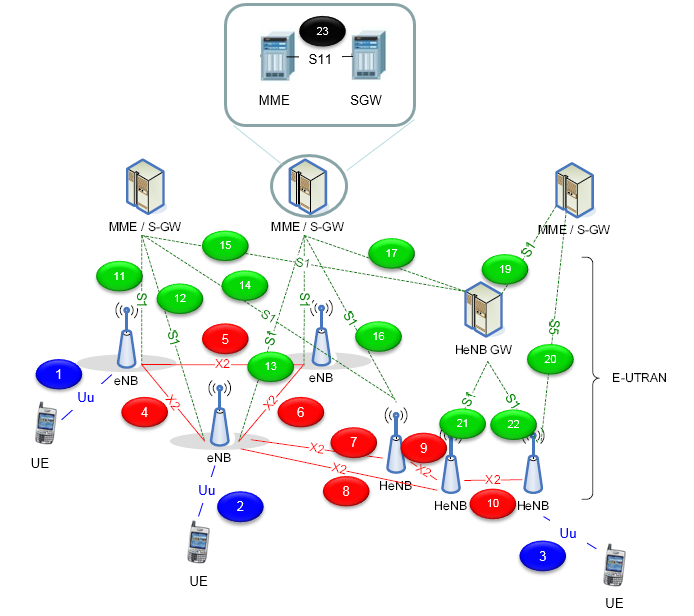
The brain of the 4G LTE network is the Evolved Packet Core (EPC). This is a streamlined, flat, and all-IP architecture designed for efficiency and scalability. Key components of the EPC include:
- Mobility Management Entity (MME): The MME is responsible for managing control plane functions, such as user authentication, mobility management (tracking user location), and selection of the appropriate Serving Gateway for data traffic.
- Serving Gateway (S-GW): The S-GW acts as the mobility anchor for the user plane data. It routes and forwards user data packets between the eNodeB (the base station) and the external networks.
- Packet Data Network Gateway (P-GW): The P-GW provides connectivity to external packet data networks, such as the internet and enterprise networks. It also handles IP address allocation to user devices and enforces quality of service (QoS) policies.
- Home Subscriber Server (HSS): The HSS is a central database that stores user profiles, including subscription information, authentication credentials, and access authorization.
The Radio Access Network (RAN): eNodeB and Antennas

The part of the network that users directly interact with is the Radio Access Network (RAN). In 4G LTE, this is primarily handled by the eNodeB (evolved Node B). The eNodeB is the base station that connects mobile devices (User Equipment or UE) to the EPC.
- Enhanced Functionality of eNodeBs: Compared to previous generations’ base stations, eNodeBs have significantly more processing power and can handle more complex radio management tasks. They also integrate the functions of the older NodeB and the Radio Network Controller (RNC) from 3G networks, leading to a simpler and more efficient RAN.
- Antenna Technology: As mentioned with MIMO, the eNodeB employs advanced antenna systems. This includes multiple transmit and receive antennas to exploit spatial diversity and multiplexing, maximizing data throughput and coverage. Carrier aggregation, where multiple frequency bands are combined to increase bandwidth, is also managed at the eNodeB level.
Spectrum Efficiency and Bandwidth
A critical factor in 4G LTE’s success is its efficient use of radio spectrum.
- Wider Channel Bandwidths: LTE supports wider channel bandwidths than previous generations (e.g., 1.4 MHz, 3 MHz, 5 MHz, 10 MHz, 15 MHz, and 20 MHz). Wider channels allow for the transmission of more data simultaneously, directly translating to higher speeds.
- Adaptive Modulation and Coding (AMC): The network dynamically adjusts the modulation scheme and coding rate based on the signal quality experienced by the user. In good signal conditions, more complex modulation and coding are used to achieve higher data rates. In poorer conditions, simpler schemes are employed to maintain a stable connection. This ensures optimal performance across various signal environments.
The Impact and Advantages of 4G LTE
The widespread adoption of 4G LTE has profoundly reshaped our technological landscape, influencing how we work, communicate, entertain ourselves, and access information. Its benefits extend far beyond simple speed increases.
Enhanced Mobile Broadband Experience
The most immediate and tangible benefit of 4G LTE is the dramatically improved mobile broadband experience.
- Faster Download and Upload Speeds: Theoretical peak download speeds for LTE can reach hundreds of megabits per second, with typical real-world speeds significantly exceeding those of 3G. This allows for quick downloads of large files, seamless streaming of high-definition video and music, and rapid loading of web pages and applications. Upload speeds have also seen substantial improvements, enabling smoother video conferencing and faster sharing of content.
- Reduced Latency: Latency, the delay between sending a command and receiving a response, is a crucial factor for interactive applications. 4G LTE has significantly lower latency compared to 3G, typically in the tens of milliseconds. This makes real-time online gaming, live video streaming with minimal buffering, and responsive voice calls possible on mobile devices.
Enabling New Technologies and Services
The capabilities of 4G LTE have served as a catalyst for innovation, paving the way for numerous technologies and services that were impractical or impossible with previous generations.
- VoLTE (Voice over LTE): As mentioned earlier, VoLTE allows voice calls to be transmitted as data packets over the LTE network. This results in clearer audio quality, faster call setup times, and the ability to seamlessly transition to data services during a call.
- IoT (Internet of Things): While 5G is increasingly associated with IoT, 4G LTE has played a crucial role in its early development and deployment. Its reliable connectivity and decent data speeds have enabled a wide range of connected devices, from smart home appliances and wearable technology to industrial sensors and fleet management systems.
- Mobile Gaming and Augmented/Virtual Reality: The low latency and high bandwidth of 4G LTE are essential for immersive mobile gaming experiences and the growing field of augmented reality (AR) and virtual reality (VR) applications that rely on real-time data processing and high-quality visuals.
- Cloud-Based Services and Productivity: Access to cloud storage, collaborative productivity tools, and enterprise applications on the go has become seamless with 4G LTE, transforming mobile devices into powerful work and productivity tools.
Increased Network Capacity and Efficiency
Beyond user-facing benefits, 4G LTE also offers significant advantages for network operators.
- Higher Capacity: The more efficient use of spectrum and advanced technologies like OFDM and MIMO allow 4G LTE networks to handle a much larger number of connected devices and a greater volume of data traffic compared to 3G. This is crucial in today’s increasingly connected world.
- Cost Efficiency: The streamlined all-IP architecture and reduced need for separate network infrastructure contribute to greater operational efficiency and potentially lower costs for network operators.
The Transition to 5G and Beyond
While 4G LTE continues to be a dominant force in mobile connectivity, the world of telecommunications is always looking forward. The development and rollout of 5G networks are already underway, promising even more significant advancements.
Understanding 5G’s Promise
5G, the fifth generation of mobile technology, is designed to offer a quantum leap in capabilities. It aims to deliver:
- Significantly Higher Speeds: With theoretical peak speeds potentially reaching multiple gigabits per second, 5G will enable near-instantaneous downloads and ultra-high-definition streaming.
- Ultra-Low Latency: 5G is expected to reduce latency to as low as 1 millisecond, unlocking true real-time applications and transforming industries like autonomous driving and remote surgery.
- Massive Connectivity: 5G is engineered to support an exponentially larger number of connected devices, making it the ideal foundation for the widespread adoption of IoT.
- Network Slicing: A key feature of 5G is network slicing, which allows operators to create virtual, isolated networks tailored to specific applications or user needs, ensuring dedicated resources and guaranteed performance.
4G LTE’s Enduring Role
Despite the advent of 5G, 4G LTE is not disappearing anytime soon.
- Continued Coverage: 4G LTE offers extensive coverage and is deeply integrated into the global telecommunications infrastructure. For many users, especially in less densely populated areas, 4G LTE will remain the primary and most reliable connection for years to come.
- Complementary Technology: 5G networks will often coexist with 4G LTE networks. Many 5G devices will also support 4G LTE, allowing for seamless handoffs between the two technologies. In many scenarios, 5G deployment will begin by leveraging existing 4G infrastructure.
- Specific Use Cases: For applications that don’t require the extreme speeds or ultra-low latency of 5G, 4G LTE will continue to be a perfectly adequate and cost-effective solution.
The Future of Mobile Connectivity
The evolution of mobile networks is a continuous process. From the rudimentary analog signals of 1G to the sophisticated IP-based infrastructure of 4G LTE and the even more advanced capabilities of 5G, each generation has pushed the boundaries of what’s possible. Understanding the technical underpinnings and impact of 4G LTE provides essential context for appreciating the current state of our connected world and anticipating the future innovations that will continue to shape our digital lives. The journey from simple voice calls to the complex, data-rich experiences we enjoy today is a testament to the relentless pace of technological advancement, with 4G LTE standing as a critical milestone in that ongoing evolution.
aViewFromTheCave is a participant in the Amazon Services LLC Associates Program, an affiliate advertising program designed to provide a means for sites to earn advertising fees by advertising and linking to Amazon.com. Amazon, the Amazon logo, AmazonSupply, and the AmazonSupply logo are trademarks of Amazon.com, Inc. or its affiliates. As an Amazon Associate we earn affiliate commissions from qualifying purchases.