
The concept of the third dimension, often perceived as simply “depth,” is far more profound and transformative within the realm of technology. It represents a fundamental leap from flat, two-dimensional representations to immersive, spatial experiences, fundamentally reshaping how we interact with digital information, create content, and engage with the world around us. For technologists, developers, designers, and indeed, any forward-thinking individual or organization operating in the digital sphere, understanding the third dimension is not merely an academic pursuit but a critical component of innovation and competitive advantage.
The journey into the third dimension in technology has been a long and evolutionary one. From the early days of pixel-based interfaces and wireframe models, we have progressively moved towards richer, more tangible digital environments. This evolution has been driven by advancements in computing power, sensor technology, display capabilities, and sophisticated software algorithms. The implications are vast, touching upon everything from how we design products and visualize data to how we play games and receive medical treatment. In essence, the third dimension imbues digital constructs with a sense of presence, reality, and utility that was previously unattainable.

The Foundations of Spatial Computing: Beyond Pixels
The transition from 2D to 3D in technology is underpinned by a fundamental shift in how we represent and manipulate information. While 2D interfaces rely on the X and Y axes to define position and form, the introduction of the Z-axis unlocks depth, volume, and true spatial relationships. This expansion allows for a much richer and more intuitive understanding of digital objects and environments.
From Wireframes to Volumetric Models: The Evolution of Digital Representation
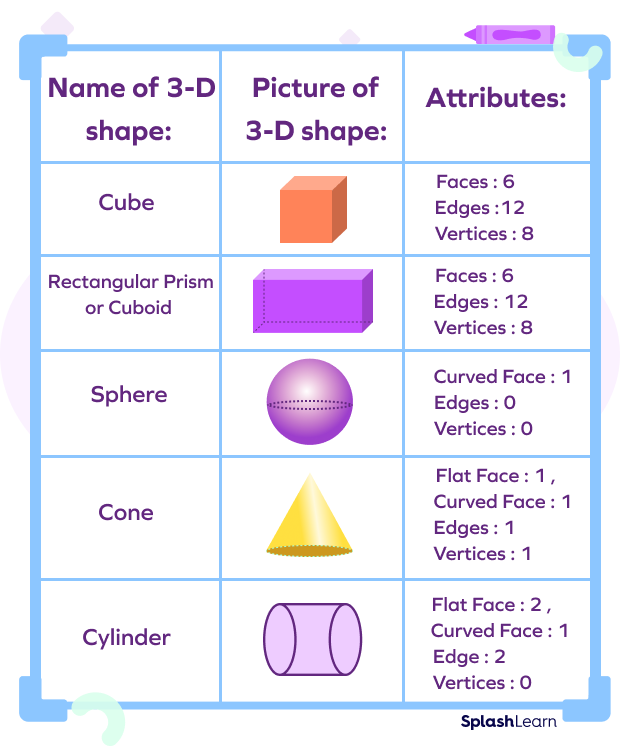
Early computer graphics were largely confined to 2D, focusing on lines, shapes, and flat images. The advent of 3D modeling introduced the concept of vertices, edges, and faces that could be arranged in three-dimensional space. Wireframe models, while rudimentary, were the initial steps in visualizing objects with depth. These were then enhanced with surface rendering, adding color and texture, and eventually sophisticated shading and lighting techniques to simulate realism.
The evolution from wireframes to complex volumetric models signifies a growing ability to capture and represent the intricate details of the physical world digitally. This includes not just the outward appearance of objects but also their internal structures and material properties. Techniques like polygonal modeling, NURBS surfaces, and subdivision surfaces have provided designers and engineers with increasingly powerful tools to sculpt and refine digital objects with remarkable precision. The development of CAD (Computer-Aided Design) software, for instance, has been instrumental in enabling engineers to design complex machinery and architectural structures in 3D, allowing for detailed analysis and simulation before physical prototyping. Similarly, 3D modeling in entertainment and gaming has moved from simple geometric shapes to hyper-realistic characters and environments, demanding immense computational power and advanced rendering techniques.
The Role of Data: From Spreadsheets to Spatial Visualizations
In the realm of data, the third dimension offers a powerful means of uncovering patterns and insights that might remain hidden in traditional 2D representations. While spreadsheets and bar charts are effective for displaying linear or categorical data, many datasets possess inherent spatial or volumetric relationships that are best understood in 3D.
Consider scientific research: imagine visualizing complex molecular structures, the intricate pathways of biological systems, or the vastness of astronomical data. 3D visualizations allow researchers to explore these datasets from multiple perspectives, identify correlations, and generate hypotheses in ways that flat charts simply cannot facilitate. In finance, for example, visualizing market trends across multiple variables (price, volume, time, sentiment) in a 3D scatter plot can reveal hidden correlations and anomalies. Geographical Information Systems (GIS) have long utilized 3D mapping to represent terrain, urban planning, and environmental modeling, providing a more comprehensive understanding of spatial data. The ability to interact with data in a spatial context transforms it from abstract numbers into tangible, explorable information. This shift fosters a deeper, more intuitive comprehension, leading to more informed decision-making and innovative problem-solving.
Technologies Enabling the Third Dimension
The realization of the third dimension in technology is not a singular invention but a confluence of various technological advancements working in concert. These breakthroughs have provided the computational power, sensory input, and display capabilities necessary to create and interact with 3D digital environments.
Advancements in Hardware: Processing Power, Sensors, and Displays
At the core of 3D technology lies the immense processing power of modern graphics processing units (GPUs). These specialized processors are designed to handle the massive parallel computations required for rendering complex 3D graphics in real-time. Without the exponential growth in GPU capabilities, the smooth and detailed 3D worlds we see in games and simulations would be impossible.
Beyond processing, the development of sophisticated sensors has been crucial. Inertial Measurement Units (IMUs) in smartphones and VR headsets track movement and orientation, allowing for natural interaction within 3D space. Depth sensors, such as those found in LiDAR technology, can capture precise geometric information about the environment, enabling the creation of digital twins and augmented reality overlays. On the display front, advancements range from high-resolution screens that can render fine 3D details to the development of stereoscopic displays, virtual reality (VR) headsets, and augmented reality (AR) glasses that create the illusion of depth and immersion by presenting slightly different images to each eye. Haptic feedback technology is also playing an increasingly important role, allowing users to “feel” the textures and resistances of virtual objects, further enhancing the sense of physical presence in 3D digital environments.
Software and Algorithmic Innovations: Rendering, Simulation, and Interaction
The hardware is only part of the equation; sophisticated software and algorithms are essential for translating raw data into immersive 3D experiences. Real-time rendering engines, such as Unity and Unreal Engine, have democratized the creation of 3D content, providing developers with robust tools for building virtual worlds and interactive applications. These engines handle everything from lighting and shadow calculations to physics simulations and animation.
Beyond rendering, algorithms for 3D reconstruction, spatial mapping, and object recognition are continuously evolving. These algorithms enable devices to understand and interact with the physical world. For example, SLAM (Simultaneous Localization and Mapping) algorithms allow AR devices to build a 3D map of their surroundings while simultaneously determining their own position within that map. This is fundamental for AR applications that seamlessly blend digital objects with the real world. Furthermore, advancements in AI are being integrated into 3D technologies, enabling more intelligent agents within virtual environments, realistic character behavior, and automated content generation. The development of AI-powered procedural generation techniques, for instance, allows for the creation of vast and detailed 3D landscapes and environments with minimal human input, significantly accelerating the content creation pipeline.
Applications and Implications of the 3rd Dimension in Tech
The ability to represent, manipulate, and interact with information in three dimensions has opened up a vast array of applications across diverse technological sectors, revolutionizing industries and creating new possibilities for human-computer interaction.
Immersive Experiences: Virtual and Augmented Reality
Perhaps the most visible manifestation of the third dimension in technology is in the fields of Virtual Reality (VR) and Augmented Reality (AR). VR completely immerses users in a digitally created environment, transporting them to new worlds, historical periods, or even abstract conceptual spaces. This has profound implications for gaming, entertainment, training, and remote collaboration. Imagine surgeons practicing complex procedures in a risk-free virtual operating room, or architects walking through their designs before a single brick is laid.
Augmented Reality, on the other hand, overlays digital information onto the real world. This can range from simple navigational aids and product information displayed on a smartphone screen to sophisticated AR glasses that seamlessly integrate virtual objects into our physical surroundings. This technology has the potential to transform fields like retail, education, maintenance, and tourism, providing context-aware information and interactive experiences that enhance our understanding and engagement with the world. The ability to visualize product dimensions in your own living room before purchasing, or to see repair instructions superimposed directly onto machinery, are just a few examples of AR’s transformative power.
Design, Simulation, and Prototyping: Engineering the Future
The third dimension is indispensable in modern design, engineering, and manufacturing. CAD software allows for the creation of highly detailed 3D models of products, buildings, and infrastructure. These models can then be used for sophisticated simulations to test performance, identify potential flaws, and optimize designs before any physical resources are committed.
This iterative process, enabled by 3D modeling and simulation, drastically reduces the time and cost associated with product development. It allows for rapid prototyping, where digital designs can be quickly translated into physical prototypes using 3D printing technology. This “additive manufacturing” process itself is a direct embodiment of working with the third dimension, building objects layer by layer from digital blueprints. The ability to design, simulate, and physically realize complex components with unparalleled accuracy is fundamental to innovation in fields ranging from aerospace and automotive engineering to medical devices and consumer electronics.
Data Visualization and Analytics: Seeing the Unseen
The power of the third dimension extends significantly to how we interpret and analyze data. While 2D charts and graphs provide valuable insights, complex, multi-dimensional datasets can often be better understood when represented spatially. 3D data visualization techniques allow for the exploration of relationships between multiple variables simultaneously, revealing patterns, outliers, and trends that might otherwise be missed.
For example, in scientific research, visualizing the complex interactions within biological systems or the distribution of astronomical phenomena in 3D can lead to groundbreaking discoveries. In finance, 3D representations of market data can help analysts identify subtle correlations and predict future movements. Even in everyday applications, visualizing geographical data in 3D can enhance our understanding of urban planning, environmental changes, and logistical challenges. The ability to “step inside” data and interact with it in a spatial manner transforms abstract figures into tangible, explorable landscapes of information, leading to deeper insights and more effective decision-making.
The Future of Spatial Computing: Beyond Our Current Perceptions
As technology continues to advance, our engagement with the third dimension will only become more seamless, intuitive, and integrated into our daily lives. The current technological landscape is merely a stepping stone towards a future where the boundaries between the physical and digital worlds blur, driven by increasingly sophisticated spatial computing.
Towards Seamless Integration and Intuitive Interaction
The ultimate goal of spatial computing is to create digital experiences that feel as natural and effortless as interacting with the physical world. This involves developing more advanced interfaces that respond to natural gestures, voice commands, and even thought, eliminating the need for cumbersome controllers or screens. As AI and machine learning continue to evolve, virtual assistants will become more context-aware and capable of understanding and responding to our needs within 3D environments.
Imagine a future where you can manipulate 3D designs with simple hand movements, collaborate with colleagues in virtual spaces that mimic real-world offices, or learn new skills through immersive, hands-on experiences delivered through AR. The continued development of haptic feedback will further enhance this realism, allowing us to feel the textures of virtual objects and the impact of our actions. The focus is shifting from simply displaying information in 3D to creating truly interactive and embodied digital experiences.

The Metaverse and Beyond: New Realities Unfolding
The concept of the “metaverse,” a persistent, interconnected set of virtual spaces, represents a significant evolution of our interaction with the third dimension. While still in its nascent stages, the metaverse envisions a future where we can socialize, work, play, and conduct commerce within rich, three-dimensional digital environments. This requires advancements in network infrastructure, interoperability standards, and the creation of compelling virtual content.
Beyond the metaverse, the trajectory of 3D technology points towards even more profound integrations. We can anticipate the development of advanced digital twins that perfectly mirror complex physical systems, enabling predictive maintenance and remote control. The use of 3D scanning and modeling in healthcare will continue to revolutionize diagnostics and personalized treatment. Ultimately, the third dimension in technology is not just about creating virtual worlds; it’s about augmenting our reality, enhancing our capabilities, and fundamentally reshaping our understanding and interaction with the digital and physical realms. The journey into depth is far from over; it is an ongoing exploration of new possibilities.
aViewFromTheCave is a participant in the Amazon Services LLC Associates Program, an affiliate advertising program designed to provide a means for sites to earn advertising fees by advertising and linking to Amazon.com. Amazon, the Amazon logo, AmazonSupply, and the AmazonSupply logo are trademarks of Amazon.com, Inc. or its affiliates. As an Amazon Associate we earn affiliate commissions from qualifying purchases.