
The term “1337,” often stylized as “leet” or “l33t,” is more than just a string of numbers and letters. It’s a vibrant, evolving linguistic phenomenon deeply rooted in the early days of online culture, particularly within the realms of computing, gaming, and hacker communities. To understand “1337” is to peel back layers of digital history, appreciating its evolution from a rudimentary form of communication to a recognized subculture and even a branding element within the tech industry. This article will delve into the origins, evolution, and contemporary relevance of “1337,” exploring its linguistic features, its cultural impact, and how it continues to resonate in the modern technological landscape.

The Genesis of Leetspeak: From Obscurity to a Digital Dialect
The birth of “1337” can be traced back to the nascent days of online bulletin board systems (BBS) and early multiplayer online games. In an era where online spaces were often exclusive and required a certain level of technical savvy to navigate, users sought ways to distinguish themselves and communicate in ways that were less accessible to outsiders. This necessity, coupled with a playful spirit, gave rise to “leetspeak.”
Early Online Environments and the Need for Secrecy
The 1980s and early 1990s saw the rise of BBSs, community-driven digital hubs where users could share files, engage in discussions, and play games. Access to these systems was often restricted, and those who could navigate their complexities, often through the use of modems and command-line interfaces, formed a distinct community. Within these environments, a desire to communicate in ways that were not immediately understood by casual observers or system administrators emerged. This was partly for amusement, but also for a degree of privacy and to signal membership within an in-group.
The Core Principles of Leetspeak: Substitution and Abbreviation
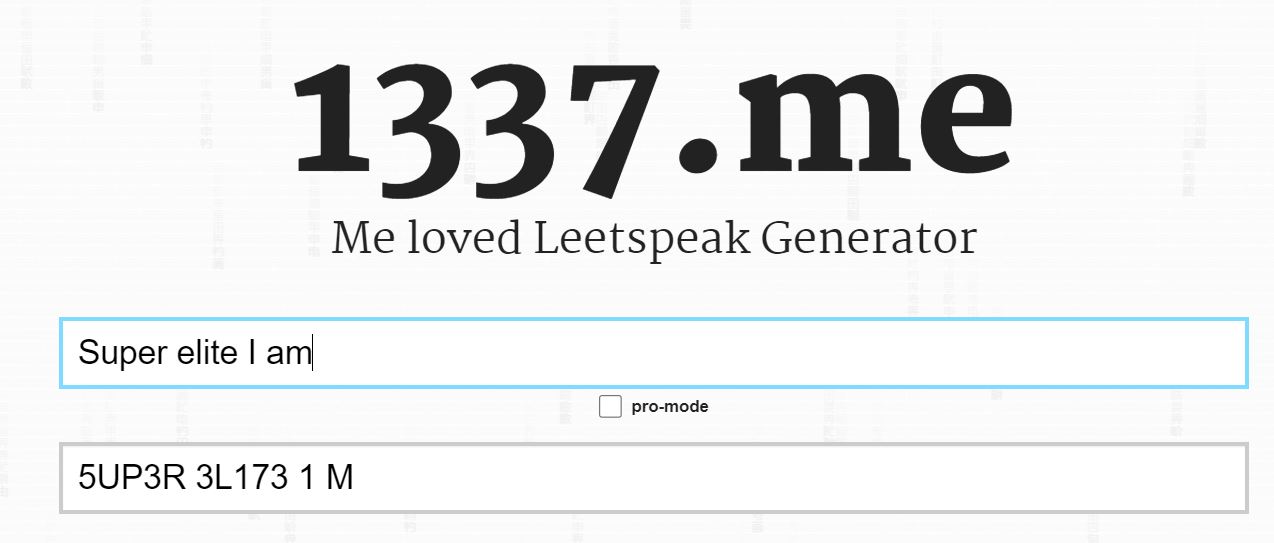
At its heart, leetspeak is a system of phonetic and symbolic substitution. The fundamental principle involves replacing standard English letters with numbers or symbols that visually resemble them. This began with simple, obvious substitutions like:
- A becoming 4
- E becoming 3
- I becoming 1
- O becoming 0
- S becoming 5
- T becoming 7
As leetspeak evolved, these substitutions became more complex and varied, often incorporating less common symbols or combinations of characters. For instance:
- B could be 8 or |3
- G could be 6 or &
- L could be 1 or |_
- N could be //` or ||
- R could be |2 or Я
- Z could be 2 or %
Beyond simple letter-for-number swaps, leetspeak also embraced phonetic abbreviations and intentional misspellings, often to create a humorous or stylized effect. Common examples include:
- “Kewl” for “cool”
- “Pwned” for “owned” (meaning thoroughly defeated or controlled)
- “Noob” or “n00b” for “newbie” or someone inexperienced
- “GG” for “good game”
- “LOL” for “laughing out loud” (though this transcended leetspeak)
The evolution of these substitutions and abbreviations was organic, driven by user creativity and the desire to innovate within the established framework. Different online communities might develop their own unique variations, further fragmenting and diversifying the leetspeak lexicon.
The Golden Age of Leetspeak: Gaming, Hacking, and Subculture
Leetspeak truly blossomed as an integral part of online subcultures, most notably in the realms of video gaming and the early hacker scene. It became a badge of honor, a marker of authenticity, and a tool for navigating complex digital environments.
Leetspeak in Gaming: From Command Lines to Clan Names
Multiplayer gaming, especially on PC platforms, was a fertile ground for leetspeak. Early online games, with their text-based chat systems and often rudimentary interfaces, provided ample opportunities for players to express themselves through this stylized language.
- Player Names and Clan Tags: Players would adopt “leet” usernames and clan names to signify their status or simply for aesthetic appeal. A name like “Ph4n70m” or a clan tag like “734M” was more than just a moniker; it was a statement of belonging to a digitally literate group.
- In-Game Communication: While often difficult for newcomers to decipher, leetspeak was used for quick communication between experienced players. It could be used to coordinate strategies, boast about victories, or taunt opponents.
- Distinguishing Skill: In competitive gaming environments, using leetspeak could be a subtle way to signal that you were a seasoned player, someone who understood the intricacies of the game and its associated culture. It created an “us” versus “them” dynamic, where the “them” were those who spoke only plain English.
The Hacker Connection: A Language of the Technically Adept
The association of leetspeak with the hacker community is profound. In the early days, “hacker” often referred to skilled programmers and computer enthusiasts who explored and pushed the boundaries of computer systems, not necessarily with malicious intent.
- Bypassing Filters and Restrictions: Leetspeak was sometimes used to bypass simple text filters or profanity blockers implemented on online systems. By substituting letters, potentially offensive words could be disguised.
- Demonstrating Technical Prowess: The ability to construct and understand leetspeak was seen as a sign of technical understanding and ingenuity. It showcased a person’s grasp of character encoding, keyboard layouts, and symbolic manipulation, all fundamental aspects of computing.
- A Sense of Identity and Secrecy: For hackers, leetspeak served as a linguistic code, a way to identify fellow practitioners and maintain a degree of secrecy. It fostered a sense of camaraderie and shared identity among those who operated on the fringes of mainstream digital society.
The “1337” itself, as a term, is a prime example of this substitution, with ‘L’ becoming ‘1’, ‘E’ becoming ‘3’, and ‘T’ becoming ‘7’. This signifies “elite,” a term that captures the aspirational and exclusive nature of these communities.
The Evolution and Modern Relevance of 1337
As the internet became more mainstream and accessible, the original context for leetspeak began to shift. However, it didn’t disappear. Instead, it adapted, finding new avenues for expression and retaining its cultural significance.
From Niche Dialect to Pop Culture Phenomenon
The widespread adoption of the internet in the late 1990s and early 2000s exposed leetspeak to a much broader audience. What was once confined to BBSs and specific online games began to seep into general internet culture.
- Gaming Culture’s Enduring Influence: While some games have more sophisticated communication tools, leetspeak remains a recognizable element within many gaming communities, particularly in PC gaming and esports. It’s often used nostalgically or ironically.
- Internet Memes and Humor: Leetspeak has been a recurring element in internet memes and online humor. Its inherent absurdity and the challenge of deciphering it can be a source of amusement. Phrases like “I can haz cheezburger?” are a playful, albeit simplified, extension of this linguistic play.
- Symbol of Digital Literacy and Authenticity: Even today, in certain tech and gaming circles, the judicious use of leetspeak can still be perceived as a sign of digital literacy or a connection to older internet traditions. It can be a way to signal that you’re “in the know.”
Leetspeak in Branding and Design
The distinct visual and cultural appeal of leetspeak has also been leveraged in branding and design, particularly within the technology sector.
- Brand Names and Logos: Companies, especially those targeting younger, tech-savvy audiences, have incorporated leetspeak elements into their brand names, product names, or logos. This can lend a sense of edginess, innovation, or exclusivity. For example, a software company might have a product named “4ppStore” or a gaming peripheral brand might use stylized numbers in its logo.
- Marketing and Advertising: Leetspeak can be used in marketing campaigns to grab attention and resonate with specific demographics. A campaign that cleverly incorporates leetspeak can signal that a brand understands its target audience’s digital culture.
- User Interface Design: While not as common for mainstream interfaces, some niche applications or websites might use subtle leetspeak elements in their design or iconography to appeal to a specific user base.

The Deeper Meaning: More Than Just Substitutions
Ultimately, “1337” represents more than just a set of arbitrary character substitutions. It embodies a significant aspect of digital history and culture.
- A Symbol of Innovation and Creativity: Leetspeak arose from a need to innovate and express creativity within the constraints of early digital communication. It showcases the human capacity for adaptation and the development of unique linguistic forms in new environments.
- Gatekeeping and In-Group Communication: In its origins, leetspeak served as a form of gatekeeping, distinguishing those who were part of the digital elite from those who were not. This aspect continues to resonate, even if more subtly, in how certain online communities form their own jargon.
- A Legacy of Online Culture: The term “1337” and the linguistic practices associated with it are a tangible legacy of the early internet. They offer a window into the social dynamics, the technical challenges, and the playful spirit of those who shaped our digital world.
In conclusion, “1337” is a multifaceted term that encapsulates a rich history and a unique linguistic evolution. From its humble beginnings as a method for early online communities to communicate in code, it has grown to become a recognizable symbol of digital culture, a source of creative expression in branding, and a testament to the enduring human desire for connection and identity within the ever-expanding digital frontier. Understanding “1337” is to understand a piece of the internet’s soul.
aViewFromTheCave is a participant in the Amazon Services LLC Associates Program, an affiliate advertising program designed to provide a means for sites to earn advertising fees by advertising and linking to Amazon.com. Amazon, the Amazon logo, AmazonSupply, and the AmazonSupply logo are trademarks of Amazon.com, Inc. or its affiliates. As an Amazon Associate we earn affiliate commissions from qualifying purchases.