
The literary world has few figures as polarising or as meticulously crafted as Daenerys Targaryen. While the television adaptation of George R.R. Martin’s A Song of Ice and Fire provided a definitive—albeit controversial—end for the character, the literary version remains suspended in a state of high-stakes transition. To understand what happens to Daenerys in the books is to analyze a masterclass in brand evolution, narrative positioning, and the strategic management of a legacy.
In the corporate world, a brand is a promise. In the realm of high fantasy, Daenerys Targaryen is a brand built on fire and blood, but also on the strategic reclamation of an identity that was nearly extinguished. As we examine her trajectory in the existing novels, we see a character undergoing a rigorous rebranding process that differs significantly from her screen counterpart.
The Evolution of a Narrative Identity: From Exile to Icon
In the opening chapters of the series, the “Targaryen” brand is essentially a legacy of bankruptcy. The family has lost its assets (the Iron Throne), its infrastructure (the dragons), and its market share (loyal subjects). Daenerys begins as a secondary asset in her brother Viserys’s failed portfolio. However, what happens to Daenerys throughout the first three books is a systematic rebuilding of personal brand equity.
Defining the Core Brand Values
Daenerys does not start with power; she starts with a story. In the books, her internal monologue is obsessed with “home” and the “house with the red door.” From a branding perspective, this represents her Core Values. Unlike Viserys, whose brand was built on entitlement and aggression, Daenerys anchors her identity in resilience and a perceived return to a golden age. This emotional core is what allows her to connect with diverse “consumer groups” (the Dothraki, the Unsullied, and the slaves of Slaver’s Bay).
The Visual Identity of the Targaryen Legacy
No brand is complete without visual signifiers. The “birth” of her dragons at the end of A Game of Thrones serves as the ultimate logo reveal. In the books, this isn’t just a plot point; it is the restoration of the Targaryen visual identity. The dragons serve as a unique selling proposition (USP) that no other competitor in the “War of the Five Kings” can match. By the time she reaches the gates of Qarth, her brand is no longer “the exiled beggar queen”; it is “The Mother of Dragons.”
Rebranding through Action: The “Breaker of Chains” Strategy
As the narrative progresses into A Storm of Swords, Daenerys engages in an aggressive market expansion. She moves from the Dothraki Sea to the coastal cities of Essos. Here, she undergoes a strategic pivot. She realizes that being a “Conqueror” is a saturated market. To differentiate herself, she adopts a new brand identity: the “Breaker of Chains.”
Target Audience Engagement in Essos
In the books, the liberation of Astapor, Yunkai, and Meereen is not just a military campaign; it is a case study in audience acquisition. By positioning herself as a liberator, she taps into an underserved demographic—the enslaved population. This “socially conscious” branding gives her a moral authority that her rivals in Westeros lack. She isn’t just fighting for a throne; she is fighting for a mission statement. This mission-driven leadership is what allows her to build a fanatical following that transcends traditional national borders.
Crisis Management and the Meereenese Knot
What happens to Daenerys in A Dance with Dragons is a sobering look at brand overextension. After the “acquisition” of Meereen, she discovers that governance is significantly harder than conquest. This is known among fans and literary critics as the “Meereenese Knot.” From a strategic standpoint, her brand begins to suffer from “mission creep.” She attempts to peaceably integrate with the local culture (marrying Hizdahr zo Loraq and reopening the fighting pits), which dilutes her core brand as a revolutionary. The books spend hundreds of pages detailing the logistical and political fallout of this compromise, illustrating how a brand loses its way when it tries to please too many stakeholders.
The Divergence of Brand Perception: Book vs. Screen
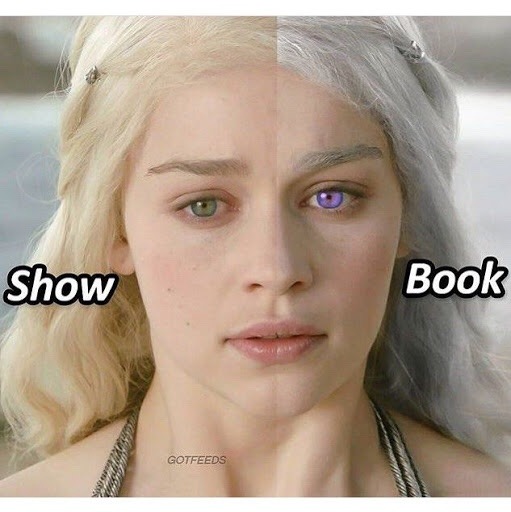
To understand the current state of Daenerys in the books, one must look at the “brand divergence” between George R.R. Martin’s writing and the HBO adaptation. While the show opted for a rapid descent into “The Mad Queen” archetype, the books are building a much more complex internal brand conflict.
Internal vs. External Brand Positioning
In the books, Daenerys’s internal monologue reveals a constant struggle between “The Girl” and “The Queen.” This internal branding is crucial. She is haunted by the fear of her father’s legacy (The Mad King). What happens in the books—specifically in her final chapters of A Dance with Dragons—is a psychological breakdown and subsequent rebuilding. As she wanders the Dothraki Sea, suffering from illness and isolation, she undergoes a “brand audit.” She realizes that her attempts at peace in Meereen were a betrayal of her true nature. Her internal conclusion, “Dragons plant no trees,” signifies a return to her original brand identity: Fire and Blood.
The Risk of Brand Dilution in Adaptation
Many brand consultants warn against changing a product’s core identity too quickly. This is where the TV show failed many fans. In the books, the transition is slower and more earned. Daenerys is not “going mad”; she is making a conscious strategic decision to embrace the more ruthless aspects of her heritage. The book version of Daenerys is a brand that is choosing to pivot back to its “disruptor” roots after a failed attempt at “market integration” (peace in Meereen).
Lessons in Intellectual Property and Brand Longevity
The state of Daenerys at the end of the most recent book is one of the most significant cliffhangers in modern literary history. She is surrounded by a Dothraki khalasar, her dragon Drogon is at her side, and her “Breaker of Chains” identity is about to merge with her “Khaleesi” identity. This creates a powerful narrative tension that keeps the brand relevant even years after the last book was published.
Sustaining Interest in an Unfinished Product
The delay of The Winds of Winter has, paradoxically, strengthened the Daenerys brand. In marketing, scarcity often increases value. Because her story is “unfinished” in the books, the community continues to generate content, theories, and discussions. This user-generated content (UGC) keeps the intellectual property (IP) alive. What happens to Daenerys is, at this point, a collaborative cultural exploration. The brand survives because the final chapter hasn’t been written, allowing for a “Schrödinger’s Cat” scenario where she is both a hero and a villain simultaneously.

The Power of Archetypal Branding in Modern Media
Daenerys Targaryen represents the “Ruler” and the “Outlaw” archetypes. This combination is a potent branding tool. By combining the stability of a monarch with the disruption of a revolutionary, the character appeals to a wide variety of “brand personas.” Whether readers value social justice or raw power, they find something in Daenerys to identify with. This is why, regardless of her eventual fate in the books, her brand is likely to endure as a foundational element of 21st-century fantasy.
In conclusion, what happens to Daenerys in the books is far more than a sequence of plot points. It is a sophisticated narrative journey that mirrors the complexities of modern brand strategy. From the initial rebuilding of a tarnished legacy to the strategic pivots of her Essos campaign, and finally to her current “identity reset” in the Dothraki Sea, her journey serves as a reminder that a brand is never static. It is a living, breathing entity that must either adapt to its environment or burn it down to start anew. As readers await her next move, one thing is certain: the Daenerys Targaryen brand remains one of the most valuable and analyzed assets in the literary world today.
aViewFromTheCave is a participant in the Amazon Services LLC Associates Program, an affiliate advertising program designed to provide a means for sites to earn advertising fees by advertising and linking to Amazon.com. Amazon, the Amazon logo, AmazonSupply, and the AmazonSupply logo are trademarks of Amazon.com, Inc. or its affiliates. As an Amazon Associate we earn affiliate commissions from qualifying purchases.