
The Quartering Act, a series of British parliamentary laws enacted between 1765 and 1774, stands as a stark historical example of how government mandates can impose significant financial burdens and create profound economic disruptions, even when seemingly focused on logistical necessities. While often discussed in the context of political rights and liberties, the economic ramifications of the Quartering Act were substantial, impacting colonial economies, individual finances, and contributing to the growing discord that ultimately led to the American Revolution. From the perspective of financial management and economic impact, the Quartering Act represented a forceful redirection of colonial resources and a significant infringement on the fiscal autonomy of the colonists.

The Economic Imposition: Mandated Expenses and Resource Diversion
The primary economic consequence of the Quartering Act was the direct financial imposition placed upon the American colonies. These acts mandated that colonial governments provide housing, food, and other provisions for British soldiers stationed in their territories. This was not a request or a voluntary contribution; it was a legislative requirement that necessitated the allocation of colonial tax revenue and public funds towards an expense that was largely perceived as unnecessary and burdensome by the colonists themselves.
The Cost of Sustenance: Food, Forage, and Fuel
At its most basic level, the Quartering Act demanded that colonists provide sustenance for the occupying troops. This included rations of food, such as salt, vinegar, and beer, along with fuel for cooking and lighting. For individuals and communities already operating with limited resources, this obligation represented a tangible drain on their existing provisions and a diversion of funds that could have been used for local infrastructure, education, or other community needs.
The procurement of these supplies often fell upon colonial assemblies, which were responsible for raising the necessary funds. In colonies where resources were already stretched thin, such as in frontier settlements or areas experiencing economic hardship, the added expense of quartering troops could lead to increased local taxes or a depletion of already meager public coffers. This created a direct conflict between the financial obligations imposed by the Crown and the fiscal realities faced by colonial municipalities. The act essentially forced a form of involuntary economic outsourcing, compelling colonies to bear the direct costs of maintaining a military presence that served imperial interests.
Shelter and Space: The Financial Burden of Housing
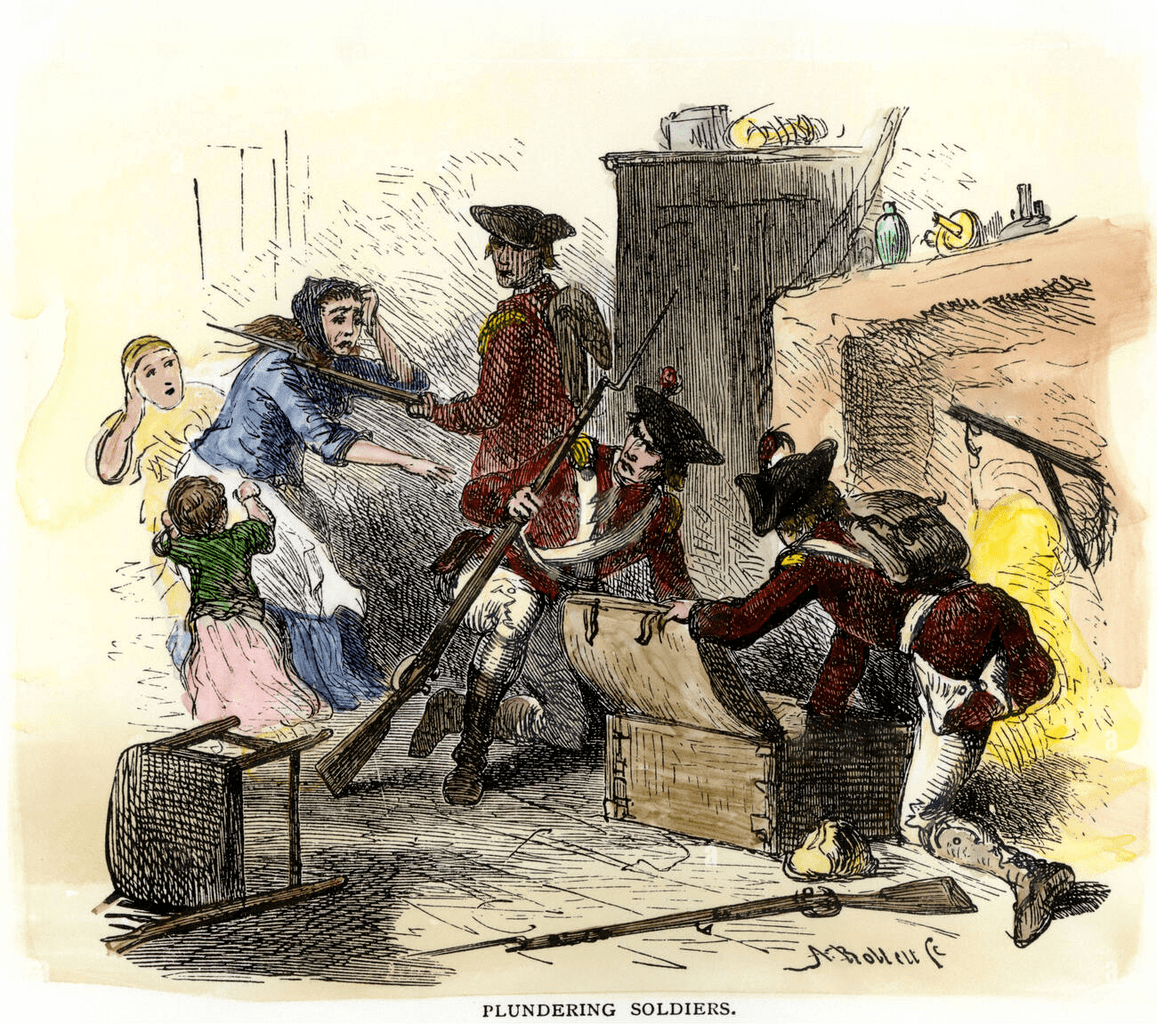
Beyond food and fuel, the Quartering Act also stipulated that colonists provide suitable quarters for the soldiers. This could range from barracks to private homes, depending on the location and the specific provisions of the act. When barracks were not available or insufficient, soldiers were often billeted in private residences or public buildings. This not only incurred costs for the upkeep and maintenance of these spaces but also represented a loss of potential rental income or usable space for the property owners.
In some instances, the housing of soldiers in private homes led to direct financial compensation being paid to the homeowners. However, the amount of this compensation was often inadequate to cover the disruption and wear and tear on the property, as well as the inconvenience of housing unfamiliar individuals. Furthermore, the requirement to house soldiers could lead to increased demand for resources like firewood and water, placing further strain on local economies. The financial impact was not always a direct cash payment but also an indirect cost associated with the utilization of private assets for public, or rather imperial, purposes. This form of mandated requisition of property, even if temporary, had a clear financial dimension for those directly affected.
The Absence of Reciprocity: An Unbalanced Financial Equation
A key aspect of the financial grievance was the perceived lack of reciprocity. The colonists were being compelled to bear the costs of supporting British troops, yet they often felt that these troops were not primarily there for their protection. The presence of soldiers was frequently seen as an instrument of imperial control, designed to enforce unpopular policies like taxation and trade regulations. From a financial management perspective, this represented a situation where resources were being extracted for purposes that did not directly benefit the providers. It was akin to a business being forced to fund a service that it did not require and that, in fact, it felt detrimental to its own interests.
The economic logic was fundamentally flawed from the colonial viewpoint. They were being asked to finance the machinery of their own subjugation, a concept that sat uneasily with any rational financial assessment. The Crown, on the other hand, viewed the Quartering Act as a reasonable contribution from the colonies towards the costs of their own defense, particularly in the aftermath of the French and Indian War. However, this disparity in perspective created a deep financial and economic chasm. The colonists saw it as an unjust tax on their resources, while the British government saw it as a legitimate contribution to imperial expenses.
The Economic Impact on Colonial Infrastructure and Trade
Beyond the immediate costs of sustenance and shelter, the Quartering Act also had broader economic implications for colonial infrastructure and trade. The diversion of funds and resources to support British troops had a ripple effect, impacting the growth and development of colonial economies.
Diversion of Capital: Hindering Local Investment and Development
The requirement to fund the quartering of troops meant that capital that could have been invested in local businesses, agriculture, or public works was instead channeled towards supporting the British military. This “opportunity cost” was a significant economic drag on colonial development. Imagine a small business owner being forced to divert a portion of their profits to fund the housing of inspectors, rather than reinvesting it in new equipment or expanding their customer base. This is analogous to the broader colonial economic situation.
The fiscal strain imposed by the Quartering Act could also lead to increased borrowing by colonial governments, thus accumulating debt. This debt, in turn, would require further taxation or the diversion of future revenues, perpetuating a cycle of financial constraint. The ability of colonies to develop their own infrastructure, such as roads, bridges, and public buildings, was hampered by the constant demand to meet the financial obligations of the Quartering Act. This inhibited economic growth and limited the potential for local prosperity.
Disruption of Local Economies and Markets
The presence of a large number of British soldiers in colonial towns and cities also had an impact on local economies and markets. While soldiers did spend money, their consumption patterns and demands could also create imbalances. For example, a sudden increase in demand for certain foodstuffs could drive up prices, disproportionately affecting the local population. Furthermore, the billeting of soldiers in private residences could lead to disputes over compensation and damage, creating economic friction between colonists and the military.
The economic disruption was not always about direct costs; it was also about the instability and unpredictability introduced into local markets. The presence of a military force, especially one perceived as an occupying force, could deter investment and create an atmosphere of uncertainty, further hindering economic activity. In some cases, the quartering of troops may have also led to increased competition for limited resources, such as land or supplies, potentially exacerbating existing economic tensions within communities.
The Economic Argument for Independence: A Financial Precedent for Revolution
The economic grievances stemming from the Quartering Act, while not the sole cause of the American Revolution, were a significant contributing factor to the growing sentiment for independence. The act represented a clear example of external financial control and resource extraction that was deeply resented by the colonists. From a financial and economic perspective, the Quartering Act served as a potent symbol of British disregard for colonial financial autonomy and the equitable distribution of economic burdens.
Taxation Without Representation and Financial Control
The Quartering Act, alongside other revenue-raising measures like the Stamp Act and the Townshend Acts, fueled the colonists’ cry of “no taxation without representation.” While these acts focused on different forms of taxation, they all shared a common thread: the imposition of financial obligations by a distant government that did not adequately represent the interests of those being taxed. The Quartering Act, by forcing colonies to fund British military presence, was a direct form of financial control that bypassed colonial legislatures and their ability to manage their own fiscal affairs.
The economic argument for independence was, therefore, not just about abstract principles of liberty but also about concrete financial realities. The colonists argued that they were being unfairly burdened with the costs of imperial endeavors, while simultaneously being denied a voice in how those costs were determined and allocated. The economic consequences of the Quartering Act were a tangible manifestation of this perceived injustice. It represented a financial precedent for how Britain intended to govern the colonies – by dictating expenditures and demanding compliance, regardless of the economic impact on the colonists themselves.

The Fiscal Foundation of Sovereignty
The struggle over the Quartering Act, therefore, became inextricably linked to the broader debate about sovereignty and self-governance. For the colonists, the right to control their own finances and direct their own economic development was a fundamental aspect of their autonomy. The imposition of the Quartering Act was seen as a direct assault on this fiscal foundation of sovereignty. It demonstrated that Britain was willing to leverage its imperial power to dictate how colonial resources were utilized, even if it meant imposing significant financial hardship.
The economic burden of the Quartering Act, therefore, was not merely a matter of dollars and cents. It was a fundamental challenge to the colonists’ ability to manage their own economic destiny and to build prosperous societies based on their own priorities. The financial demands of the act, coupled with the lack of perceived benefit, created a powerful economic case for severing ties with a distant power that seemed intent on treating the colonies as a financial resource to be exploited rather than as partners in a shared enterprise. The events surrounding the Quartering Act thus laid a critical part of the economic groundwork for the eventual pursuit of financial and political independence.
aViewFromTheCave is a participant in the Amazon Services LLC Associates Program, an affiliate advertising program designed to provide a means for sites to earn advertising fees by advertising and linking to Amazon.com. Amazon, the Amazon logo, AmazonSupply, and the AmazonSupply logo are trademarks of Amazon.com, Inc. or its affiliates. As an Amazon Associate we earn affiliate commissions from qualifying purchases.