
In the world of high-performance machinery, the term “V8” evokes images of roaring internal combustion engines, muscle cars, and raw mechanical power. However, in the realm of software engineering and digital infrastructure, “V8” represents something equally powerful but far more invisible. It is the open-source JavaScript and WebAssembly engine developed by the Google Chromium project.
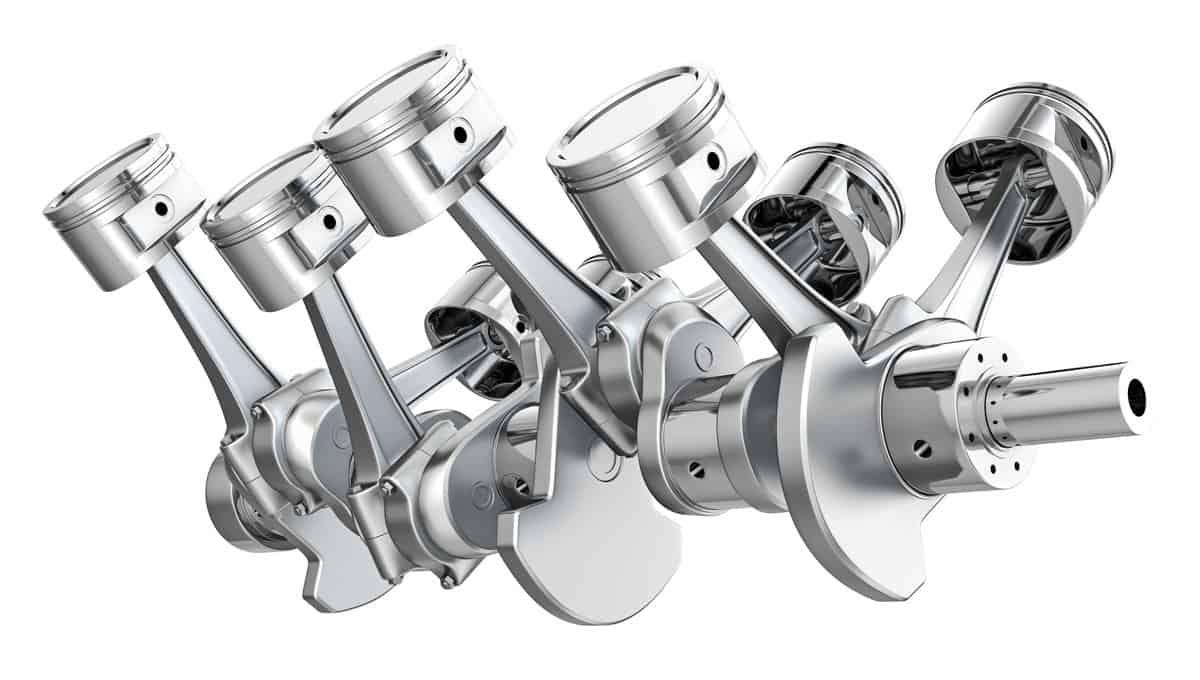
When people ask what the “V” stands for in the context of technology, the answer is a tribute to the automotive world: the “V” refers to the configuration of a high-performance engine where cylinders are arranged in a V-shape. For the software developers who built it, the name was a metaphorical promise—a commitment to speed, efficiency, and the power required to drive the next generation of web applications.

The Origin Story: Why a Software Engine Borrowed an Automotive Name
To understand why Google chose the name V8, one must look back at the state of the internet in the mid-2000s. At that time, JavaScript was widely considered a “toy” language, primarily used for simple browser animations or form validations. It was notoriously slow, and web browsers struggled to execute complex logic without freezing or crashing.
From Performance Engines to High-Performance Code
The lead architect behind V8, Lars Bak, was a veteran in virtual machine design. When he and his team in Aarhus, Denmark, began developing a new JavaScript engine for Google’s then-secret browser project (Chrome), they weren’t just looking for an incremental improvement. They wanted to revolutionize how code was executed in the browser.
The name “V8” was chosen to signal that this engine would be the “muscle car” of the software world. Just as a V8 internal combustion engine provides a high power-to-weight ratio and smooth delivery, the V8 JavaScript engine was designed to provide the high-performance execution necessary for a new era of “heavy” web applications like Gmail and Google Maps.
The Google Chrome Revolution
When Google Chrome launched in 2008, it wasn’t the UI that stunned the tech world—it was the speed. V8 was the secret sauce. By treating JavaScript as a language that could be compiled rather than just interpreted, V8 effectively killed the “laggy” web. The “V” in V8 became a symbol of a paradigm shift: the browser was no longer just a document viewer; it was a sophisticated application platform.
How the V8 Engine Works: The Mechanics of Speed
The brilliance of V8 lies in its architecture. Unlike traditional interpreters that read and execute code line-by-line—a slow and arduous process—V8 utilizes complex compilation strategies to transform human-readable JavaScript into machine code that a computer’s processor can execute directly.
Just-In-Time (JIT) Compilation
At the heart of V8’s speed is Just-In-Time (JIT) compilation. In the early days of the web, JavaScript was interpreted. V8 changed the game by compiling JavaScript during execution. As the script runs, V8 analyzes the code and compiles it into highly optimized machine code. This allows the software to “learn” as it runs, identifying patterns and optimizing the most frequently used paths of the code to ensure maximum velocity.
The Pipeline: Ignition, Sparkplug, and Turbofan
V8 doesn’t just use one compiler; it uses a multi-stage pipeline to balance startup time with long-term execution speed:
- Ignition: This is the interpreter. It generates bytecode from the source code, allowing the program to start running almost instantly.
- Sparkplug: A non-optimizing compiler that sits between the interpreter and the heavy-duty optimizer. It fast-tracks the conversion to machine code without spending too much time on complex optimizations.
- Turbofan: This is the “high-performance” part of the engine. Turbofan takes the “hot” parts of the code—the functions that run over and over—and applies advanced optimizations to make them run as fast as possible.
Memory Management and Garbage Collection
A powerful engine needs a great cooling system, and in software, that is “Garbage Collection” (GC). V8 manages memory automatically. It identifies objects that are no longer needed by the application and clears them out to prevent memory leaks. The “V” in V8 also stands for efficiency in this regard; the engine uses a “stop-the-world” generational collector that minimizes pauses, ensuring that the user experience remains fluid even during heavy data processing.
V8’s Impact Beyond the Browser: The Birth of Node.js
Perhaps the most significant chapter in the V8 story is its migration from the client-side (the browser) to the server-side. For decades, JavaScript was trapped within the confines of the web browser. The high performance of the V8 engine, however, convinced developers that it could be used for much more.
The Rise of Node.js
In 2009, Ryan Dahl took the V8 engine out of the Chrome browser and wrapped it in a C++ layer, creating Node.js. This allowed developers to run JavaScript on servers, desktops, and even embedded devices. Because V8 was so fast and handled asynchronous operations so well, Node.js became an overnight sensation for building scalable network applications.
The “V” in V8 effectively powered the “Full-Stack JavaScript” revolution. Suddenly, companies could use a single language for both their frontend and backend, drastically reducing the complexity of software development. Today, tech giants like Netflix, Uber, and LinkedIn rely on Node.js—and by extension, the V8 engine—to handle millions of concurrent requests.
Serverless and Edge Computing
The legacy of V8 continues to expand with the rise of serverless computing and “edge” functions. Platforms like Cloudflare Workers use “V8 Isolates” rather than traditional virtual machines or containers. Because V8 can start up in milliseconds and has a low memory footprint, it is the perfect engine for running small snippets of code at the edge of the network, closer to the user. This has fundamentally changed how we think about cloud architecture and digital security.
Optimization Strategies: Writing V8-Friendly Code
For software engineers, understanding what the “V” stands for also means understanding how to “tune” their code for the engine. V8 uses several “hidden” mechanisms to maintain its speed, and writing code that aligns with these mechanisms can lead to significant performance gains.
Hidden Classes and Inline Caches
JavaScript is a dynamically typed language, meaning the shape of objects can change at runtime. This is usually slow for computers to process. To solve this, V8 creates “Hidden Classes” behind the scenes. When you create an object and add properties to it, V8 tracks these changes. If you create another object with the same properties in the same order, V8 reuses the hidden class, allowing it to access properties with the speed of a statically typed language like C++.
Avoiding De-optimizations
One of the most critical aspects of working with V8 is avoiding “de-optimization.” If you write code that is too unpredictable—for example, a function that sometimes returns an integer and sometimes returns a string—the Turbofan compiler might “give up” on optimizing it and revert to the slower interpreter. Professional developers optimize for V8 by keeping their functions “monomorphic,” meaning they always handle the same types of data.
The Future of V8 and Web Performance
As we look toward the future, the V8 engine is no longer just a JavaScript engine; it is a polyglot execution environment. The introduction of WebAssembly (Wasm) has allowed V8 to execute languages like C++, Rust, and Go at near-native speeds within the browser.
WebAssembly (Wasm) Integration
The “V” in V8 now stands for versatility. By supporting WebAssembly, V8 has opened the door for complex software—like video editors, 3D games, and AI models—to run directly in the browser. This blurs the line between “web apps” and “desktop apps,” creating a more unified and powerful digital ecosystem.

Sustainability and Energy Efficiency
In the modern tech landscape, performance isn’t just about speed; it’s about efficiency. A more efficient engine uses less CPU power, which in turn consumes less electricity. The engineers working on V8 today are increasingly focused on “Green Code”—optimizing the engine to reduce the carbon footprint of the billions of devices running JavaScript every day. By making the V8 engine leaner, they are contributing to a more sustainable digital future.
In conclusion, while the “V” in V8 began as a nod to the power of automotive engineering, it has come to represent the heartbeat of the modern internet. From the browser on your phone to the servers powering global financial systems, the V8 engine remains the gold standard for high-performance software execution. It is a testament to the idea that with the right architecture, even a “toy” language can become the most important tool in a programmer’s arsenal.
aViewFromTheCave is a participant in the Amazon Services LLC Associates Program, an affiliate advertising program designed to provide a means for sites to earn advertising fees by advertising and linking to Amazon.com. Amazon, the Amazon logo, AmazonSupply, and the AmazonSupply logo are trademarks of Amazon.com, Inc. or its affiliates. As an Amazon Associate we earn affiliate commissions from qualifying purchases.