
The General Data Protection Regulation (GDPR) is a landmark piece of legislation that has fundamentally reshaped how organizations handle personal data across the European Union and, by extension, globally. Its aim is ambitious yet crucial: to empower individuals with greater control over their personal information and to establish a robust framework for data protection that fosters trust and accountability in the digital age. This regulation is not merely a bureaucratic hurdle; it represents a significant shift in the balance of power between data subjects and data controllers, driven by evolving societal expectations around privacy in an increasingly data-driven world.
At its core, the GDPR is about recognizing personal data as an extension of an individual’s identity and rights. It acknowledges that in an era where vast amounts of personal information are collected, processed, and shared, individuals must have clear rights and understanding regarding how their data is used. The regulation’s objectives are multifaceted, encompassing the protection of fundamental rights and freedoms, particularly the right to privacy, while also aiming to harmonize data protection laws across the EU to facilitate the free flow of data for legitimate business purposes. This dual objective underscores the GDPR’s intent to create a secure and unified digital single market where trust in data handling is paramount.
The Evolution of Data Privacy and the Need for GDPR
The genesis of the GDPR lies in the growing recognition of the profound impact of data on individuals’ lives and the inadequacy of existing data protection frameworks. The internet and the explosion of digital technologies have created unprecedented opportunities for data collection and analysis. From online shopping habits and social media interactions to health records and financial transactions, almost every aspect of modern life generates a wealth of personal data. This data, when aggregated and analyzed, can provide immense value, driving innovation, personalizing services, and informing critical decisions. However, it also presents significant risks if mishandled, leading to potential misuse, discrimination, or breaches of privacy.
Prior to the GDPR, data protection laws across EU member states were fragmented and often outdated, failing to keep pace with technological advancements. This inconsistency created legal uncertainty for businesses operating across borders and left individuals with varying levels of protection depending on their location. The increasing frequency and scale of data breaches further highlighted the urgent need for a comprehensive and unified approach. The GDPR was therefore conceived as a response to these challenges, seeking to modernize and strengthen data protection principles for the 21st century. It aimed to move beyond a mere compliance checklist towards a culture of privacy by design and by default, embedding data protection considerations into the very fabric of technological development and business operations. This proactive approach is a cornerstone of the GDPR’s philosophy, ensuring that privacy is not an afterthought but an integral part of any data processing activity.
Empowering Individuals: The Core of GDPR’s Aims
One of the most significant aims of the GDPR is to fundamentally empower individuals, or “data subjects,” by granting them enhanced control and transparency over their personal data. This empowerment is realized through a series of clearly defined rights that grant individuals agency in how their information is collected, processed, and stored. The regulation shifts the paradigm from one where individuals were often passive subjects of data collection to one where they are active participants with defined entitlements.
Key Rights Granted to Data Subjects
The GDPR enumerates several key rights designed to give individuals greater sovereignty over their digital footprints. These rights are not abstract principles; they are actionable entitlements that individuals can invoke to manage their personal information.
The Right to Access and Portability
Perhaps the most foundational right is the right of access. This means individuals have the right to obtain confirmation from a data controller as to whether or not personal data concerning them is being processed, and, where that is the case, to access that personal data. This includes information about the purposes of the processing, the categories of personal data concerned, the recipients to whom the personal data has been or will be disclosed, and the envisaged period for which the personal data will be stored, among other details. Furthermore, the right to data portability allows individuals to receive personal data concerning them, which they have provided to a controller, in a structured, commonly used, and machine-readable format. They also have the right to transmit that data to another controller without hindrance. This is particularly important in contexts where individuals might want to switch service providers, ensuring that their accumulated data is not a barrier to doing so.
The Right to Rectification and Erasure
The GDPR also strengthens the right to rectification. If personal data held by a controller is inaccurate or incomplete, individuals have the right to have it rectified without undue delay. This ensures that the data being processed is accurate and up-to-date, preventing potential misinterpretations or unfair decisions based on erroneous information. Complementing this is the right to erasure, often referred to as the “right to be forgotten.” This right allows individuals to request the deletion of their personal data when it is no longer necessary for the purpose for which it was collected, or when they withdraw their consent for its processing. While not absolute and subject to certain exceptions (e.g., legal obligations), this right provides a crucial mechanism for individuals to reclaim their digital space and minimize their exposure to potentially sensitive information.
The Right to Restriction of Processing and Objection
Individuals are also granted the right to restriction of processing. This allows them to request the limitation of how their data is processed under certain circumstances, such as when the accuracy of the personal data is contested by the data subject, or when the processing is unlawful. During the period of restriction, the data can generally only be stored. Moreover, the right to object empowers individuals to object to the processing of their personal data in certain situations, particularly for direct marketing purposes. This is a powerful tool for individuals who wish to opt out of receiving unsolicited promotional materials or to stop their data from being used for profiling or direct sales.
The Right to Not Be Subject to Automated Decision-Making
Finally, the GDPR includes the right not to be subject to a decision based solely on automated processing, including profiling, which produces legal effects concerning him or her or similarly significantly affects him or her. This is particularly relevant in the age of AI and machine learning, where automated systems can make decisions about loan applications, job prospects, or insurance premiums. Individuals have the right to obtain human intervention, express their point of view, and contest such decisions, ensuring that human oversight remains a critical component of significant decision-making processes.
Establishing Robust Data Protection Frameworks: Accountability and Security
Beyond empowering individuals, a central aim of the GDPR is to establish a comprehensive and rigorous framework for how organizations collect, process, and store personal data. This involves imposing clear obligations on data controllers and processors, emphasizing accountability, and mandating robust security measures to prevent data breaches. The regulation seeks to move organizations from a reactive approach to data protection to a proactive, integrated one.

Principles of Data Processing and Accountability
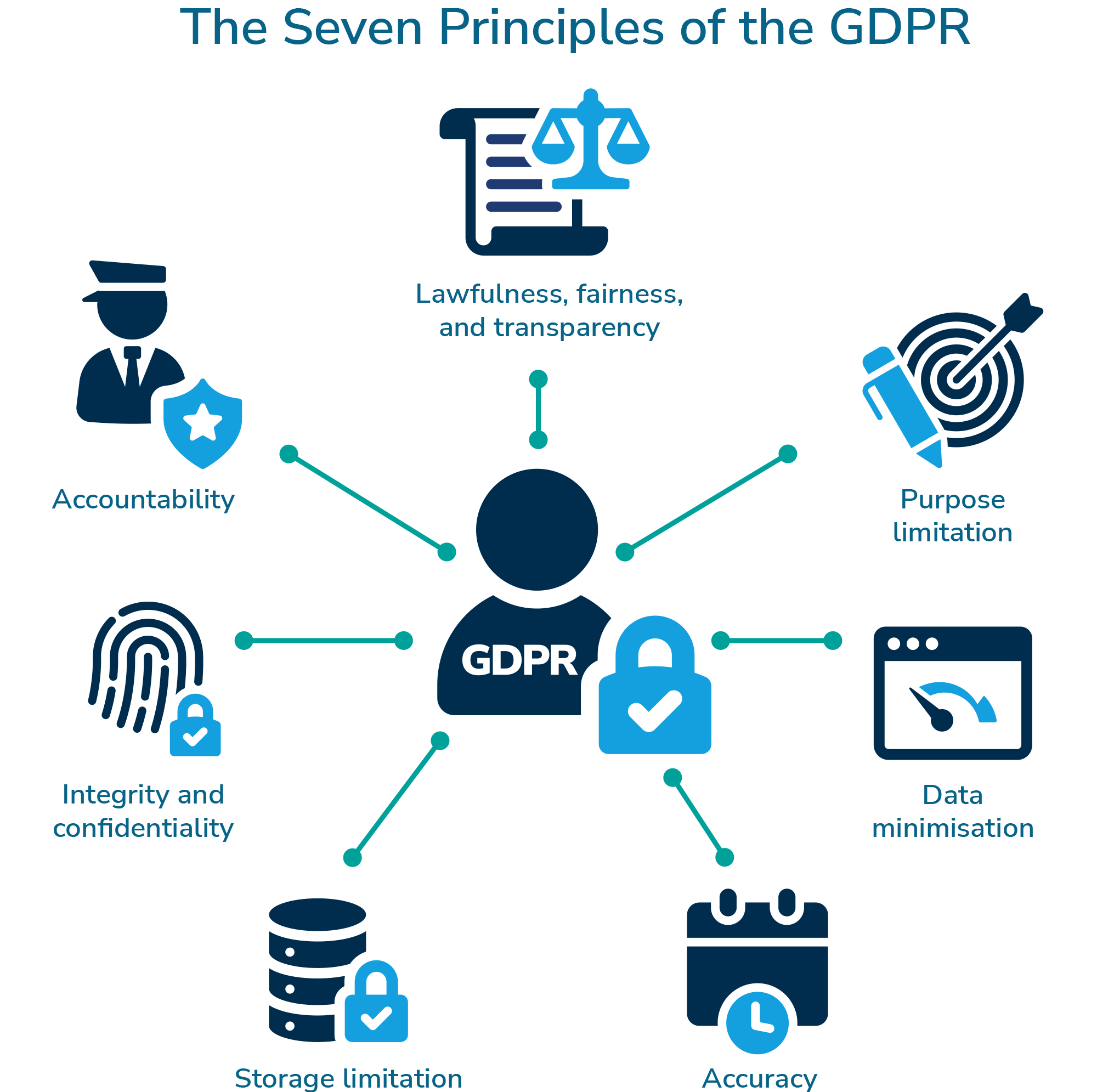
The GDPR is built upon a set of core data processing principles that organizations must adhere to. These principles are designed to ensure that data is handled ethically and responsibly.
Lawfulness, Fairness, and Transparency
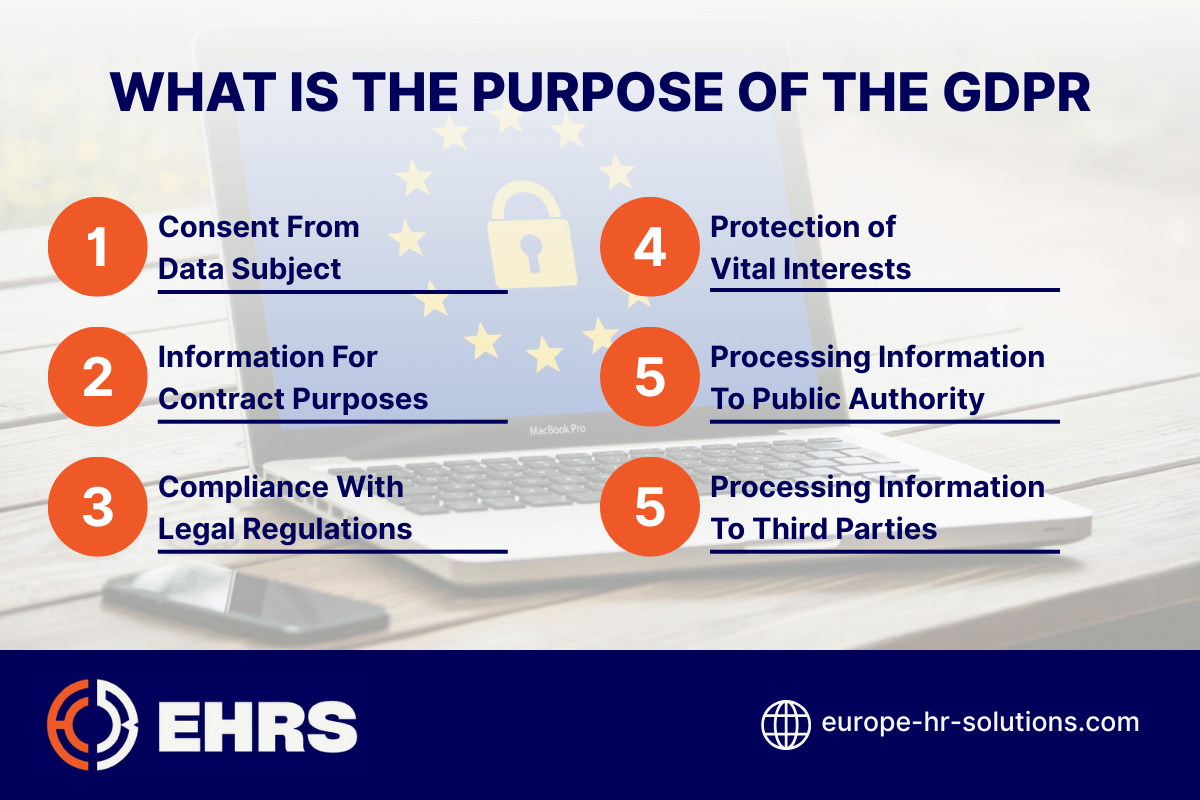
Personal data must be processed lawfully, fairly, and in a transparent manner in relation to the data subject. This means that there must be a legal basis for processing the data (e.g., consent, contract, legal obligation), and individuals must be informed about how their data is being used in a clear and understandable way. Transparency is crucial for building trust, as it allows individuals to make informed decisions about sharing their information.
Purpose Limitation and Data Minimization
Data should be collected for specified, explicit, and legitimate purposes and not further processed in a manner that is incompatible with those purposes. This “purpose limitation” principle prevents organizations from collecting data for one reason and then repurposing it for entirely different, potentially intrusive uses without further consent. Equally important is the principle of data minimization, which states that personal data should be adequate, relevant, and limited to what is necessary in relation to the purposes for which they are processed. Organizations should only collect the data they absolutely need and retain it only for as long as necessary.
Accuracy and Storage Limitation
The GDPR emphasizes the importance of accuracy. Personal data must be accurate and, where necessary, kept up to date. Inaccurate data should be rectified or erased without delay. The storage limitation principle dictates that personal data should be kept in a form that permits identification of data subjects for no longer than is necessary for the purposes for which the personal data are processed. This encourages regular data audits and secure deletion of data that is no longer required.
Integrity and Confidentiality
Finally, data must be processed in a manner that ensures appropriate security of the personal data, including protection against unauthorized or unlawful processing and against accidental loss, destruction, or damage, using appropriate technical or organizational measures. This “integrity and confidentiality” principle underpins the need for strong cybersecurity practices and data protection by design and by default.
Accountability and Governance
The GDPR places a strong emphasis on accountability. Organizations are not only responsible for complying with the regulation but must also be able to demonstrate that they are compliant. This means maintaining records of processing activities, implementing appropriate policies and procedures, and appointing a Data Protection Officer (DPO) in certain cases. The DPO acts as an independent advisor and point of contact for data protection matters, further embedding a culture of privacy within the organization. This proactive approach to demonstrating compliance is a significant departure from previous, more passive regulatory regimes.
Harmonizing Data Protection Across the EU and Beyond
Another crucial aim of the GDPR was to harmonize data protection laws across the European Union. Prior to its implementation, each member state had its own data protection legislation, which often resulted in a complex and fragmented regulatory landscape. This created significant challenges for businesses operating across multiple EU countries, leading to inconsistencies in compliance requirements and legal uncertainties. The GDPR sought to create a single, coherent framework that would apply uniformly throughout the EU.
The One-Stop-Shop Mechanism
A key feature of the GDPR that facilitates this harmonization is the one-stop-shop mechanism. This mechanism generally allows businesses to deal with a single data protection authority – typically the one in the country where their main establishment in the EU is located – for all their data protection matters across the EU. This simplifies compliance for organizations and ensures a more consistent application of the regulation. It reduces the administrative burden and the risk of conflicting interpretations by different national supervisory authorities.
Extraterritorial Scope and Global Impact
The GDPR’s ambitions extend beyond the borders of the EU through its extraterritorial scope. The regulation applies not only to organizations established in the EU but also to those outside the EU if they process personal data of individuals located in the EU and their activities relate to:
- Offering goods or services to such individuals in the EU, regardless of whether a payment is required.
- Monitoring the behavior of such individuals as far as their behavior takes place within the EU.
This broad reach means that companies worldwide that interact with EU citizens, even if they have no physical presence in the EU, must comply with GDPR. This extraterritorial effect has had a profound impact globally, compelling many organizations outside the EU to review and enhance their data protection practices to accommodate the GDPR’s requirements. It has, in essence, set a global benchmark for data privacy, influencing the development of similar regulations in other jurisdictions. The GDPR’s success in establishing a consistent and high standard for data protection across Europe and its ripple effect internationally underscore its aim to create a globally recognized and respected framework for digital privacy and data security.
aViewFromTheCave is a participant in the Amazon Services LLC Associates Program, an affiliate advertising program designed to provide a means for sites to earn advertising fees by advertising and linking to Amazon.com. Amazon, the Amazon logo, AmazonSupply, and the AmazonSupply logo are trademarks of Amazon.com, Inc. or its affiliates. As an Amazon Associate we earn affiliate commissions from qualifying purchases.