
The term “emo” has undergone a fascinating evolution, transitioning from a specific music genre to a multifaceted slang term that encompasses fashion, attitude, and even a digital aesthetic. While its roots are firmly planted in the music scene of the 1980s and 1990s, contemporary usage often extends far beyond, touching upon aspects of online identity and self-expression. Understanding the slang meaning of “emo” requires a nuanced approach, acknowledging its historical context while embracing its modern interpretations, particularly within the digital realm. This exploration delves into the origins of the term, its subsequent popularization, and its current manifestation as a descriptor of a particular online persona and communication style, often intertwined with the technological platforms that facilitate its dissemination.

The Genesis of “Emo”: From Music to an Identity
The term “emo” is intrinsically linked to a distinct subgenre of hardcore punk music that emerged in the mid-1980s. This early iteration was characterized by its emotionally charged lyrics, introspective themes, and often raw, unpolished sound. As the genre evolved, it began to influence fashion and visual aesthetics, laying the groundwork for the more widely recognized “emo” culture that would gain mainstream traction in the early 2000s.
Early Musical Influences and Lyrical Themes
The term “emo” is a portmanteau of “emotional hardcore,” a label applied to bands that injected a heightened sense of vulnerability and personal expression into their music. This was a departure from the often more aggressive or politically charged themes prevalent in hardcore punk at the time. Bands like Rites of Spring, Embrace, and later Sunny Day Real Estate and The Promise Ring, are often cited as pioneers of this sound. Their lyrical content frequently delved into themes of love, heartbreak, alienation, and existential angst, resonating deeply with a segment of the youth culture that felt misunderstood or disenfranchised. This emphasis on raw, unfiltered emotion became a defining characteristic, setting the stage for future interpretations of the term.
The Evolution into a Subculture and Aesthetic
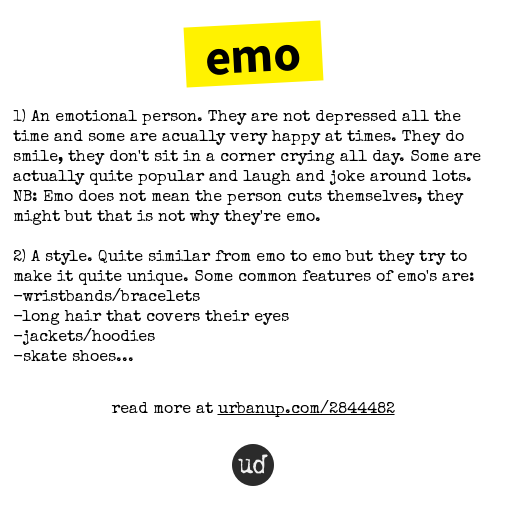
By the late 1990s and early 2000s, “emo” had transcended its musical origins to become a distinct subculture. This evolution was fueled by the rise of a new wave of bands like My Chemical Romance, Fall Out Boy, and Dashboard Confessional, who brought the genre to a wider audience through more polished production and widespread media exposure. Alongside the music, a recognizable aesthetic emerged. This included specific fashion choices such as skinny jeans, band t-shirts, dyed hair (often black with vibrant streaks), heavy eyeliner for both men and women, and an overall melancholic or introspective visual presentation. This aesthetic, while sometimes exaggerated or stereotyped, became a powerful visual signifier of belonging to the “emo” sphere.
“Emo” in the Digital Age: A Slang Lexicon
The advent of the internet and social media platforms has significantly reshaped how slang terms are adopted and understood. “Emo” is a prime example of this phenomenon, with its slang meaning becoming increasingly detached from its musical origins and more closely tied to online communication, personal expression, and sometimes, even ironic detachment. The digital space has provided a fertile ground for the term to flourish and mutate.
Online Persona and Self-Expression
In contemporary slang, calling someone “emo” often refers to their perceived emotional disposition or the way they present themselves online. This can range from genuinely expressing sadness or vulnerability to adopting a performative melancholy for aesthetic or ironic purposes. Platforms like Tumblr, early Twitter, and even modern TikTok have become hubs for this usage. Users might describe a song with sad lyrics, a dramatic social media post, or even a particular aesthetic filter as “emo.” This usage can be both descriptive and, at times, pejorative, depending on the context and intent. It’s a shorthand for a certain type of introspective or overtly emotional communication style.

Emo as an Aesthetic and Vibe Online
Beyond individual expression, “emo” has also become a descriptor of an online aesthetic or “vibe.” This often involves a curated digital presence that leans into darker themes, melancholic imagery, and a certain nostalgic sensibility. Think of grainy photos with moody filters, lyrics from sad songs overlaid on images, or a consistent use of specific color palettes. This online “emo” aesthetic is often self-aware and can be embraced ironically or sincerely. It’s about creating a digital atmosphere that reflects a particular emotional state or a curated persona that resonates with the historical associations of the emo subculture, albeit often in a modernized or distilled form. This digital manifestation is heavily influenced by the visual and textual tools available on social media.
The Nuances and Potential for Misinterpretation
It’s crucial to recognize that the slang usage of “emo” can be nuanced and prone to misinterpretation. What one person considers a sincere expression of emotion, another might dismiss as “being emo” in a dismissive or critical way. The term can sometimes be used to generalize or stereotype individuals who express a wider range of emotions or who don’t fit a narrow definition. Furthermore, the irony often embedded in internet culture means that the term can be used both seriously and playfully. Understanding the context, the platform, and the relationship between the speaker and the subject is key to deciphering the intended meaning.
“Emo” in Slang: Context is Key
The slang meaning of “emo” is not static; it’s a fluid descriptor that adapts to different situations and online communities. Its interpretation hinges heavily on the context in which it’s used, the intent of the speaker, and the shared understanding within a particular digital space. Without this contextual awareness, the term can easily lead to misunderstandings.
Identifying the “Emo” Slang Usage
To identify when “emo” is being used as slang, consider the following:
- Focus on Emotion: Is the term being applied to express or describe feelings, particularly sadness, melancholy, or intense emotional expression?
- Online Presentation: Does it refer to someone’s social media posts, profile pictures, or overall online persona? This often involves a certain aesthetic or tone.
- Musical Association (Indirect): While not directly about music, the slang usage often carries residual associations with the themes of emo music—heartbreak, introspection, and vulnerability.
- Irony and Exaggeration: Is there an element of playful exaggeration or irony? The term can be used to poke fun at overly dramatic emotional displays or to self-deprecatingly label oneself.
- Fashion and Visuals (Modernized): While the original fashion is less of a strict requirement, the slang can still allude to a darker, more introspective visual style, especially in online aesthetics.
The Impact of Digital Platforms on the Term’s Longevity
Digital platforms have played a pivotal role in the continued relevance and adaptation of “emo” as slang. Social media allows for rapid dissemination and evolution of language. Trends emerge and spread quickly, and “emo” has been able to find new life within these dynamic environments. From the early days of MySpace, where profile aesthetics were paramount, to the visual storytelling of Instagram and the meme culture of TikTok, “emo” has been reinterpreted and repurposed. The ability to share music, lyrics, personal thoughts, and curated images instantly means that the “emo” sensibility can be expressed and recognized by a global audience in ways that were impossible when it was solely a music genre. This continuous engagement ensures that the slang meaning remains current and adaptable.
Conclusion: The Enduring Resonance of “Emo”
The journey of “emo” from a musical niche to a widely recognized slang term underscores the dynamic nature of language, particularly in the digital age. While its origins are rooted in heartfelt music, its contemporary usage as slang is a testament to its adaptability, often signifying emotional expression, a specific online aesthetic, or even an ironic nod to past cultural movements. Understanding “emo” slang requires looking beyond its musical past and embracing its fluid, context-dependent interpretations within the vast landscape of online communication. Its continued presence in our digital vernacular speaks to a persistent human inclination to express and categorize complex emotional states and personal identities, a process greatly amplified by the very technologies that shape our modern discourse.
aViewFromTheCave is a participant in the Amazon Services LLC Associates Program, an affiliate advertising program designed to provide a means for sites to earn advertising fees by advertising and linking to Amazon.com. Amazon, the Amazon logo, AmazonSupply, and the AmazonSupply logo are trademarks of Amazon.com, Inc. or its affiliates. As an Amazon Associate we earn affiliate commissions from qualifying purchases.