
In the current landscape of rapid digital transformation, few technologies have sparked as much debate, innovation, and technical curiosity as the blockchain. While often conflated with cryptocurrencies, blockchain is fundamentally a breakthrough in computer science—a distributed ledger technology (DLT) that redefines how data is stored, shared, and secured. At its core, blockchain represents a shift from centralized authority to decentralized verification, offering a robust framework for digital trust in an era where data integrity is paramount.
To understand blockchain is to understand the evolution of the internet itself. We are moving from the “Internet of Information,” where data is copied and moved across servers, to the “Internet of Value,” where digital assets and data can be tracked, owned, and verified without the need for a central intermediary. This article explores the technical foundations of blockchain, its structural mechanics, and its profound implications for software development and digital security.
The Architecture of Trust: How Blockchain Works
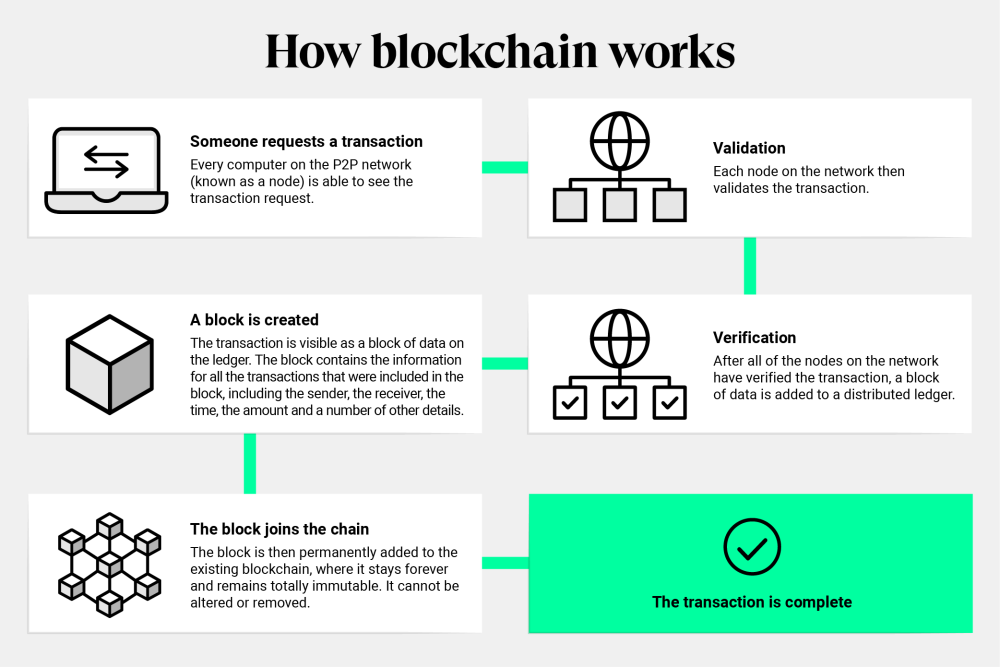
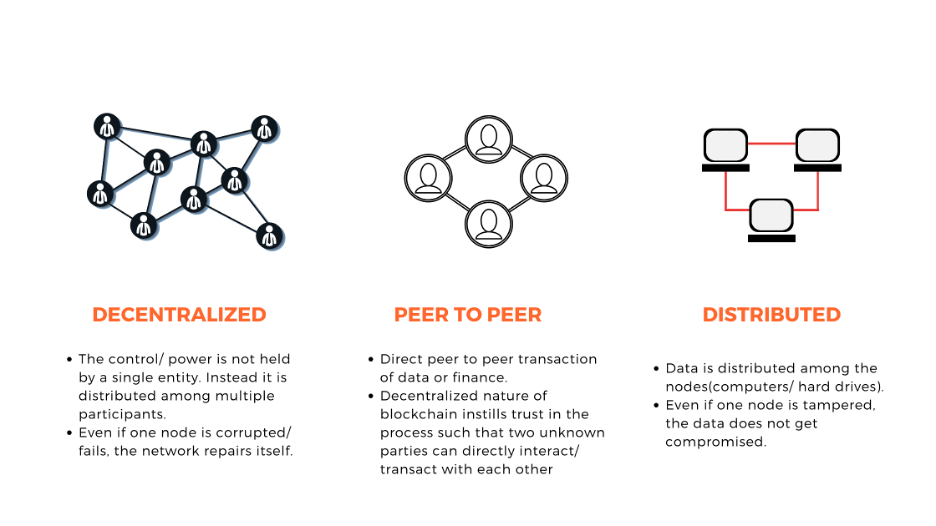
Blockchain is not a single piece of software but a conceptual framework for managing data. Traditionally, data is stored in centralized databases managed by a single entity—a bank, a social media company, or a government agency. Blockchain disrupts this model by distributing the database across a network of independent computers, known as nodes.
Distributed Ledgers vs. Centralized Databases
In a centralized system, the central authority has the power to alter, delete, or restrict access to data. This creates a “single point of failure.” If the central server is hacked or corrupted, the entire system is compromised.
In contrast, blockchain utilizes a distributed ledger. Every participant in the network holds a copy of the entire history of transactions. For a change to be made to the ledger, the majority of the nodes must reach an agreement. This redundancy ensures that even if several nodes go offline or are compromised by a malicious actor, the integrity of the overall network remains intact.
The Anatomy of a Block
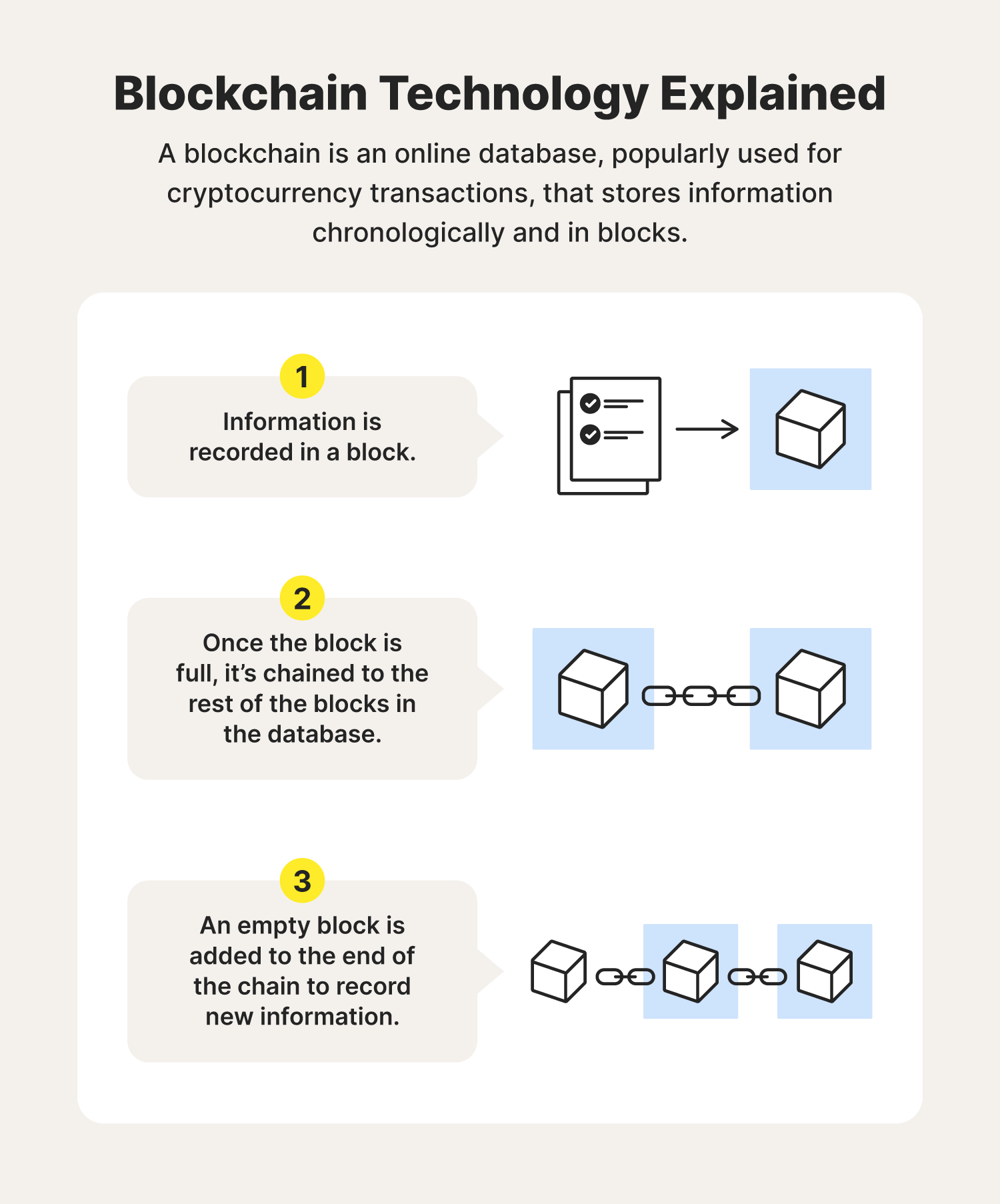
The “chain” in blockchain refers to a series of data clusters called “blocks.” Each block contains three primary components:
- Data: Depending on the purpose of the blockchain, this could be transaction details, medical records, or supply chain logs.
- Nonce: A “number used once,” which is a random value used in the mining process to generate a valid hash.
- Hash: A unique digital fingerprint generated by a cryptographic algorithm.
Cryptographic Hashing and Immutability
The most critical technical feature of a block is the inclusion of the “previous block’s hash.” This creates a mathematical link between blocks. If a single bit of data in an old block is altered, its hash changes. Because the subsequent block contains the old hash, the link is broken, and the entire chain becomes invalid. This property, known as immutability, makes blockchain virtually tamper-proof, providing a level of digital security that traditional databases cannot match.
Consensus Mechanisms: The Engine of Agreement
Because there is no central authority to validate data, blockchain networks rely on “consensus mechanisms.” These are cryptographic protocols that allow a distributed network of computers to agree on the state of the ledger.
Proof of Work (PoW) and Energy Efficiency
Proof of Work was the first consensus mechanism, popularized by the Bitcoin network. It requires nodes (miners) to solve complex mathematical puzzles to earn the right to add a new block to the chain. While PoW provides unparalleled security, it is computationally expensive and requires significant energy. From a software engineering perspective, PoW is a “brute force” method of securing a network, ensuring that the cost of attacking the system outweighs any potential gain.
Proof of Stake (PoS) and Scalability
To address the energy and scalability limitations of PoW, many modern blockchains—most notably Ethereum—have transitioned to Proof of Stake. In a PoS system, “validators” are chosen to create new blocks based on the number of tokens they hold and are willing to “stake” as collateral. This eliminates the need for massive hardware arrays, drastically reducing the energy footprint and allowing for higher transaction throughput. PoS represents a more sophisticated software approach to network security and resource management.
Emerging Protocols: Proof of History and DAGs
As the tech evolves, new architectures are emerging to solve the “Blockchain Trilemma”—the challenge of balancing security, scalability, and decentralization. Protocols like Proof of History (PoH) use a high-frequency verifiable delay function to create a chronological record of events, allowing nodes to process transactions faster. Similarly, Directed Acyclic Graphs (DAGs) move away from the linear “chain” structure entirely, allowing for parallel processing of data, which could potentially offer infinite scalability for IoT and high-speed data applications.
The Evolution of Software Development: Smart Contracts and DApps
The true potential of blockchain was unlocked when developers realized the ledger could store more than just transaction data—it could store executable code. This led to the rise of programmable blockchains.
Understanding Smart Contracts
A smart contract is a self-executing contract with the terms of the agreement directly written into lines of code. They run on the blockchain, meaning they are decentralized and cannot be altered by any party. For example, a smart contract could be programmed to release payment to a vendor only when a digital shipping receipt is verified. This removes the need for escrow services or legal intermediaries, automating trust through software logic.
Building Decentralized Applications (DApps)
Smart contracts serve as the back-end logic for a new generation of software called Decentralized Applications (DApps). Unlike traditional apps (like Twitter or Uber) that run on centralized servers (AWS or Google Cloud), DApps run on a peer-to-peer network.
- Front-end: Usually built with standard web technologies (HTML/JavaScript).
- Back-end: Composed of smart contracts deployed on a blockchain.
The advantage of DApps is that they are censorship-resistant. Because no single entity controls the servers, a DApp cannot be “shut down” by a central authority, making them vital tools for digital freedom and resilient software ecosystems.
Interoperability and Cross-Chain Bridges
A significant hurdle in the current tech landscape is that different blockchains (like Bitcoin, Ethereum, and Solana) often operate in silos. They cannot “talk” to one another. Tech developers are currently focused on “interoperability”—the ability for different blockchain networks to exchange data. Cross-chain bridges and “Layer 0” protocols are being developed to create a unified web of blockchains, often referred to as the “Internet of Blockchains.”
Digital Security and the Immutable Web
In an era of deepfakes, data breaches, and identity theft, blockchain offers a suite of tools to harden digital security. By decentralizing the storage of sensitive information, we can move away from the vulnerable “honey pots” of data stored by major corporations.
Protecting Against 51% Attacks
The security of a blockchain is generally proportional to its level of decentralization. A “51% attack” occurs if a single entity gains control of more than half of the network’s computing power (or stake), allowing them to manipulate the ledger. However, as networks grow, the cost and logistical complexity of coordinating such an attack become nearly impossible. For developers, choosing a network with high node distribution is the primary defense strategy in software deployment.
Private vs. Public Blockchains in Enterprise
While public blockchains (like Ethereum) are open to everyone, many enterprises are developing private or “permissioned” blockchains. These are used within corporate environments to streamline supply chains or manage internal identity systems. They offer the speed and privacy of a traditional database with the security and auditability of a blockchain, allowing companies to maintain a “single source of truth” across global departments.
The Role of Zero-Knowledge Proofs (ZK-Proofs)
One of the most exciting advancements in digital security is the Zero-Knowledge Proof. This cryptographic method allows one party to prove to another that they know a specific piece of information without actually revealing the information itself. In the context of blockchain, ZK-Proofs allow for “Privacy-Preserving Transactions,” where a user can prove they have enough funds for a transaction or are over 18 years old without revealing their balance or their birthdate. This is a game-changer for digital identity and software privacy.
Looking Ahead: The Role of Blockchain in AI and IoT
As we look toward the future of technology, blockchain is increasingly being viewed as the “connective tissue” for other emerging fields, particularly Artificial Intelligence (AI) and the Internet of Things (IoT).
Verifying AI Data Integrity
As AI models become more pervasive, the risk of “garbage in, garbage out” becomes a systemic threat. Blockchain can be used to create immutable logs of the datasets used to train AI. This allows developers to audit the provenance of data, ensuring that an AI model hasn’t been tampered with or trained on biased, unverified information. It brings a layer of transparency to the “black box” of AI.
Securing the Internet of Things (IoT)
By 2030, billions of devices will be connected to the internet. Standard centralized security for these devices is often weak, making them prime targets for botnet attacks. Blockchain allows IoT devices to communicate and transact autonomously in a secure, peer-to-peer manner. A smart meter could theoretically buy and sell electricity with a neighbor’s solar panel via a blockchain, with every transaction secured by cryptography and executed without human intervention.
The Path to Web3 and Decoupling Data
The ultimate realization of blockchain technology is “Web3″—a decentralized version of the internet where users own their data. In the current Web2 model, users trade their data for access to services. In a blockchain-based Web3, your “identity” is a cryptographic key that you carry with you across different platforms. You decide what data to share, and because the infrastructure is decentralized, you cannot be de-platformed or silenced by a central provider.
Blockchain is far more than a financial tool; it is a foundational upgrade to the internet’s architecture. By solving the problem of digital trust, it provides a new toolkit for developers to build more secure, transparent, and resilient systems. As the technology matures and its energy efficiency and scalability improve, blockchain will likely become the invisible backbone of the global digital economy.
aViewFromTheCave is a participant in the Amazon Services LLC Associates Program, an affiliate advertising program designed to provide a means for sites to earn advertising fees by advertising and linking to Amazon.com. Amazon, the Amazon logo, AmazonSupply, and the AmazonSupply logo are trademarks of Amazon.com, Inc. or its affiliates. As an Amazon Associate we earn affiliate commissions from qualifying purchases.