
In the fast-paced world of digital communication, acronyms and abbreviations are the unsung heroes, enabling rapid exchanges and conveying meaning with swift efficiency. Among these, “ty” is a ubiquitous yet sometimes ambiguous shorthand. While most seasoned texters and online communicators readily understand its primary meaning, the context in which “ty” appears can subtly shift its emphasis, impacting the tone and perceived sincerity of the message. This exploration delves into the multifaceted nature of “ty” within the realm of digital text, unraveling its core meaning, its evolutionary usage, and the subtle nuances that contribute to effective and impactful online interactions. Understanding these digital linguistic shortcuts is not merely about decoding messages; it’s about appreciating the evolving landscape of human connection in a technologically driven era.

The Ubiquitous “ty”: A Foundation of Gratitude in Digital Dialogue
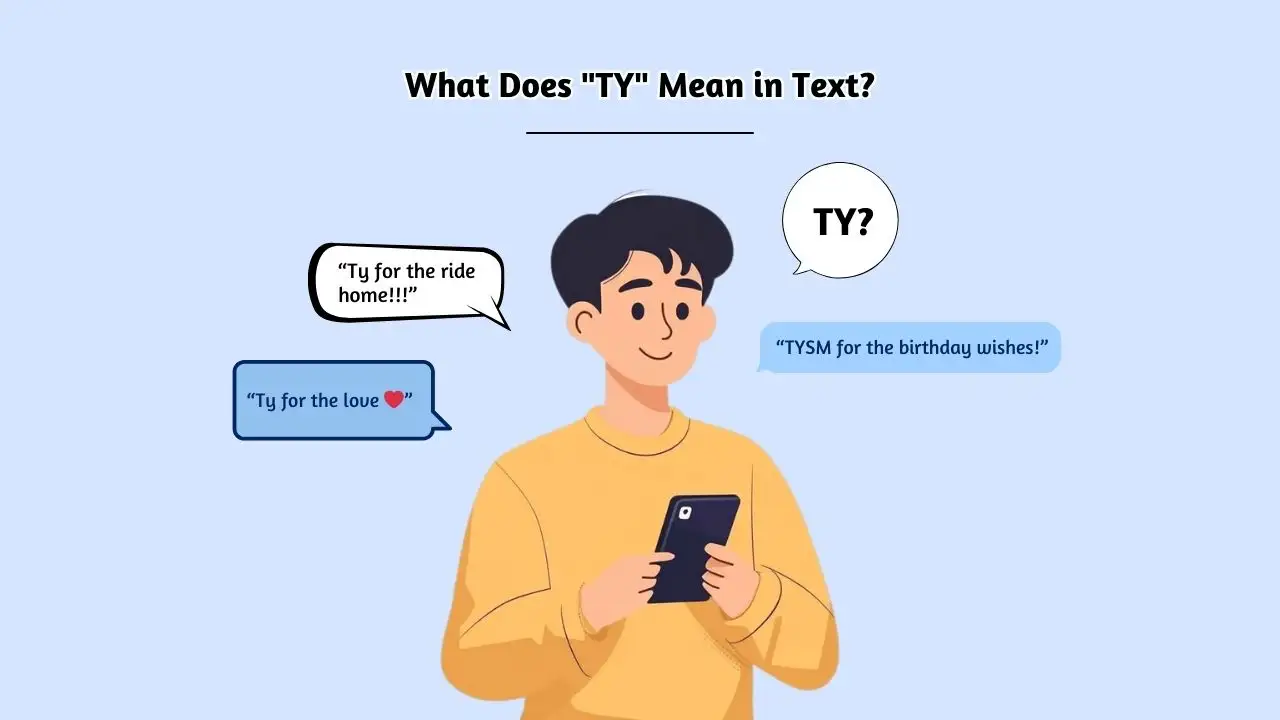
At its core, “ty” is a universally recognized abbreviation for “thank you.” This simple, two-letter phrase has become an indispensable part of our digital lexicon, serving as a quick and convenient acknowledgment of a favor, a piece of information, or a kind gesture. The efficiency it offers is paramount in environments where brevity is often prioritized, from rapid-fire instant messaging to the character-constrained world of early social media.
The Evolution from “Thank You” to “ty”
The journey of “ty” from its full form to a condensed abbreviation is a testament to the natural human inclination towards efficiency and conciseness in communication. Long before the advent of smartphones and instant messaging, written correspondence already saw the emergence of abbreviations. However, the digital age, with its emphasis on speed and brevity, catalyzed the widespread adoption of such shortcuts. The transition from typing out “thank you” to the mere “ty” represents a significant reduction in keystrokes, a minor but cumulative saving that, across millions of interactions, translates into a tangible increase in communication speed. This evolution is not unique to “ty”; it’s a broader phenomenon that has shaped digital language, including the popularization of acronyms like “lol” (laughing out loud) and “brb” (be right back).
The Spectrum of Gratitude: Beyond a Simple Acronym
While “ty” undeniably signifies gratitude, the depth and sincerity of that gratitude can be subtly conveyed through its usage. In many instances, a standalone “ty” is perfectly sufficient. It acts as a polite nod, a minimal acknowledgment that fulfills the social obligation of expressing thanks. However, the surrounding context, the platform, and even the individual’s typical communication style can imbue “ty” with varying degrees of emphasis. For instance, a “ty” sent immediately after receiving assistance, perhaps followed by a brief explanation of how the assistance was helpful, carries a stronger sense of appreciation than a “ty” buried within a longer, more casual message.
Furthermore, the rise of more expressive digital communication tools has introduced variations that amplify the sentiment of gratitude. While not strictly “ty,” these related expressions underscore the desire to go beyond a simple acknowledgment when a deeper sense of appreciation is felt. This might include the use of emojis ( , ✨), or the slightly more formal “thanks,” or even “thank you so much.” However, in the context of pure abbreviation, “ty” remains the foundational element, its meaning readily understood across a vast digital demographic.
The Contextual Significance of “ty” in Digital Interactions
Understanding the intended meaning and impact of “ty” requires a keen awareness of the contextual clues within a digital conversation. The platform being used, the relationship between the communicators, and the overall tone of the exchange all play a crucial role in shaping how “ty” is perceived. What might be considered a perfunctory acknowledgment in one scenario could be interpreted as a genuinely heartfelt expression of thanks in another.
Platform-Specific Nuances: From Instant Messages to Social Media Comments

The environment in which “ty” is deployed significantly influences its reception. In the rapid-fire, informal nature of instant messaging apps like WhatsApp or Signal, a simple “ty” is often sufficient to convey thanks for a quick piece of information or a favor. It’s efficient and doesn’t interrupt the flow of conversation. On platforms like Discord or Slack, which often involve group chats and more immediate exchanges, “ty” serves a similar purpose, acknowledging contributions or helpfulness within a shared digital space.
Social media platforms, while also relying on brevity, can present slightly different dynamics. A “ty” in response to a comment on a post might be seen as a polite acknowledgment of engagement. However, on platforms that emphasize visual content or personal narratives, a more elaborate expression of gratitude might be more appropriate if the interaction involves a significant contribution or act of kindness. For instance, thanking a creator for a particularly insightful post or a generous giveaway might warrant more than a simple “ty.” The character limits on platforms like Twitter (now X) have historically encouraged the use of abbreviations, making “ty” a common and expected form of acknowledgment.
Relational Dynamics: The Personal Touch in Digital Exchange
The relationship between the sender and receiver profoundly impacts how “ty” is interpreted. Between close friends or family members, a casual “ty” is usually understood within the context of their established rapport. The unspoken understanding of their bond often infuses even the briefest of expressions with warmth. However, when communicating with someone less familiar, or in a more professional digital setting, the interpretation of “ty” can be more guarded.
In professional contexts, such as email or professional messaging platforms like Microsoft Teams or LinkedIn, a standalone “ty” might be perceived as less formal than desired. While still conveying thanks, it might lack the gravitas expected in a business communication. In such scenarios, expanding to “thank you,” “thanks again,” or “appreciate it” might be more appropriate to convey a higher level of professionalism and sincerity. Conversely, in a personal context where speed is paramount, a “ty” from a friend might be imbued with a greater sense of genuine appreciation than a more formal “thank you” might suggest, simply because of the inherent informality and ease of their communication.
Amplifying Gratitude: Moving Beyond the Basic “ty”
While “ty” is a foundational element of digital gratitude, there are numerous ways to amplify this sentiment and ensure that one’s appreciation is clearly and effectively communicated. Recognizing when a simple “ty” might fall short, and employing strategies to enhance the expression of thanks, is a key aspect of sophisticated digital communication. This involves understanding the power of elaboration, the impact of tone, and the strategic use of additional linguistic tools.
The Power of Elaboration: Adding Detail and Depth
The most straightforward way to elevate a “ty” is through elaboration. Adding a few words to specify what the gratitude is for can significantly enhance its impact. For example, instead of just “ty,” one might say “ty for the info,” “ty for your help,” or “ty for sharing this.” This small addition provides clarity and demonstrates that the sender has processed and valued the specific contribution.
Furthermore, explaining the positive outcome or benefit derived from the action for which thanks are being given can powerfully amplify the sentiment. Phrases like “ty, that really helped me out,” “ty, I appreciate you taking the time,” or “ty, this is exactly what I needed” convey a deeper level of appreciation and acknowledge the effort or thoughtfulness of the other person. This level of detail transforms a perfunctory acknowledgment into a more meaningful exchange, reinforcing positive interactions and strengthening relationships.
The Role of Tone and Emojis in Conveying Sincerity
The tone of a digital message, even with a simple abbreviation like “ty,” can be subtly manipulated. Punctuation, word choice, and the inclusion of emoticons or emojis all contribute to this. For instance, a “ty!” with an exclamation mark can convey more enthusiasm than a simple “ty.” Similarly, adding a smiley face ( ) or a thumbs-up emoji ( ) after “ty” can soften the tone and add a layer of warmth and positivity.
However, it’s crucial to be mindful of the audience and the platform when using emojis. What might be appropriate and well-received in a casual conversation with friends could be perceived as unprofessional or overly familiar in a formal or business setting. The judicious use of emojis, alongside the careful selection of accompanying words, allows for a nuanced expression of gratitude that can effectively convey sincerity and goodwill. Ultimately, the goal is to ensure that the message of thanks is not just received, but genuinely felt, fostering positive digital relationships and a more connected communication experience.
aViewFromTheCave is a participant in the Amazon Services LLC Associates Program, an affiliate advertising program designed to provide a means for sites to earn advertising fees by advertising and linking to Amazon.com. Amazon, the Amazon logo, AmazonSupply, and the AmazonSupply logo are trademarks of Amazon.com, Inc. or its affiliates. As an Amazon Associate we earn affiliate commissions from qualifying purchases.