
For decades, the sound of a tornado has been described by survivors in hauntingly consistent terms: a freight train, a jet engine, or a continuous, low-pitched growl. While these descriptions provide a visceral sense of the terror involved, they offer little in the way of actionable data for meteorologists. However, in the realm of modern technology, the question of what a tornado sounds like has shifted from a matter of survivor testimony to a sophisticated field of acoustic engineering and signal processing.
Today, the intersection of atmospheric science and high-tech audio analysis is revolutionizing how we detect and track these destructive forces. By leveraging infrasound sensors, artificial intelligence, and advanced signal-processing algorithms, researchers are learning to “listen” to the atmosphere in ways that were previously impossible.
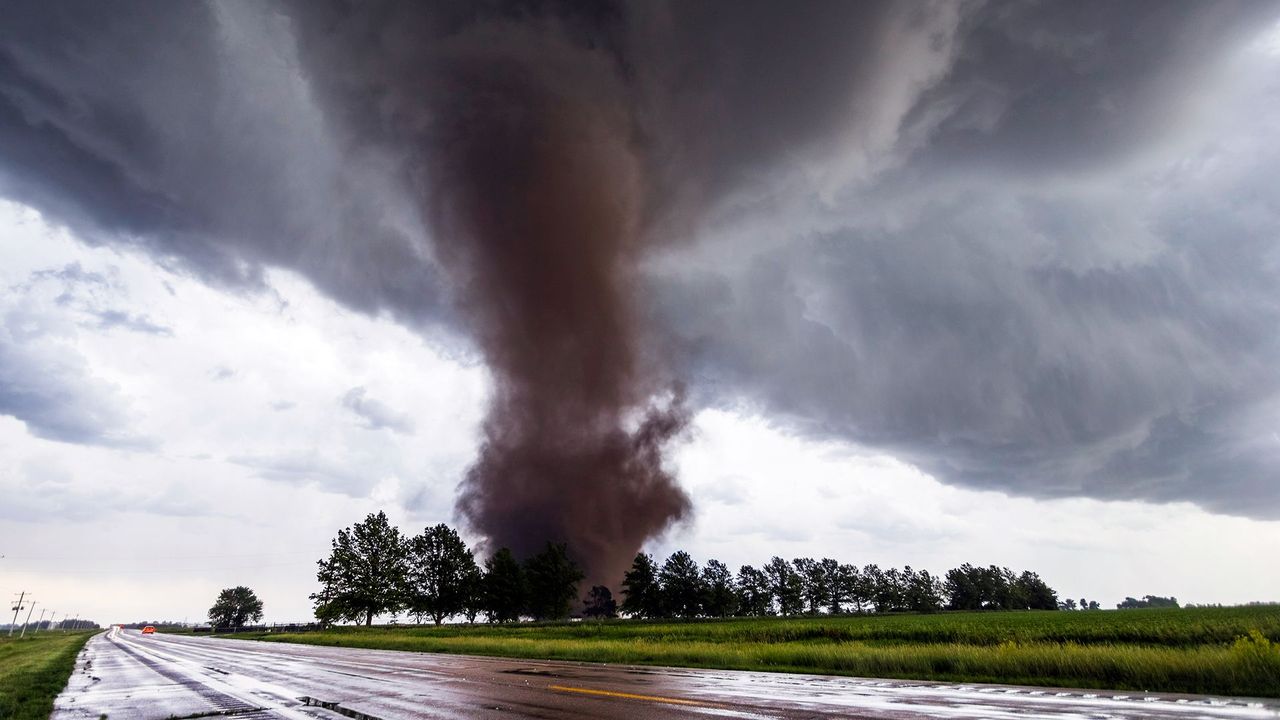
The Physics of Sound in Severe Weather Monitoring
To understand what a tornado sounds like from a technical perspective, we must look beyond the audible range. The “roar” heard by the human ear is only a fraction of the acoustic energy generated by a supercell. Tornadoes are massive machines of fluid dynamics, and as they interact with the ground and the atmosphere, they produce a complex spectrum of sound waves.
Audible Frequencies vs. Infrasound
The sounds we hear—the grinding, rushing, and whistling—are high-frequency noises caused by debris, high-speed winds hitting structures, and internal turbulence. While useful for immediate proximity warnings, these sounds dissipate quickly over distance. The real breakthrough in technology lies in “infrasound”—sound waves with frequencies below 20 Hz, which is the lower limit of human hearing.
Infrasound waves are unique because they can travel hundreds of miles without significant attenuation. Tech-driven meteorological stations are now utilizing specialized microphones designed to capture these sub-audible signatures. These sensors detect the “heartbeat” of a storm, providing a data stream that is unaffected by the visual obstructions that often hamper radar or spotters.
The “Freight Train” Phenomenon: Why Traditional Audio Matters
Even the audible “freight train” sound is being decoded using high-fidelity recording equipment. By analyzing the spectrograms of tornado audio, tech researchers have identified specific acoustic peaks that correspond to the size and intensity of the vortex. This data allows for the development of “acoustic fingerprints.” If a sensor picks up a specific pattern of turbulence and mechanical friction, software can now categorize the event even before a funnel cloud is confirmed visually.
Infrasound Technology: Listening to the Unheard
The most significant technological leap in “hearing” tornadoes is the deployment of infrasound sensor arrays. Unlike traditional microphones, these devices are designed to filter out the “noise” of local wind while focusing on the massive, low-frequency pressure fluctuations caused by a developing tornado.
Capturing the Low-Frequency Signature
Infrasound sensors, or microbarographs, are becoming a staple in the meteorologist’s toolkit. When a tornado begins to form, the rapid expansion and contraction of air within the core—coupled with the oscillation of the vortex itself—acts like a massive subwoofer. This creates a rhythmic, low-frequency pulse.
Current tech allows these sensors to detect a tornado up to 30 minutes before it touches the ground. This “pre-touchdown” acoustic signature is the “Holy Grail” of early warning systems. By deploying these sensors in high-density grids across “Tornado Alley,” tech firms are creating a secondary layer of defense that complements traditional Doppler radar.
Triangulation and Early Warning Precision
A single sensor can tell you a sound is occurring, but a network of sensors provides location. Through a process known as “Time Difference of Arrival” (TDOA) processing, specialized software can triangulate the exact position of an infrasound source. This is a massive tech advantage because radar often struggles with “beam overshoot”—where the radar pulse passes over a tornado that is too close to the ground or too far from the station. Acoustic technology fills this “blind zone” by listening from the ground up, providing a more precise location for emergency management software to issue localized alerts.
AI and Machine Learning: From Noise to Data

The challenge of listening to tornadoes isn’t just capturing the sound; it’s identifying it amidst the chaotic noise of a thunderstorm. This is where Artificial Intelligence (AI) and Machine Learning (ML) are making their mark.
Training Models on Atmospheric Audio
Machine learning models are only as good as the data they are fed. In recent years, researchers have been building massive databases of “storm audio.” These datasets include everything from light rain and distant thunder to the direct hit of an EF-5 tornado.
By training neural networks on these audio samples, developers have created algorithms capable of real-time “acoustic classification.” When a sensor array picks up a signal, the AI compares it to thousands of known patterns in milliseconds. It can distinguish between a harmless gust of wind and the specific “tearing” sound of a tornadic vortex. This level of automation reduces the burden on human meteorologists and speeds up the warning pipeline.
Filtering the Chaos: How Algorithms Identify a Vortex
One of the most impressive feats of modern signal-processing tech is the ability to filter out “background noise.” During a major storm, there is a cacophony of sound: thunder, hail hitting the ground, and wind whistling through trees. Advanced digital signal processors (DSPs) use adaptive filtering to “cancel out” these distractions, isolating the specific frequency bands associated with a tornado’s core.
This tech is similar to the noise-canceling technology found in high-end consumer headphones, but applied on a massive, atmospheric scale. By isolating the vortex signature, the AI can track the tornado’s movement with unprecedented clarity, even when the storm is wrapped in rain and invisible to the naked eye.
The Future of Meteorological Hardware
As we move forward, the hardware used to listen to tornadoes is becoming more portable, durable, and interconnected. We are moving away from stationary labs and toward a distributed “Internet of Things” (IoT) for weather.
Next-Gen Acoustic Sensor Arrays
The next generation of acoustic hardware is being designed for “rapid deployment.” These are ruggedized, solar-powered units that can be dropped in the path of a storm or permanently mounted on cell towers. These devices use MEMS (Micro-Electro-Mechanical Systems) technology, which allows for high-sensitivity microphones to be built onto tiny silicon chips. This makes the sensors cheaper to produce and easier to deploy in the massive numbers required for a comprehensive early warning grid.
Integration with Satellite and Radar Tech
The most powerful tech solutions are rarely standalone. The future of storm tracking lies in the integration of acoustic data with satellite imagery and Dual-Pol Doppler radar. Tech platforms are being developed that aggregate all three data streams into a single “fused” visualization.
In this ecosystem, the sound (infrasound) acts as the early trigger, the radar provides the structural shape of the storm, and the satellite provides the broad atmospheric context. When the acoustic sensor “hears” the tornado’s signature, it can automatically trigger the radar to focus its scan on that specific coordinate, optimizing the use of high-power hardware and reducing latency in warning times.
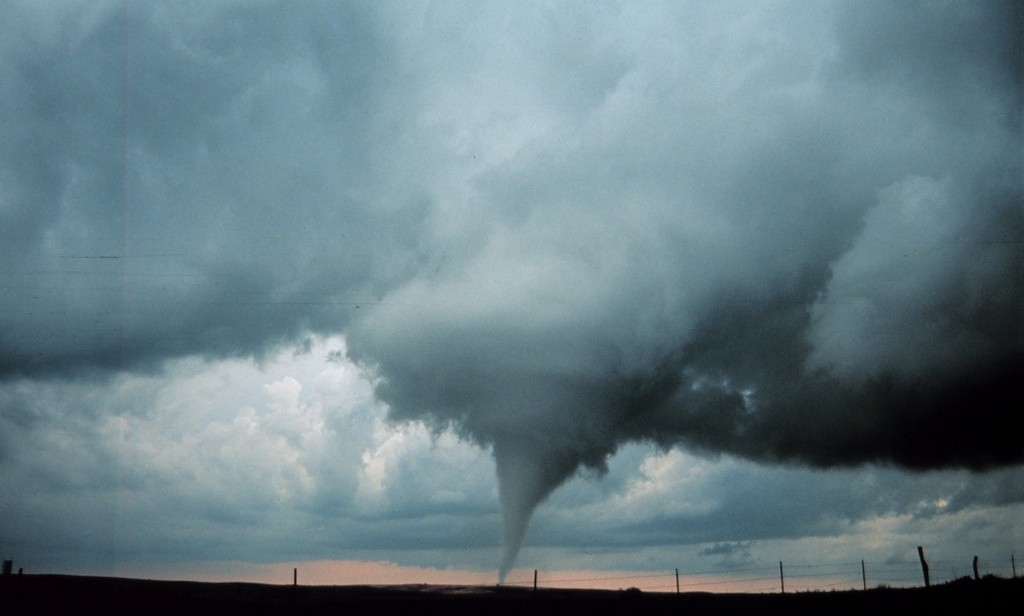
Why Sound Tech is the New Frontier in Disaster Prevention
The transition from wondering what a tornado sounds like to scientifically measuring its acoustic output represents a paradigm shift in disaster technology. For years, we relied almost exclusively on visual confirmation and radar reflectivity. While effective, these methods have limitations—nighttime tornadoes, rain-wrapped funnels, and radar gaps have all contributed to loss of life.
Acoustic technology offers a way to “see” through the darkness and the rain. By treating the atmosphere as a medium for sound, we unlock a constant stream of data that doesn’t rely on line-of-sight. The “roar” of the tornado, once a signal of impending doom, is being transformed into a vital data point.
In the coming decade, we can expect to see acoustic sensing integrated into smart home devices and city-wide infrastructure. Imagine a world where your smart speaker can identify the specific infrasound frequency of a developing tornado and alert you before the local sirens even begin to wail. This is the promise of acoustic tech: turning the terrifying sound of the storm into the very tool we use to survive it. Through the clever application of software, AI, and specialized hardware, we are finally learning to speak the language of the skies.
aViewFromTheCave is a participant in the Amazon Services LLC Associates Program, an affiliate advertising program designed to provide a means for sites to earn advertising fees by advertising and linking to Amazon.com. Amazon, the Amazon logo, AmazonSupply, and the AmazonSupply logo are trademarks of Amazon.com, Inc. or its affiliates. As an Amazon Associate we earn affiliate commissions from qualifying purchases.