
In the modern digital landscape, fiber optic technology serves as the backbone of our global communication network. While most of us interact with the “end product”—high-speed internet, seamless 4K streaming, and instantaneous cloud access—the physical infrastructure remains largely hidden behind walls, under streets, or across ocean floors. If you have ever wondered what a fiber optic cable actually looks like, the answer is more complex than a simple “thin wire.” From hair-thin glass strands to heavily armored subterranean bundles, the appearance of fiber cables is dictated by a sophisticated marriage of physics and engineering.
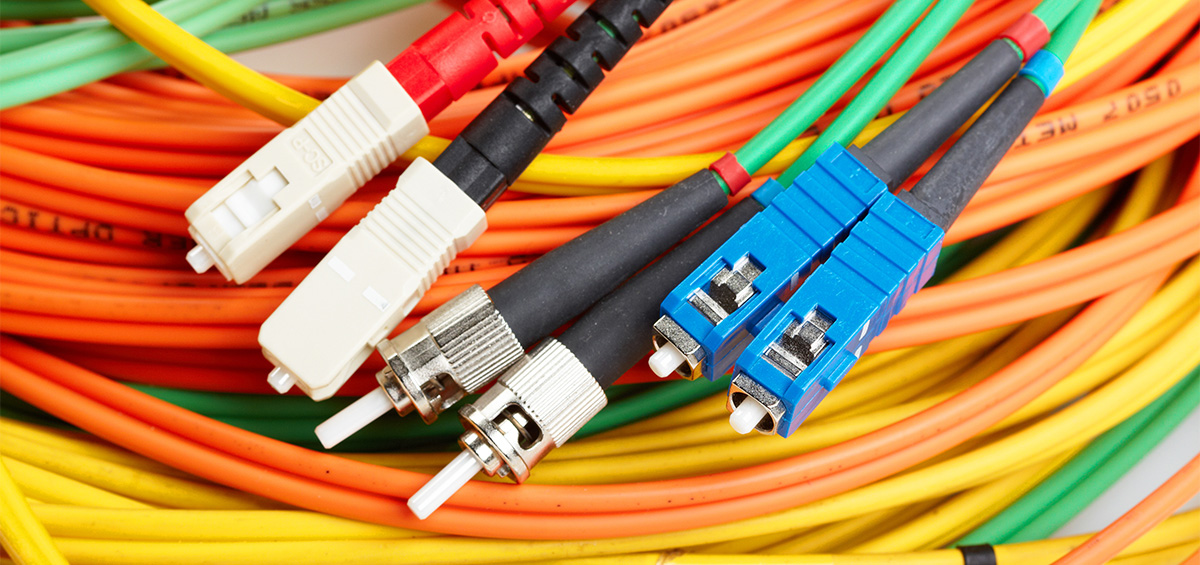
This guide explores the anatomy, varieties, and visual identifiers of fiber optic cables, providing a comprehensive look at the hardware that powers the information age.
The Anatomy of a Fiber Optic Cable
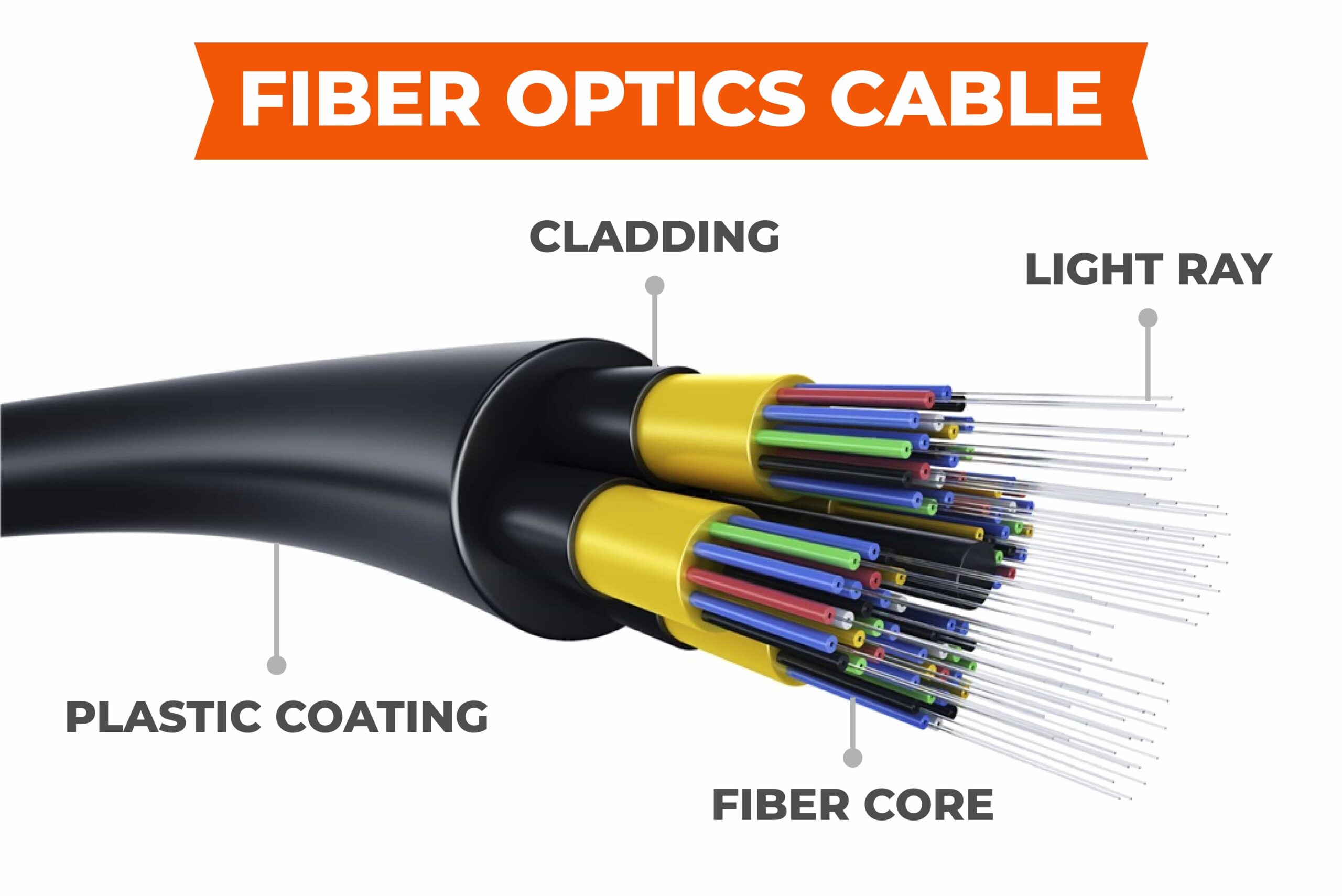
To understand what a fiber cable looks like, one must look past the outer plastic shell. Unlike traditional copper cables, which use solid or stranded metal to conduct electricity, fiber optic cables are designed to transport light. This fundamental difference in physics requires a unique layered construction.
The Core and Cladding: Where the Light Happens
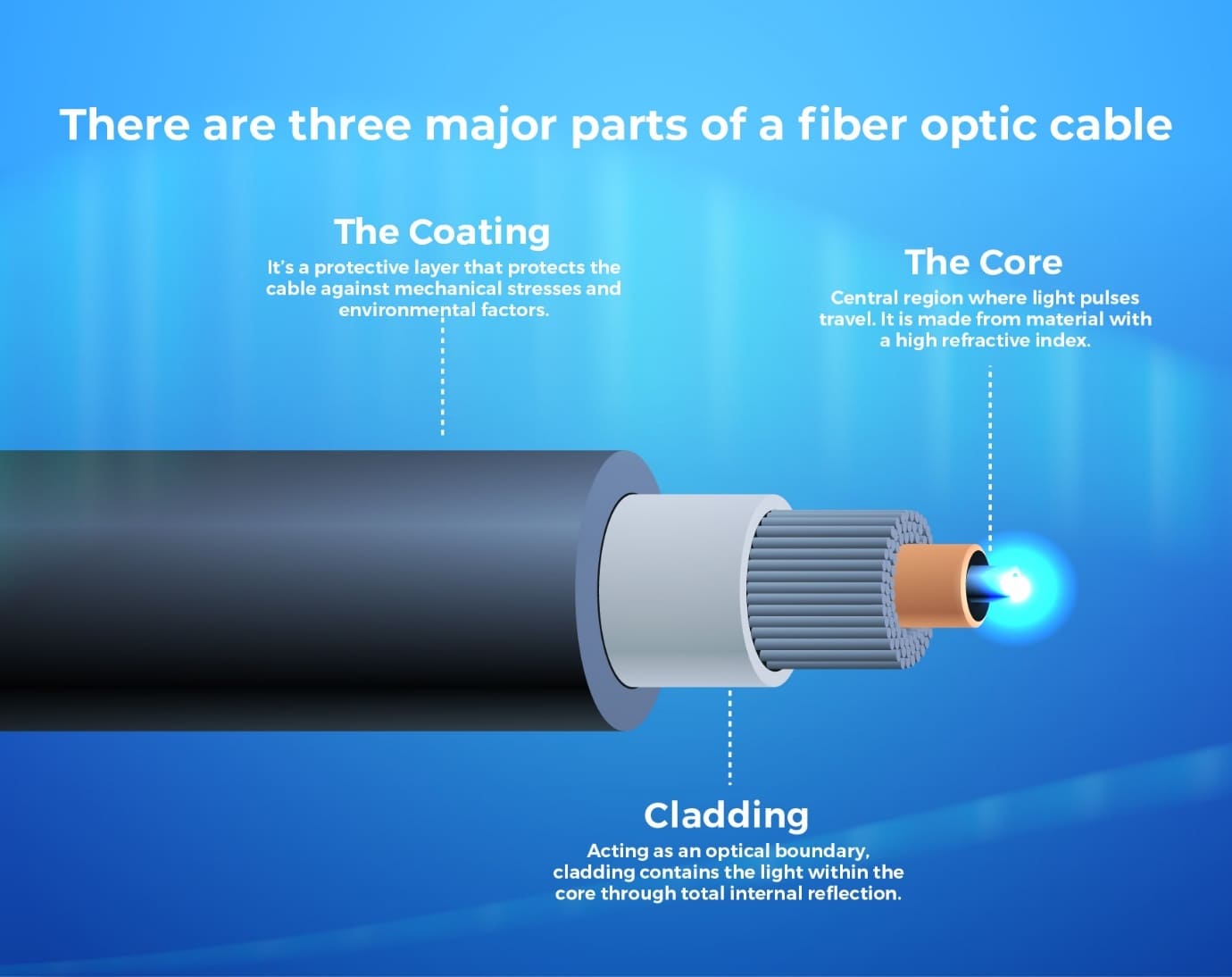
At the center of every fiber cable is the core. To the naked eye, a single fiber core looks like a strand of human hair or a very fine fishing line. It is typically made of high-purity glass (silica), though some short-distance applications use plastic. Despite its fragile appearance, this glass is engineered to be incredibly strong and flexible.
Surrounding the core is the cladding. The cladding is also made of glass, but it has a different refractive index. Visually, you cannot easily distinguish the core from the cladding with the naked eye because they are fused together, but their interaction is what allows “total internal reflection,” keeping the light trapped inside the core.
Protective Layers: Coating, Strength Members, and Jackets
Moving outward, the next layer is the buffer coating. This is usually a colored plastic layer that protects the glass from moisture and physical damage. If you strip a fiber cable, the “wires” you see inside are actually these colored buffer tubes.
To prevent the cable from stretching or snapping during installation, engineers add strength members. Usually made of aramid yarn (commonly known by the brand name Kevlar), these look like soft, yellow fibrous threads bundled around the inner glass. Finally, the outer jacket provides the final layer of protection. Depending on the environment, this jacket can be thin and flexible or thick and rugged.
Identifying Different Types of Fiber Cables
Fiber cables are not one-size-fits-all. Their appearance changes drastically depending on whether they are designed to carry data across a room or across a continent.
Single-Mode vs. Multi-Mode: Visual Differences
One of the most important distinctions in fiber optics is the difference between single-mode and multi-mode cables. For technicians and enthusiasts, color coding is the primary way to tell them apart:
- Single-Mode (OS1/OS2): Designed for long-distance transmission, these cables have a tiny core (about 9 microns). They are almost always identifiable by a yellow outer jacket.
- Multi-Mode (OM1/OM2): Older multi-mode cables, which have larger cores for shorter distances, typically feature an orange jacket.
- Multi-Mode (OM3/OM4): Optimized for high-speed data centers (10Gbps and above), these cables usually have a distinct aqua (light blue) or Erika Violet jacket.
By looking at the color of the cable jacket, a tech professional can immediately determine the bandwidth capacity and the distance limitations of the hardware.
Indoor vs. Outdoor Cabling: Build and Appearance
Indoor fiber cables, often called “patch cords,” are generally thin, brightly colored, and very flexible. They look similar to high-quality headphone cables or thin USB cords. They are designed to be routed through tight corners in server racks.
In contrast, outdoor fiber cables look like heavy-duty utility lines. They are almost always black to provide UV protection against sunlight. Because they must survive the elements, they are much thicker and stiffer. Some versions, known as armored cables, contain a layer of corrugated steel tape under the jacket to prevent rodents from chewing through the glass fibers. If you were to see a cross-section of a high-density outdoor cable, it wouldn’t look like a single wire; it would look like a honeycomb containing hundreds of individual colored fiber strands.
Understanding Fiber Optic Connectors and Terminations
A fiber cable is only as good as its connection. The “ends” of the cable—the connectors—are the most recognizable part of the hardware for most users. Unlike the rounded pins of a VGA cable or the rectangular shape of USB, fiber connectors are precision-engineered to align glass cores with sub-micron accuracy.
Common Connector Types: LC, SC, and ST
If you look at the tip of a fiber cable, you will see a small, ceramic or plastic white cylinder protruding from the center. This is called the ferrule, and it holds the glass fiber in place. The housing around the ferrule determines the connector type:
- LC (Lucent Connector): These are the most common in modern tech environments. They are small, “squarish,” and feature a plastic clip similar to an Ethernet (RJ45) jack.
- SC (Subscriber Connector): A larger, square connector that uses a “push-pull” mechanism. It is often used in older networking gear and GPON (Gigabit Passive Optical Network) boxes in homes.
- ST (Straight Tip): These look like old-school BNC connectors used in radio. They are round and use a twist-lock (bayonet) mount. While less common now, they are still found in industrial environments.
Color Coding Standards (TIA-598-C)
The industry follows a strict color-coding standard known as TIA-598-C. Inside a large cable bundle, there are 12 standard colors: Blue, Orange, Green, Brown, Slate, White, Red, Black, Yellow, Violet, Rose, and Aqua. When a technician opens a high-capacity fiber cable, they see a “rainbow” of microscopic threads. This allows them to identify exactly which fiber carries which signal at both ends of a five-mile run.
How Fiber Cables Look in Modern Infrastructure
To see fiber cables “in the wild,” one must look at data centers and telecommunications hubs. Here, the visual appearance shifts from individual cables to massive organizational systems.
Data Center Patching and Cable Management
Inside a modern data center, fiber cables look like vibrant, organized waterfalls. Because fiber is immune to electromagnetic interference, thousands of cables can be bundled together without performance loss. You will see rows of aqua and yellow cables neatly dressed in “velcro” ties, plugged into high-density patch panels. The precision of this “cable porn”—as it is colloquially known in tech circles—is vital for airflow and maintenance.
One unique visual aspect of fiber in these settings is the bend radius. Unlike copper wires, which can be kinked or bent sharply, fiber cables are always routed in gentle curves. If a fiber cable is bent too sharply, the light escapes the core, and the connection fails. Consequently, fiber infrastructure is characterized by rounded “waterfall” brackets and curved raceways.
Fiber to the Home (FTTH) Hardware
For the average consumer, fiber looks like a thin, white or grey wire entering the house, leading to an Optical Network Terminal (ONT). The ONT is a small box (often white) that converts light signals back into electrical signals for your Wi-Fi router. Inside this box, you might see a “service loop”—a small coil of extra fiber. This loop is a visual giveaway of a fiber installation, as the extra length is required to allow for future repairs or splicing without replacing the entire run.
The Future of Fiber: Evolution in Design and Form Factor
As we push toward 800Gbps and 1.6Tbps networking, the appearance of fiber is evolving once again. We are moving away from individual connectors toward MPO (Multi-fiber Push-On) connectors. These look like wide, flat rectangular plugs that can hold 12, 24, or even 72 fibers in a single interface.
Additionally, “Ribbon Fiber” is becoming more common in massive infrastructure projects. Instead of individual strands, the fibers are manufactured in flat, tape-like ribbons. This allows for massive density; a single cable no thicker than a garden hose can now contain over 3,000 individual strands of glass.
Conclusion
To the untrained eye, a fiber cable might look like just another cord behind a desk. However, upon closer inspection, it is a masterpiece of material science. From the microscopic glass core that carries data at the speed of light to the color-coded jackets that denote bandwidth and the rugged armor that protects the line from the environment, every visual element of a fiber cable serves a specific technical purpose.
Whether it is the bright yellow of a single-mode patch cord in a server room or the massive black bundles being unspooled from a utility truck, fiber cables are the visible evidence of our invisible digital world. Understanding what they look like—and why they are designed that way—is fundamental to understanding the technology that connects us all.
aViewFromTheCave is a participant in the Amazon Services LLC Associates Program, an affiliate advertising program designed to provide a means for sites to earn advertising fees by advertising and linking to Amazon.com. Amazon, the Amazon logo, AmazonSupply, and the AmazonSupply logo are trademarks of Amazon.com, Inc. or its affiliates. As an Amazon Associate we earn affiliate commissions from qualifying purchases.