
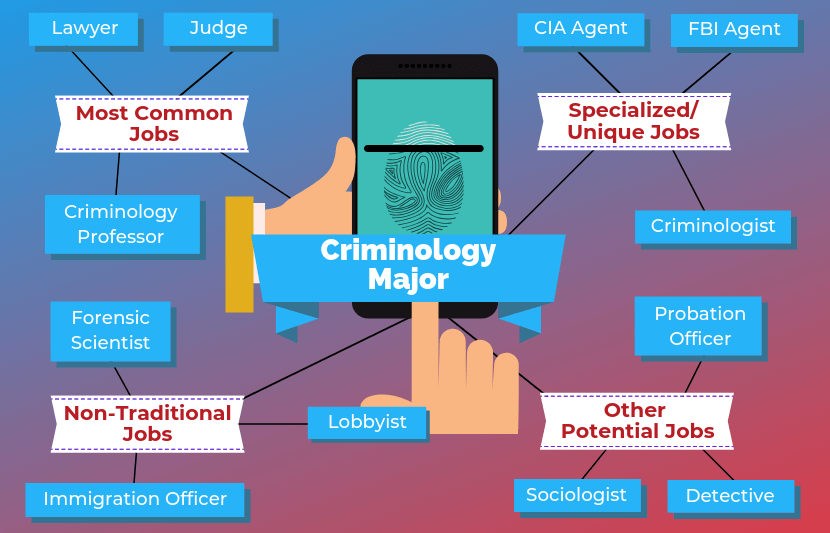
Criminology, as an academic discipline, delves into the intricate web of crime and its societal implications. While the term “criminologist” might conjure images of detectives solving intricate mysteries or forensic scientists meticulously analyzing crime scenes, the reality of what criminologists do is far broader and more nuanced. Their work extends beyond the immediate investigation of criminal acts to encompass the understanding of criminal behavior, the societal factors that contribute to it, and the development and evaluation of strategies to prevent and control crime. In essence, criminologists are social scientists who employ rigorous research methods to dissect the phenomenon of crime from multiple perspectives, aiming to inform policy, improve justice systems, and foster safer communities.

The field draws upon a diverse range of theoretical frameworks and methodologies from sociology, psychology, economics, law, and even biology. This interdisciplinary approach allows criminologists to examine crime not just as an individual act, but as a complex social issue influenced by a multitude of variables, including socioeconomic status, environmental factors, psychological predispositions, and systemic inequalities. Their work can be broadly categorized into research, theory development, policy analysis, and practical application, all contributing to a deeper, more informed understanding of crime and its control.
Understanding the Roots of Criminal Behavior
At the heart of criminological inquiry lies the fundamental question: why do people commit crimes? Criminologists are dedicated to uncovering the underlying causes and contributing factors that lead to criminal activity. This involves a multifaceted approach that considers both individual-level characteristics and broader societal influences.
Biological and Psychological Factors
While not solely determinist, criminologists acknowledge the potential role of biological and psychological factors in shaping an individual’s propensity towards crime. This can involve studying genetic predispositions, neurological differences, personality traits such as impulsivity or aggression, and mental health conditions that might increase the likelihood of engaging in criminal behavior. Research in this area often utilizes psychological assessments, studies of twins and adopted individuals, and neuroimaging techniques to identify potential correlations. It’s crucial to emphasize that these factors are rarely the sole determinants of crime; they interact with environmental and social influences in complex ways.
Sociological and Environmental Influences
Perhaps the most significant focus for many criminologists lies in understanding how social structures and environmental conditions contribute to crime. This includes examining the impact of poverty, inequality, lack of educational and employment opportunities, and residential segregation on crime rates. Theories such as Strain Theory, Social Disorganization Theory, and Differential Association Theory offer frameworks for understanding how these macro-level factors can create environments conducive to criminal activity. Criminologists analyze data related to demographic shifts, community characteristics, and socioeconomic indicators to identify patterns and correlations. They might investigate how the physical environment of a neighborhood – such as poor lighting, abandoned buildings, or lack of public spaces – can influence opportunities for crime and residents’ sense of safety.
Cultural and Subcultural Factors
Culture and subcultures can also play a significant role in shaping norms, values, and behaviors, including those related to crime. Criminologists explore how certain subcultural groups may develop codes of conduct that deviate from mainstream society, potentially leading to criminal acts. This can involve studying the influence of peer groups, the adoption of particular lifestyles, and the development of shared attitudes towards law and authority. For instance, understanding the dynamics within gangs or other organized criminal groups requires an appreciation of their internal norms, hierarchies, and shared beliefs that can legitimize or encourage criminal behavior. Research in this area often involves ethnographic studies, interviews, and analysis of cultural artifacts to gain an insider perspective.
Analyzing Crime Patterns and Trends
Beyond understanding the individual causes of crime, criminologists are deeply invested in analyzing broader patterns and trends in criminal activity. This macro-level analysis is crucial for identifying emerging threats, allocating resources effectively, and developing targeted prevention strategies.
Data Collection and Statistical Analysis
A cornerstone of criminological work involves the meticulous collection and analysis of crime data. This data can come from a variety of sources, including official police records (e.g., Uniform Crime Reporting Program in the US), victimization surveys (which capture crimes not reported to the police), court records, and correctional data. Criminologists employ sophisticated statistical techniques to identify trends, such as increases or decreases in specific types of crime, geographical hotspots, and demographic profiles of offenders and victims. They use this quantitative data to test hypotheses, identify correlations, and build predictive models.
Geographic Profiling and Crime Mapping
Understanding where crime occurs is as important as understanding why. Criminologists utilize crime mapping and geographic profiling to visualize crime patterns and identify spatial relationships. Crime mapping software can highlight areas with high crime rates, allowing law enforcement and policymakers to focus resources on specific neighborhoods or types of locations. Geographic profiling, often used in serial crime investigations, involves analyzing the spatial data of crimes to infer characteristics of the offender, such as their likely area of residence or operation. This spatial analysis helps to understand the environmental factors that may be contributing to crime concentration and to develop more effective place-based interventions.
Victimology and Offender Profiling
Criminologists also dedicate significant attention to the study of victims and offenders. Victimology examines the characteristics of crime victims, the circumstances under which victimization occurs, and the consequences of crime for individuals and society. Understanding victim patterns can help in developing targeted prevention efforts and support services. Offender profiling, on the other hand, involves developing a profile of an offender based on the characteristics of their crimes. While often associated with criminal investigations, criminological profiling also seeks to understand the motivations, behaviors, and background characteristics of different types of offenders, contributing to broader theories of criminal behavior.
Developing and Evaluating Crime Prevention Strategies
The ultimate goal of much criminological research is to inform the development and implementation of effective strategies to prevent and control crime. This involves translating theoretical knowledge and empirical findings into practical interventions.
Policy Analysis and Reform
Criminologists play a vital role in advising policymakers and government agencies on crime-related issues. They analyze existing laws and policies, evaluate their effectiveness, and propose evidence-based reforms. This can involve examining the impact of sentencing guidelines, drug policies, community policing initiatives, or rehabilitation programs. Their research provides an objective basis for policy decisions, helping to ensure that resources are allocated efficiently and that interventions are likely to achieve their intended outcomes. For example, a criminologist might analyze the cost-effectiveness of incarceration versus community-based rehabilitation programs for certain offenders.
Designing and Implementing Interventions
Beyond policy, criminologists are involved in the design and implementation of direct crime prevention programs. This can range from community-based initiatives aimed at reducing juvenile delinquency to situational crime prevention strategies that focus on modifying the physical environment to reduce opportunities for crime. Examples include improving street lighting, installing surveillance cameras in public spaces, or developing programs that provide positive recreational activities for at-risk youth. The effectiveness of these interventions is then rigorously evaluated using research methodologies to determine what works and why.

Criminal Justice System Research
The criminal justice system itself is a major focus of criminological inquiry. Criminologists examine the operations of police, courts, and correctional facilities, seeking to identify areas for improvement and to understand the impact of these institutions on crime and recidivism. This can involve studying the effectiveness of different policing strategies, the fairness and efficiency of court processes, or the rehabilitative potential of various correctional programs. Their work aims to ensure that the justice system is not only effective in controlling crime but also just and equitable. For instance, they might study disparities in sentencing or the effectiveness of restorative justice programs.
In conclusion, the work of criminologists is multifaceted and critical to understanding and addressing the complex issue of crime. They are researchers, analysts, and advisors who employ scientific methods to shed light on the causes, patterns, and consequences of criminal behavior. Their contributions are essential for developing informed policies, designing effective interventions, and ultimately, striving to build safer and more just societies.
aViewFromTheCave is a participant in the Amazon Services LLC Associates Program, an affiliate advertising program designed to provide a means for sites to earn advertising fees by advertising and linking to Amazon.com. Amazon, the Amazon logo, AmazonSupply, and the AmazonSupply logo are trademarks of Amazon.com, Inc. or its affiliates. As an Amazon Associate we earn affiliate commissions from qualifying purchases.