
The advent of “false teeth,” or more accurately, dental prosthetics, has revolutionized restorative dentistry, offering solutions for tooth loss that are not only functional but also increasingly aesthetic and comfortable. The materials employed in their creation are a testament to significant advancements in material science and manufacturing technology. Understanding what constitutes these modern marvels provides a fascinating glimpse into the intersection of biology, engineering, and patient well-being. This article will explore the diverse array of materials used in the fabrication of dentures, implants, and bridges, delving into their properties, advantages, and the technological innovations that make them possible.

The Evolving Landscape of Dental Prosthetic Materials
Historically, dental prosthetics were often rudimentary, with materials like ivory, bone, or even porcelain being used. While these early attempts offered some semblance of function, they were plagued by issues of durability, comfort, and a natural appearance. The 20th and 21st centuries, however, have witnessed a dramatic transformation, driven by a deeper understanding of biomaterials and the development of sophisticated manufacturing techniques. Today’s dental prosthetics are crafted from a range of advanced polymers, ceramics, and metals, each meticulously chosen for specific applications and patient needs. This evolution has not only improved the efficacy of false teeth but has also significantly enhanced the quality of life for individuals who require them. The journey from basic replacements to highly personalized, biocompatible prosthetics underscores the continuous innovation within the field of dental technology.
The Foundation: Base Materials for Dentures
The “base” of a denture, the part that mimics the gums and provides support for the artificial teeth, is primarily constructed from acrylic resins. These synthetic polymers have become the cornerstone of modern denture fabrication due to their excellent balance of properties and cost-effectiveness.
Acrylic Resins: The Workhorse of Denture Bases
Poly(methyl methacrylate) (PMMA), commonly known as acrylic resin, is the most prevalent material used for denture bases. Its popularity stems from several key attributes:
- Biocompatibility: PMMA exhibits good biocompatibility, meaning it is well-tolerated by the oral tissues and rarely causes allergic reactions. This is crucial for a material that will be in constant contact with the gums and surrounding tissues for extended periods.
- Ease of Fabrication and Repair: Acrylic resins are relatively easy to process, mold, and manipulate by dental technicians. This allows for relatively straightforward and cost-effective fabrication of custom dentures. Furthermore, if a denture base becomes damaged or needs adjustments, it can often be repaired or relined by adding more acrylic material.
- Aesthetic Potential: While the base itself is designed to mimic the pink color of healthy gums, PMMA can be pigmented to closely match an individual’s natural gum shade, contributing to a more lifelike appearance. The inclusion of fine fibers or particles can also enhance the realism by simulating the microvasculature of natural gum tissue.
- Strength and Durability: Modern acrylic resins have been engineered to offer considerable strength and resistance to fracture. While not as strong as metal, they are sufficiently robust for the demands of everyday chewing and speaking. However, they can be susceptible to wear over time and may fracture under significant impact.
- Lightweight: The relatively low density of acrylic resins makes dentures comfortable to wear, reducing the feeling of heaviness often associated with older prosthetic materials.
The fabrication process typically involves mixing a liquid monomer (methyl methacrylate) with a polymer powder (polymethyl methacrylate). This mixture is then packed into a mold representing the patient’s mouth and cured under heat and pressure, causing it to polymerize and harden into a rigid structure.
Innovations in Acrylic Base Materials
Ongoing research and development have led to improvements in acrylic resins, addressing some of their inherent limitations:
- High-Impact Acrylics: These formulations incorporate rubber modifiers or other reinforcing agents to significantly enhance their resistance to fracture. This is particularly beneficial for patients who are prone to dropping their dentures.
- Metal Reinforcement: For added strength and stability, especially in complete dentures or those with a large span, a thin metal framework, often made of a cobalt-chromium alloy, can be embedded within the acrylic base. This provides structural integrity without significantly increasing the bulk or weight.
- Flexible Dentures: While less common for full dentures, certain flexible acrylics or other thermoplastic polymers (like nylon-based materials) are used for partial dentures. These materials offer increased comfort, better retention, and can be advantageous in cases where traditional clasps might be visible or uncomfortable. However, they can be more challenging to repair and may absorb stains more readily.
The Crucial Components: Materials for Artificial Teeth
The “teeth” themselves, those visible components that restore function and aesthetics, are made from a variety of materials, each with its own set of advantages and disadvantages. The choice often depends on factors like cost, durability, aesthetics, and the specific type of prosthetic being fabricated.
Porcelain: The Classic Choice for Aesthetics
Porcelain has long been a favored material for artificial teeth due to its exceptional aesthetic qualities.
- Natural Appearance: High-quality porcelain closely mimics the translucency and luster of natural enamel, making the artificial teeth appear highly realistic. Different shades and opacities can be used to match the patient’s existing teeth or to create a desired smile.
- Durability and Wear Resistance: Porcelain is a very hard material, making it resistant to wear from chewing. This ensures that the teeth maintain their shape and function for a long time.
- Stain Resistance: Porcelain is generally resistant to staining from food and beverages, helping to maintain its bright appearance.
However, porcelain teeth also have drawbacks:
- Brittleness: Porcelain is inherently brittle and can chip or fracture, especially if subjected to sudden impact or excessive force. This is a primary reason why many modern dentures utilize acrylic teeth.
- Wear on Natural Teeth: When used in bridges or partial dentures that articulate with natural teeth, porcelain can wear down the opposing enamel due to its hardness.
- Higher Cost: Porcelain teeth are generally more expensive to manufacture than acrylic teeth.
Types of Dental Porcelain
Various formulations of dental porcelain exist, including feldspathic porcelain, leucite-reinforced ceramics, and newer lithium disilicate and zirconia-based ceramics, each offering different levels of strength and aesthetic control.
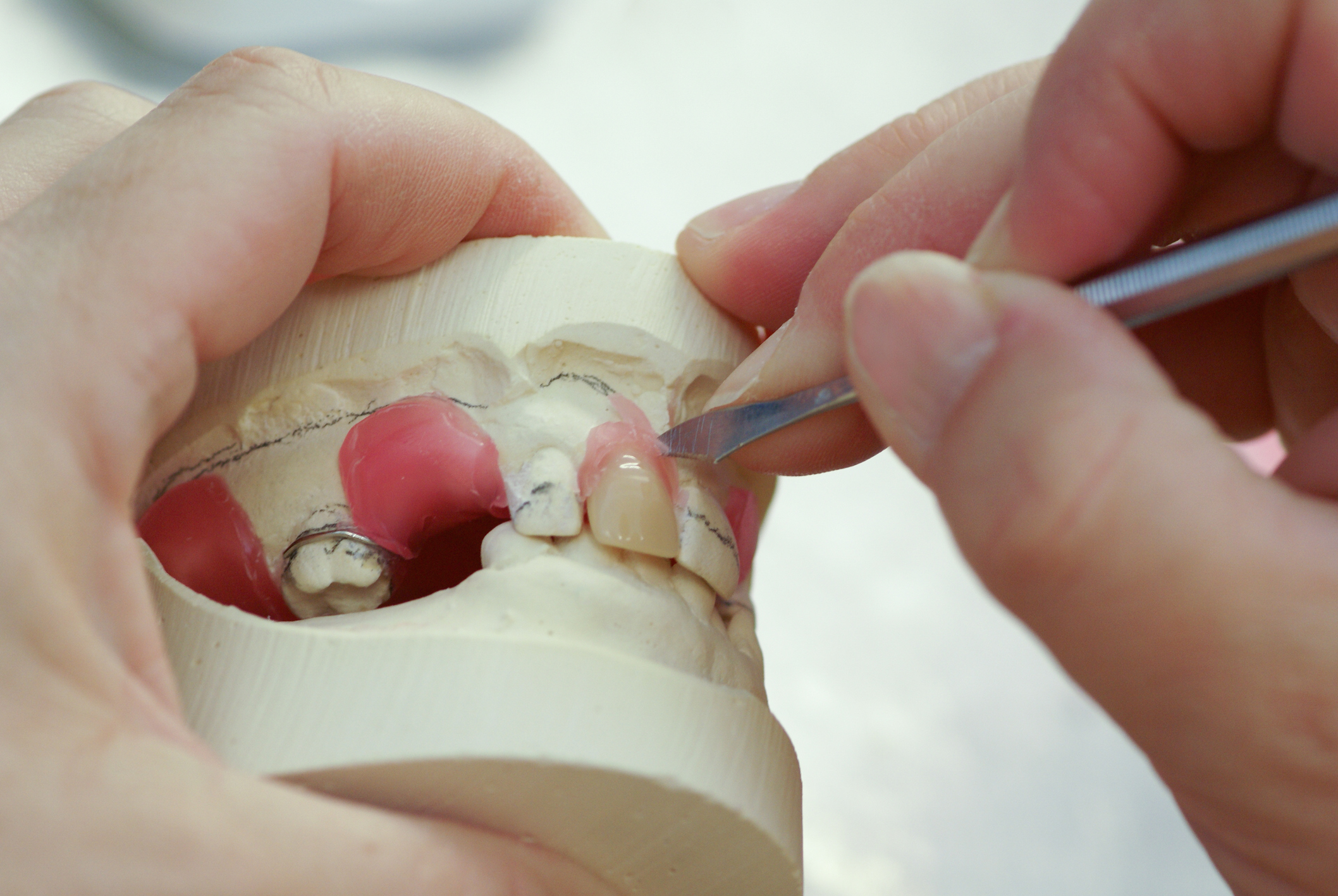
Acrylic Resins: The Versatile and Popular Option
Acrylic resins, the same material used for denture bases, are also widely used for the artificial teeth themselves, especially in complete dentures and many partial dentures.
- Cost-Effectiveness: Acrylic teeth are significantly less expensive to produce than porcelain teeth, making them a more budget-friendly option.
- Impact Resistance: Unlike porcelain, acrylic teeth are much more resistant to chipping and fracture. They have a degree of flexibility that allows them to withstand the forces of mastication without breaking.
- Ease of Bonding: Acrylic teeth bond well to acrylic denture bases, simplifying the fabrication process.
- Natural Feel and Sound: The sound produced when acrylic teeth occlude (meet during chewing) is often more natural-sounding than that of porcelain. They also have a slightly softer feel, which can be more comfortable for the patient.
The primary disadvantage of acrylic teeth is their tendency to wear down over time. This means that dentures with acrylic teeth may require adjustments or replacement more frequently than those with porcelain teeth, as the chewing surfaces can become flattened and less effective. They can also be more prone to staining than porcelain.
Composite Materials: Bridging the Gap
Composite materials, a blend of acrylic resin and ceramic or glass fillers, offer a middle ground between pure acrylic and porcelain.
- Improved Wear Resistance: The addition of fillers enhances the wear resistance of composite teeth compared to pure acrylic, making them more durable.
- Good Aesthetics: Composites can achieve a good level of translucency and color matching, offering pleasing aesthetic results.
- Bonding Strength: They bond well to acrylic bases and can offer good resistance to fracture.
While offering advantages, composite teeth may not always match the extreme aesthetics of high-grade porcelain, and their wear resistance, while improved, may still be less than that of porcelain.
Advanced Materials and Technologies: The Future of False Teeth
The field of dental prosthetics is continually evolving, with ongoing research focused on developing even more advanced materials and utilizing cutting-edge technologies to create false teeth that are stronger, more aesthetically pleasing, and more integrated with the patient’s natural anatomy.
Zirconia: The High-Strength Ceramic Revolution
Zirconium dioxide, commonly known as zirconia, has emerged as a transformative material in restorative dentistry, particularly for dental implants and crowns, but also increasingly for artificial teeth.
- Exceptional Strength and Durability: Zirconia is incredibly strong and resistant to fracture, making it an ideal material for applications requiring high mechanical loads. This surpasses the strength of traditional porcelain and even many metals.
- Biocompatibility: Zirconia is highly biocompatible, with a very low risk of allergic reactions or rejection by the body. This makes it an excellent choice for implants and restorations that are in close contact with bone and soft tissues.
- Aesthetic Versatility: While early zirconia was opaque, advancements have led to the development of translucent zirconia blocks that can be layered with porcelain or stained to achieve highly natural-looking aesthetics, rivaling even the best porcelain.
- Computer-Aided Design/Computer-Aided Manufacturing (CAD/CAM): Zirconia’s properties make it ideally suited for CAD/CAM technology. This digital workflow allows for precise design and milling of highly accurate prosthetic components from a solid block of zirconia, ensuring a perfect fit.
Zirconia is most commonly used for the abutments and frameworks of bridges and implants, and increasingly for full-contour crowns. While its strength is a major advantage, its opacity in its purest form necessitates careful layering with porcelain for optimal aesthetics in certain applications.
Titanium and its Alloys: The Backbone of Dental Implants
While not directly used for the visible “teeth” in the same way as acrylic or porcelain, titanium is the foundational material for the most advanced form of tooth replacement: dental implants.
- Osseointegration: The remarkable property of titanium is its ability to osseointegrate – to fuse directly with the jawbone. This provides a stable and permanent foundation for prosthetic teeth.
- Biocompatibility: Titanium is exceptionally biocompatible, meaning it is not recognized as foreign by the body and does not elicit an adverse immune response.
- Corrosion Resistance: It is highly resistant to corrosion in the oral environment.
- Strength and Durability: Titanium alloys are strong and durable, capable of withstanding the forces of chewing.
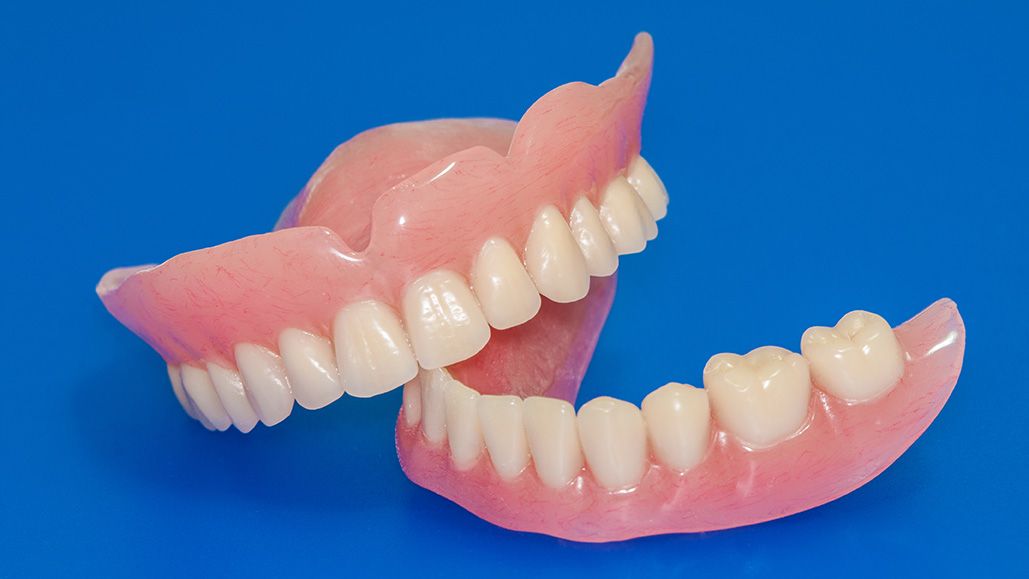
A dental implant consists of a titanium screw that is surgically placed into the jawbone. Once osseointegration has occurred, an abutment is attached to the implant, and this serves as the connector for the prosthetic crown, bridge, or denture.
The Role of 3D Printing and Digital Dentistry
The integration of digital technologies has profoundly impacted the fabrication of dental prosthetics.
- Digital Impressions: Instead of traditional messy alginate impressions, dentists now use intraoral scanners to capture highly accurate 3D digital models of a patient’s mouth.
- CAD/CAM: These digital models are then used in CAD software to design the prosthetic. The design can then be milled from various materials (including zirconia, ceramics, and wax for casting) or, increasingly, 3D printed.
- 3D Printing: Additive manufacturing, or 3D printing, is revolutionizing the creation of dental models, surgical guides, and even some components of dentures and temporary restorations. This allows for greater customization and faster turnaround times. Materials used in 3D printing for dentistry include specialized resins and biocompatible polymers.
The continuous advancements in material science, coupled with sophisticated digital manufacturing processes, are steadily improving the efficacy, comfort, and aesthetic appeal of false teeth, offering individuals new possibilities for restoring their smiles and oral health.
aViewFromTheCave is a participant in the Amazon Services LLC Associates Program, an affiliate advertising program designed to provide a means for sites to earn advertising fees by advertising and linking to Amazon.com. Amazon, the Amazon logo, AmazonSupply, and the AmazonSupply logo are trademarks of Amazon.com, Inc. or its affiliates. As an Amazon Associate we earn affiliate commissions from qualifying purchases.