
The term “char” is a fundamental concept in computer science and programming, representing the smallest unit of data that a computer can process and store: a single character. While seemingly simple, understanding characters and their various representations is crucial for anyone working with data, text, or code. In the realm of technology, “chars” form the building blocks of everything from the words on your screen to the intricate instructions that power complex software.
The Fundamental Nature of Characters in Computing
At its core, a computer understands only binary – sequences of 0s and 1s. Characters, as humans perceive them, must be translated into this binary format for a computer to process. This translation process is managed through encoding schemes, which assign a unique numerical value to each character. This seemingly straightforward mapping is the bedrock upon which all digital communication and data manipulation is built.
From Abstract Concepts to Binary Representations
Imagine the vast array of characters we use daily: letters (uppercase and lowercase), numbers, punctuation marks, symbols, and even control characters that dictate formatting or actions. Each of these needs a distinct numerical representation. Early computing systems developed rudimentary encoding schemes, but the need for standardization and the ever-increasing complexity of languages and symbols led to the evolution of more robust and comprehensive standards.
The process begins with the human-readable character. When you type the letter “A,” your keyboard sends a signal to the computer. This signal is then interpreted by the operating system and application, which consult an encoding table to find the corresponding numerical value for “A.” This numerical value, typically an integer, is then further represented in binary form – a string of 0s and 1s. This binary sequence is what the computer actually stores and manipulates.
Encoding Standards: The Rosetta Stone of Digital Text
The critical component in this translation process is the character encoding standard. Without a standardized way to map characters to numbers, different computers and software would interpret the same binary data differently, leading to garbled text or incorrect data. Several encoding standards have emerged over time, each with its strengths and limitations.
ASCII: The Pioneer of Character Encoding
The American Standard Code for Information Interchange (ASCII) was one of the earliest and most influential character encoding standards. Developed in the early 1960s, ASCII uses 7 bits to represent 128 characters, including uppercase and lowercase English letters, numbers 0-9, basic punctuation, and control characters. This limited character set made it ideal for early computing systems and English-centric applications. However, its inability to represent characters from other languages or a wider range of symbols quickly became a significant limitation.
A common extension, Extended ASCII, uses 8 bits (a byte) to represent 256 characters. This allowed for the inclusion of additional characters, such as accented letters and some graphic symbols, but it was still not a universal solution for global character representation. The fundamental issue with ASCII and its extensions was their reliance on a fixed, limited character set, which struggled to keep pace with the growing diversity of human languages and the need for more symbols.
Unicode: The Universal Language of Characters
To address the limitations of ASCII and its derivatives, the Unicode standard was developed. Unicode aims to provide a unique number, called a code point, for every character in every writing system, as well as for various symbols and emojis. This ambitious project has become the de facto standard for character encoding in modern computing.
Unicode’s design philosophy is to be comprehensive and inclusive. It assigns code points to characters from almost all known writing systems, including ancient scripts, mathematical symbols, and pictorial representations. The sheer scope of Unicode is staggering, encompassing hundreds of thousands of characters.
Character Encoding Formats: Bringing Unicode to Life
While Unicode defines the code points, it doesn’t dictate how these code points are stored in memory or transmitted as data. This is where character encoding formats come into play. These formats specify how Unicode code points are represented as sequences of bytes.
UTF-8: The Dominant Encoding for the Web
UTF-8 (Unicode Transformation Format – 8-bit) is the most widely used character encoding format on the internet and in many software applications. Its key advantage is its backward compatibility with ASCII. For characters that are part of the ASCII set, UTF-8 uses the same single-byte representation as ASCII. This means that ASCII text files can be read as UTF-8 without any modification, preserving compatibility with older systems.
For characters outside the ASCII range, UTF-8 uses a variable number of bytes, typically between two and four. This variable-length encoding is highly efficient for text that is predominantly English or uses characters that are common in many languages, as it minimizes storage space and transmission bandwidth. The efficiency and compatibility of UTF-8 have made it the dominant force in modern digital communication.
Other UTF Encodings: UTF-16 and UTF-32
While UTF-8 is the most common, other Unicode transformation formats exist. UTF-16 (Unicode Transformation Format – 16-bit) uses one or two 16-bit units to represent a code point. It is often used in systems that primarily deal with East Asian languages, where many characters require more than one byte in UTF-8. However, UTF-16 can be less efficient for predominantly English text compared to UTF-8, as even ASCII characters are represented by two bytes.
UTF-32 (Unicode Transformation Format – 32-bit) uses a fixed four-byte representation for every Unicode code point. This makes it very straightforward to work with, as the length of each character representation is constant. However, this simplicity comes at the cost of significant storage and bandwidth overhead, especially for text that doesn’t require the full range of Unicode characters. As a result, UTF-32 is rarely used for general-purpose text storage or transmission.
The “char” Data Type in Programming Languages
In programming, the term “char” often refers to a specific data type designed to hold a single character. This data type is a fundamental element in many programming languages, enabling developers to manipulate textual information. While the underlying representation of a character in memory will adhere to one of the aforementioned encoding standards, the “char” data type provides a convenient and abstract way to work with individual characters.
Primitive “char” Types
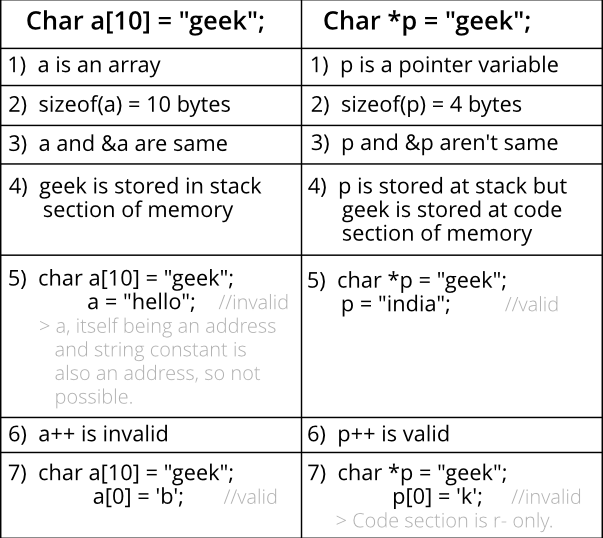
Many programming languages, such as C, C++, and Java, have a primitive char data type. This type is typically designed to hold a single character, and its size and internal representation can vary slightly between languages.
In C and C++, a char is usually an 8-bit integer type. It can be signed or unsigned, depending on the compiler and system architecture. This means it can hold values ranging from -128 to 127 (signed) or 0 to 255 (unsigned). This aligns with the byte-based nature of many early character encodings like Extended ASCII. When working with standard ASCII characters, a char in C/C++ can directly store their numerical representation.
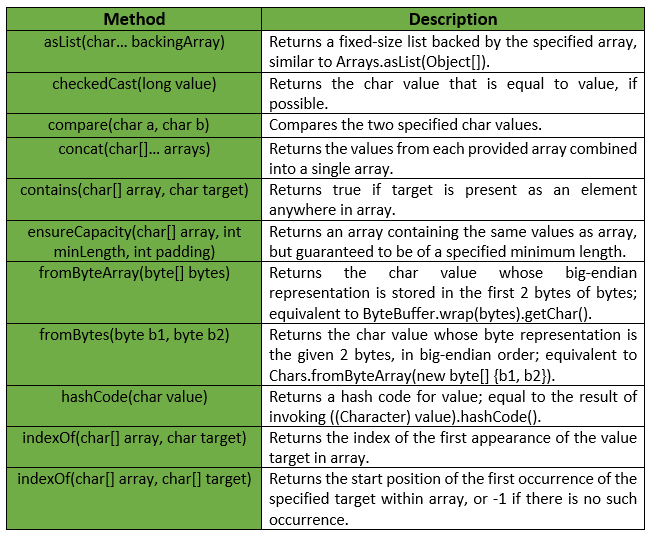
Java’s char data type is different. It is a 16-bit unsigned integer that uses the UTF-16 encoding. This means that a Java char can directly represent any Unicode character within the Basic Multilingual Plane (BMP), which covers the most commonly used characters. For characters outside the BMP (supplementary characters), Java uses surrogate pairs, where two char values are needed to represent a single character. This design choice reflects Java’s early commitment to Unicode support.
Working with “char” in Code
The char data type simplifies operations involving individual characters. For example, you can:
- Assign characters: You can assign a character literal (e.g.,
'a','5','$') to acharvariable. - Perform arithmetic: Since characters are represented by numerical values, you can perform arithmetic operations on them. For instance, incrementing a
charvariable holding'a'might result in'b'. This is particularly useful for iterating through sequences of characters. - Compare characters: You can compare characters using standard comparison operators (
<,>,==,!=). This allows you to check alphabetical order or equality. - Convert to and from integers: You can explicitly cast a
charto an integer to get its numerical representation, or cast an integer to acharto create a character from its numerical value, provided the value is within the valid range for the character type and encoding.
These operations are fundamental for tasks like parsing input strings, manipulating text, building lookup tables, and implementing algorithms that process characters. The char data type provides a convenient abstraction layer that shields programmers from the complexities of raw binary encoding when dealing with individual characters.
The Ubiquitous Role of Characters in Data Representation
Beyond programming languages, characters are the fundamental units of data in countless technological applications. From plain text files to complex data structures, characters are how we encode and interpret information. Understanding their nature is essential for comprehending how data is stored, transmitted, and processed.
Text Files and String Data
The most obvious application of characters is in text files and string data. Whether it’s a simple .txt document, a configuration file, a script, or a message sent over a network, all this information is composed of sequences of characters. The encoding used to store these characters directly impacts how the file or data is interpreted by different systems. Mismatched encodings are a common source of “mojibake,” where text appears as a jumble of seemingly random characters.
For instance, if a file saved using UTF-8 encoding is opened by a program that expects Latin-1 encoding, characters outside the Latin-1 range will be displayed incorrectly. This highlights the importance of knowing and specifying the correct character encoding when creating, sharing, or processing text-based data.
Database Storage and Retrieval
Databases, the backbone of many applications, store vast amounts of textual data. When you store names, addresses, product descriptions, or any other text in a database, characters are being stored. The way these characters are encoded and the database’s understanding of character sets and collations are critical for accurate searching, sorting, and retrieval of this data.
Databases often support multiple character sets, allowing users to choose the most appropriate encoding for their data. Proper configuration ensures that characters from different languages are stored and retrieved correctly, maintaining data integrity across diverse user bases.
User Interfaces and Human-Computer Interaction
Characters are the primary means of communication between humans and computers through graphical user interfaces (GUIs) and command-line interfaces (CLIs). Text labels, input fields, error messages, and menu options are all rendered using characters. The ability to display a wide range of characters and symbols, including emojis, is crucial for creating user-friendly and globally accessible applications.
The rendering of text on screen is a complex process that involves fonts, character mappings, and display protocols. Ultimately, it all relies on the computer’s ability to correctly interpret and display the underlying character encodings.
Network Protocols and Data Transmission
When data is transmitted over networks, whether it’s sending an email, browsing a website, or making an API call, characters are involved. Network protocols often define how textual data should be encoded and transmitted. For example, web pages are typically transmitted using UTF-8 encoding, enabling seamless display of content across different regions and languages.
Ensuring consistent character encoding across the entire communication chain – from the sender to the receiver, including any intermediate servers – is vital to prevent data corruption and misinterpretation.
The Future of Characters in a Globalized Digital World
As the world becomes increasingly interconnected, the importance of robust and inclusive character representation will only grow. The evolution from limited ASCII to the comprehensive Unicode standard reflects this trend, and the ongoing development of encoding formats like UTF-8 continues to address the demands of a globalized digital landscape.
Internationalization and Localization
The ability to support characters from all languages is essential for internationalization (designing products to be adaptable to different languages and regions) and localization (adapting products for specific locales). Unicode, by providing a universal character set, is the cornerstone of these efforts. It allows applications to be designed once and then adapted for various markets without fundamentally altering their core text handling mechanisms.
The development of new characters, symbols, and emojis continues to expand the expressive power of digital communication. The Unicode Consortium regularly updates its standard to incorporate new characters, ensuring that it remains a living and evolving system that keeps pace with human communication needs.

Challenges and Emerging Trends
Despite the advancements, challenges remain. Ensuring that legacy systems can correctly interpret modern encodings, managing large character sets efficiently, and dealing with potential security vulnerabilities related to malformed character sequences are ongoing concerns.
Emerging trends in AI and natural language processing (NLP) further underscore the significance of characters. These technologies rely heavily on the accurate understanding and manipulation of text, making the underlying character representations and encodings critical components of their success. The ability to process and generate text across a multitude of languages is a key goal for AI, and this is only possible with a solid foundation in character encoding.
In conclusion, “chars” are far more than just letters and numbers on a screen. They are the fundamental units of information that power our digital world. From the earliest days of computing to the sophisticated systems of today, understanding the nature of characters, their encoding, and their representation in programming languages is a vital skill for anyone navigating the ever-expanding landscape of technology.
aViewFromTheCave is a participant in the Amazon Services LLC Associates Program, an affiliate advertising program designed to provide a means for sites to earn advertising fees by advertising and linking to Amazon.com. Amazon, the Amazon logo, AmazonSupply, and the AmazonSupply logo are trademarks of Amazon.com, Inc. or its affiliates. As an Amazon Associate we earn affiliate commissions from qualifying purchases.