
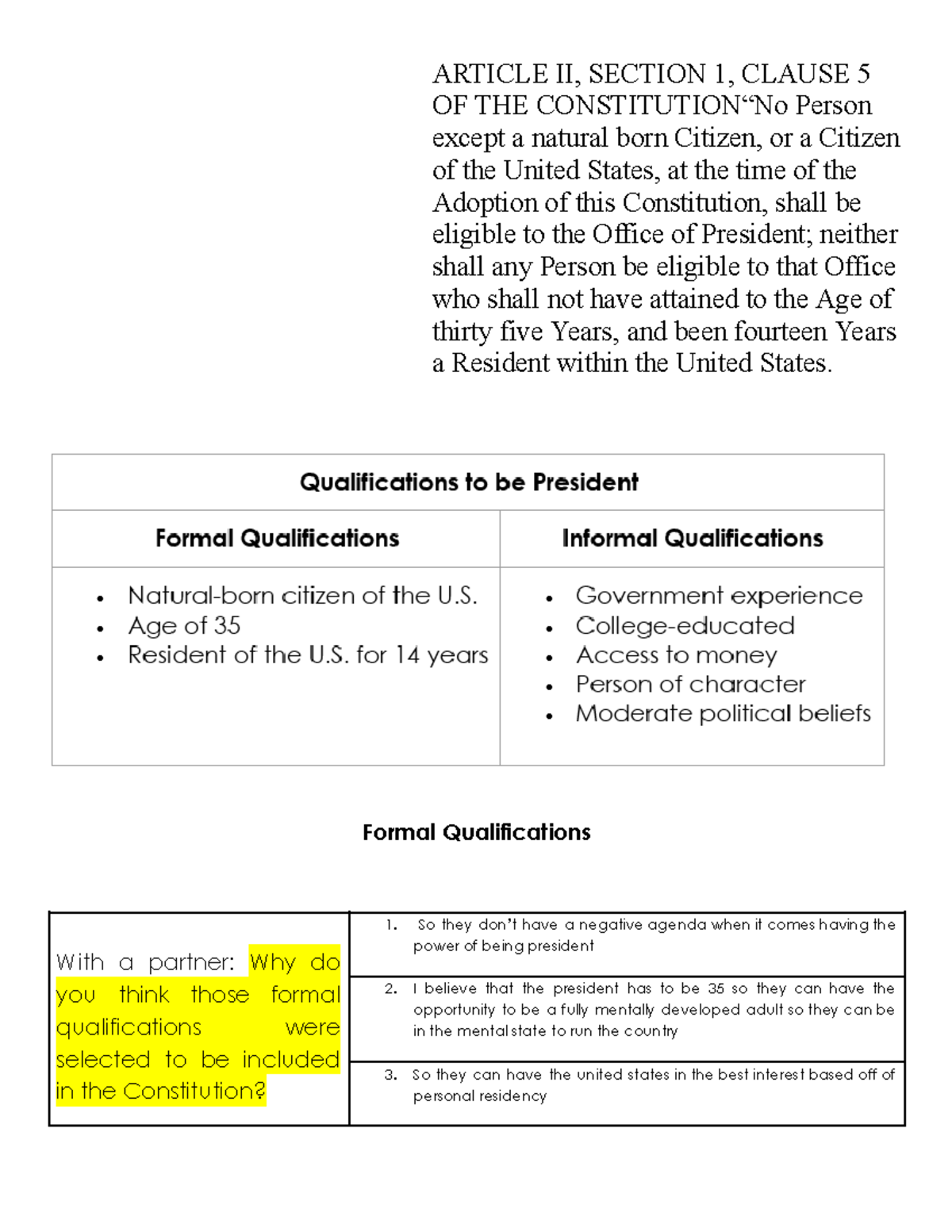
The United States presidency is arguably the most powerful and demanding office in the world. While the U.S. Constitution clearly outlines the formal, legal requirements for assuming the presidency – being a natural-born citizen, at least 35 years old, and a resident of the United States for at least 14 years – these qualifications are merely the entry ticket. The true journey to the Oval Office, and indeed the effective execution of its duties, is paved with a set of informal qualifications that often go unnoticed but are undeniably crucial. These are the intangible assets, the honed skills, and the deeply ingrained character traits that enable a candidate to connect with voters, navigate complex political landscapes, and ultimately lead a nation.
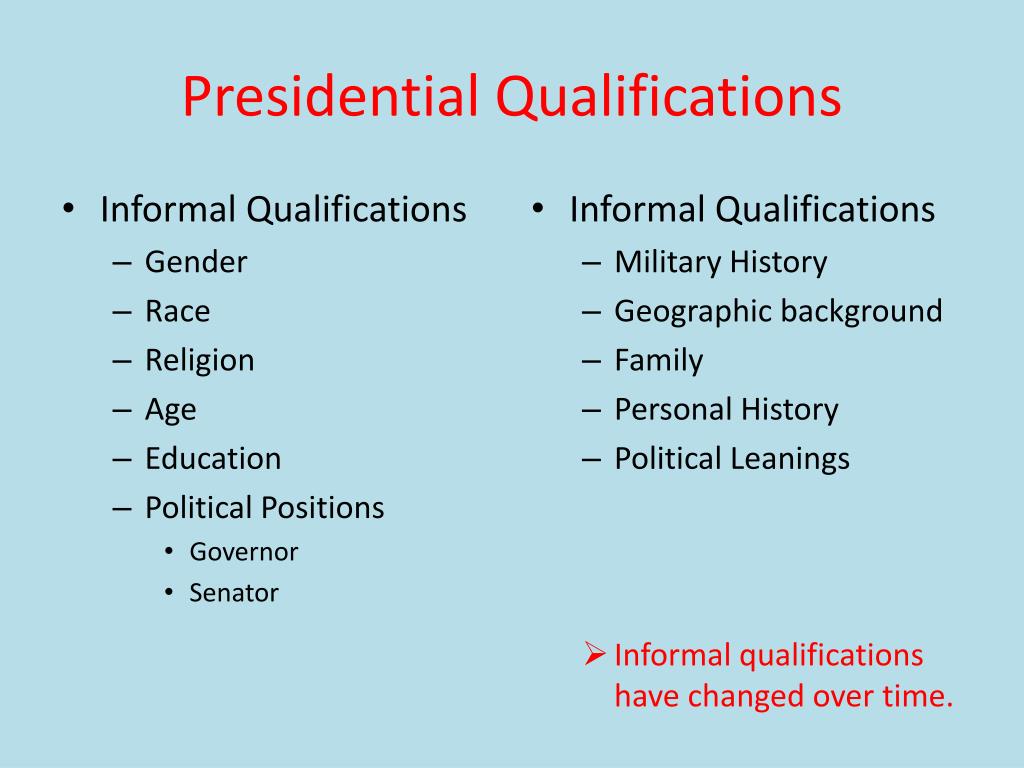
This exploration will delve into five such informal qualifications, focusing on the critical role of Brand in shaping a presidential candidate’s perception and success. In the modern political arena, a candidate’s personal brand is not just an accessory; it’s a fundamental component of their campaign strategy, their communication effectiveness, and their ability to forge a compelling narrative that resonates with the electorate.
1. A Coherent and Compelling Personal Brand Narrative
In the realm of politics, a personal brand is far more than just a catchy slogan or a well-designed logo. It’s the carefully constructed, overarching story that defines a candidate, encapsulates their values, their vision, and their perceived ability to lead. This narrative must be consistent, authentic, and resonate deeply with the aspirations and anxieties of the electorate. It’s about crafting an identity that voters can connect with, trust, and ultimately believe in.
Crafting a Distinctive Political Identity
The first step in building a compelling personal brand narrative is establishing a distinctive political identity. This involves understanding who the candidate truly is, what they stand for, and what unique perspective they bring to the political stage. It’s about moving beyond generic policy positions and articulating a clear set of core beliefs that form the bedrock of their platform. This identity needs to be authentic, as perceived inauthenticity can be a fatal blow to any political campaign. Voters are increasingly savvy and can detect when a candidate is merely performing or pandering. Therefore, the brand must be rooted in genuine conviction.
Communicating a Vision for the Future
A powerful personal brand is inextricably linked to a compelling vision for the future. A presidential candidate must articulate not just what they will do, but why it matters and what kind of nation they aspire to build. This vision should be optimistic, aspirational, and offer concrete solutions to the challenges facing the country. It’s about painting a picture of a better tomorrow that voters can eagerly embrace. This requires foresight, an understanding of societal trends, and the ability to inspire hope and confidence. The brand narrative should clearly communicate this future, making it tangible and relatable for diverse segments of the population.
Establishing Authenticity and Trust
In an era of information overload and increasing public skepticism, authenticity is paramount. A candidate’s personal brand must be perceived as genuine and trustworthy. This means aligning their words with their actions, demonstrating transparency, and exhibiting vulnerability where appropriate. Voters are looking for leaders they can believe in, individuals who are not afraid to be themselves and who have a track record that supports their claims. Building trust is a long-term endeavor, and a consistent, honest brand narrative is the foundation upon which that trust is built. Any perceived deception or inconsistency can quickly erode this crucial element of their brand.
2. Masterful Communication and Storytelling
Beyond a well-defined brand, the ability to communicate that brand effectively is paramount. This involves not just eloquent speeches but a nuanced understanding of how to connect with diverse audiences through various channels. Storytelling, in particular, has emerged as a potent tool in a candidate’s arsenal, allowing them to convey complex ideas and evoke emotional responses that foster deeper engagement.
Articulating Complex Ideas Simply and Persuasively
The presidency involves grappling with incredibly complex issues, from economic policy to international relations. A presidential candidate must possess the informal qualification of being able to distill these complexities into clear, understandable, and persuasive language. This isn’t about dumbing down the issues, but about translating them into a form that resonates with the average voter. This requires exceptional rhetorical skills, an understanding of audience, and the ability to frame arguments in a way that highlights their relevance and benefits. A candidate who can explain intricate policy proposals with clarity and conviction is far more likely to gain public support.
Engaging Diverse Audiences Through Multiple Channels
In today’s fragmented media landscape, reaching and engaging diverse audiences is a significant challenge. A strong candidate understands that communication is not a one-size-fits-all endeavor. They must be adept at tailoring their message and delivery to different demographics, political leanings, and cultural backgrounds. This involves mastering not only traditional platforms like television and radio but also increasingly important digital channels like social media, podcasts, and online forums. The personal brand needs to be adaptable and accessible across these varied touchpoints, ensuring consistent messaging while resonating with specific groups.
The Power of Narrative in Political Discourse
Storytelling is a fundamental human activity, and in politics, it can be an incredibly powerful tool for persuasion and connection. A candidate who can weave compelling narratives around their life experiences, their policy proposals, or their vision for the nation can create an emotional resonance that transcends dry policy debates. These stories help voters understand the “why” behind a candidate’s actions and beliefs, making them more relatable and memorable. A well-told story can humanize a candidate, foster empathy, and build a stronger connection with the electorate, ultimately solidifying their brand in the minds of voters.
3. The Ability to Build and Mobilize Coalitions
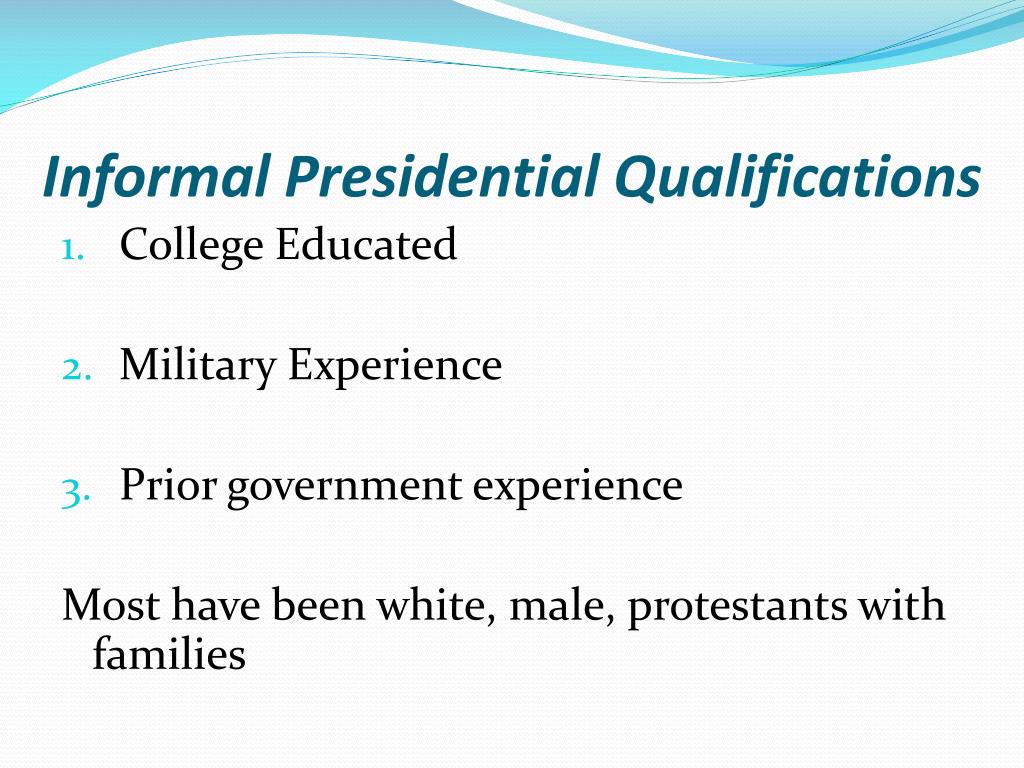
No president governs in a vacuum. The ability to build and mobilize coalitions, both within their own party and across the political spectrum, is an informal qualification that directly impacts their effectiveness and the success of their agenda. This involves understanding diverse interests, finding common ground, and forging alliances that can achieve shared goals.
Navigating the Political Spectrum and Finding Common Ground
A successful presidential candidate doesn’t operate solely within their own ideological bubble. They must possess the skill to navigate the broader political spectrum, identifying potential allies and understanding the concerns of those with differing viewpoints. This requires empathy, a willingness to listen, and the strategic acumen to find areas of common ground, even amidst significant ideological divides. The personal brand must project an image of someone who can unite, rather than divide, and who is willing to engage in productive dialogue.
Forging Alliances and Securing Support
The legislative process and the effective implementation of policy rely heavily on the ability to forge alliances and secure support from various stakeholders. This includes not only fellow politicians but also interest groups, community leaders, and the general public. A candidate with a strong personal brand that emphasizes collaboration and a commitment to serving the broader good is more likely to attract support. This informal qualification is about demonstrating a capacity for leadership that transcends partisan lines and focuses on achieving national objectives.
Mobilizing a Diverse Electorate
Beyond the immediate political arena, a presidential candidate must be able to mobilize a diverse electorate to vote for them. This involves understanding the unique motivations and concerns of different demographic groups and crafting messages that resonate with each. The personal brand needs to be inclusive and speak to the aspirations of a broad cross-section of society. Effective mobilization goes beyond simply asking for votes; it involves inspiring engagement, fostering a sense of shared purpose, and creating a movement that can translate into electoral success.
4. Resilience and Adaptability Under Pressure
The presidency is a crucible, a position that exposes its occupant to relentless scrutiny, unexpected crises, and immense pressure. The informal qualification of resilience and adaptability is therefore not just beneficial but essential for survival and effective leadership. A candidate’s brand must convey a sense of strength and stability, even in the face of adversity.
Navigating Scrutiny and Public Criticism
Presidential candidates and, subsequently, presidents face an unprecedented level of public scrutiny. Every decision, every statement, and even personal aspects of their lives are subject to intense examination and often harsh criticism. A strong informal qualification is the ability to withstand this pressure, to remain focused on their objectives without being derailed by negativity. Their personal brand must project an image of someone who is not easily rattled, who can absorb criticism and use it as a learning opportunity rather than a debilitating blow.
Responding Effectively to Crises and Unexpected Challenges
The political landscape is inherently unpredictable. Crises, from economic downturns to international conflicts, can emerge with little warning, demanding swift and decisive action. A presidential candidate must demonstrate an informal capacity for leadership in such moments. Their brand should communicate a sense of preparedness, strategic thinking, and the ability to remain calm and collected when faced with unexpected challenges. The ability to adapt their strategy and messaging in response to evolving circumstances is a hallmark of strong leadership and a vital component of their overall brand perception.
Maintaining Composure and Strategic Focus
In the heat of a campaign or the demands of the presidency, it can be easy to lose sight of long-term goals. A crucial informal qualification is the ability to maintain composure and strategic focus amidst the chaos. This means not getting bogged down in minor skirmishes or reacting emotionally to every provocation. The candidate’s brand should embody a sense of measured confidence and a clear understanding of their ultimate objectives. This mental fortitude is what allows them to execute their vision and lead effectively, demonstrating to the public that they are capable of handling the immense responsibilities of the office.
5. A Commitment to Public Service and a Strong Ethical Compass
Ultimately, the most enduring informal qualification for any president is a genuine commitment to public service, underpinned by a strong ethical compass. While political maneuvering and strategic brand building are important, they must be anchored in a deep-seated desire to serve the nation and a commitment to the highest ethical standards. This commitment forms the bedrock of a trustworthy and respected political brand.
Demonstrating a Genuine Desire to Serve the Public Good
The public is often skeptical of politicians, assuming self-interest often guides their actions. A presidential candidate who can demonstrably convey a genuine desire to serve the public good, rather than personal ambition, builds a more powerful and respected brand. This involves articulating a vision that prioritizes the well-being of the nation and its citizens above all else. Their past actions, their policy proposals, and their public discourse should all consistently reflect this commitment, solidifying their brand as one of selfless dedication.
Upholding High Ethical Standards and Integrity
Integrity is the cornerstone of any effective leader’s brand. A presidential candidate must demonstrate an unwavering commitment to ethical conduct. This means being transparent, honest, and accountable in all their dealings. Any perceived lapse in ethical standards can quickly tarnish a carefully crafted brand and erode public trust. The informal qualification here is about embodying a moral authority that inspires confidence and reassures voters that they are placing their trust in a leader of unimpeachable character. This ethical foundation is what allows a brand to endure and remain respected through the inevitable challenges of leadership.
The Enduring Power of a Principled Brand
In the long arc of history, presidents are often remembered not just for their policies or their charisma, but for their character and their commitment to principles. A personal brand that is built on a foundation of genuine public service and strong ethical standards possesses an enduring power that transcends the immediate political cycle. It is this principled brand that fosters lasting respect, inspires future generations, and ultimately defines the legacy of a president. It is the intangible yet invaluable asset that allows a candidate to not only win an election but to govern with wisdom and integrity.
aViewFromTheCave is a participant in the Amazon Services LLC Associates Program, an affiliate advertising program designed to provide a means for sites to earn advertising fees by advertising and linking to Amazon.com. Amazon, the Amazon logo, AmazonSupply, and the AmazonSupply logo are trademarks of Amazon.com, Inc. or its affiliates. As an Amazon Associate we earn affiliate commissions from qualifying purchases.