
The question of what Pokémon was the very first designed and conceptualized is one that sparks fervent debate among fans and holds a peculiar fascination for those who trace the origins of popular culture. While the answer might seem straightforward, delving into the creation of these iconic creatures reveals a complex and fascinating process of game design, artistic evolution, and eventual branding that laid the groundwork for a global phenomenon. To truly understand which Pokémon holds the title of “first,” we must look beyond the in-game roster and examine the earliest stages of development at Game Freak, the company responsible for bringing the Pokémon world to life. This exploration will navigate through the initial ideas, the evolution of character design, and the pivotal decisions that shaped the very first Pokémon, ultimately contributing to the immense success of the brand.

The Genesis of Pokémon: From Concept to Creature
The genesis of Pokémon wasn’t a singular “aha!” moment for one specific creature. Instead, it emerged from a broader concept conceived by Satoshi Tajiri, the founder of Game Freak. His childhood hobby of insect collecting, coupled with his fascination for the burgeoning world of video games, coalesced into an idea for a game that involved capturing, training, and battling creatures. This core concept, originally pitched as “Capsule Monsters,” was the true beginning, predating any specific Pokémon design.
Satoshi Tajiri’s Vision: Capsule Monsters
The initial idea for what would become Pokémon was far simpler than the expansive world we know today. Tajiri envisioned a game where players would collect small monsters, housed in Poké Balls, and use them in strategic battles. This early iteration focused on the collection and battling mechanics, with the creatures themselves being more abstract representations of the idea rather than fully fleshed-out characters. The name “Capsule Monsters” reflected this early stage, emphasizing the portable nature of the creatures.
The Influence of Early Game Design and Technology
The technological limitations of the Game Boy at the time significantly influenced the early design choices. The monochromatic display and limited processing power meant that character designs had to be relatively simple and distinct. This constraint, however, also fostered creativity, pushing designers to develop memorable silhouettes and unique visual cues that could be easily recognized. The concept of “linking” Game Boys to trade and battle creatures, a revolutionary feature for its time, was also integral to Tajiri’s vision, directly influencing the need for a diverse and collectible set of creatures. The very idea of creature evolution, a cornerstone of the Pokémon experience, likely stemmed from observing natural processes of growth and transformation, mirroring the biological world that inspired Tajiri.
Early Prototypes and Conceptual Sketches
While no definitive “first sketch” of a specific Pokémon has been publicly released in the way one might expect for a singular, groundbreaking invention, the development process involved numerous conceptual sketches and brainstorming sessions. Game Freak’s team, including artists like Ken Sugimori, would have explored a wide range of creature ideas. These early explorations were less about producing a final design and more about establishing the aesthetic and thematic direction of the game. It’s likely that during this period, various creature archetypes and potential evolutionary lines were being considered. The focus was on creating a diverse ecosystem of creatures that would appeal to players and offer a rich gameplay experience. This iterative process of conceptualization and refinement is crucial to understanding how any individual Pokémon eventually came to be.
The Birth of Rhydon: A Contender for the First Designed Pokémon
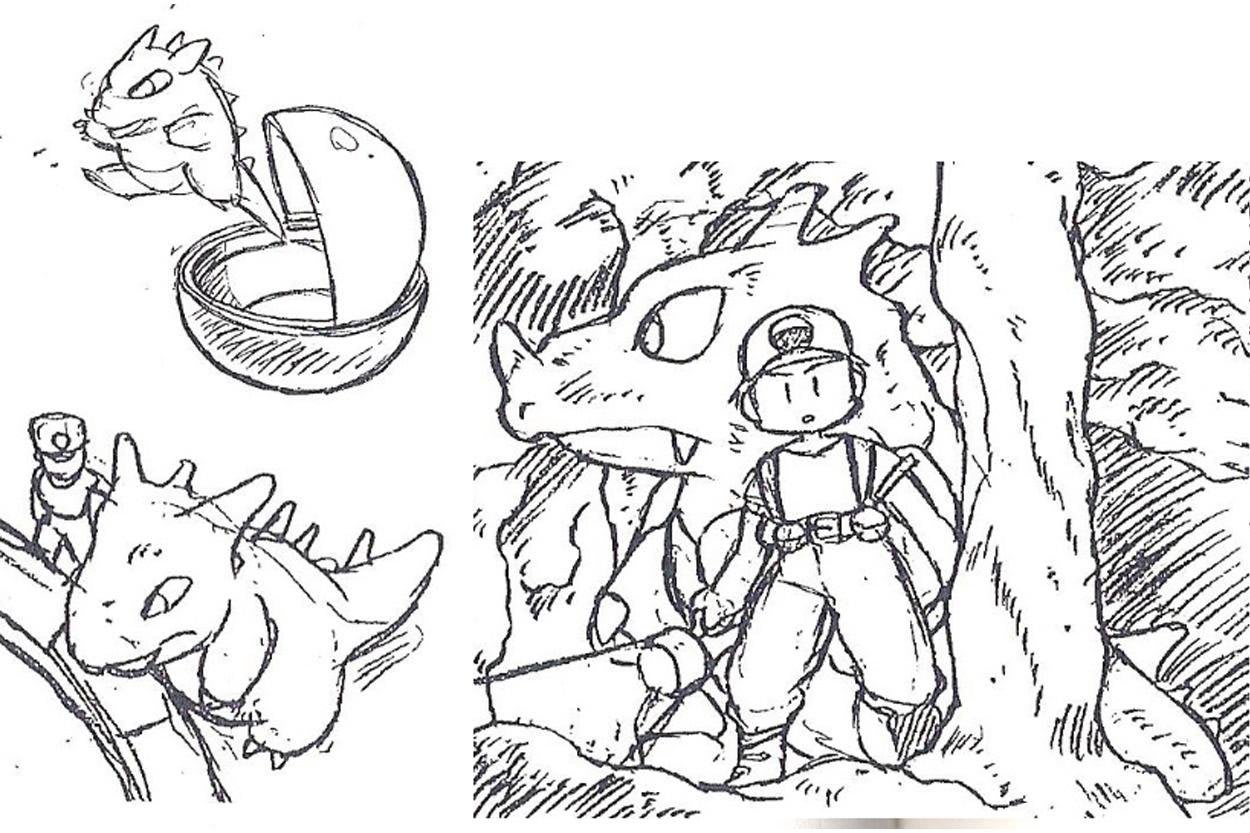
While the idea of Pokémon predates any specific creature, the question of which Pokémon was the first designed often points to Rhydon. This hulking, dinosaur-like Pokémon, with its sturdy build and imposing presence, is frequently cited as the earliest fully realized character design to emerge from Game Freak’s development process. Its inclusion in the initial game sprite sheets and its foundational role in the early game development provide strong evidence for its claim to this honorary title.
Ken Sugimori’s Role in Early Design
Ken Sugimori, the lead artist for Pokémon, is widely recognized for his pivotal role in shaping the visual identity of the franchise. His artistic vision and ability to translate abstract concepts into memorable character designs were instrumental in bringing the world of Pokémon to life. While many artists contributed to the vast Pokédex, Sugimori’s early work on the foundational creatures is particularly significant. He was tasked with creating a diverse array of monsters that were not only visually appealing but also functionally distinct within the game’s mechanics.
Rhydon’s Design: Form Follows Function
Rhydon’s design is often described as one of the earliest to be fully fleshed out. Its robust physique and prominent horn suggest a creature built for combat and perhaps even excavation, aligning with early concepts of powerful, territorial beasts. The design is relatively simple yet iconic, featuring a strong silhouette that would translate well to the limited graphical capabilities of the Game Boy. Its evolutionary line, starting from Rhyhorn, further emphasizes its foundational nature, suggesting it was one of the initial building blocks for the evolutionary mechanics that would become synonymous with Pokémon. The visual cues of Rhydon – its reptilian features, its horn, its tail – all contribute to a strong, memorable presence that would have been crucial for establishing the visual identity of the game’s monsters.
Rhydon’s Prominence in Early Game Assets

Evidence supporting Rhydon’s claim often comes from its presence in early game assets and its placement within the original game code. It’s frequently cited as one of the first Pokémon to have its graphical sprites created, and it occupies a relatively early index number in the game’s internal data. This suggests that it was among the first to be fully realized from a design and implementation perspective. While this doesn’t negate the importance of the underlying concept, it strongly indicates that Rhydon was one of the pioneering designs that helped define the visual language of Pokémon. Its early implementation also implies that it might have been used in early testing phases of the game’s mechanics, further cementing its status as a foundational element.
The Enigmatic Absence of a Definitive “First”
Despite the strong evidence for Rhydon, the concept of a singular “first” Pokémon is inherently complex. The development process was iterative, with multiple designs likely being worked on concurrently. The “first” can be interpreted in several ways: the first conceived as an idea, the first sketched, the first fully rendered, or the first programmed into the game. This nuance often leads to debate, as different individuals and sources may focus on different stages of the creative pipeline.
Distinguishing Between Conception and Creation
It is crucial to differentiate between the conception of the Pokémon concept and the creation of individual Pokémon designs. Satoshi Tajiri’s vision for a monster-collecting game was the genesis, but this vision didn’t immediately translate into a specific creature. The subsequent design phase involved a collaborative effort to bring that vision to life, resulting in a multitude of distinct Pokémon. Therefore, while the idea of Pokémon is foundational, the first Pokémon ever made often refers to the earliest designed creature.
The Iterative Nature of Game Development
Game development is rarely a linear process. Concepts evolve, designs are revised, and functionality is tested and refined. It’s highly probable that early in the development of “Capsule Monsters” (and later, “Pokémon”), multiple creature ideas were being explored simultaneously. Some designs might have been abandoned, while others were refined and incorporated. This iterative approach means that pinpointing a single, undisputed “first” can be challenging, as there were likely several creatures in various stages of development at any given time. The idea of “first” might also be influenced by which designs were the most stable or furthest along in the implementation pipeline.
The Importance of Early Sprite Work and Data
The order in which Pokémon were assigned internal data IDs or had their graphical sprites created can be a strong indicator of their early development. These technical aspects often reflect the order in which designers and programmers tackled the creation of the creatures. While this information is not always readily available to the public, it often forms the basis for claims regarding which Pokémon was “first.” The presence of certain Pokémon in early promotional materials or in the very first playable builds of the game also lends weight to their claim as being among the earliest conceptualized and realized.
Beyond Rhydon: The Evolving Landscape of Early Pokémon
While Rhydon is a strong contender for the title of the first Pokémon designed, it’s important to acknowledge that the early development involved a broader exploration of creature types and designs. Other Pokémon also played significant roles in shaping the initial roster and establishing the core mechanics of the game. Understanding these early influences provides a richer picture of how the Pokémon universe came to be.
The Role of Bulbasaur, Charmander, and Squirtle
The starter Pokémon – Bulbasaur, Charmander, and Squirtle – are arguably the most iconic and recognizable Pokémon for many players. Their inclusion as the initial choices players make in the game has cemented their place in Pokémon history. While their exact order of design relative to Rhydon is debated, it is widely accepted that they were among the earliest creatures to be conceptualized and brought to life, as they were fundamental to the player’s initial engagement with the game. Their designs represent distinct elemental types and offer varied gameplay approaches, which would have been crucial for early player onboarding.
Early Evolutionary Lines and Their Impact
The concept of Pokémon evolution is a defining characteristic of the franchise. The early designers likely focused on creating creatures that not only looked distinct but also possessed the potential for growth and transformation. The development of early evolutionary lines, such as Caterpie evolving into Metapod and then Butterfree, or Pidgey evolving into Pidgeotto and Pidgeot, demonstrates a thoughtful approach to creature progression. These lines would have been essential for establishing the core gameplay loop of training and battling, showcasing the rewards of investing time in a Pokémon. The visual and mechanical shifts between evolutionary stages were carefully considered to provide a sense of progression and power.
The Broader Impact on the Pokémon Brand
The meticulous process of designing and developing the first generation of Pokémon laid the foundation for an unprecedented global brand. The unique personalities, distinct visual styles, and engaging gameplay mechanics of these early creatures captivated audiences and established a loyal fanbase. The success of these initial designs fueled further innovation, leading to the creation of thousands of new Pokémon and expanding the Pokémon universe across games, anime, trading cards, and merchandise. The decisions made in those early developmental stages, including the conceptualization and design of what is often considered the first Pokémon, were instrumental in forging the enduring appeal and cultural significance of the Pokémon franchise. The deliberate choices made in shaping these initial creatures were not just about creating characters for a game, but about crafting the very soul of a brand that would resonate for generations.
aViewFromTheCave is a participant in the Amazon Services LLC Associates Program, an affiliate advertising program designed to provide a means for sites to earn advertising fees by advertising and linking to Amazon.com. Amazon, the Amazon logo, AmazonSupply, and the AmazonSupply logo are trademarks of Amazon.com, Inc. or its affiliates. As an Amazon Associate we earn affiliate commissions from qualifying purchases.