
The night sky, a timeless canvas of wonder and mystery, has captivated humanity for millennia. From ancient astronomers charting constellations with the naked eye to modern scientists peering into the deepest reaches of the cosmos with sophisticated telescopes, our quest to understand what lies beyond has been a constant. In today’s digital age, this age-old fascination has been profoundly amplified and democratized by a surge of innovative technology. Gone are the days when observing celestial events required specialized equipment and years of dedicated study. Now, with a smartphone in hand and a few well-chosen applications, anyone can become an amateur astronomer, uncovering the secrets that graced the heavens just last night. This article will delve into the technological advancements that empower us to identify celestial objects, track their movements, and even anticipate future astronomical phenomena, transforming our nocturnal gazette into an interactive and informative experience.

The Digital Telescope: Leveraging Apps for Celestial Identification
The most immediate and accessible technological tools for understanding last night’s sky are the ever-growing ecosystem of mobile applications. These digital marvels have effectively put a virtual planetarium in our pockets, offering sophisticated features that were once the exclusive domain of professional observatories. They bridge the gap between casual curiosity and genuine astronomical knowledge, making the night sky less intimidating and more engaging.
Augmented Reality Sky Viewers: Overlaying the Cosmos onto Reality
Perhaps the most groundbreaking advancement in amateur astronomy apps is the integration of augmented reality (AR). By simply pointing your smartphone or tablet towards the sky, these applications utilize your device’s GPS, compass, and gyroscope to identify and label celestial objects in real-time.
How AR Apps Work: A Symphony of Sensors and Data
The magic behind these AR sky viewers lies in their sophisticated algorithms and access to vast astronomical databases. When you launch an app like SkyView, Star Walk, or Sky Guide, it begins by pinpointing your precise location and orientation. The device’s sensors then feed this data into the app, which cross-references it with a detailed three-dimensional model of the night sky. This model includes the positions of stars, planets, constellations, satellites, and even deep-sky objects like nebulae and galaxies. As you move your device, the on-screen representation of the sky shifts in perfect sync, overlaying the digital labels and artistic renditions of constellations onto the actual celestial backdrop. This intuitive interaction allows you to effortlessly discover the names of stars you’re looking at, trace the paths of planets, and understand the mythological figures represented by star patterns.
Identifying Last Night’s Brightest Lights: Planets and Prominent Stars
For anyone who stepped outside last night and noticed particularly bright, non-twinkling lights, AR sky viewer apps are invaluable for identification. Often, these are planets. For instance, if you saw a brilliant, steady light, an AR app could quickly identify it as Venus, Mars, Jupiter, or Saturn, depending on its position in the sky. The apps also highlight prominent stars like Sirius, the brightest star in the night sky, or the North Star (Polaris), which is crucial for navigation. Beyond simple identification, many apps provide detailed information about these objects, including their distance from Earth, their chemical composition, and historical or mythological significance. This transforms a fleeting glimpse into a learning opportunity, enriching the experience of stargazing.
Stargazing Databases and Ephemerides: Predicting and Understanding Celestial Movements
While AR apps provide immediate identification, other technological tools focus on deeper understanding and prediction. These often involve comprehensive databases and ephemerides – tables or data files that give the calculated positions of celestial bodies for a particular time.
Accessing Astronomical Data: From Basic Coordinates to Complex Orbits
Many stargazing apps and dedicated websites offer access to extensive astronomical databases. These databases contain information on millions of stars, thousands of galaxies, and precise orbital data for planets and other solar system bodies. This allows users to not only identify what was visible last night but also to understand why it was in that particular position. For instance, if you were curious about the trajectory of a specific planet, an app could display its orbital path around the Sun, illustrating its current phase and its future predicted positions. This level of detail transforms a passive observation into an active exploration of celestial mechanics.
Tracking Satellites and the International Space Station (ISS): Man-Made Wonders in the Sky
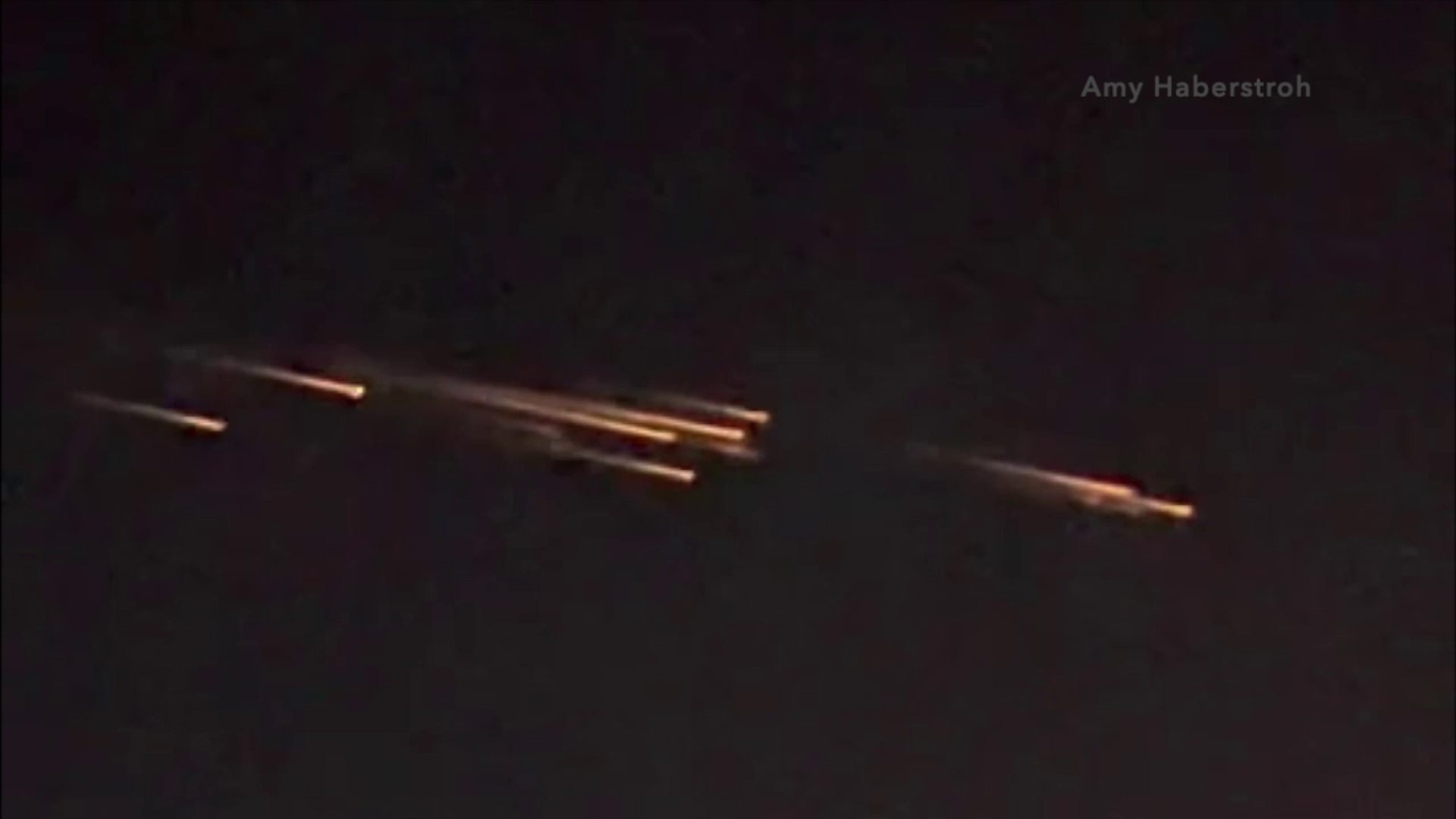
Beyond natural celestial bodies, technology also helps us track man-made objects that traverse the night sky. Satellites and the International Space Station (ISS) are often mistaken for shooting stars or unusual lights. Specialized apps and websites, such as Heavens-Above or ISS Detector, utilize orbital data to predict when and where these objects will be visible from your location. These tools can provide real-time tracking, alerts for upcoming passes, and even information about the specific satellite or the ISS. Last night, if you observed a fast-moving, steady light that didn’t twinkle, it might have been the ISS, and with the right app, you could have identified it and even learned about its current mission. This aspect of technology adds another layer of wonder, revealing the human presence amongst the stars.
Beyond the Smartphone: Dedicated Gadgets and Online Resources
While smartphone apps are incredibly powerful, the technological landscape for stargazing extends to more specialized hardware and vast online repositories of astronomical information. These tools cater to both the enthusiastic amateur and those seeking a deeper, more immersive experience.
Smart Telescopes and Go-To Mounts: Automating the Celestial Hunt
For the more serious amateur astronomer, smart telescopes and computerized Go-To mounts have revolutionized the way we observe the night sky. These devices integrate advanced electronics and software to significantly simplify the process of finding and tracking celestial objects.
The Power of Automation: Finding Faint Objects with Precision
Traditional telescopes require manual alignment and a good understanding of star charts to locate fainter objects like galaxies and nebulae. Smart telescopes and Go-To mounts automate this tedious process. After a simple initial alignment procedure (often guided by the telescope’s built-in software or a connected smartphone app), these systems can automatically slew the telescope to thousands of cataloged celestial objects with remarkable precision. Last night, if you wanted to observe a specific nebula but didn’t know its precise coordinates or how to find it, a Go-To telescope could have had it in your eyepiece within minutes, displaying it with clarity that would have been impossible to achieve manually without extensive practice.
Integrating with Apps and Databases: A Seamless Observation Workflow
The true power of smart telescopes and Go-To mounts often lies in their integration with the very apps and databases we’ve discussed. You can use your smartphone or tablet to select an object from a catalog within a stargazing app, and then send that command to the telescope. The telescope will then automatically point itself to that object, track its movement as the Earth rotates, and keep it centered in the field of view. This seamless workflow allows for extended observation periods of faint or transient celestial events without the frustration of constant manual adjustments. It’s a sophisticated fusion of digital navigation and optical magnification, making the wonders of the universe more accessible than ever before.
Online Observatories and Citizen Science Projects: Collaborative Cosmic Exploration
The internet has also fostered a sense of global community in astronomy, with online observatories and citizen science projects allowing individuals to contribute to real scientific research and access data from powerful instruments.
Remote Observation and Data Access: Bridging the Gap to Professional Instruments
While not directly answering “what was in the sky last night” for your personal observation, online observatories provide access to data and sometimes even remote observing time on professional or semi-professional telescopes. Platforms like the Virtual Telescope Project or Slooh offer live feeds from observatories around the world, allowing users to view celestial events in real-time or access archived images. This means that even if your local weather was poor last night, you could still have “seen” the phenomena through the eyes of a telescope thousands of miles away. Furthermore, many astronomical data archives are publicly accessible, allowing enthusiasts to download and analyze images or light curves of celestial objects, even those that were visible on past nights.
Citizen Science: Contributing to Astronomical Discovery
The rise of citizen science has empowered individuals to play a direct role in scientific discovery. Projects like Zooniverse, with its various astronomy-focused initiatives, invite the public to classify galaxies, identify exoplanet transits, or search for supernovae in astronomical images. While this might not directly tell you what was in your sky last night, participating in these projects contributes to our collective understanding of the universe. By analyzing data from past observations, you are helping scientists make discoveries that could shed light on cosmic phenomena, including events that might have been visible on any given night. This collaborative approach to astronomy democratizes research and turns passive stargazing into active scientific participation.
The Future of Celestial Observation: AI and Predictive Technologies
As technology continues its relentless march forward, the way we interact with and understand the night sky is poised for even more transformative changes. Artificial intelligence (AI) and advanced predictive algorithms are set to further enhance our ability to decipher the cosmos.
AI-Powered Astronomy Assistants: Intelligent Guidance and Analysis
Artificial intelligence is beginning to infiltrate the realm of amateur astronomy, offering intelligent guidance and analytical capabilities that go beyond simple object identification.
Personalized Sky Tours and Event Prediction
Imagine an AI assistant that not only identifies celestial objects but also learns your interests and preferences. Future stargazing apps could offer personalized “sky tours” based on your past observations and current astronomical events of interest. AI could also be employed to predict and highlight rare or fleeting phenomena that you might otherwise miss. For instance, an AI could analyze light curve data to predict an upcoming stellar flare or a meteor shower’s peak activity, alerting you to prime viewing times. This level of intelligent forecasting transforms passive observation into a curated, personalized cosmic experience.
Automated Image Analysis and Anomaly Detection
Beyond live viewing, AI is becoming increasingly adept at analyzing astronomical images. For those who capture their own astrophotography, AI tools could soon be used to automatically enhance image quality, identify and remove noise, and even detect anomalies or faint objects that might be difficult for the human eye to spot. This capability could elevate amateur astrophotography, allowing individuals to contribute more valuable data and uncover subtle details in the night sky that were previously inaccessible. This means that what you saw in the sky last night, and captured, could be further analyzed and understood with greater depth.
The Interconnected Cosmos: Cloud Computing and Global Astronomical Networks
The future of celestial observation will also be characterized by increasingly interconnected systems, leveraging cloud computing and global astronomical networks.
Real-Time Data Sharing and Collaborative Observation
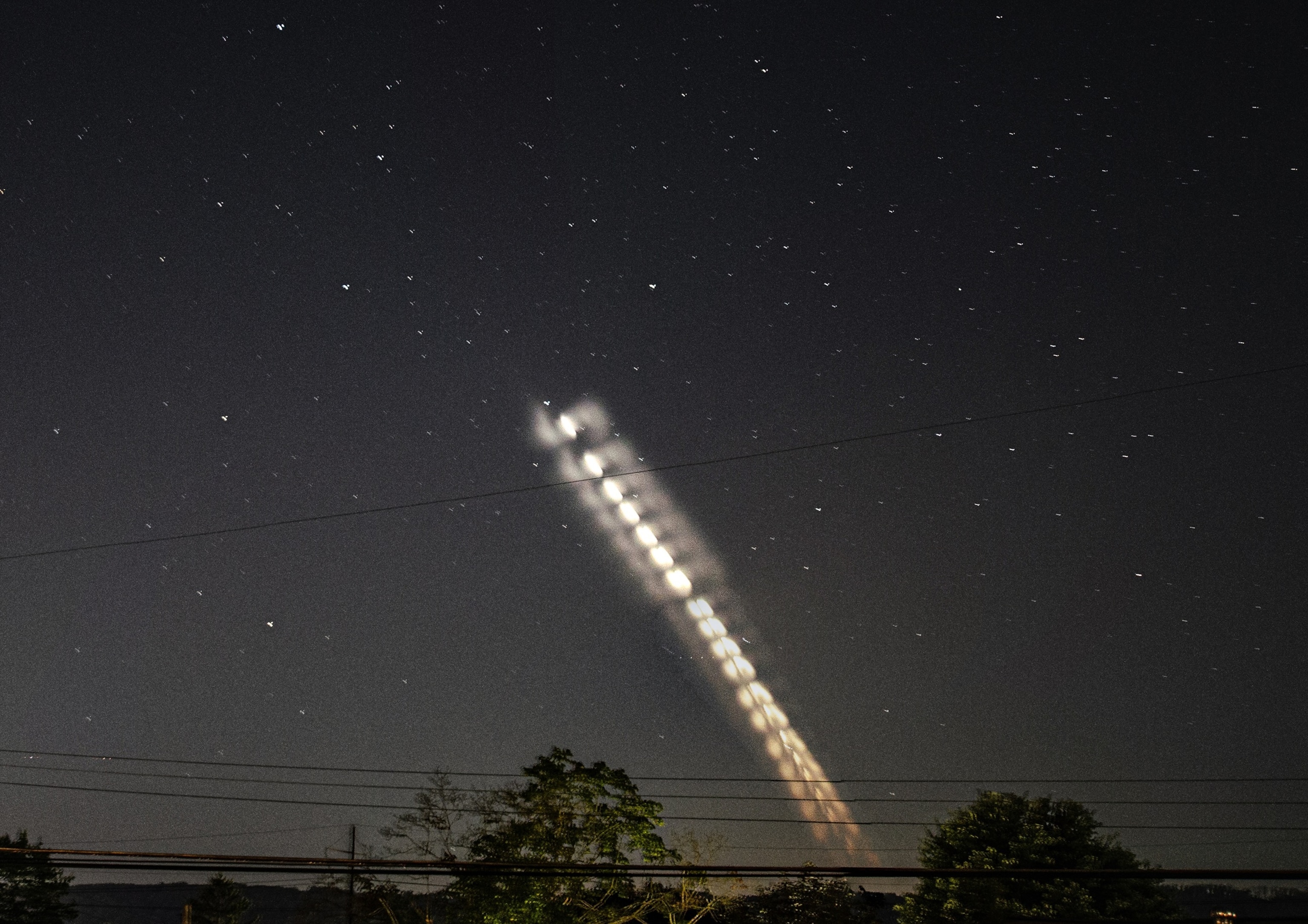
Cloud computing will enable seamless sharing of observational data and insights across a global network of amateur and professional astronomers. This could lead to more rapid identification and tracking of transient astronomical events, such as supernovae or near-Earth asteroids. Imagine a scenario where a sudden, unusual celestial event is detected by an amateur astronomer, and within minutes, data is shared globally, allowing others to observe and document it. This collaborative approach, facilitated by cloud infrastructure, amplifies our collective ability to monitor and understand the dynamic universe.
Predictive Modeling and Enhanced Understanding of Cosmic Phenomena
Advanced predictive modeling, powered by vast datasets and sophisticated algorithms running on cloud platforms, will allow us to understand cosmic phenomena with unprecedented accuracy. This includes predicting the behavior of solar flares, the likelihood of meteor impacts, or the evolutionary stages of distant celestial bodies. While not directly answering what was in the sky last night, these predictive capabilities offer a deeper context for our observations, transforming our understanding of the universe’s grander narratives. The technological tools available today and those on the horizon empower us to engage with the night sky not just as passive observers, but as active participants in the ongoing exploration of the cosmos.
aViewFromTheCave is a participant in the Amazon Services LLC Associates Program, an affiliate advertising program designed to provide a means for sites to earn advertising fees by advertising and linking to Amazon.com. Amazon, the Amazon logo, AmazonSupply, and the AmazonSupply logo are trademarks of Amazon.com, Inc. or its affiliates. As an Amazon Associate we earn affiliate commissions from qualifying purchases.