
When someone asks, “What time is it in Chattanooga?” the literal answer is straightforward: the city resides in the Eastern Time Zone of the United States. However, in the world of global technology, infrastructure, and urban innovation, the answer is far more profound. “Chattanooga time” has become synonymous with the future—specifically, the future of hyper-connectivity, smart-city resilience, and quantum networking.
Once an industrial hub struggling with the decline of traditional manufacturing, Chattanooga, Tennessee, has undergone a radical digital transformation. Today, it is recognized globally as the “Gig City.” This transition wasn’t accidental; it was the result of a bold, tech-first strategy that leveraged fiber-optic infrastructure to rewrite the rules of municipal development. To understand what time it is in Chattanooga is to understand the current state of the “Smart City” and where the next decade of technological evolution is headed.
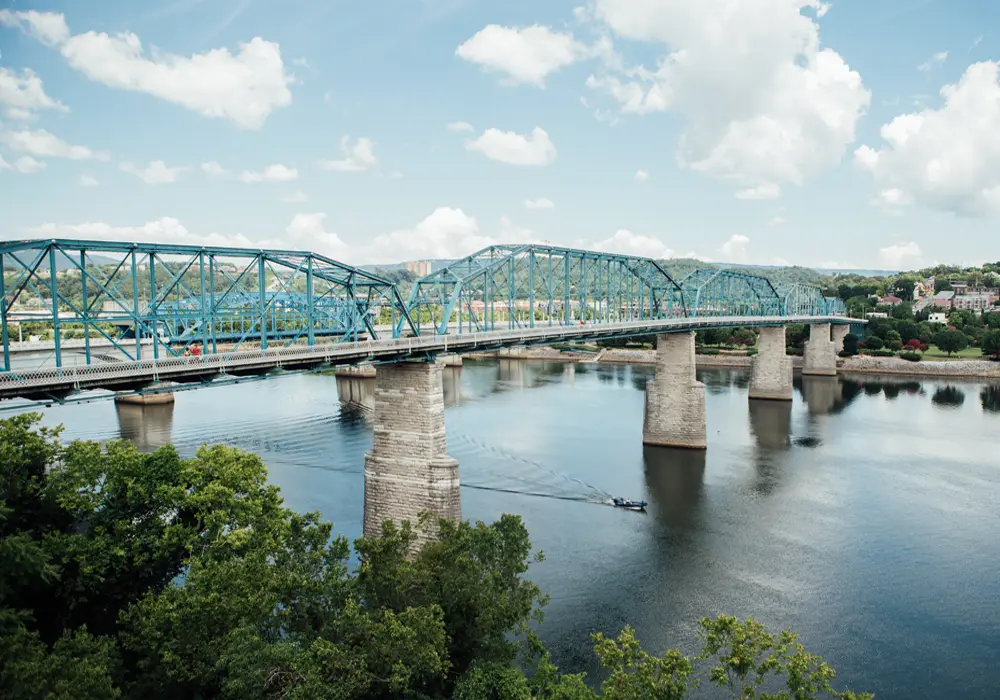
The Synchronized City: How Chattanooga Redefined Fiber Infrastructure
The technological metamorphosis of Chattanooga began not with software, but with hardware. While most American cities were at the mercy of private internet service providers (ISPs) and their aging copper-wire networks, Chattanooga’s municipally-owned utility, EPB (Electric Power Board), took a different path. In 2010, they completed a community-wide fiber-optic network, making Chattanooga the first city in the Western Hemisphere to offer one-gigabit-per-second internet speeds to every home and business.
The Backbone of Speed: Understanding the Fiber Grid
The core of Chattanooga’s tech identity is its 100% fiber-optic network. Unlike hybrid-fiber coaxial systems used by traditional providers, Chattanooga’s symmetric fiber ensures that upload speeds match download speeds. In the era of remote work, high-definition video conferencing, and massive cloud-based data transfers, this symmetry is no longer a luxury—it is a prerequisite for economic competitiveness. By 2022, EPB pushed the envelope further, launching the nation’s first community-wide 25-gigabit-per-second internet service, effectively future-proofing the city for the next generation of data-heavy applications.
Low Latency and High Connectivity
For tech professionals and developers, “time” in Chattanooga is measured in milliseconds. The city’s infrastructure offers incredibly low latency, which is essential for real-time applications such as online gaming, high-frequency trading, and the remote operation of medical or industrial machinery. This technical advantage has transformed the city into a living laboratory for developers who need to test how applications perform when bandwidth is essentially infinite.
The Tech Ecosystem: Beyond the Speed Test
Infrastructure is only as valuable as the innovation it enables. Chattanooga’s leadership understood that having the world’s fastest internet was a vanity metric unless it could foster a robust tech ecosystem. This realization led to the creation of the Chattanooga Innovation District—the first of its kind in a mid-sized city—designed to condense startups, accelerators, and venture capital into a walkable, collaborative environment.
Attracting the Next Wave of Startups
The “Gig City” brand acted as a magnet for tech talent fleeing the high costs of Silicon Valley and New York. By offering world-class connectivity alongside a lower cost of living, Chattanooga became a “Zoom town” before the term was even coined. However, it went beyond remote workers. The city has become a hub for “FreightTech.” Given its history as a logistics crossroads, companies like FreightWaves have emerged, utilizing the city’s data infrastructure to provide high-frequency analytics for the global trucking and shipping industries.
The Innovation District: A Hub for Collaborative Technology
The 140-acre Innovation District serves as the heartbeat of the city’s tech scene. Here, the focus is on “accidental collisions”—the idea that putting developers, artists, and entrepreneurs in the same physical space leads to breakthroughs. Local accelerators like CO.LAB provide the mentorship and resources necessary for early-stage tech companies to scale. The presence of these entities ensures that the technology developed in Chattanooga remains grounded in solving real-world problems, from supply chain optimization to sustainable energy management.

Smart Grid, Smart Future: AI and Real-Time Data Management
One of the most significant, yet invisible, tech achievements in Chattanooga is the integration of its fiber network with its electrical grid. This created one of the most advanced “Smart Grids” in the world. By utilizing the fiber optic network to communicate between every transformer and switch in the city, EPB has automated the management of energy distribution.
Resilience Through Automation: The Self-Healing Grid
In most cities, a fallen tree limb on a power line causes a localized blackout that requires a manual crew to fix. In Chattanooga, the “Self-Healing Grid” uses sensors and automated switches to reroute power instantly around a fault. This system has reduced the duration of power outages by over 50%, saving local businesses millions of dollars in lost productivity. This is a prime example of how IoT (Internet of Things) technology, when backed by a robust fiber backbone, can provide tangible reliability to urban living.
Quantum Networking: The Next Frontier
If the last decade was defined by the Gig, the next decade in Chattanooga is defined by the Qubit. In 2023, EPB launched the EPB Quantum Network℠, the first commercially available software-defined quantum network in the United States. This infrastructure allows private companies and researchers to test quantum key distribution (QKD) and other quantum-based technologies in a real-world environment. By providing the “time and space” for quantum experimentation, Chattanooga is positioning itself at the absolute vanguard of digital security and high-performance computing.
Digital Equity and the Social Impact of Technology
A city cannot truly be a “Smart City” if its technological advancements only benefit a privileged few. The true “time” of Chattanooga is reflected in its commitment to digital equity. The city has recognized that high-speed internet is a social determinant of health, education, and economic mobility.
Closing the Digital Divide
In 2020, Chattanooga launched “HCS EdConnect,” a program that provides free, high-speed internet to every student in the Hamilton County School system who receives free or reduced-price lunch. This initiative eliminated the digital divide for nearly 30,000 students, ensuring that every child has the tools necessary to compete in a tech-driven economy. This was not a temporary “hotspot” solution, but a permanent connection to the city’s fiber grid, proving that municipal tech can be a powerful tool for social justice.
Education in a Hyper-Connected Environment
With universal access, the city’s schools have become testing grounds for advanced educational technology. From virtual reality field trips that require high bandwidth to collaborative coding projects between schools, Chattanooga’s students are being trained on the platforms of tomorrow. This creates a sustainable pipeline of local talent that will feed the city’s tech ecosystem for decades to come, ensuring that the “Gig City” isn’t just a temporary moniker, but a foundational identity.
Conclusion: Why Chattanooga is the Clock for Modern Innovation
What time is Chattanooga? It is the time of the “Connected Community.” While other metropolitan areas are just now beginning to grapple with the complexities of 5G rollouts and aging infrastructure, Chattanooga is already moving into the quantum era.
The city provides a blueprint for how technology should be integrated into the fabric of society: it should be fast, it should be resilient, it should be accessible, and it should be used to solve the community’s most pressing challenges. From the “Self-Healing Grid” that keeps the lights on during a storm to the quantum fibers that will secure the data of the future, Chattanooga has proven that the size of a city doesn’t limit its technological reach.
For the tech industry, Chattanooga is a reminder that innovation doesn’t just happen in high-rise labs; it happens when a community decides to invest in itself. Whether you are a developer looking for low-latency environments, a startup seeking a supportive ecosystem, or a researcher exploring the boundaries of quantum physics, the time in Chattanooga is—and will remain—decidedly ahead of the curve.
aViewFromTheCave is a participant in the Amazon Services LLC Associates Program, an affiliate advertising program designed to provide a means for sites to earn advertising fees by advertising and linking to Amazon.com. Amazon, the Amazon logo, AmazonSupply, and the AmazonSupply logo are trademarks of Amazon.com, Inc. or its affiliates. As an Amazon Associate we earn affiliate commissions from qualifying purchases.