
In the vast and often complex world of maritime operations, precision in language is not merely a matter of etiquette; it’s a fundamental necessity for safety, efficiency, and clear communication. Among the most basic, yet crucial, distinctions a boater must grasp is the identification of “port” and “starboard” sides. While seemingly simple, the consistent and accurate use of these terms underpins everything from docking maneuvers to emergency procedures. This article will delve into the origins and practical applications of identifying port side on a boat, illuminating its significance within the broader context of maritime technology and communication.
The Evolution of Maritime Navigation Terminology
The language of the sea, much like the vessels themselves, has evolved over centuries, shaped by necessity, innovation, and a deep understanding of the maritime environment. Understanding “port” requires a brief historical detour.
From Steering Oars to Dedicated Rudders
Origins of “Port” and “Starboard”
The terms “port” and “starboard” are deeply rooted in the historical methods of steering vessels. In ancient times and through the medieval period, most boats and ships were steered by a large oar, often called a steering oar or a “steerboard.” This oar was typically placed on the right-hand side of the stern (the rear of the vessel). Why the right side? It’s widely believed that most people are right-handed, making it the more practical and dominant hand for controlling such a crucial steering mechanism.
As this steerboard was usually located on the right side, the left side of the ship became known as “larboard.” This term, however, proved to be problematic. In rough seas and windy conditions, the commands “larboard” and “starboard” sounded remarkably similar, leading to confusion and potential errors. Imagine shouting “larboard” when you mean “starboard,” or vice versa, during a critical maneuver in a storm. The consequences could be disastrous.
To resolve this ambiguity, the British Royal Navy, in 1844, officially replaced “larboard” with “port.” The reasoning behind this change was practical and intuitive: since the steerboard was on the right, ships would naturally dock on the left side, facing the “port” or harbor. Therefore, the left side of the ship became known as the “port” side, as it was the side most frequently presented to the port. This standardization dramatically improved clarity and safety at sea.
The Technological Imperative of Clear Communication
The transition from “larboard” to “port” is a prime example of how technological advancements and the evolving operational needs of seafaring have driven linguistic innovation. As ships grew larger and voyages more complex, the need for precise, unambiguous communication became paramount. This is a principle that resonates strongly in modern technology.
In the digital age, the concept of clear, standardized communication is the bedrock of almost all technological advancements. Think about programming languages, network protocols, or even the user interfaces of our devices. They all rely on a defined set of rules and terminologies to ensure that instructions are understood and executed correctly, whether by a computer or another human.
Similarly, in naval operations, the correct identification of port and starboard is not just about knowing which way to turn. It’s about understanding vessel positioning relative to other ships (for collision avoidance), identifying navigation lights (green on starboard, red on port), and executing docking and mooring procedures safely. The technological sophistication of modern vessels, from advanced radar systems to automated navigation, still relies on these fundamental human-readable identifiers to function effectively within a coordinated maritime environment. The historical evolution of “port” and “starboard” highlights this enduring need for clear, standardized communication in any complex operational system, be it analog or digital.
Identifying Port Side: A Practical Guide for Navigators
Understanding the history behind the terms is one thing; reliably identifying port side in practice is another. This requires a consistent frame of reference and an understanding of how these terms apply to the vessel itself.
The Bow-to-Stern Perspective
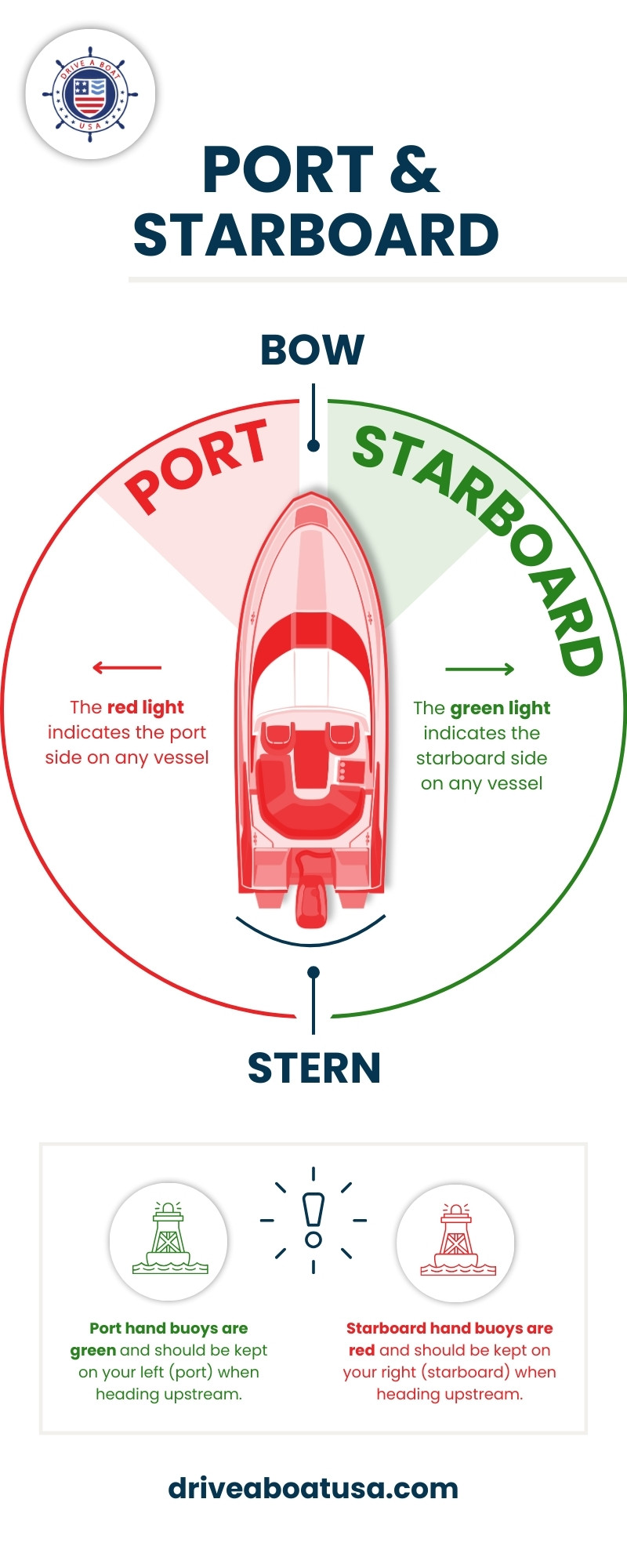
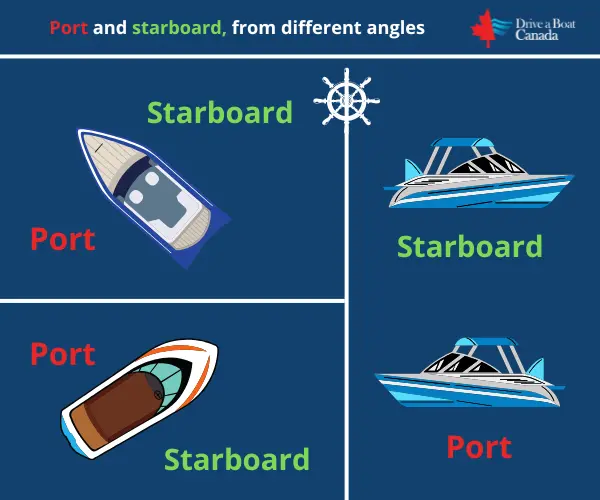
The most crucial rule for identifying port and starboard is to adopt the correct perspective. When referring to the sides of a boat, the terms “port” and “starboard” are always defined from the perspective of someone on board the vessel, facing forward towards the bow (the front of the boat).
- Port Side: This is the left-hand side of the boat when facing forward.
- Starboard Side: This is the right-hand side of the boat when facing forward.
This “facing forward” perspective is critical and universally applied in maritime contexts. It eliminates ambiguity, regardless of whether you are standing on the deck, in the cabin, or even observing the boat from another vessel.
Visual Cues: Navigation Lights and Markings
Beyond the fundamental perspective, there are several practical visual cues that confirm the identification of port side. These are often integrated into the vessel’s design and lighting systems, reflecting the technological implementation of these standardized terms.
- Navigation Lights: Perhaps the most universally recognized visual cue is the color of the navigation lights. On any vessel underway at night or in restricted visibility, the port side exhibits a red navigation light, while the starboard side displays a green navigation light. The bow light (white) and stern light (white) also help orient the vessel. If you see a red light on a vessel, you know its port side is facing you. This system is standardized internationally, ensuring vessels can communicate their position and intentions in the dark.
- Hull Markings: While not as universally standardized as navigation lights, some vessels may have subtle markings or even painted stripes on their hulls that subtly differentiate sides, although relying on navigation lights is far more definitive.
- Docking Considerations: When approaching a dock, the port side is often the side used for docking in many regions, particularly where traffic flows in a particular direction. This is a practical consequence of the term’s origin, as it’s the side facing the “port” or harbor.
Mastering these visual cues is essential for any boater. It allows for immediate and accurate situational awareness, whether navigating, docking, or observing other vessels. The technological integration of these visual identifiers underscores the importance of consistent terminology in maritime operations.
The Technological Significance of Standardized Maritime Terminology
The seemingly simple distinction between port and starboard is a cornerstone of maritime communication and, by extension, maritime technology. The accuracy and universality of these terms are indispensable for the seamless operation of modern vessels and the safety of all at sea.
Enhancing Vessel-to-Vessel Communication
Effective communication between vessels is paramount for preventing collisions. The International Regulations for Preventing Collisions at Sea (COLREGs) heavily relies on the precise identification of port and starboard for signaling intentions and determining right-of-way.
- Collision Avoidance: When two vessels are approaching each other, knowing which side is port and which is starboard is crucial for applying the COLREGs. For example, if you see the red (port) light of another vessel, you know it is showing you its port side. This information, combined with other visual cues like the masthead lights, helps determine the relative bearing and whether a risk of collision exists. Standardized terminology ensures that both vessel operators interpret the situation identically.
- Maneuvering Signals: While often conveyed through signals like horn blasts or radio communication, the underlying understanding of vessel orientation is still based on port and starboard. A command to “come hard aport” means to turn the bow to port, a maneuver dictated by the identified left side of the vessel.
- Radio Communications: When communicating with Vessel Traffic Services (VTS) or other vessels via VHF radio, precise positional information is vital. Describing a vessel’s location or a hazard often involves referencing its port or starboard side in relation to a landmark or another vessel.
Integration with Onboard Navigation and Safety Systems
Modern vessels are equipped with increasingly sophisticated technological systems that, while automating many functions, still rely on human interpretation of fundamental maritime principles.
- Electronic Chart Display and Information Systems (ECDIS): While ECDIS displays detailed navigational information, the underlying data and the way vessels are represented often use port and starboard conventions. For instance, understanding traffic separation schemes or the positioning of navigation buoys implicitly relies on this terminology.
- Radar and AIS Systems: Automatic Identification System (AIS) transponders broadcast a vessel’s identity, position, course, and speed. While the data is technical, the interpretation of this data often involves understanding the relative orientation of vessels, where port and starboard become critical descriptors. Radar displays might show targets, and operators use port/starboard knowledge to predict their movements.
- Automated Docking Systems: Even automated docking systems, which are the pinnacle of maritime technology, are programmed with the understanding of port and starboard to execute precise maneuvers. The underlying algorithms are built upon these fundamental definitions, ensuring that the automated system “speaks the same language” as human mariners.
The standardization of terms like “port side” is not just about historical preservation; it’s about maintaining a universally understood language that underpins the safe and efficient operation of technologically advanced maritime systems. It highlights how even in a digital age, fundamental human-defined concepts remain vital for effective technological application.
The Enduring Relevance of “Port” in the Digital Age
In an era dominated by digital interfaces and abstract data, the physical, tangible nature of maritime terminology like “port side” might seem quaint. However, its enduring relevance is a testament to the fundamental principles of clarity, standardization, and human understanding that drive technological progress.
Bridging the Gap Between Human Operators and Digital Systems
While AI and advanced navigation systems are transforming seafaring, the human element remains central. For these systems to be effective, they must integrate seamlessly with human operators. This is where clear, universally understood terminology becomes indispensable.
- User Interface Design: When designing user interfaces for navigation software, vessel management systems, or even virtual reality training simulators, the developers must incorporate established maritime terminology. A clear and intuitive display of information regarding vessel orientation, navigation lights, and potential hazards will always include readily identifiable references to port and starboard. The goal is to make the technology accessible and usable for the human operator, not to replace their fundamental understanding.
- Training and Education: The rigorous training of maritime professionals, from recreational boaters to commercial mariners, relies on instilling a deep understanding of these basic terms. Nautical schools and certification programs emphasize the importance of port and starboard as foundational knowledge. Modern training often employs digital tools, but the core concepts remain the same. The ability to correctly identify port side is a non-negotiable prerequisite for advanced training and competency.
- Troubleshooting and Maintenance: When diagnosing issues with onboard electronic systems or reporting problems, precise language is crucial. A technician or engineer receiving a report about an anomaly on the “port side” of a vessel will know exactly which physical area to investigate. This direct translation from human observation to technical intervention is facilitated by standardized terminology.

The Global Language of the Sea
The maritime industry is inherently global. Vessels from all nations interact on international waters, and their operations are governed by international regulations. The adoption of “port” over “larboard” was a global standardization that facilitated international maritime commerce and safety.
- International Maritime Organization (IMO): The IMO, a specialized agency of the United Nations responsible for safety and security of shipping and the prevention of marine pollution by ships, relies on standardized terminology in its regulations and conventions. The correct use of port and starboard is implicitly understood and applied across all international maritime laws and recommendations.
- Cross-Cultural Communication: In a diverse industry where crews and stakeholders come from various linguistic backgrounds, having a common, unambiguous set of terms is vital. “Port” and “starboard” serve as a neutral, universally understood “language” that transcends cultural and linguistic barriers, ensuring that critical instructions and information are conveyed accurately and safely.
In conclusion, the question “what side is port side on a boat” leads us to a profound understanding of how language, technology, and safety are interwoven in the maritime world. From its origins in practical necessity to its indispensable role in modern navigation and digital systems, “port side” is more than just a directional term; it’s a fundamental element of the global maritime lexicon, ensuring clarity and safety on the digital and physical seas alike.
aViewFromTheCave is a participant in the Amazon Services LLC Associates Program, an affiliate advertising program designed to provide a means for sites to earn advertising fees by advertising and linking to Amazon.com. Amazon, the Amazon logo, AmazonSupply, and the AmazonSupply logo are trademarks of Amazon.com, Inc. or its affiliates. As an Amazon Associate we earn affiliate commissions from qualifying purchases.