
A malfunctioning accelerator pedal, often colloquially referred to as a “stuck accelerator,” is a rare but potentially dangerous automotive issue. While modern vehicle safety systems and advanced engineering have significantly reduced the likelihood of such an occurrence, understanding the proper procedures to regain control of your vehicle is crucial for any driver. This article delves into the technical aspects of a stuck accelerator, the underlying causes, and the systematic steps you should take to mitigate the risk and ensure your safety.
Understanding the Mechanics: How an Accelerator System Works and Fails
To effectively address a stuck accelerator, it’s essential to grasp the fundamental principles of how modern accelerator systems operate and the potential points of failure.

The Evolution of Accelerator Control: From Cables to Drive-by-Wire
Historically, vehicles utilized a mechanical linkage system where a cable directly connected the accelerator pedal to the throttle body. When the pedal was pressed, the cable pulled a lever on the throttle body, opening it to allow more air into the engine, thus increasing speed. While simple, this system was susceptible to cable stretching, binding, or snapping, which could lead to a partially or fully open throttle.
The advent of electronic throttle control (ETC), often referred to as “drive-by-wire,” revolutionized accelerator systems. In ETC, a sensor on the accelerator pedal measures the pedal’s position and sends an electronic signal to the engine control unit (ECU). The ECU then commands an electric motor in the throttle body to adjust the throttle plate opening. This system offers several advantages, including improved fuel efficiency, better emissions control, and the integration of advanced features like cruise control and traction control. However, it also introduces new potential failure points, such as sensor malfunctions, wiring issues, or problems with the electric motor.
Common Causes of a Stuck Accelerator
A genuinely stuck accelerator, where the pedal feels physically impeded and the engine RPM remains elevated, is a complex issue with a few primary culprits:
- Mechanical Binding: In older vehicles with cable-actuated throttles, the cable itself can become corroded, frayed, or obstructed by debris, causing it to bind and hold the throttle open. Similarly, the throttle body’s internal components or the throttle plate itself could experience mechanical issues, such as a foreign object lodging in the mechanism or a build-up of carbon deposits, preventing it from closing properly.
- Electronic Throttle Control (ETC) System Malfunctions: In drive-by-wire systems, a variety of electronic issues can lead to an unintended increase in engine speed.
- Accelerator Pedal Position Sensor (APPS) Failure: This sensor is critical for translating pedal input into an electronic signal. If the APPS malfunctions, it can send erroneous readings to the ECU, leading to the ECU commanding the throttle to open beyond the driver’s intention.
- Throttle Body Actuator Failure: The electric motor that controls the throttle plate can fail or become stuck. This could be due to electrical faults, mechanical wear, or even a software glitch within the throttle body’s integrated controller.
- Wiring Harness Issues: Damaged or corroded wiring connecting the APPS, ECU, and throttle body can interrupt or distort signals, leading to unpredictable throttle behavior.
- ECU Glitches or Software Errors: While less common, a rare software malfunction within the ECU could misinterpret sensor data or send incorrect commands to the throttle actuator.
- Foreign Objects and Debris: In rare instances, a foreign object, such as a floor mat, can become lodged under the accelerator pedal, physically preventing it from returning to its resting position. While this is a mechanical obstruction at the pedal itself, its effect is similar to a stuck throttle.
- Cruise Control Malfunctions (Less Likely to Cause a “Stuck” Accelerator but Can Mimic Symptoms): While not a true stuck accelerator, a malfunctioning cruise control system can sometimes hold vehicle speed unexpectedly. However, these systems are typically designed with safety overrides to disengage them under braking.
Immediate Actions: Regaining Control in a Critical Situation
The most critical aspect of dealing with a stuck accelerator is to remain calm and execute a series of precise actions to regain control of your vehicle safely. Panic can lead to rash decisions, exacerbating the situation.
Step 1: Do NOT Slam on the Brakes (Unless Absolutely Necessary)
Your instinct might be to stomp on the brake pedal. While braking is essential, immediately slamming on the brakes with full force can destabilize the vehicle, especially if it’s at high speed. The primary goal is to reduce engine power.
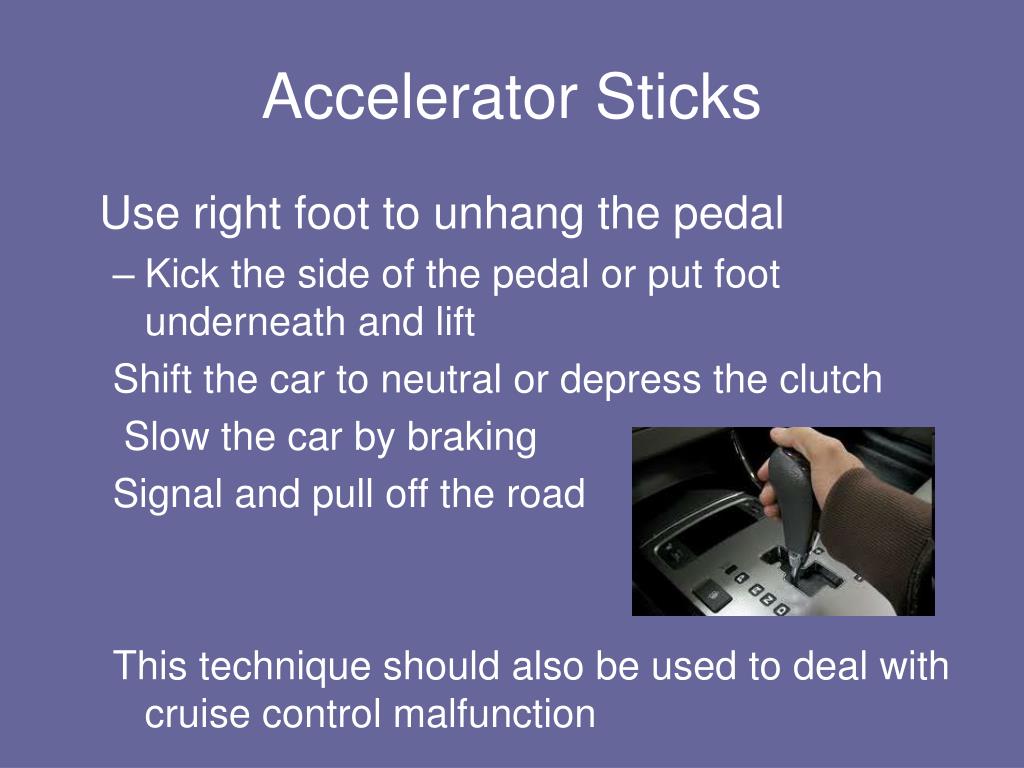
Step 2: Shift to Neutral or Park (If Automatic) / Disengage Clutch (If Manual)
This is the most critical step for immediately decoupling the engine from the wheels, effectively stopping the engine from driving the vehicle forward.
- Automatic Transmission: Firmly and decisively shift the gear selector to Neutral (N). This will disengage the transmission from the engine, causing the engine RPM to return to idle or near idle, regardless of accelerator pedal position. If Neutral doesn’t seem to be working or is difficult to engage, and if you are in a controlled environment with no immediate obstacles, shifting to Park (P) can also achieve a similar engine disengagement, though it will also lock the drivetrain, which can be less ideal for steering.
- Manual Transmission: Immediately depress the clutch pedal fully. This will disconnect the engine from the transmission and wheels, allowing you to control the vehicle’s speed with the brakes.
Step 3: Apply Brakes Gradually but Firmly

Once the engine is disengaged from the drivetrain, you will have significantly reduced forward momentum. Now, you can use the brakes to control your speed. Apply them firmly and smoothly, avoiding abrupt or jerky movements that could lead to a loss of control. Continue to brake until you can safely bring the vehicle to a stop.
Step 4: Turn Off the Engine (Once Safely Stopped)
After you have brought the vehicle to a complete stop in a safe location, turn off the ignition. This will ensure the engine completely shuts down and eliminates any further risk of unintended acceleration.
- Important Note: Do not turn off the engine while the vehicle is still in motion and you are trying to regain control. Doing so will disable your power steering and power brakes, making it extremely difficult to steer and stop the vehicle. This is a critical safety distinction.
Step 5: Engage the Parking Brake
Once the engine is off and the vehicle is stopped, engage the parking brake to ensure it remains stationary.
Post-Incident Procedures: Ensuring Long-Term Safety
After the immediate threat has been neutralized, it’s crucial to address the underlying issue to prevent a recurrence and ensure your continued safety on the road.
Assessing the Situation and Seeking Professional Help
Once safely stopped, it is imperative to remain vigilant and assess the situation thoroughly.
- Check for Obstructions: Carefully inspect the accelerator pedal area. Is a floor mat or any other object wedged beneath it? If so, remove it cautiously.
- Observe Warning Lights: Pay attention to any warning lights that may have illuminated on your dashboard. These can provide valuable clues to the nature of the malfunction, particularly in vehicles with electronic throttle control. Common indicators might include the “Check Engine” light, the Electronic Throttle Control (ETC) warning light, or the Malfunction Indicator Lamp (MIL).
- Do Not Attempt to Restart Immediately: If you suspect an electronic issue, do not immediately attempt to restart the engine. This could potentially re-engage the problematic system.
- Contact Emergency Services or Towing: If you are in a hazardous location or are unsure of the cause, do not hesitate to call for roadside assistance or emergency services. It is always better to err on the side of caution. Explain the situation clearly to the dispatcher.
The Role of Technology in Preventing and Diagnosing Stuck Accelerators
Modern vehicle technology plays a dual role in this scenario: it introduces potential failure points but also provides sophisticated systems for prevention and diagnosis.
- Built-in Safety Features: Electronic throttle control systems are designed with multiple redundant sensors and fail-safe mechanisms. If the primary throttle position sensor fails, a secondary sensor can take over, or the ECU can default to a limp-home mode, limiting engine power and speed to allow the driver to reach a safe stopping point. Many systems are also programmed to recognize conflicting sensor data or unusual throttle behavior and will automatically disengage the throttle or alert the driver.
- Diagnostic Trouble Codes (DTCs): When an issue arises within the ETC system, the ECU will typically log a Diagnostic Trouble Code (DTC). These codes can be read by automotive diagnostic tools and provide technicians with precise information about the specific component or circuit that is malfunctioning. This greatly speeds up the diagnostic and repair process.
- Software Updates and Recalls: Manufacturers continuously monitor vehicle performance and safety data. If a systemic issue is identified with an electronic throttle control system, they may issue software updates or conduct recalls to address the problem, further enhancing the safety and reliability of the technology.
Preventive Maintenance and Driver Awareness
While sudden malfunctions are rare, adopting a proactive approach to vehicle maintenance and staying aware of your vehicle’s behavior can significantly mitigate risks.
- Regular Servicing: Adhere to your vehicle’s recommended maintenance schedule. This includes regular inspections of the throttle body, pedal assembly, and associated wiring by qualified technicians.
- Be Mindful of Floor Mats: Always ensure your floor mats are properly secured and do not interfere with the accelerator pedal’s travel. This is a common and easily preventable cause of unintended acceleration.
- Listen to Your Vehicle: Pay attention to any unusual noises, hesitations, or changes in your vehicle’s performance. These subtle cues can sometimes indicate an impending issue.
- Understand Your Vehicle’s Systems: Familiarize yourself with your vehicle’s dashboard warning lights and their meanings. Knowing what certain lights signify can help you react more appropriately in an emergency.
In conclusion, while the prospect of a stuck accelerator can be alarming, a calm and informed response, combined with an understanding of the vehicle’s systems and diligent maintenance, can transform a potentially dangerous situation into a manageable event. Modern automotive technology, while complex, is designed with safety as a paramount concern, and by knowing the right steps to take, drivers can enhance their ability to maintain control and ensure their well-being on the road.
aViewFromTheCave is a participant in the Amazon Services LLC Associates Program, an affiliate advertising program designed to provide a means for sites to earn advertising fees by advertising and linking to Amazon.com. Amazon, the Amazon logo, AmazonSupply, and the AmazonSupply logo are trademarks of Amazon.com, Inc. or its affiliates. As an Amazon Associate we earn affiliate commissions from qualifying purchases.