
The automotive industry is currently undergoing its most significant transformation since the invention of the assembly line. At the center of this revolution lies the powertrain—the complex assembly of components that generates power and delivers it to the road surface. While traditionally viewed through the lens of mechanical engineering, the modern powertrain has transitioned into a sophisticated ecosystem of software, high-capacity hardware, and artificial intelligence.
Understanding the powertrain is no longer just for gearheads; it is essential for anyone tracking the trajectory of consumer technology. As cars evolve into “computers on wheels,” the powertrain represents the ultimate fusion of kinetic energy and digital intelligence. This article explores the technical intricacies of the modern powertrain, its transition from fossil fuels to electrons, and the software-defined future of mobility.

The Anatomy of a Modern Powertrain: From Hardware to Software
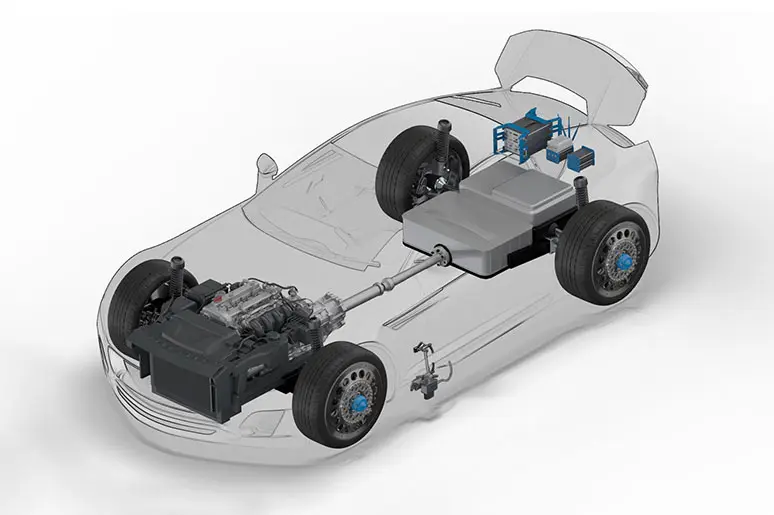
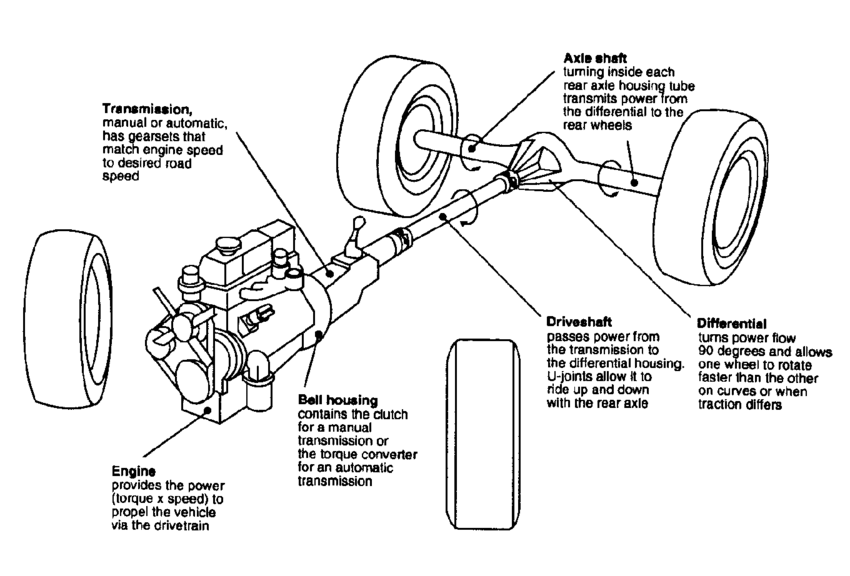
In the simplest terms, the powertrain encompasses everything that makes a vehicle move. In a traditional internal combustion engine (ICE) vehicle, this includes the engine, transmission, driveshafts, differentials, and wheels. However, in the context of modern tech, we must view these components as a synchronized system managed by complex processing units.
Internal Combustion Engine (ICE) vs. Electric Motors
The core of the powertrain is the power source. For over a century, the ICE reigned supreme, relying on controlled explosions of fuel and air. From a tech perspective, the modern ICE is a marvel of sensor integration, utilizing variable valve timing and high-pressure injection systems to maximize efficiency.
Conversely, the electric motor represents a paradigm shift toward simplicity and precision. Unlike an ICE, which has hundreds of moving parts, an electric motor typically has only one: the rotor. This hardware simplification allows for instantaneous torque—a feat of electrical engineering that provides immediate power delivery without the “lag” associated with mechanical combustion.
The Role of the Transmission and Drivetrain
The transmission acts as the mediator between the power source and the wheels. In the tech niche, we can think of the transmission as the vehicle’s “operating system” for torque. Traditional multi-speed transmissions use complex gear ratios to keep the engine in its power band.
In contrast, most electric vehicles (EVs) utilize a single-speed reduction gear. Because electric motors are efficient across a wide range of RPMs, the mechanical “gear hunting” of the past is being replaced by electronic frequency modulation. The drivetrain, which includes the axles and differentials, then distributes this power, often utilizing electronic “torque vectoring” to adjust power to individual wheels in milliseconds for superior handling.
Energy Storage: Fuel Tanks and High-Capacity Batteries
A powertrain is only as effective as its energy source. While fuel tanks are simple vessels, modern battery packs are high-tech masterpieces. A contemporary EV battery is not a single unit but an array of thousands of lithium-ion cells managed by a Battery Management System (BMS). This BMS is a sophisticated computer that monitors temperature, voltage, and state of charge, ensuring the hardware operates within safe parameters while maximizing the vehicle’s range and lifespan.
The Digital Revolution: Software-Defined Powertrains
The most profound change in powertrain technology is the shift from mechanical linkages to “drive-by-wire” systems. In a software-defined vehicle, the physical components of the powertrain are controlled by lines of code rather than physical cables or hydraulic pressure.
Electronic Control Units (ECUs) and Sensory Networks
Modern powertrains are governed by a network of Electronic Control Units (ECUs). These are specialized microprocessors that act as the “brain” of each component. A high-end vehicle may have dozens of ECUs communicating over a Controller Area Network (CAN bus). These units process data from hundreds of sensors—measuring everything from oxygen levels in the exhaust to the precise angle of the crankshaft—making thousands of adjustments per second to optimize performance.
Over-the-Air (OTA) Updates: Redefining Performance
Perhaps the greatest tech innovation in the automotive sector is the ability to update a powertrain’s performance via software. Much like a smartphone receives an iOS or Android update, modern vehicles can receive Over-the-Air (OTA) updates that recalibrate the powertrain.
Manufacturers can now “patch” a vehicle to improve its acceleration, increase its battery efficiency, or refine its regenerative braking curves without the car ever entering a physical service center. This capability treats the powertrain as an evolving digital asset rather than a static piece of hardware.
AI and Machine Learning in Efficiency Optimization
Artificial Intelligence is now being integrated into the powertrain to predict driving conditions. Predictive powertrain control uses GPS data and machine learning to anticipate the road ahead. For example, if the car knows a steep incline is approaching, the AI can pre-condition the battery or adjust the hybrid system’s energy distribution to ensure maximum efficiency. This level of synchronization between data and mechanical output is the hallmark of 21st-century automotive tech.
Electrification and the Shift to Sustainable Tech
As the global tech landscape pivots toward sustainability, the powertrain is the primary site of innovation. The transition from carbon-heavy systems to clean energy involves complex engineering challenges in energy density and power conversion.
Battery Electric Vehicles (BEVs) and Simplified Architecture
The BEV powertrain is a masterclass in “less is more.” By removing the radiator, exhaust system, fuel pump, and multi-speed gearbox, engineers have created a streamlined architecture. The tech focus here shifts to power electronics—specifically the inverter. The inverter converts the Direct Current (DC) from the battery into Alternating Current (AC) for the motor. The efficiency of these silicon-carbide inverters is a major area of competitive R&D, as even a 1% increase in efficiency can result in miles of additional range.
Hybrid Architectures: Integrating Dual Systems
Hybrid powertrains are perhaps the most complex pieces of consumer technology currently on the market. They require the seamless integration of an ICE, an electric motor, and a battery pack. The “Power Split Device” in a hybrid acts as a mechanical computer, deciding in real-time whether to draw power from gas, electricity, or both. Managing the “handover” between these two power sources requires immense computational power to ensure the driver experiences a smooth, linear delivery of force.
Hydrogen Fuel Cells: The Next Frontier in Energy Conversion
While batteries dominate the current conversation, Hydrogen Fuel Cell Electric Vehicles (FCEVs) represent a different technological path. An FCEV powertrain is essentially an electric vehicle that generates its own electricity on board via a chemical reaction between hydrogen and oxygen. The “fuel cell stack” is a sophisticated chemical reactor. This technology offers the potential for long-range, zero-emission transport with refueling times comparable to gasoline, though the infrastructure and storage tech remain significant hurdles.
Performance Tuning and the Future of Mobility
The future of the powertrain is not just about moving from A to B; it is about the integration of the powertrain into the broader tech ecosystem, including autonomous driving and smart grids.
Regenerative Braking: Closing the Energy Loop
In a traditional powertrain, braking is a wasteful process that converts kinetic energy into heat through friction. Modern electric powertrains utilize regenerative braking, which reverses the electric motor to act as a generator. This sends energy back into the battery, effectively turning the act of slowing down into a charging event. The software logic required to balance friction braking with regenerative “drag” is a critical component of the modern driving experience.
Solid-State Batteries and the Quest for Density
The “holy grail” of powertrain tech is the solid-state battery. Current lithium-ion batteries use liquid electrolytes, which are heavy and flammable. Solid-state technology replaces this with a solid ceramic or polymer material. This tech promises to double energy density, allow for ultra-fast charging (0-80% in minutes), and significantly reduce the footprint of the powertrain. Major tech hubs and automotive labs are currently in a high-stakes race to commercialize this hardware.
Autonomous Systems and Powertrain Synergy
As we move toward fully autonomous vehicles (AVs), the powertrain must become even more responsive and redundant. An AV’s “perception stack”—the cameras, LiDAR, and radar—must be perfectly synced with the powertrain’s output. If an autonomous system detects an obstacle, the communication between the AI “driver” and the powertrain “actuator” must happen at lightning speed. This requires a high-bandwidth data architecture that treats the powertrain as a mission-critical peripheral of the central vehicle computer.
Conclusion: The Heart of the Computer on Wheels
The powertrain has evolved from a collection of gears and pistons into a sophisticated digital-mechanical hybrid. In the world of technology, the car is no longer just a mode of transportation; it is the most complex gadget we own. By shifting the focus from pure mechanics to software control, energy management, and AI integration, the automotive industry has redefined what a powertrain can be.
As we look toward a future of solid-state batteries, hydrogen conversion, and autonomous synergy, the powertrain will continue to be the primary indicator of a manufacturer’s technological prowess. Whether powered by liquid fuel or ions, the goal remains the same: the efficient, intelligent, and seamless conversion of energy into motion. For tech enthusiasts and professionals alike, the powertrain is the ultimate frontier where hardware meets the infinite possibilities of code.
aViewFromTheCave is a participant in the Amazon Services LLC Associates Program, an affiliate advertising program designed to provide a means for sites to earn advertising fees by advertising and linking to Amazon.com. Amazon, the Amazon logo, AmazonSupply, and the AmazonSupply logo are trademarks of Amazon.com, Inc. or its affiliates. As an Amazon Associate we earn affiliate commissions from qualifying purchases.