
For decades, the phrase “How do you say that in Italian?” was the precursor to a frantic thumbing through a pocket-sized bilingual dictionary. Travelers and linguists alike were limited by the physical constraints of printed text and the slow process of manual lookup. Today, the question “What is that in Italian?” has been fundamentally transformed by technology. We no longer ask people; we ask our devices.
The intersection of Artificial Intelligence (AI), Computer Vision, and Neural Machine Translation (NMT) has created a landscape where the barrier between languages is thinner than ever. From point-and-translate smartphone apps to wearable hardware that provides real-time subtitles for the world around us, the tech industry has turned a simple linguistic query into a masterclass in software engineering and data processing.
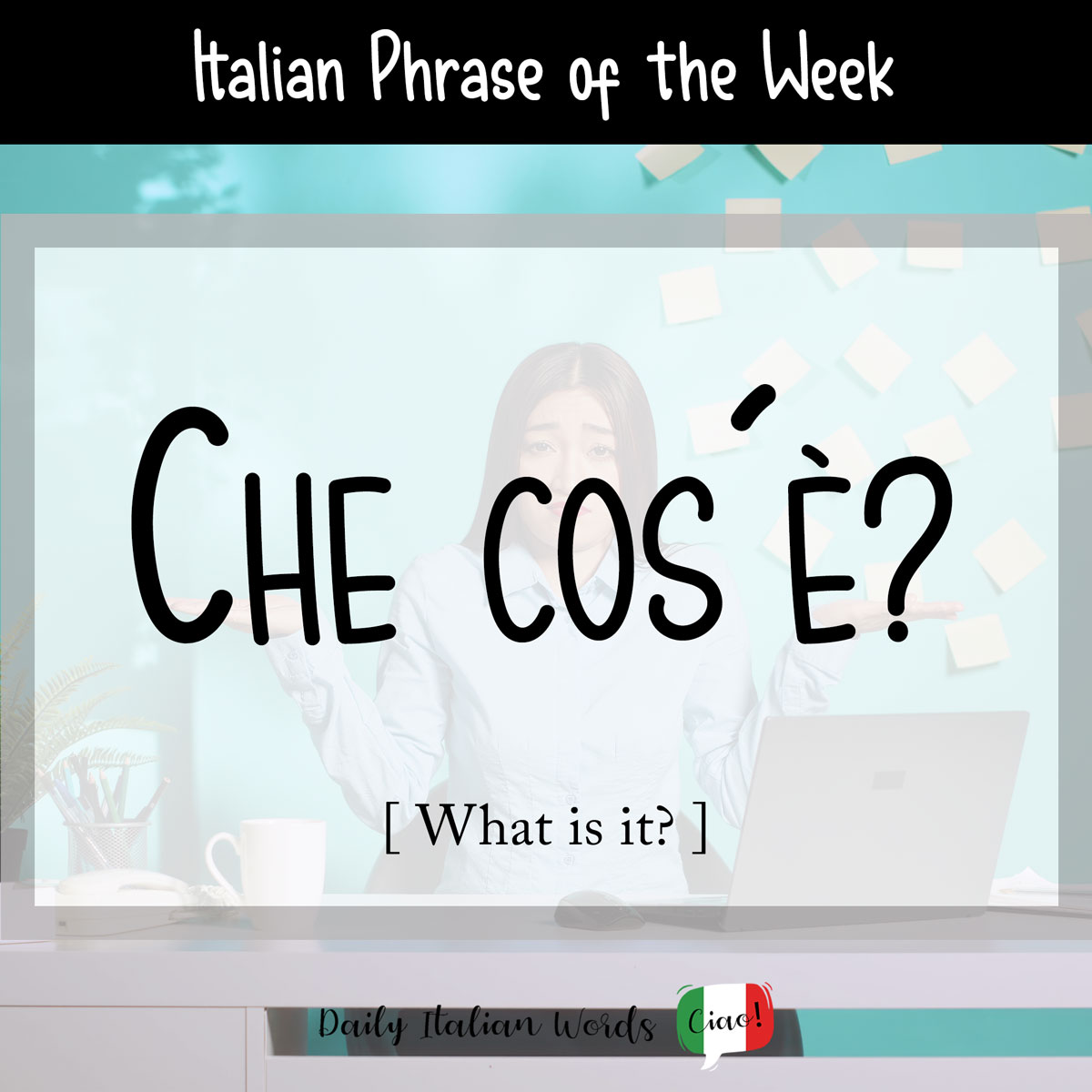
The Rise of Real-Time Visual Translation
The most immediate answer to “What is that in Italian?” now comes from visual recognition software. This technology allows a user to point a camera at an object, a menu, or a street sign and receive an instantaneous translation overlaid on their screen. This isn’t just a clever trick; it is the result of several complex technological layers working in perfect synchronicity.
OCR Technology: Turning Images into Language
At the heart of visual translation is Optical Character Recognition (OCR). Early OCR was rigid, requiring high-contrast, perfectly leveled text to function. However, modern iterations—powered by deep learning—can identify Italian text in the wild, regardless of stylized fonts, low lighting, or physical distortion.
When you point your device at a sign in Rome, the software first performs “layout analysis” to distinguish between text and background imagery. It then uses character recognition to identify the specific letters. For Italian, this involves recognizing specific diacritics like the accento grave (à, è, ì, ò, ù) and accento acuto (é). The tech must be precise; in Italian, the difference between “meta” (half) and “metà” (middle/half) is a single stroke, yet it changes the meaning entirely.
Augmented Reality (AR) Overlays in Modern Apps
Once the text is recognized, the software doesn’t just display a text box. Advanced translation apps utilize Augmented Reality (AR) to perform “Live Translation.” This involves the software “inpainting” the original image—erasing the Italian text and replacing it with the translated version in the same font, color, and orientation.
This requires immense processing power, often utilizing the dedicated Neural Engine found in modern smartphone chips. By keeping the translation in context (for example, keeping the “Uscita” sign looking like a sign but reading “Exit”), the technology reduces the cognitive load on the user, providing a seamless digital experience that feels like “magic” but is actually high-speed matrix multiplication.
Artificial Intelligence and the Nuances of Italian
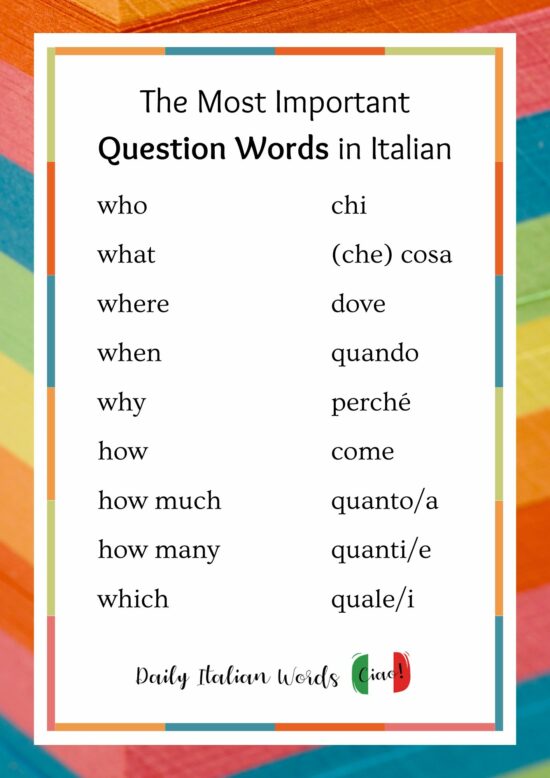
Translating “What is that in Italian?” involves more than just swapping words. Italian is a high-context, gendered, and inflected language. The “Tech” behind the translation has had to evolve from simple “bag-of-words” models to sophisticated Neural Machine Translation (NMT).
Neural Machine Translation (NMT) vs. Statistical Models
In the early 2010s, translation software relied on Statistical Machine Translation (SMT), which analyzed large bodies of bilingual text to find the most probable word match. This often led to “translationese”—grammatically correct but unnaturally sounding sentences.
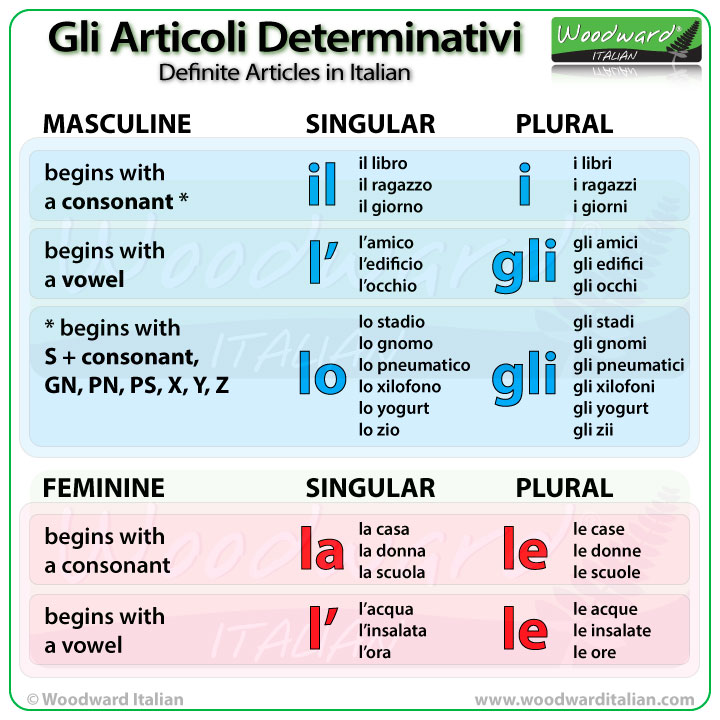
Today’s leading tools use NMT, specifically Transformer models. These models process entire sentences at once rather than word-by-word, allowing the AI to understand the relationship between words. When translating into Italian, the AI must decide if “that” refers to a masculine object (quello) or a feminine one (quella). By analyzing the surrounding pixels or text, the AI makes an informed “prediction” about gender and formality, delivering a result that sounds like a native speaker rather than a robot.
Solving the Context Problem: Dialects and Formality
One of the greatest challenges in language tech is the “Lei vs. Tu” distinction (the formal vs. informal “you”). A standard algorithm might struggle with the social context of a conversation. However, the latest Large Language Models (LLMs) are being trained on diverse datasets that include Italian cinema, literature, and social media.
This training allows the software to offer “style transfers.” If you are using a translation tool in a professional business setting in Milan, the AI can prioritize the formale tone. Conversely, if the GPS detects you are in a casual trattoria, the AI can suggest more colloquial phrasing. This contextual awareness is the current frontier of AI development, moving beyond literal translation into true cultural interpretation.
Hardware Innovations: Wearables and Beyond
While the smartphone remains the primary tool for answering “What is that in Italian?”, the industry is rapidly shifting toward specialized hardware. The goal is “ambient computing”—technology that assists us without requiring us to stare at a screen.
Smart Glasses and the “Heads-Up” Translation Experience
The most exciting development in this niche is the resurgence of Smart Glasses. Equipped with front-facing cameras and micro-LED displays, these glasses can perform real-time OCR and AR translation directly in the wearer’s field of vision.
Imagine walking through a museum in Florence. As you look at the descriptions of the art, the glasses identify the Italian text and project the English translation onto the lens. Companies like Meta, Google, and various startups are competing to perfect the weight and battery life of these devices. The “Tech” here isn’t just in the software; it’s in the miniaturization of optics and the thermal management required to keep a processor running on a user’s temple.
Instant-Translation Earbuds: Breaking the Audio Barrier
If the question “What is that in Italian?” refers to a spoken phrase rather than a physical object, the solution lies in “Hearables.” Modern wireless earbuds now feature integrated translation modes. Using a combination of Low-Latency Bluetooth and Cloud Processing, these devices can capture Italian speech, translate it in the cloud, and play back the translation in the user’s ear in under 500 milliseconds.
This requires incredibly efficient “Speech-to-Text” (STT) and “Text-to-Speech” (TTS) engines. The Italian language, with its varied regional cadences and rapid-fire delivery, provides a rigorous test for these algorithms. Engineers are currently focusing on “Denoising” tech, which allows the earbuds to isolate a single Italian speaker’s voice in a crowded, noisy piazza.
Security and Data Privacy in Translation Software
As we rely more on technology to navigate foreign languages, a critical tech-centric concern emerges: Digital Security. When you use an app to translate a document or a conversation, that data is often sent to a remote server.
Edge Computing: Offline Processing for Secure Travel
To combat privacy concerns and the lack of reliable internet in rural areas, developers are leaning heavily into “Edge Computing.” This refers to running the AI models locally on the device rather than in the cloud.
Modern mobile processors now have dedicated AI accelerators (like Apple’s A-series or Qualcomm’s Snapdragon chips) that are powerful enough to house a compressed version of an Italian-English dictionary and grammar engine. By downloading “Language Packs” for offline use, users ensure that their visual and audio data never leaves the device. This is a massive win for both privacy and speed, as it eliminates the latency of a round-trip to a data center.
Data Handling in Cloud-Based AI Tools
For more complex translations that require the “heavy lifting” of the cloud, encryption is the industry standard. End-to-end encryption ensures that the Italian phrase you are trying to decipher isn’t being intercepted or stored in a way that could identify you. Tech companies are increasingly adopting “Differential Privacy,” a method that allows them to learn from collective translation trends to improve their models without ever seeing the specific, private data of an individual user.
The Future of Cross-Cultural Communication
The trajectory of translation technology suggests a future where the question “What is that in Italian?” is answered before it is even asked.
Hyper-Personalized Language Learning Algorithms
The next step in the tech evolution is the integration of translation with personalized education. Instead of just giving you the answer, AI tools are beginning to use “Spaced Repetition Systems” (SRS) to help you remember the word. If you look up the word for “bridge” (ponte) in Venice, the app’s algorithm notes your location and the frequency of the query, later prompting you with a mini-quiz to solidify the knowledge.
The Convergence of Multimodal AI
The ultimate goal for tech giants is “Multimodal AI”—a single system that can see a physical object, hear a spoken description of it, and read a handwritten note about it, all while providing a cohesive Italian translation. We are moving away from siloed apps and toward integrated ecosystems. Whether it is through a watch, a pair of glasses, or an AI-powered pin, the technology is becoming an invisible layer of our reality.
In conclusion, “What is that in Italian?” is no longer a question of personal knowledge, but a question of technological access. Through the power of NMT, OCR, and Edge Computing, the tech world has not only bridged the gap between languages but has also set the stage for a future of universal, instantaneous human connection.
aViewFromTheCave is a participant in the Amazon Services LLC Associates Program, an affiliate advertising program designed to provide a means for sites to earn advertising fees by advertising and linking to Amazon.com. Amazon, the Amazon logo, AmazonSupply, and the AmazonSupply logo are trademarks of Amazon.com, Inc. or its affiliates. As an Amazon Associate we earn affiliate commissions from qualifying purchases.