
The business landscape in India is a complex ecosystem, governed by a multitude of regulations and identification systems designed to ensure transparency, facilitate compliance, and streamline operations. Among these, the CIN number, or Corporate Identity Number, stands out as a crucial identifier for registered companies. Far from being a mere bureaucratic detail, the CIN number serves as a digital fingerprint, uniquely identifying every company incorporated in India. Understanding its significance, structure, and implications is paramount for businesses, investors, and anyone interacting with the corporate sector in India. This article delves deep into the world of CIN numbers, exploring their purpose, how they are generated, where to find them, and their multifaceted role in the Indian business environment.
The Genesis and Purpose of the CIN Number
The introduction of the CIN number was a significant step in India’s journey towards digitizing corporate governance and enhancing transparency. Prior to its implementation, companies were identified by various means, often leading to confusion and duplication. The Ministry of Corporate Affairs (MCA), the nodal government body responsible for company administration in India, introduced the CIN number as part of its efforts to create a centralized, unified, and efficient database of all registered companies.
The primary purpose of the CIN number is to provide a unique, alphanumeric identifier that distinguishes one company from another. This unique identification is fundamental for several key reasons:
- Legal Compliance and Regulatory Oversight: The CIN number is essential for all statutory filings, submissions, and compliance requirements mandated by the Companies Act and other relevant legislation. It allows regulatory bodies like the MCA to track a company’s activities, monitor its compliance, and ensure adherence to corporate laws. This includes annual filings, financial statements, and any changes in company structure or directorship.
- Transparency and Information Access: The CIN number acts as a gateway to a wealth of public information about a company. By using the CIN on the MCA portal, stakeholders can access details such as the company’s incorporation date, registered address, directors’ names, financial statements (if publicly available), and any charges registered against the company. This transparency fosters trust and allows for due diligence.
- Ease of Business Transactions: In various business transactions, the CIN number is often required for identification and verification. This can include opening bank accounts, applying for loans or licenses, entering into contracts, and dealing with government agencies. Having a standardized identifier simplifies these processes and reduces the risk of errors.
- Data Management and Administration: For the MCA itself, the CIN number is the cornerstone of its vast database. It enables efficient data management, analysis, and the generation of statistics related to the corporate sector. This data is invaluable for policy-making and economic planning.
- Combating Fraud and Shell Companies: The unique nature of the CIN number helps in identifying and preventing the proliferation of shell companies and fraudulent entities. By linking a company to its CIN, it becomes more difficult to create multiple fictitious entities with the same or similar names, thus enhancing the integrity of the corporate registry.
In essence, the CIN number is a digital passport for Indian companies, facilitating their interaction with the government, the financial system, and the broader business community.
The Evolution of the CIN Number Format
The CIN number has undergone significant evolution since its inception, reflecting advancements in technology and the increasing need for more granular data. Initially, the CIN format was simpler, but with the introduction of the Ministry of Corporate Affairs 2 (MCA21) e-governance project, the format was revised to incorporate more detailed information.
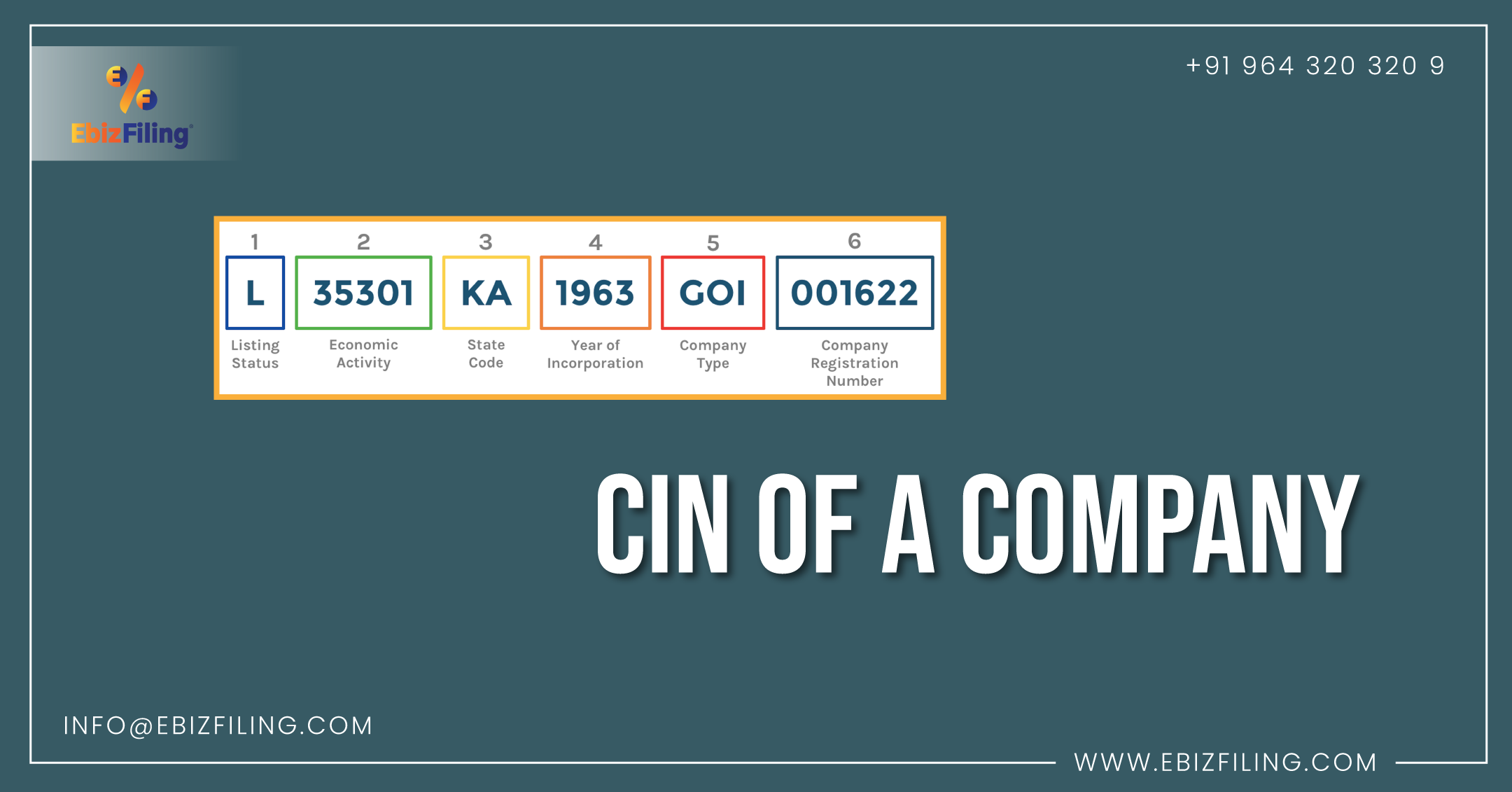
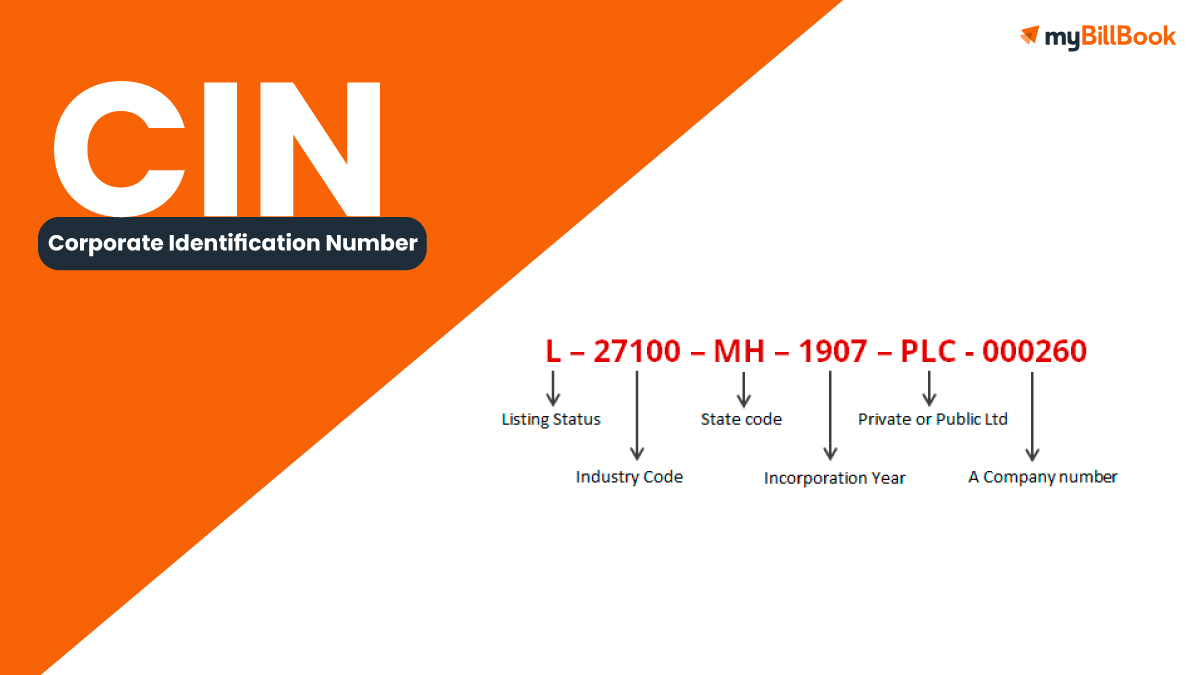
The current CIN number is an 21-digit alphanumeric code. Each character within this code is meticulously designed to convey specific information about the company. This structure allows for a quick understanding of a company’s basic profile upon examination of its CIN.
Decoding the CIN Number: A Breakdown of its Structure
Understanding the structure of the CIN number provides valuable insights into the information it encapsulates. The 21-digit code can be broken down into distinct segments, each representing a specific attribute of the company.
1. Registration Number (Digits 1-7): The Core Identifier
The first seven digits of the CIN number represent the unique registration number assigned to the company by the Registrar of Companies (ROC) in the state where the company is registered. This is the primary identifier that distinguishes a company from all others within the Indian corporate registry. Each ROC office has its own numbering sequence, ensuring that within a particular jurisdiction, each company receives a distinct registration number.
2. Company Identification Number (Digits 8-11): Categorical Information
The next four digits of the CIN number provide crucial information about the company’s classification and the industry in which it operates. This segment is designed to categorize companies based on their legal status and economic activity.
- First Digit (Alphabetic): Company Type: This digit indicates the category of the company. For example, a ‘U’ might signify a Public Limited Company, while an ‘L’ could represent a Limited Liability Partnership. Other common prefixes include ‘P’ for Private Limited Company, ‘C’ for Companies Limited by Guarantee, and ‘F’ for Foreign Companies.
- Next Three Digits (Numeric): Industry Classification: These three digits are based on the National Industrial Classification (NIC) codes. The NIC system classifies economic activities into various sectors. These digits provide a broad indication of the primary industry or sector in which the company is engaged. This helps in statistical analysis and understanding the industrial composition of the economy.
3. Year of Incorporation (Digits 12-15): The Company’s Age
The digits from the 12th to the 15th represent the year in which the company was incorporated. This is a straightforward yet important piece of information, indicating the company’s age and its establishment in the Indian corporate landscape.
4. State Code (Digits 16-17): Geographic Location
The 16th and 17th digits of the CIN number represent a two-digit numeric code that identifies the state in which the company is registered. Each state in India has a unique numeric code assigned by the MCA. This helps in geographically segmenting companies and understanding their regional distribution.
5. ROC Code (Digits 18-21): The Registrar’s Office
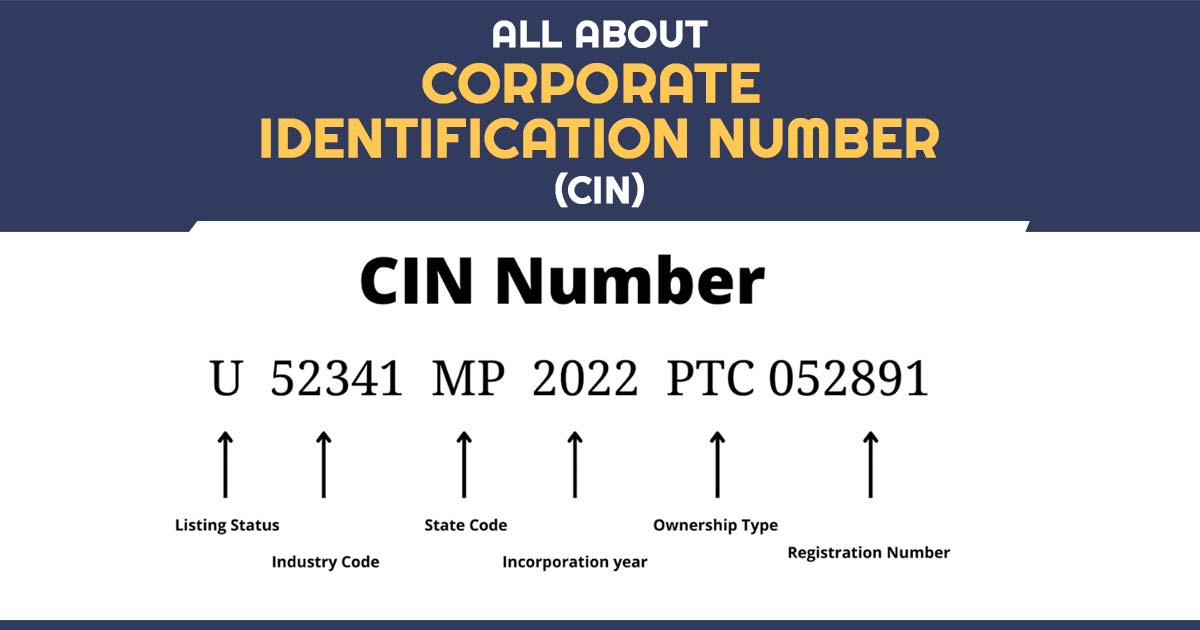
The final four digits of the CIN number represent the specific code of the Registrar of Companies (ROC) office under whose jurisdiction the company is registered. Each ROC office, located in different cities within a state, has a unique four-digit code. This further refines the geographical location and the administrative body responsible for the company’s registration and oversight.
By combining these segments, the 21-digit CIN number provides a comprehensive and unique identifier for every registered company in India. This structured approach to identification ensures that the information is not only unique but also readily interpretable, aiding in efficient data management and accessibility.
Accessing and Verifying Your CIN Number
For any business operating in India, knowing its CIN number is non-negotiable. It’s a fundamental piece of information that will be used repeatedly in official capacities. Fortunately, locating and verifying a company’s CIN number is a straightforward process, primarily facilitated by the Ministry of Corporate Affairs (MCA).
Finding Your Company’s CIN Number
- Official Company Documents: The most direct way to find your company’s CIN number is to refer to its official incorporation documents. This includes the Certificate of Incorporation, Memorandum of Association (MoA), and Articles of Association (AoA). The CIN number is prominently displayed on these documents.
- Company Letterheads and Stationery: Most businesses print their CIN number on their official letterheads, business cards, and other stationery. This is a common practice for easy identification and to comply with regulatory requirements.
- Annual Reports and Filings: Any annual reports, financial statements, or other regulatory filings submitted to the MCA will contain the company’s CIN number.
- MCA Portal (for company owners/representatives): If you are a director or authorized representative of a company, you can log in to the MCA portal using your Director Identification Number (DIN) or other credentials. Your company’s details, including the CIN, will be accessible within your dashboard.
Verifying a CIN Number Online
The MCA provides a robust online platform that allows anyone to verify the existence and details of a company using its CIN number. This is a crucial tool for ensuring that you are dealing with a legitimate and registered entity.
- The MCA Website: The Ministry of Corporate Affairs (MCA) has a dedicated website (mca.gov.in). Navigate to the “MCA Services” section and then select “View Company/LLP Master Data.”
- Search Functionality: On the “View Company/LLP Master Data” page, you will find a search field. You can either enter the CIN number directly or search by company name.
- Information Displayed: Once you enter a valid CIN number or company name, the portal will display a snapshot of the company’s master data. This includes the company’s full name, CIN, registration number, date of incorporation, registered address, company status (e.g., Active, Struck Off), and the status of its charges.
- Importance of Verification: Verifying a CIN number is essential for conducting due diligence before entering into any business agreement, investment, or partnership. It helps mitigate risks associated with fraud or dealing with non-existent entities.
The accessibility of CIN information through the MCA portal underscores the government’s commitment to transparency and ease of doing business in India.
The Strategic Importance of CIN Number in Business Operations
Beyond its role as a mere identifier, the CIN number plays a strategic role in how businesses operate, interact with stakeholders, and manage their corporate affairs. Its implications extend to compliance, financial dealings, and overall business integrity.
CIN Number and Compliance: The Backbone of Corporate Governance
As previously mentioned, the CIN number is intrinsically linked to a company’s legal and regulatory obligations. All statutory filings with the MCA, such as the Annual Return (Form MGT-7/7A) and the Financial Statements (Form AOC-4), require the submission of the correct CIN. Failure to accurately provide the CIN number can lead to rejection of filings, penalties, and potential legal repercussions.
Furthermore, when a company seeks to raise capital through equity or debt, its CIN number will be a critical piece of information for potential investors and lenders. They will use this number to access the company’s public records on the MCA portal and conduct their due diligence, assessing the company’s financial health, history, and compliance record.
CIN Number in Financial Transactions: Ensuring Legitimacy
In the realm of finance, the CIN number serves as a vital tool for establishing the legitimacy of a business entity. When a company opens a bank account, it must provide its CIN to the bank. Banks, in turn, verify this information with the MCA to ensure that they are dealing with a registered and active entity.
Similarly, when a company applies for loans, credit facilities, or any form of financial assistance from institutions, the CIN number is a mandatory requirement. Financial institutions use the CIN to access the company’s credit history and other relevant financial data, which forms a crucial part of their lending decision process. The presence of a valid CIN number lends credibility and trustworthiness to a business in its financial dealings.
CIN Number and Business Growth: Building Trust and Credibility
For businesses aiming for growth and expansion, a well-managed corporate identity, of which the CIN number is a key component, is essential. When a company operates transparently and adheres to all regulatory requirements, it builds trust and credibility with its customers, suppliers, partners, and the wider business community.
The CIN number, by facilitating access to public information, enables stakeholders to make informed decisions about engaging with a company. A company with a clean compliance record, easily verifiable through its CIN, is more likely to attract investment, secure partnerships, and build lasting customer relationships.
In conclusion, the CIN number is far more than just an alphanumeric code. It is a cornerstone of corporate identity in India, underpinning legal compliance, financial legitimacy, and overall business credibility. As businesses navigate the dynamic Indian market, understanding and leveraging the significance of their CIN number is not just a matter of administrative necessity but a strategic imperative for sustained success and growth.
aViewFromTheCave is a participant in the Amazon Services LLC Associates Program, an affiliate advertising program designed to provide a means for sites to earn advertising fees by advertising and linking to Amazon.com. Amazon, the Amazon logo, AmazonSupply, and the AmazonSupply logo are trademarks of Amazon.com, Inc. or its affiliates. As an Amazon Associate we earn affiliate commissions from qualifying purchases.